





02
Aug
Bayer Loses Appeal of EPA’s Ban of Insecticide Flubendiamide that Kills Wildlife, Distributors Allowed to Sell Off Inventory
(Beyond Pesticides, August 2, 2016) The Environmental Protection Agency’s (EPA) Environmental Appeals Board (EAB) has upheld an earlier ruling by EPA’s chief administrative law judge, Susan Biro, to cancel sales of the conditionally registered insecticide flubendiamide, produced by Bayer CropScience, which was conclusively found to be highly toxic to freshwater wildlife after EPA allowed its use on 200 crops. The situation has left many questioning why the agency did not wait to register the product until it had complete data.
The EAB disagreed with the Office of Pesticide Programs and Judge Biro’s decision regarding existing stocks of the insecticide product, and ruled that farmers and other users, retailers, and distributors (not the manufacturers) will be allowed to use and sell existing supplies of the chemical. This controversy points to what health and environmental advocates cite as a fundamental flaw in EPA’s pesticide registration review —the agency’s conditional pesticide registration process, which allows toxic pesticides on the market without a complete and comprehensive assessment of their potential harm””in this case to wildlife and the vital ecosystem services they provide.
Despite its agreement with EPA, Bayer said in March it would fight the EPA decision, which it appealed to the EAB. But, on Friday after the EAB decision, Bayer told Reuters that it would “halt future U.S. sales.”
The EAB ruling on July 29 makes clear that under the Federal Insecticide, Fungicide and Rodenticide Act (FIFRA), Bayer CropScience and fellow registrant Nichino America could not challenge conditions of the registration. The document states, “By failing to request voluntary cancellation of their flubendiamide registrations within one week of the Program’s January 29, 2016 determination that flubendiamide causes unreasonable adverse effects, Bayer and Nichino failed to satisfy the termination condition in their flubendiamide registrations.” The EAB also found that, while Judge Biro’s decision to halt sale and distribution of existing flubendiamide products through Bayer and Nichino was legally sound, the determination to prohibit distributors and retailers from doing the same was not supported.
“It is outrageous that EPA would allow this known hazardous pesticide to remain on the market until stocks in the hands of users and re-sellers are used up, when the chemical exceeds the agency’s risk criteria, threatens wildlife now, and was allowed on the market with a presumed standard of safety that was not met,” said Jay Feldman, executive director of Beyond Pesticides.
In 2008, EPA granted Bayer a “conditional” registration for flubendiamide, a classification that allows a new pesticide to be registered and used in the field, despite outstanding data on its toxicological impact. In this case, original data submitted to EPA by Bayer showed concern over the effect of the chemical and its breakdown product on freshwater benthic invertebrates, species such as crustaceans and aquatic insects that live in stream sediment and provide important ecosystem services. such as decomposition and nutrient cycling. In response, rather than declining to proceed with registration of the chemical, EPA negotiated a deal with Bayer to conditionally register the chemical for five years with additional label restrictions, while it waited for more data on the harm to benthic species. EPA wrote (p.10): “If there are risk concerns at that time that result in the Agency being unable to determine there are no reasonable adverse effects to the environment, the registrants have agreed that the pesticide will be voluntarily canceled.”
Since the conditional registration agreement, studies showed that flubendiamide —which is registered for use on over 200 crops, including soybeans, almonds, tobacco, peanuts, and cotton— is toxic to aquatic organisms, breaking down into a more highly toxic substance that harms organisms important to aquatic ecosystems, especially fish. The insecticide is also persistent in the environment. After being informed of the agency’s findings on January 29, 2016, Bayer and Nichino were asked to submit a request for voluntary cancellation by Friday, February 5, 2016. Instead, Bayer then rejected the request and EPA’s interpretation of the science. After Bayer would not voluntarily remove from the market the insecticide flubendiamide, EPA formally issued a Notice of Intent to Cancel the insecticide, citing its high toxicity to aquatic organisms.
The saga that has unfolded between EPA and Bayer reveals an agency struck a deal that it could not immediately enforce. Rather than reject the pesticide for its adverse impacts, or require the additional data before it is used across the country on 200 crops, EPA allowed a pesticide known to harm aquatic organisms to go to market with only a promise that it would be withdrawn if warranted by additional data. EPA has historically opted to work with pesticide manufacturers to have them voluntarily cancel harmful products, rather than go through a process of cancellation proceedings, which requires agency resources. Bayer’s actions show the danger of making deals with a multinational corporation that puts profit motives above environmental health. In 2013, the Government Accountability Office scolded the agency for its conditional registration process, writing, “Specifically, EPA does not have a reliable system, such as an automated data system, to track key information related to conditional registrations, including whether companies have submitted additional data within required time frames.”
A startling number of pesticides, nearly 65% of the more than 16,000 pesticides now on the market, were first approved by the process of “conditional registration.” Meanwhile, the Canadian Pest Management Regulatory Agency finalized its decision to discontinue granting new conditional registrations, also on June 1. “The prudent approach to protecting environmental health would be to halt conditional registrations of pesticides,” said Mr. Feldman. Rather than provide avenues for chemical companies to game the system and poison the environment, EPA should take strong action to encourage pest prevention and readily available alternatives to toxic pesticides.
Beyond Pesticides has long advocated a regulatory approach that prohibits hazardous chemical use and requires alternative assessments to identify less toxic practices and products under the unreasonable adverse effects clause of FIFRA. Farm, beekeeper, and environmental groups, including Beyond Pesticides, have urged EPA to follow in the steps of countries like Canada and the European Union by following the precautionary principle, which generally approves products after they have been assessed for harm, not before. Beyond Pesticides suggests an approach that rejects uses and exposures deemed acceptable under risk assessment calculations, and instead focuses on safer alternatives that are proven effective, such as organic agriculture, which prohibits the use of toxic chemicals.
Source: Environmental Appeals Board Decision, Agri-Pulse
All unattributed positions and opinions in this piece are those of Beyond Pesticides.

 The law, signed by the President on July 29, does very little to ensure that consumers will actually be able to identify genetically engineered ingredients because it allows for a range of labeling options that will not warn consumers — quick response (QR) codes, 800 numbers, websites and on-package labeling. This approach leaves poorer Americans at a disadvantage in accessing this information, as QR code labels require the use of a smartphone to read. Allowing food companies to decide how to label enables them to misinform or mislead the public about their products. We have already seen on product labels
  f highly neurotoxic pesticides still widely used on farms in California, have been associated with a
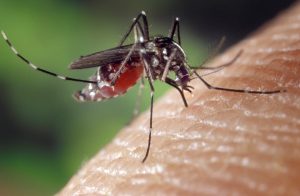 me of the report, the country had only seven official cases of microcephaly, a birth defect marked by small head size, related to Zika infection.
 d pets.
 ized marijuana for medicinal and or recreational purposes. Because the U.S. government classifies cannabis as a narcotic, the U.S. Environmental Protection (EPA) does not register pesticide products for use in its production, leaving consumers exposed to hazardous pesticides through inhalation, ingestion, and dermal absorption without any evaluation of potential health effects.
 The transparency provision of the Sustainable Chemistry Policy requires all suppliers to provide full online ingredient disclosure beginning January 2015 and Walmart Priority Chemicals on packaging beginning January 2018. Walmart says that 78% of suppliers responding reported disclosure for all products. For their goal of advancing safer formulations of products, Walmart focused on reducing the HPCs.
 “It’s alarming to see just how common it’s been for the EPA to ignore how these chemical mixtures might endanger the health of our environment,” said Nathan Donley, Ph.D., a scientist with the CBD, and author of the report. “It’s pretty clear that chemical companies knew about these potential dangers, but the EPA never bothered to demand this information from them or dig a little deeper to find it for themselves.”
 The study, “
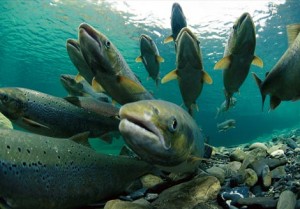 species interactions, and potentially create trophic cascades, situations where the interaction between predators and prey in the food web becomes imbalanced. For example, a predacious fish may, under normal circumstances, exert a population control on smaller fish that feed on insects that eat algae. Decreased activity and reduced predation among predacious fish can result in an explosion of smaller fish, which can then result in an overconsumption of algae-eating insects, ultimately leading to an increase in algae in an aquatic area. These difficult to perceive interactions underscore the call from the authors of the study for future research to better understand how pesticide-induced changes in behavior can alter the fitness, populations, and make-up of aquatic communities and ecosystems.
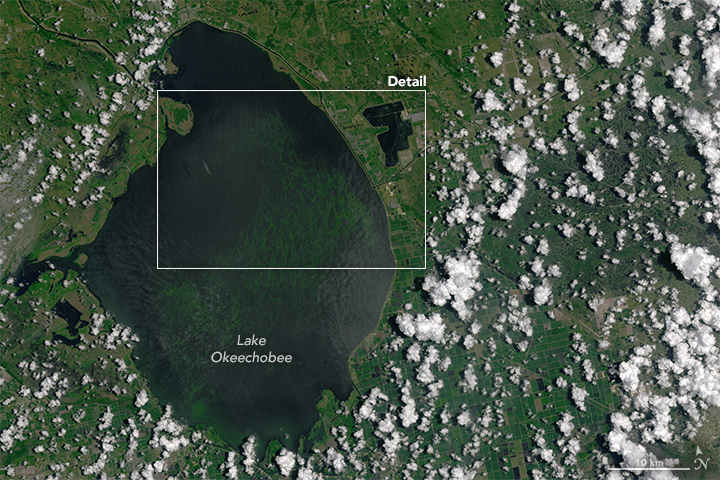
 Title IV, Section 437 of H.R. 5538 states that, “None of the funds made available by this or any other Act may be used to implement or enforce, or to require States to implement or enforce, the provisions of
  In 2014 the state announced its
 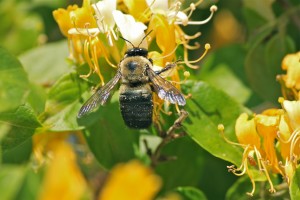 The lawsuit, filed by Ecojustice on behalf of The David Suzuki Foundation, Friends of the Earth Canada, Ontario Nature, and the Wilderness Committee, argues that pesticide products containing two neonicotinoids,
 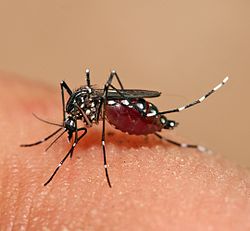 An efficient mosquito management strategy emphasizes public awareness, prevention, and monitoring methods. However, if these methods are not used properly or in time, communities must determine if they should risk exposing vulnerable populations to potentially harmful diseases caused by mosquitoes or to chronic or deadly illnesses caused by pesticides.
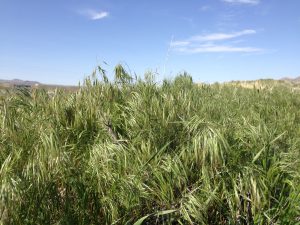 UM researchers, Cara Nelson, Ph.D. and Viktoria Wagner, Ph.D., along with two researchers from Canada, looked at government agencies and agricultural statistics companies in the U.S., Canada, and Mexico to find their data. The study found that the government agencies in Canada and Mexico kept no archived database of herbicide usage for invasive plant management. In the U.S., five out of seven agencies that were contacted by the researchers tracked herbicide usage, and only four of those agencies shared their data. These agencies include the Bureau of Indian Affairs, Bureau of Land Management, Fish and Wildlife Service, and National Park Service. The U.S. Forest Service, which oversees 193 million acres in the U.S., declined to share its data on herbicide use. The report found that even the agencies that did share their data did not consistently archive information on the effectiveness of the herbicide usage, the costs associated with usage, or make the information publicly available.
 “The American people have a right to know what they’re eating,” said Senator Bernie Sanders (I-VT), who vowed to put a hold on the bill if they didn’t reach the 60 votes needed for cloture during a
  According to the European Commission
 Many of the residents were with an community group called
  fter the European Food Safety Authority (EFSA)
  The Department of Recreation and Parks (DRP) manages approximately 10,000 acres of parkland within Howard County. According to the new policy and procedure, DRP is restricting the use of neonicotinoids, “due to recent research suggesting that there is a link between pesticides that contain neonicotinoids negatively effecting populations of pollinator species, such as; honeybees, native bees, butterflies, moths and other insects.” Neonics were often used on parklands for grubs on turf, Japanese beetles on trees, and aphids on flowers and are now prohibited on all County parkland, including sports fields, garden plots, golf course and open space. Exemptions exist for agricultural uses and invasive pest infestations.


