





08
Aug
Failure of Hawai’i to Enforce Pesticide Law Sparks Request that EPA Revoke State’s Authority
(Beyond Pesticides, August 8, 2016) Last week, the Environmental Protection Agency (EPA) received a letter from Earthjustice requesting that the agency notify the Hawaii State Department of Agriculture (HDOA) of its chronic failure to meet statutory duties for pesticides regulation and enforcement under the Federal Insecticide, Fungicide, and Rodenticide Act (FIFRA), and, if timely corrections are not made, to rescind HDOA’s primary enforcement authority completely. Earthjustice has asked EPA to immediately notify HDOA that it has failed to carry out its responsibilities, and, pursuant to FIFRA, to give the agency 90 days to correct its overwhelming shortcomings. If the problems, which include failure to enforce pesticide use violations and a large backlog of pesticide complaints and investigations dating back to as early as 2008, are not corrected and addressed within 90 days, Earthjustice requests  that EPA revoke HDOA’s primary enforcement authority indefinitely. In the event that HDOA’s authority to regulate is stripped, EPA would then take over the responsibility for enforcing pesticide use violations occurring within the state.
Under FIFRA, the federal statutory authority for pesticide approval and use, EPA may delegate to a state primary responsibility for enforcing pesticide use violations if thestate has adequate pesticide laws and adequate procedures for carrying out the law, or enters into a cooperative agreement with EPA. The state must have procedures that allow for quick and effective prevention, discovery, and prosecution of pesticide use violations. EPA regulations require that a state with primary enforcement authority have sufficient personnel and financial resources to maintain an effective compliance monitoring program, and must pursue enforcement actions promptly. EPA and Hawaii currently have a cooperative agreement giving Hawaii those responsibilities.
But EPA has been warning HDOA repeatedly since at least 2012 that HDOA has failed to adequately enforce pesticide laws and has allowed an unacceptable backlog of inspection files to grow. Instead of increasing its staff, HDOA’s enforcement staff has been steadily shrinking, and not surprisingly, the number of inspections and enforcement actions has been decreasing every year. EPA’s most recent annual review of HDOA’s performance noted there were about 700 inspection files in need of review, some dating back to 2008. As a result, there have not only been enforcement delays but some cases can no longer be enforced because the statute of limitations expired while files sat on HDOA’s desk. At the same time, the number of complaints about pesticide misuse has been increasing, along with public frustration and loss of confidence.
HDOA is not the only government body in Hawaii failing to take action when it comes to addressing pesticide issues plaguing the state. This past March, a draft version of a report commissioned by Hawaii and Kauai County found that Hawaii should dramatically improve its regulation of pesticide use and study its impacts fell on deaf ears in the state legislature. Additionally, in 2015 the Hawaii state House agriculture committee rejected a bill that sought to impose buffer zones for large agricultural companies that spray restricted-use pesticides near schools and other sensitive areas, once again failing to act to protect the interests of Hawaiian citizens from toxic pesticide use. The bill had strong support from the Hawaii chapter of the national nonprofit Center for Food Safety (CFS), as well as a strong backing from neighbor island residents, but industry efforts once again proved overwhelmingly powerful in obstructing the bill.
In light of continuing inaction at the state level, several local governments took action to try to protect their residents from harmful pesticide practices across the islands. Maui, Kauai, and the Big Island all passed laws to regulate the seed industry, but a federal district court judge ruled that Hawaiian counties do not have that power, citing state preemption in his reasoning. That ruling followed a similar federal court decision handed down in August 2014 that overruled a Kauai ordinance requiring annual reporting of genetically engineered organisms. Both of those decisions were unfortunate, as state preemption laws effectively deny local residents and decision makers their democratic right to better protection when a community decides that minimum standards set by state and federal law are insufficient, and in the case of Hawaii, often unenforced.
Paul Achitoff, Earthjustice’s managing attorney in Hawaii, noted that the lack of enforcement is consistent with the Department of Agriculture’s general failure to take seriously its duty to regulate pesticides in Hawaii and protect the public: “The Department of Agriculture has been ignoring for years repeated warnings from EPA that it’s not keeping up with its responsibility to investigate pesticide complaints and enforce the law against violators. So pesticide users now have good reason to think they can get away with carelessness, or even ignoring the law. And why shouldn’t they, when the Department cuts its enforcement staff instead of increasing it, and allows the statute of limitations to run out, preventing any enforcement at all?”
Mr. Achitoff pointed out, “While agrochemical companies have been arguing in court that only the State, and not the counties, have the power to protect the public from pesticide drift and contamination, the Department of Agriculture has done nothing to use the authority it has. In fact, the Department’s Chair recently scoffed at the findings and recommendations of KauaÊ»i County’s Joint Fact Finding report that that toxic chemicals are finding their way into our air, water, and soils in violation of the law, and that HawaiÊ»i’s pesticide enforcement and monitoring are inadequate. It’s no wonder that many believe the State is protecting the agrochemical industry rather than the public.”
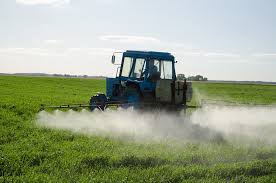
Residents living on the Hawaiian Islands are subject to a particularly pronounced form of environmental assault, as the state’s premiere growing conditions have made it a prime target for agrichemical companies to test new, experimental forms of genetically engineered (GE) crops. Data released last year reveals that high levels of restricted use pesticides, in some cases almost double the pounds per acre average of other states, are being used in Kauai County. According to the Center for Food Safety, in 2014 alone, there were 1,381 field test sites in Hawaii, compared to only 178 sites in California- a large agricultural state. Most of these crops are engineered to resist herbicides and pesticides. Testing these crops means repeated spraying of dangerous chemicals near neighborhoods, schools, and waterways. Residents of the Hawaiian Islands that live, work, or go to school near these fields are subject to incessant pesticide spraying, as the climate provides a year-round growing season for GE crops. A May 2014 report found 25 herbicides, 11 insecticides and 6 fungicides in Hawaii’s waterways, underscoring resident concerns for both the land and human health.
Beyond Pesticides continues to be an ardent supporter of common sense protections from pesticides and their associated use on GE crops. If you too support these issues, please visit our website to learn more about the issues and find ways to get involved in your local community.
Source: Earthjustice Press Release
All unattributed positions and opinions in this piece are those of Beyond Pesticides.

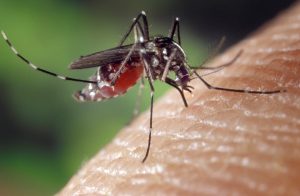 The Aedes aegypti mosquito, which has the ability to live indoors and reproduce even in tiny pools of water, is the primary way the Zika virus is spread, although there are reports that the disease can also be transmitted through sexual contact. Zika virus has been linked to cases of microcephaly, in which babies are born with underdeveloped brains. The virus has been detected in several Latin American countries, including Brazil where the outbreak was first observed and linked to increased cases of microcephaly. However, locally transmitted cases are now being reported in southern Florida.
 Rye Golf Club, which turned into a “field of dustbowls” within weeks of the green residue appearing on golfer’s shoes, had to close 18 putting greens, leading members to demand thousands of dollars in refunds and city leaders to address the severely damaged city-owned golf course. The cause of the mysterious green residue was later revealed to be the result of an application of a contaminated batch of the fungicide ArmorTech ALT 70, whose active ingredient is
  The law, signed by the President on July 29, does very little to ensure that consumers will actually be able to identify genetically engineered ingredients because it allows for a range of labeling options that will not warn consumers — quick response (QR) codes, 800 numbers, websites and on-package labeling. This approach leaves poorer Americans at a disadvantage in accessing this information, as QR code labels require the use of a smartphone to read. Allowing food companies to decide how to label enables them to misinform or mislead the public about their products. We have already seen on product labels
  f highly neurotoxic pesticides still widely used on farms in California, have been associated with a
 d pets.
 ized marijuana for medicinal and or recreational purposes. Because the U.S. government classifies cannabis as a narcotic, the U.S. Environmental Protection (EPA) does not register pesticide products for use in its production, leaving consumers exposed to hazardous pesticides through inhalation, ingestion, and dermal absorption without any evaluation of potential health effects.
 The transparency provision of the Sustainable Chemistry Policy requires all suppliers to provide full online ingredient disclosure beginning January 2015 and Walmart Priority Chemicals on packaging beginning January 2018. Walmart says that 78% of suppliers responding reported disclosure for all products. For their goal of advancing safer formulations of products, Walmart focused on reducing the HPCs.
 “It’s alarming to see just how common it’s been for the EPA to ignore how these chemical mixtures might endanger the health of our environment,” said Nathan Donley, Ph.D., a scientist with the CBD, and author of the report. “It’s pretty clear that chemical companies knew about these potential dangers, but the EPA never bothered to demand this information from them or dig a little deeper to find it for themselves.”
 The study, “
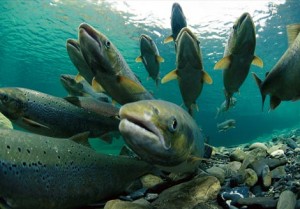 species interactions, and potentially create trophic cascades, situations where the interaction between predators and prey in the food web becomes imbalanced. For example, a predacious fish may, under normal circumstances, exert a population control on smaller fish that feed on insects that eat algae. Decreased activity and reduced predation among predacious fish can result in an explosion of smaller fish, which can then result in an overconsumption of algae-eating insects, ultimately leading to an increase in algae in an aquatic area. These difficult to perceive interactions underscore the call from the authors of the study for future research to better understand how pesticide-induced changes in behavior can alter the fitness, populations, and make-up of aquatic communities and ecosystems.
 Title IV, Section 437 of H.R. 5538 states that, “None of the funds made available by this or any other Act may be used to implement or enforce, or to require States to implement or enforce, the provisions of
  In 2014 the state announced its
 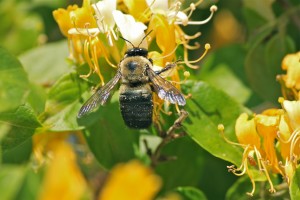 The lawsuit, filed by Ecojustice on behalf of The David Suzuki Foundation, Friends of the Earth Canada, Ontario Nature, and the Wilderness Committee, argues that pesticide products containing two neonicotinoids,
 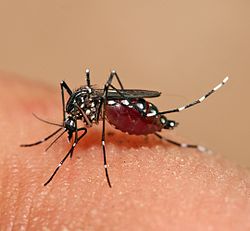 An efficient mosquito management strategy emphasizes public awareness, prevention, and monitoring methods. However, if these methods are not used properly or in time, communities must determine if they should risk exposing vulnerable populations to potentially harmful diseases caused by mosquitoes or to chronic or deadly illnesses caused by pesticides.
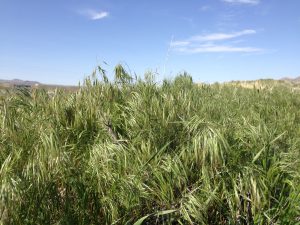 UM researchers, Cara Nelson, Ph.D. and Viktoria Wagner, Ph.D., along with two researchers from Canada, looked at government agencies and agricultural statistics companies in the U.S., Canada, and Mexico to find their data. The study found that the government agencies in Canada and Mexico kept no archived database of herbicide usage for invasive plant management. In the U.S., five out of seven agencies that were contacted by the researchers tracked herbicide usage, and only four of those agencies shared their data. These agencies include the Bureau of Indian Affairs, Bureau of Land Management, Fish and Wildlife Service, and National Park Service. The U.S. Forest Service, which oversees 193 million acres in the U.S., declined to share its data on herbicide use. The report found that even the agencies that did share their data did not consistently archive information on the effectiveness of the herbicide usage, the costs associated with usage, or make the information publicly available.
 “The American people have a right to know what they’re eating,” said Senator Bernie Sanders (I-VT), who vowed to put a hold on the bill if they didn’t reach the 60 votes needed for cloture during a


