





14
Jan
Tell Congress to Stop EPA from Allowing Antibiotic Use in Citrus Production
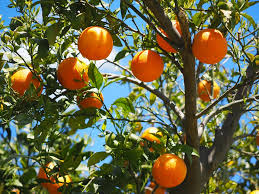 (Beyond Pesticides, January 14, 2019) Tell Congress to stop the Trump administration from opening the floodgates to permit widespread use of antibiotics in citrus production (grapefruits, oranges and tangerines).
Despite the building national and international crisis of deadly bacterial resistance to antibiotics, this new allowance would expand on an emergency use decision the Environmental Protection Agency made in 2017. It permits up to 480,000 acres of citrus trees in Florida to be treated with more than 650,000 pounds of streptomycin per year; 23,000 citrus acres in California will likely be treated annually.
The World Health Organization has called bacterial resistance “one of the biggest threats to global health, food security, and development today.”
The two approved antibacterial chemicals to be used as pesticides in citrus production are streptomycin and oxytetracycline. Their use was permitted by the U.S. Environmental Protection Agency (EPA) under an emergency exemption in May, 2017 for a citrus greening disease caused by the bacterium Candidatus Liberibacter asiaticus (CLas) in Florida citrus crops through December of 2019.
The Environmental Protection Agency announced March 15, “EPA is issuing these tolerances without notice and opportunity for public comment as provided in FFDCA [Federal Food, Drug and Cosmetic Act] section 408(l)(6).” EPA states, “[T]ime-limited tolerances are established for residues of streptomycin in or on fruit, citrus, group 10-10, at 2 ppm, and the dried pulp of these commodities at 6 ppm.” For oxytetracycline, EPA is allowing residues “in or on all commodities of fruit, citrus, group 10-10, at 0.4 ppm.” [See below; organic standards do not allow antibiotic use.] Now, EPA is moving forward with a permanent allowance of these chemicals.
In addition, both the active and inert ingredients in common herbicides advance antibiotic resistance. Learn more about the history of Resistance and Antibiotics by visiting Beyond Pesticides’ Antimicrobials and Antibacterials program page. Pose the question to policy makers: Will we now see an “Antibiotics rebellion”?
Beyond Pesticides, with other organizations, led a successful effort to remove antibiotics from organic apple and pear production because of their contribution to antibiotic resistance and the availability of alternative practices and inputs.
As bacteria become resistant to the most commonly prescribed antibiotics, the results are longer-lasting infections, higher medical expenses, the need for more costly or hazardous medications, and the inability to treat life-threatening infections. The development and spread of antibiotic resistance is the inevitable effect of antibiotic use. Bacteria evolve quickly, and antibiotics provide strong selection pressure for those strains with genes for resistance. Both antibiotics proposed for expanded use are important for fighting human disease. Tetracycline is used for many common infections of the respiratory tract, sinuses, middle ear, and urinary tract, as well as for anthrax, plague, cholera, and Legionnaire’s disease, though it is used less frequently because of resistance. Streptomycin is used for tuberculosis, tularemia, plague, bacterial endocarditis, brucellosis, and other diseases, but its usefulness is limited by widespread resistance (U.S. National Library of Medicine, 2006).
Exposure to antibiotics can disturb the microbiota in the gut. In addition to interfering with digestion, a disrupted gut microbiome can contribute to a whole host of “21st century diseases,” including diabetes, obesity, food allergies, heart disease, antibiotic-resistant infections, cancer, asthma, autism, irritable bowel syndrome, multiple sclerosis, rheumatoid arthritis, celiac disease, inflammatory bowel disease, and more. Furthermore, the human immune system is largely composed of microbiota.
Letter to Congress:
Please stand up to EPA and insist that the agency does not permit the use of antibiotics, including streptomycin and oxytetracycline, in citrus production. This creates a public health threat that EPA must consider in real terms, as it relates to longer-lasting infections, higher medical expenses, the need for more costly or hazardous medications, and the inability to treat life-threatening infections. Antibiotic resistance is a real and urgent public health threat and represents an existential threat to modern civilization. Antibiotic resistance kills over 23,000 people each year, according to the Centers for Disease Control and Prevention (CDC). In addition to the CDC, the World Health Organization has cited this escalating problem as one of the biggest public health challenges of our time.
“By 2050, resistance is estimated to add 10 million annual deaths globally with a cumulative cost to the world economy of US$100 trillion,” said Jack Heinemann, PhD, University Canterbury’s School of Biological Sciences.
In addition to interfering with digestion, exposure to antibiotics can disturb the gut microbiota, contributing to a whole host of “21st century diseases,” including diabetes, obesity, food allergies, heart disease, antibiotic-resistant infections, cancer, asthma, autism, irritable bowel syndrome, multiple sclerosis, rheumatoid arthritis, celiac disease, inflammatory bowel disease, and more. The human immune system is largely composed of microbiota. Treating all these diseases have real costs that must be calculated when the agency allows exposure to a pesticide, in this case an antibiotic used for non-medical uses.
Note that it may not be widely appreciated that use of antibiotics on fruit trees can contribute to resistance to the antibiotic in human pathogens. The human pathogenic organisms themselves do not need to be sprayed by the antibiotic because movement of genes in bacteria is not solely “vertical,” that is from parent to progeny—but can be “horizontal”— from one*/ bacterial species to another. So, a pool of resistant soil bacteria or commensal gut bacteria can provide the genetic material for resistance in human pathogens.
Consider the real cost to the American people and internationally and urge EPA to prohibit the use of streptomycin in citrus production by setting a tolerance or allowable residue of zero. Please let me know that you are able to voice your concern to EPA on this matter.
Sincerely,

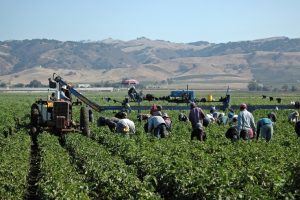 (Beyond Pesticides, January 11, 2019) Plans to weaken farmworker protections from toxic pesticides were dropped by Acting U.S. Environmental Protection Agency (EPA) Administrator Andrew Wheeler, according to an undated letter sent to Senator Tom Carper (D-DE) late last year. Reports indicate the action was part of a deal cut by both parties that permitted confirmation of
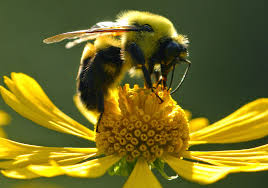
 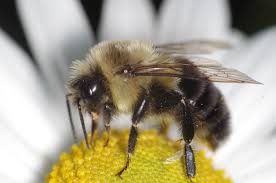 (Beyond Pesticides, January 9, 2019) It is news to approximately no one that pollinators are in trouble worldwide. A series of papers by biologists at the University of Guelph, Ontario, posits that pesticide regulations aimed at protection of honey bees fall far short of the critical task of protecting the multitude of bee species that are important pollinators of human food crops. These recent papers arose from 2017 workshops that involved 40 bee researchers from various universities, and representatives from Canadian, U.S., and European regulatory agencies, and from the agrochemical industry.
 (Beyond Pesticides, January 8, 2019) At the end of December, the U.S. Department of Agriculture (USDA) finalized

 (Beyond Pesticides, January 7, 2019) As the dust settles on the final Farm Bill, which passed the U.S. Senate and House of Representatives last month, it is clear that neither the substance nor the process on a range of issues meet the urgent need to address key sustainability issues that put the future in peril.
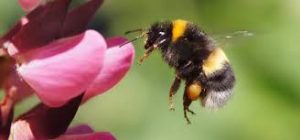 (Beyond Pesticides, January 4, 2019) First, the good news: plaintiffs in a
  (Beyond Pesticides, January 3, 2019) Bee-toxic pesticides
  (Beyond Pesticides, January 2, 2019) The “indoor microbiome” of yoga studios and other athletic facilities often contain significant levels of antibacterial chemicals like
  (Beyond Pesticides, December 21-31, 2018) As we look ahead to the new year, we wish you good health, extend our appreciation for your being a part of the Beyond Pesticides network, and ask you to consider a contribution to Beyond Pesticides. Your support is critical to our program and deeply appreciated.
 (Beyond Pesticides, December 21, 2019)
  (Beyond Pesticides, December 20, 2018) Using low doses of the herbicide paraquat and common proteins found in food called lectins, researchers were able to recreate the symptoms of Parkinson’s disease in rats. Results of this study,
  (Beyond Pesticides, December 19, 2018) As the dust still settles on the final Farm Bill, which passed the U.S. Senate and House of Representatives last week, it is clear that neither the substance nor the process on a range of issues meet the urgent need to address key sustainability issues that put the future in peril.
 (Beyond Pesticides, December 18, 2018) The ingredients not listed on a pesticide product are not fully reviewed for their adverse effects may be the most toxic chemicals in the formulation. Recent research, Toxicity of formulants and heavy metals in glyphosate-based herbicides and other pesticides (Toxicology Reports 5, 2018), by Defarge, de Vendômois, and Séralini demonstrates the need to disclose and test all ingredients in pesticide products, as well as the full formulation that includes “inert” or nondisclosed ingredients. While glyphosate/Roundup is obviously not allowed to be used in organic production, this research reaffirms the need to evaluate full formulations of substances allowed for use in organic.
 (Beyond Pesticides, December 17, 2018) Cardiovascular disease is a major cause of poor health and mortality across the world. Much is known about congenital and behavioral contributors to the disease, yet to date, little research has focused on potential environmental factors, including the possible contribution to cardiovascular disease (CVD) of exposures to toxic chemicals in the workplace.
 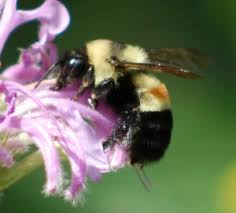 (Beyond Pesticides, December 14, 2018) The richness, diversity, and abundance of wild bumblebees in Vermont has plummeted over the last century, according to an
 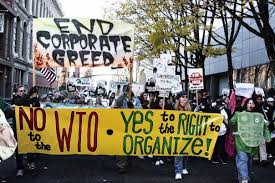 (Beyond Pesticides, December 13, 2018) The U.S. is pushing back against international standards that restrict pesticides by appealing to the World Trade Organization (WTO) to intervene. At issue are new EU maximum residue levels (MRLs) on food for the following pesticides: buprofezin, diflubenzuron, ethoxysulfurom, ioxynil, molinate, picoxystrobin and tepraloxydim.
 (Beyond Pesticides, December 12, 2018) Costa Rica is currently experiencing exponential growth in its banana and pineapple farming industries and with it an increase in intensive pesticide applications. Recent
  (Beyond Pesticides, December 11, 2018) Meltwater and runoff from Alaskan glaciers contain detectable levels of organochlorine pesticides that bioconcentrate in fish and put individuals at risk, according to a new study from researchers at the
 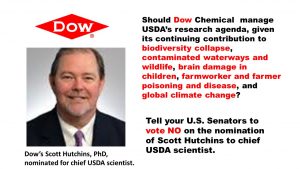 (Beyond Pesticides, December 10, 2018) The Senate Agriculture Committee has cleared the way for the whole U.S. Senate to vote on the confirmation of Scott Hutchins, PhD, recently retired from research and management at what is now the agricultural division of DowDuPont, as chief scientist at the U.S. Department of Agriculture (USDA). If confirmed, he will become the third member of Dow’s pesticide and seed division to hold a high-level position in the Trump administration’s USDA.
 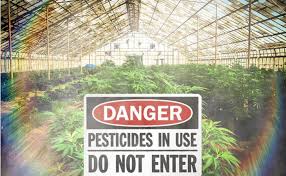 (Beyond Pesticides, December 7, 2018) As medicinal and recreational marijuana continue to be legalized in various states,
  (Beyond Pesticides, December 6, 2018) A
  (Beyond Pesticides, December 5, 2018) The Environmental Protection Agency


