





06
Sep
Farmers’ Greater Risk of Diabetes Linked to Pesticide Exposure
(Beyond Pesticides, September, 2017) A recently released report, Gallup-Sharecare State of Well-Being: The Face of Diabetes in the United States, looks at high diabetes rates across various U.S.  demographic groups, including those in farming. People working in the transportation sector registered the highest incidence of diagnosed diabetes at 10.6%. But those working as farmers and fishermen came in second, with 8.5% reporting a diagnosis of the disease.
Based on a self-reporting survey, The Face of Diabetes in the United States did not differentiate between Type 1 diabetes (which typically manifests in childhood or young adulthood) and Type 2 diabetes (which commonly emerges in adulthood). It did, however, consider lifestyle risk factors that can influence development of each form of the disease.
The “farmer and fisher” folks placed more-or-less in the mid-range among all occupations vis-à-vis several of the lifestyle factors that can impact development of the disease (smoking, diet, and obesity), and a bit higher in alcohol consumption, but in fact, reported more exercise than any other category of worker. These data points would seem to suggest that farmers would be at less risk than those in some other occupational categories. For instance, those working in “installation and repair” reported higher rates of obesity, smoking, alcohol consumption, and poor diet, and lower rates of exercise, yet experienced only a 6.2% rate of diabetes diagnosis. The Gallup-Sharecare report asks what might account for such a high incidence in the agricultural sector, and then identifies a particular potential explanation.
New Food Economy suggests that the answers may well be related to factors the report did not consider: exposure to toxic chemicals in farmers’ work environments — specifically, insecticides and herbicides. Numerous studies have found evidence that such exposures elevate the risk of developing diabetes.
Age may be a factor that — on its own — increases diabetes risk; given the higher average age of farmers (58.3 in 2012) compared with that of other occupational groups, this might offer some explanation of farmers’ higher diabetes rate.
The long-term Agricultural Health Study (AHS) of 89,000 farmers who had exposures through application of pesticides, and their spouses, was launched in 1993 by the National Cancer Institute. The study reported in 2008 that participants who had exposure to three kinds of toxic pesticides — the organochlorines aldrin, chlordane, and heptachlor; the organophosphates dichlorvos and trichlorfon; and the herbicides alachlor and cyanazine — had (after controls for age and BMl, or body mass index) increased risk of developing diabetes.
A 2014 study, using data from the AHS, reviewed 13,637 female spouses (of farmers) who had themselves mixed or applied any of 50 different pesticides, and found increased associated diabetes risk from exposure to specific organochlorines and organophosphates. Matt Kelly of New Food Economy, says, “These AHS-based studies draw on and are part of a growing body of research that suggests the organochlorine pesticides and other organic pollutants that persist in our environment over time are connected to increased risk of diabetes among different populations of people.” A 2016 meta-study (of 22 other studies) pointed to an association between organochlorine pesticide exposures and development of Type 2 diabetes.
Evidence continues to implicate toxic pesticide use in development of a number of human diseases, including diabetes, though the mechanisms are not yet always clear. It is thought that, generally, the organic compounds in pesticides that don’t readily decompose through typical chemical, photolytic, or biological processes bind to particular human proteins and receptors that tend to mediate functions such as insulin production, glucose metabolism, and glucose homeostasis — and then disrupt those processes.
Beyond Pesticides has also noted that evidence points to endocrine disruption as a potential mechanism: “The interactions and mechanisms of toxicity of endocrine-disrupting chemicals (EDCs) in relation to human general health problems, especially those broadening the term of endocrine disruption to ‘metabolic disruption,’ should be deeply investigated. These include endocrine disturbances, with particular reference to reproductive problems and breast, testicular, and ovarian cancers, and metabolic diseases such as obesity and diabetes.”
EDCs generally cause disruption because their molecular structure mimics closely that of molecules that are part of normal endocrine processes. ED chemicals, of course, have no business binding to the receptor sites meant for those endemic processes, but they can, and can thus disrupt normal endocrine function. For example, a University of Buffalo study has linked carbamate pesticides to diabetes. Researchers discovered that the insecticides carbaryl and carbofuran were structurally similar enough to melatonin that they “showed affinity for” melatonin receptors, and could potentially affect glucose homeostasis nd insulin secretion.
Another possible mechanism is the alteration of normal functioning of the gut microbiome — in ways that contribute to the development of diabetes — as toxic pesticides are metabolized by microbes in the human gut. A group of scientists at Madurai Kamaraj University in India, for example, reported in 2016 on their research indicating that organophosphate insecticides may cause diabetes through this mechanism.
There are approaches to agricultural challenges that inflict far less risk on those who work in the sector, as well as the general population. Beyond Pesticides remarks, on the Pesticide-Induced Diseases Database page on diabetes, “There are no groups in the human population that are completely unexposed to pesticides. Development of eco-friendly pesticide alternatives and Integrated Pest Management (IPM) techniques is desirable to reduce the impacts of pesticides.”
There are myriad ways to avoid pesticide exposures, and to help protect farm workers by advocating for nontoxic solutions to agricultural challenges that too many farms continue to address with toxic chemicals. The power of the consumer purse is also not to be underestimated. Buying and consuming organic (or at least “sustainably produced”) foods as much as possible sends a strong signal to producers, leverages more organically grown food, and can improve health outcomes for all.
Sources: The New Food Economy: Why do so many farmers have diabetes, and Gallup-Sharecare State of American Well-Being: The Face of Diabetes in the United States.

 (Beyond Pesticides, September 5, 2017) The bog copper butterfly (Lycaena epixante) is a member of the second largest family of butterflies, Lycaenidae, which includes over 4,700 species worldwide. Also known as the cranberry-bog copper butterfly, the species has strong biological ties to cranberry plants and its associated habitat.
 (Beyond Pesticides, September 1, 2017)
  agricultural areas increases the risk of giving birth to a baby with abnormalities. These results are more significant for those exposed to very high levels of pesticides, underscoring the continued risks faced by farmworkers and farmworker families, especially mothers living near chemically-intensive treated fields.
 pesticides from the market, according to a study recently published by
  Environmental Protection Agency (EPA) for pregnant women. Chlorpyrifos is linked to low IQs, autism and other developmental neurological effects. Earlier this year, EPA Administrator Scott Pruitt refused to ban chlorpyrifos to the dismay of many scientists, medical professionals, and farmworker organizations.
 (Beyond Pesticides, August 28, 2017) School policies must protect children from pesticides by adopting organic land and building management policies and serving organic food in cafeterias. At the start of the school year, it is critical for school administrators to make sure that students and teachers are learning and teaching in an environment where no hazardous pesticides are used in the school’s buildings or on playing fields. It is also essential that children have access to organic food in food programs and manage school gardens organically.
 (Beyond Pesticides, August 25, 2017) While organic agriculture still represents only a fraction of the world’s food production, organic food sales have enjoyed remarkable growth over the past couple of decades, which is captured in a recent article,
  (Beyond Pesticides, August 24, 2017) Common pesticides used on canola crops significantly reduce bumblebee egg laying and may lead to local population extinction, according to new research published in the journal Nature by scientists at the Royal Holloway University of London. This is the latest study to investigate how neonicotinoids, insecticides
 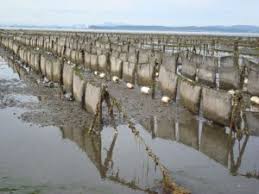 with an expansion of industrial shellfish aquaculture on the Washington state coast without any water quality or marine life protections from pesticide use and habitat loss. This is just the latest in efforts to protect sensitive coastal areas in Washington from shellfish farming that is contributing to increased pesticide use and environmental degradation.
 (Beyond Pesticides, August 22, 2017) Streams in the Midwestern U,S. are polluted with complex mixtures averaging over 50 pesticides each, according to a U.S. Geological Survey (USGS) report published earlier this month. This is the latest and also most extensive study on pesticide contamination in U.S. streams to date. The shocking results put many aquatic plants and animals at existential risk, leading health and environmental advocates to ask how the federal government can continue to permit U.S. streams to be used as a mixing bowl for toxic pesticide compounds.
 National Organic Program (NOP) is currently undermining this central organic principle. During a National Organic Standards Board (NOSB) webinar, NOP Deputy Administrator Miles McEvoy extolled the new “flexibility” of his program in allowing organic certification of operations not permitted by regulations. Although the webinar focused on the program’s allowance of hydroponics, Mr. McEvoy’s comments apply to a wide variety of permitted practices for which USDA has yet to approve standards.
 more interested in eating healthfully and knowing more about the sourcing of their food. The bloom may be coming off the rose just a bit, as people respond to a variety of concerns, including pricing; some perception of “preciousness” or elitism about the movement; the occasional “food fraud” — cutting corners and/or “greenwashing” — perpetrated by those looking to cash in on the trend without delivering the real goods; and ethical concerns rooted in a growing recognition of health, safety, and inequality problems in the U.S.
 2015, the
  contaminated with the insecticide
 inue its food uses. [The bill is currently co-sponsored by Senators Cory Booker (D-NJ), Ben Cardin (D-MD), Richard Durbin (D-IL), Kirsten Gillibrand (D-NY), Kamala Harris (D-CA), Ed Markey (D-MA), and Jeff Merkley (D-OR).]
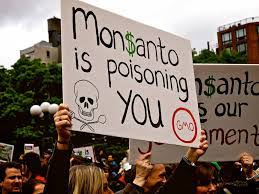 its efforts to hide information about impacts of its popular glyphosate-based herbicide, Roundup. This follows on the heels of the March 2017 unsealing, by federal judge Vince Chhabria, of internal Monsanto documents — the “
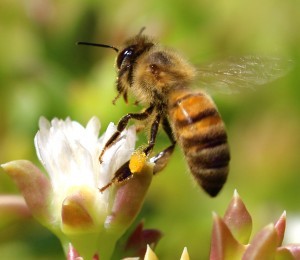 these numbers may seem to be a positive sign after over a decade of consistent pollinator declines, they are more indicative of a beekeeping industry that is using every available tactic possible to stay viable. With the continued use of highly toxic neonicotinoid insecticides in farms, gardens, and public spaces throughout the country, the long-term health honey bees and other pollinators continue to be in jeopardy.
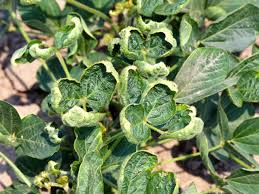 chemical used in genetically engineered (GE) fields. Dicamba, a toxic pesticide prone to drift off the target site, has been used in agriculture for decades. However, new GE crops developed by Monsanto must be paired with specific formulations of dicamba, and until now many believed these drift incidents were the result of illegal formulations of dicamba being applied to fields. But the extent of damage now being observed, covering over 2.5 million acres, is casting doubt on this theory, and raising more questions as to whether the new dicamba formulation is actually the cause of the widespread drift damage.
 during the cabbage planting cycle
 Grassroots advocates who supported passage of the Healthy Lawns Act to protect children, families and the environment are dismayed by the court’s ruling, but nevertheless vow to keep up the fight for protections from hazardous pesticides used in their community. “The court should have recognized that, in restricting lawn pesticides throughout its jurisdiction, Montgomery County is exercising a local democratic principle under Maryland and federal law to ensure the safety of the community, including children, pets, and the environment, from a known hazard not adequately regulated by the U.S. Environmental Protection Agency or the state,” said Jay Feldman, executive director of Beyond Pesticides. “After extensive hearings and study, the county council understands that toxic chemicals are dangerous and not needed to have beautiful lawns and landscapes,” Mr. Feldman said.


