





12
Jul
USDA Shuts Down Data Collection on Honey Bees
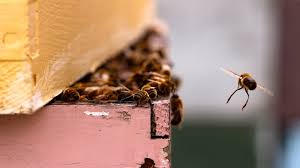 (Beyond Pesticides, July 12, 2019) The U.S. Department of Agriculture (USDA) announced, on Saturday, July 6 that it would suspend indefinitely the data collection for its Honey Bee Colonies survey and report. The move came, tellingly, less than three weeks after the Environmental Protection Agency (EPA) once again approved “emergency” uses of the pesticide sulfoxaflor, a bee-killing compound similar to the notorious neonicotinoids, insecticides that contribute significantly to the phenomena of pollinator collapse (“colony collapse disorder”) and massive insect loss (“insect apocalypse”) that are underway worldwide.
Sulfoxaflor is one of the many toxic pesticides that threaten honey bees, which are critical pollinators responsible for one-third of the food we humans consume. Permitting its use and then ceasing to collect and report data on the status of honey bees that are likely to be impacted is not only a recipe for kneecapping the study of bee decline and imperiling the food supply, but also, another example of the corruption for which this administration is infamous. As The Huffington Post reported, “Critics say the USDA’s move is the latest evidence of the Trump administration’s war on science, and its goal of suppressing information about serious environmental harms increasing under Donald Trump’s presidency.” Union of Concerned Scientists economist Rebecca Boehm opined to CNN, “This is yet another example of the Trump administration systematically undermining federal research on food safety, farm productivity and the public interest writ large.”
The USDA survey and report had been conducted annually since 2015, through its National Agricultural Statistics Service, to help scientists, farmers, and ultimately, policy makers, understand what has been happening to these pollinators and how to address the crisis. As Common Dreams identifies, “The number of honey bee hives in the U.S. dropped from about six million in 1947 to just 2.4 million in 2008, with 2018 being the worst year on record for hive loss. Beekeepers reported last year that 40 percent of honey bee hives had collapsed, due to a combination of factors including the use of pesticides.”
In 2015, EPA’s unconditional 2013 registration of sulfoxaflor was challenged by plaintiff beekeepers, and overturned by the federal Ninth Circuit Court of Appeals on the basis of EPA’s having approved use of the compound absent reliable studies on the pesticide’s impacts on honey bee colonies. But in 2016, sulfoxaflor’s registration was amended to proscribe use on crops such as sorghum and cotton, which attract bees. Yet EPA regularly uses an “emergency exemption” rule (authorized under Section 18 of FIFRA, the Federal Insecticide, Fungicide, and Rodenticide Act) to act around such restrictions. In June, as mentioned above, EPA permitted “emergency” uses of sulfoxaflor on cotton and sorghum crops, which could affect as many as 14 million acres. As of 2017, EPA had granted 78 “emergency” exemptions for sulfoxaflor — a pesticide that EPA itself concluded is highly toxic to bees. In 2018, EPA approved treatment of 16.2 million acres with sulfoxaflor under the “emergency” exemption.
The Center for Biological Diversity provides important context for the June exemption: “The approval includes 2019 crops of cotton and sorghum in Alabama, Arkansas, California, Georgia, Kansas, Louisiana, Missouri, Mississippi, Tennessee, Texas and Virginia. Ten of the 11 states have been granted the approvals for at least four consecutive years for the same ‘emergency.’ Five have been given approvals for at least six consecutive years. ‘The only emergency here is the Trump EPA’s reckless approval of this dangerous bee-killing pesticide,’ said Lori Ann Burd, environmental health director at the Center for Biological Diversity. ‘It’s sickening that even amid the current insect apocalypse, the EPA’s priority is protecting pesticide industry profits.’” She added, “This administration has been grossly abusing this exemption to allow the use of this one pesticide called sulfoxaflor on a vast acreage year after year.”
EPA’s statement announcing this most recent exemption says, “Pollinator protection efforts remain critical, even under emergency conditions. For each emergency exemption, mitigation measures were put in place to minimize exposure and reduce the potential for unreasonable risks to the environment. The approvals include advisory guidance for protecting bees, and users must also follow all existing EPA guidance for pollinator protection.” The EPA Office of the Inspector General (OIG) has recognized the misuse of FIFRA Section 18, and introduced some reality about EPA’s actual commitment to pollinator protection when it wrote in 2018 that EPA “does not have outcome measures in place to determine how well the emergency exemption process maintains human health and environmental safeguards.”
The OIG also noted that, “The program office also does not have comprehensive internal controls to manage the emergency exemption data it collects,” and “OPP [Office of Pesticide Programs] does not consistently communicate emergency exemption information with its stakeholders.” Beyond Pesticides added: “Section 18 is intended to be utilized for unanticipated, urgent, and short-lived pest situations. Instead, it is harnessed as an effective, chronic workaround [of] FIFRA registration and appropriate limits of use.”
Beyond Pesticides opposes the current misuse of Section 18 of FIFRA. During the past decade, Beyond Pesticides’ monitoring of the situation has noticed increasing numbers of state requests for Section 18 exemptions to control a variety of resistant weed and insect pests. Exemptions are frequently approved for such requests. Of course, herbicide-resistant weeds and organisms have proliferated across the U.S. in the last 10 years as a predictable consequence of pesticide use. The argument has been made that such sequelae hardly constitute an “emergency.”
The problems of pesticide-induced impacts — on the health of pollinators, humans, and other organisms; the environmental toxicity and harm that pesticides cause; and the serious and emergent issue of resistance — call out for a real fix: adoption of organic land management practices in the agricultural sector. Such practices can prevent disease and infestation, and are a long-term, sustainable approach that would end reliance on chemically intensive controls that exacerbate the problems that are currently the “easy” remedy to which most farming operations turn.
All unattributed positions and opinions in this piece are those of Beyond Pesticides.

 (Beyond Pesticides, July 11, 2019) Pregnant mothers with higher concentrations of pesticide metabolites (breakdown products) in their urine are more likely to have children who develop symptoms of Attention Deficit/Hyperactivity Disorder (ADHD), according to research conducted by the University of Southern Denmark and Odense University Hospital. The results of this study are consistent with past findings from
  (Beyond Pesticides, July 10, 2019) The California Coastal Commission will host a public hearing today on a U.S. Fish and Wildlife Service (USFWS) proposal to drop 1.5 tons of the rodenticide brodifacoum, an extremely potent anticoagulant, on the Farallon Islands National Wildlife Refuge.
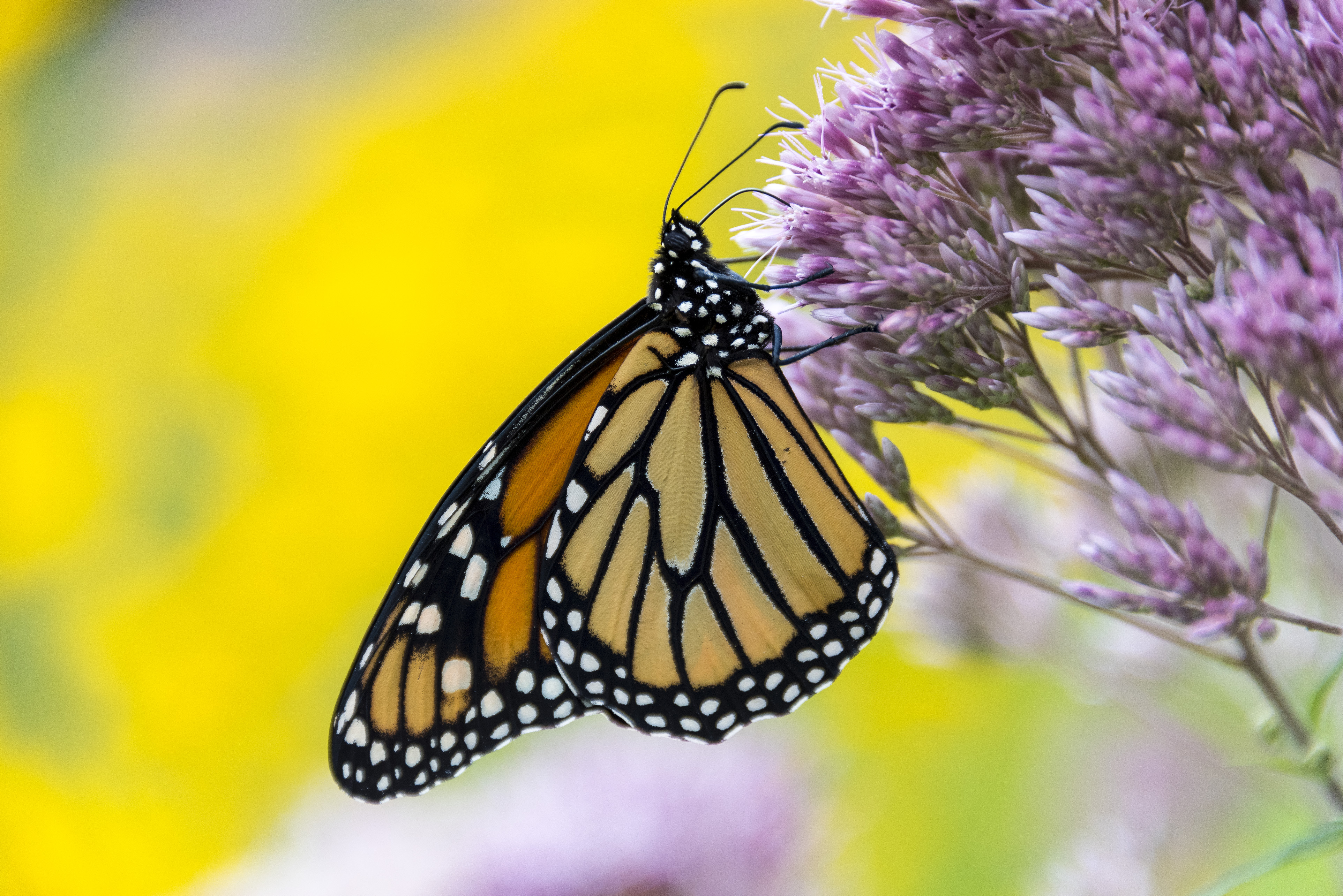 (Beyond Pesticides, June 8, 2019) Scientists studying the precipitous decline in populations of monarch butterflies are searching for causes, and
  (Beyond Pesticides, July 5, 2019) This is a story about a chemical pesticide, a fungicide, in wide use for which the mode of action, i.e., the ability to cause harm, has not been fully understood. It is not a story unique to this pesticide. Rather, it is an important story to consider when deciding to use a pesticide or allowing a pesticide to be used. The question is whether the chemical could be broadly problematic beyond the target organisms, in this case fungi? In its coverage of a study published in March, the
 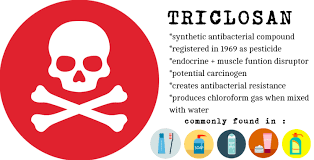 (Beyond Pesticides, July 3, 2019) A disturbing association between urinary triclosan concentrations and osteoporosis has been identified in an epidemiological study. Drawing from the National Health and Nutrition Examination Survey (NHANES) results for 1,848 U.S. adult women, the authors conclude that higher concentrations of urinary triclosan are associated with lower bone mass density and higher prevalence of osteoporosis among U.S. adult women.
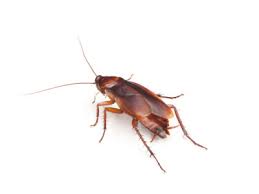 (Beyond Pesticides, July 2, 2019) German cockroaches, the bane of many apartment-dwellers throughout the U.S., can rapidly develop cross-resistance to insecticides they have never been exposed to, according to researchers from Purdue University. “This is a previously unrealized challenge in cockroaches,” said Michael Scharf, PhD, whose findings were published in the journal
 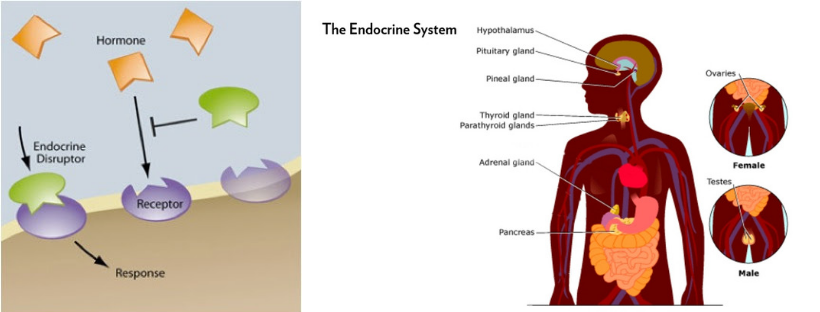 (Beyond Pesticides, July 1, 2019) France made a decision in May to ban a widely-used fungicide because it damages the endocrine system. In contrast, there has been a stark failure to protect health in the U.S. Despite a Congressional mandate, EPA is not acting on
 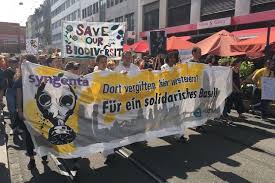 (Beyond Pesticides, June 28, 2019) As is the case in many countries, the conversation about the use of pesticides has been especially vigorous in the past few years. Switzerland is a case in point: it is undergoing deep scrutiny of pesticide use, and the
 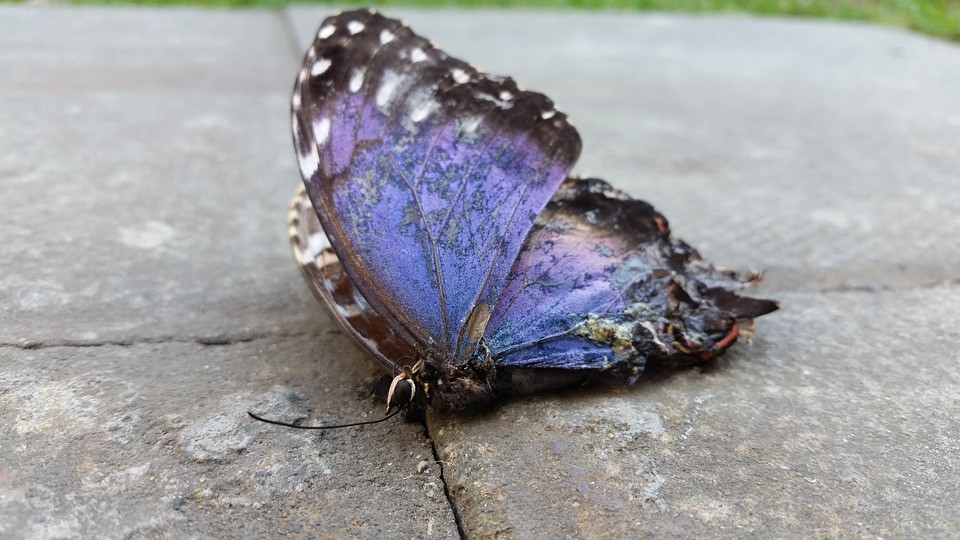 (Beyond Pesticides, June 27, 2019) A review of scientific literature urges for swift societal action on the collapse of insect populations worldwide, according to authors of a study. The authors point out that while there is a need for more research on the extent of the phenomenon as well as causal factors, there is currently sufficient evidence to spur and inform transformational policy in response to a definite worldwide crisis. The paper, Declines in insect abundance and diversity: We know enough to act now, provides a run-down of actions to take—from national policy to apartment balconies.
 (Beyond Pesticides, June 26, 2019) “We were drooling excessively. My eyes would not stop watering,”
  (Beyond Pesticides, June 24, 2019) A
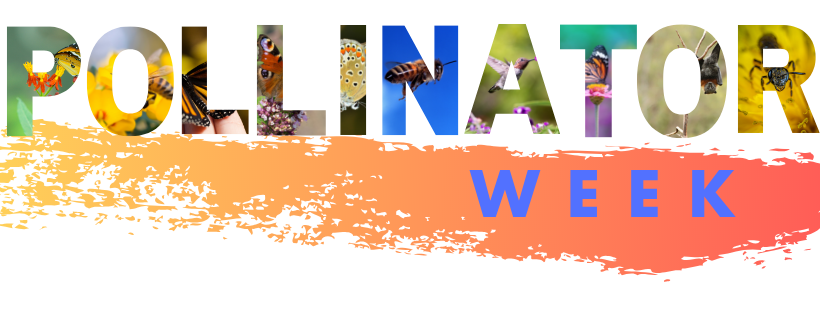
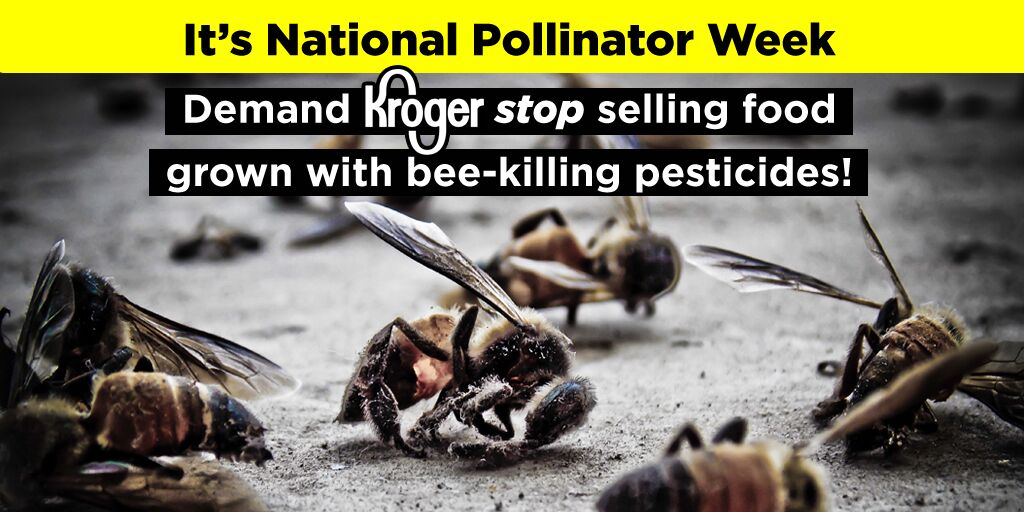 (Beyond Pesticides, June 19, 2019) To mark National Pollinator Week (June 17-23), more than 10,000 people across the country are joining to demand that Kroger (NYSE: KR) help stop the extreme decline of pollinators. Customers are delivering letters to stores asking the nation’s largest conventional grocery store to eliminate pollinator-toxic pesticides from its food supply chain and increase domestic organic food offerings to help stop the catastrophic decline of pollinators and other insects.
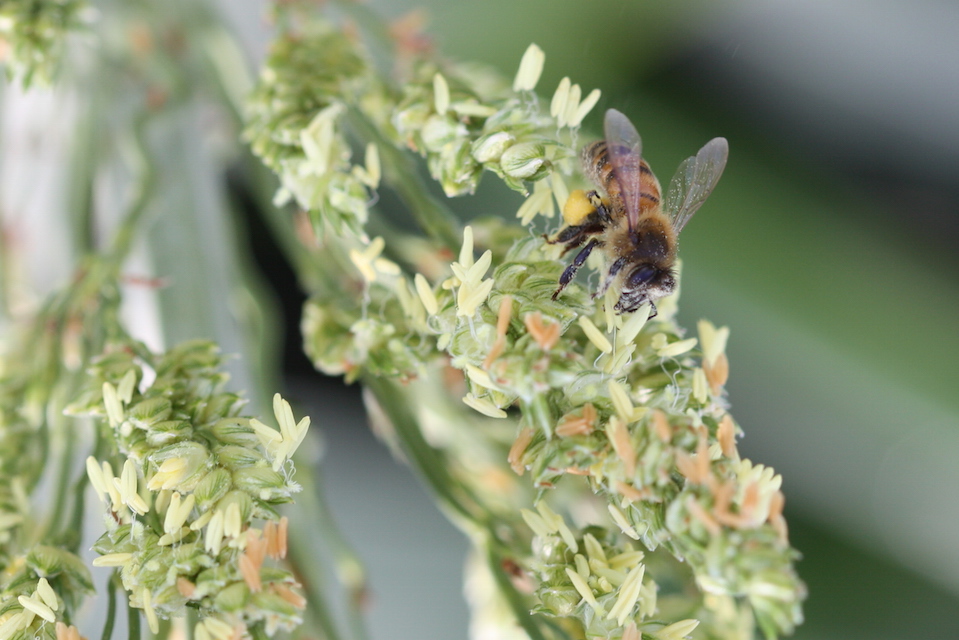 (Beyond Pesticides, June 19, 2019) On June 17, 2019, the Environmental Protection Agency (EPA) once again approved “emergency” uses of sulfoxaflor, a bee-toxic insecticide, on millions of acres of crops that are attractive to bees. Sulfoxaflor is functionally identical to the neonicotinoid class of
  (Beyond Pesticides, June 18, 2019) As the New York Times wrote in November 2018, “
 (Beyond Pesticides, June 17, 2019) During Pollinator Week, starting June 17, ask your elected representative in Congress to support pollinators by co-sponsoring Saving America’s Pollinators Act (SAPA). If they are already a cosponsor, use the occasion to thank them for their leadership on this critical issue.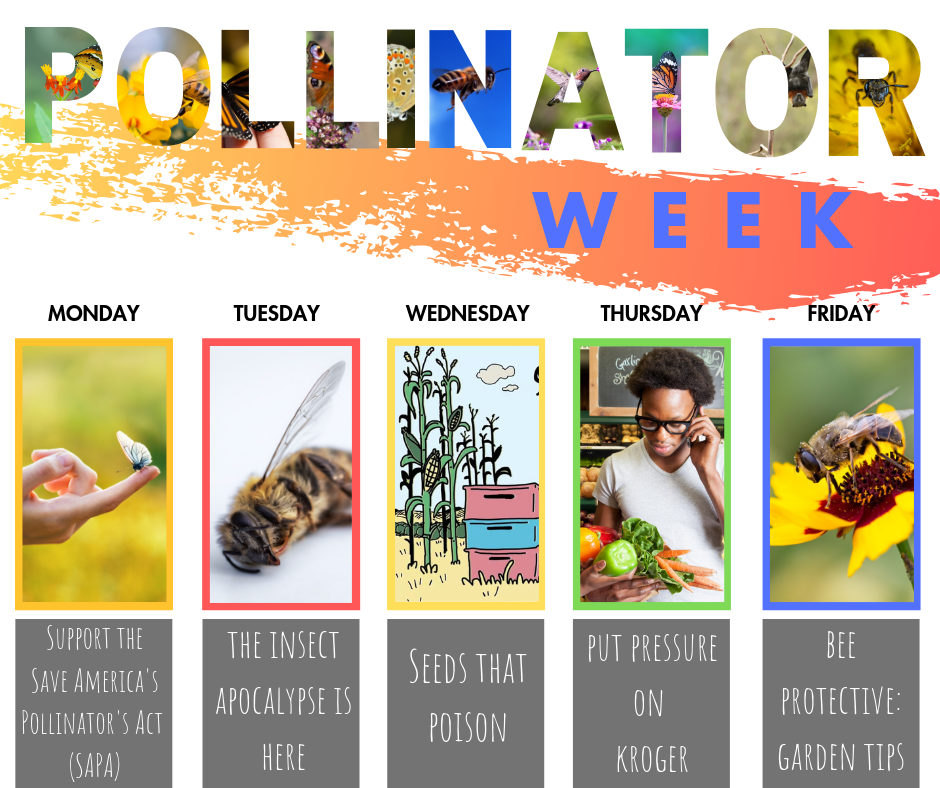
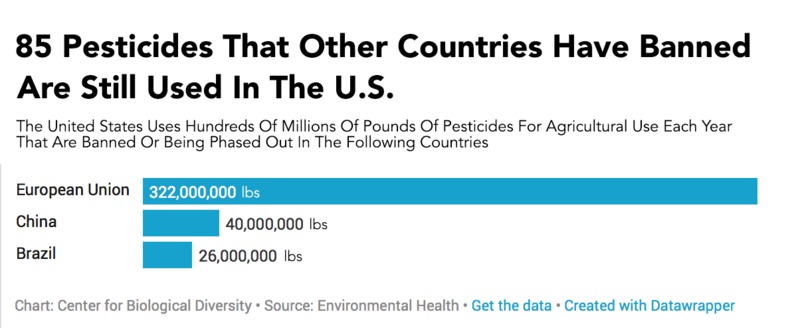 “It’s appalling the U.S. lags so far behind these major agricultural powers in banning harmful pesticides,” said Nathan Donley, PhD, a senior scientist with the Center for Biological Diversity and author of the study. “The fact that we’re still using hundreds of millions of pounds of poisons other nations have wisely rejected as too risky spotlights our dangerously lax approach to phasing out hazardous pesticides.”
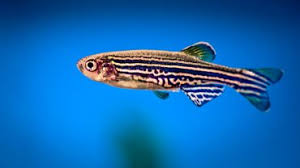 (Beyond Pesticides, June 12, 2019) A new study finds that the widespread insecticide fipronil causes transgenerational toxicity across generations of zebrafish. Fipronil, already known to be highly toxic to aquatic organisms, is now implicated in causing even more damage than previously thought. Even individuals who are not themselves directly exposed are shown to suffer from maternally transmitted toxic effects, including a more than doubled mortality rate.
 (Beyond Pesticides, June 11, 2019) Genetically engineered (GE) wheat developed to tolerate repeated applications of Bayer Monsanto’s Roundup herbicide has been discovered in a farm field in Washington State. The U.S. Department of Agriculture (USDA) has never approved a GE wheat variety for commercial production, making the incident a potential economic export risk. In the past, Asian and European countries have temporarily blocked purchases of U.S. wheat as a result of GE contamination. Organic and non-GE farmers are also at risk as any contamination with non-GE varieties can result in loss of certifications and price premiums.


