02
Jul
Cockroaches Rapidly Develop Resistance to Nearly Every Pesticide, Requiring Alternative Approach
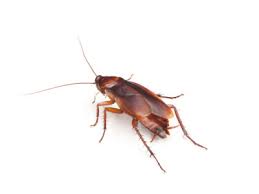 (Beyond Pesticides, July 2, 2019) German cockroaches, the bane of many apartment-dwellers throughout the U.S., can rapidly develop cross-resistance to insecticides they have never been exposed to, according to researchers from Purdue University. “This is a previously unrealized challenge in cockroaches,” said Michael Scharf, PhD, whose findings were published in the journal Scientific Reports. “Cockroaches developing resistance to multiple classes of insecticides at once will make controlling these pests almost impossible with chemicals alone.” In the face of pesticide resistance, integrated measures that focus structural, mechanical, and cultural pest management practices must become standard practice for this notorious pest.
Dr. Scharf and his colleagues began their study at two separate housing complexes in Indianapolis, IN and Danville, IL. Prior to the study, researchers pre-treated a subset of cockroaches in each building, and selected five insecticides out of 14 commercially available. These insecticides – abamectin, pyriproxyfen, thiamethoxam, lambda-cyhalothrin, and boric acid, were used because cockroaches had already developed significant resistance to others tested, mostly synthetic pyrethroids. Pre-treatment applications of synthetic pyrethroids revealed over 80% of cockroaches surviving.
For the insecticides left with any level of efficacy, researchers established three separate treatment approaches, and stuck with it for six months, with one application each month, to test for additional changes in resistance. In the first, only the insecticide abamectin was applied. In the second, a mixture of insecticides was applied. And for the third, insecticides were rotated each month.
Overall, all the treatment regimens established fared very poorly against German cockroaches. Only the single abamectin treatment showed any promise in one housing complex. At the Indianapolis location, cockroaches were found to be susceptible to the chemical beforehand, and numbers decreased significantly after two applications. However, at the Danville location, roughly 10% were already resistant to abamectin, which permitted their population to flourish after the first application.
Rotating the insecticides used each month resulted in cockroach populations that were relatively stable or increased, while the treatment with a mixture of pesticides resulted in a population explosion. And researchers found that for cockroaches that survived after an application of one chemical didn’t develop resistance merely to that one chemical or even class of chemicals, they also developed resistance to pesticides in other chemical classes. This occurred even if they had never been exposed to these new pesticides in their life.
“We would see resistance increase four- or six-fold in just one generation,” Dr. Scharf said. “We didn’t have a clue that something like that could happen this fast.”
The research results track what farmers are experiencing in agriculture as a result of pressure from agrichemical and insurance companies to spray or grow pesticide-incorporated genetically engineered (PI-GE) crops as a preventative practice. A 2013 study found that “stacking” multiple toxin-producing genes into PI-GE corn crops produced resistance effects in corn earworms similar to what Dr. Scharf and his team discovered. Researchers assumed that earworms resistant to one toxin would survive on one-toxin plants, but die when consuming two-toxin plants because they had not yet developed resistance to the new formulation. However, as Dr. Carrière, Yves Carrière, PhD, lead author of the GE study explains, “[O]n the two-toxin plants, the caterpillars selected for resistance to one toxin survived significantly better than caterpillars from a susceptible strain.”
And in crop fields repeatedly doused with herbicides, a 2018 study by scientists at University of Sheffield in the United Kingdom (UK) determined that herbicide use was not only the major, but the singular factor driving weed resistance. Other factors, such as cultural techniques, or herbicide rotations could not ameliorate resistance at all. And like cockroaches, weed resistance to one herbicide was likely to drive increasingly rapid resistance to other, different chemical formulations.
As Dr. Scharf’s work indicates, integrated methods to address pests are critical to an effective treatment plan. And there is no doubt it is important to control cockroaches, as they increase risk of asthma, and can carry a number of human pathogens. But it is simply not enough to spray a pesticide and assume the job is done. In fact, you may be creating an even worse pest problem.
To manage cockroaches, focus in denying them access to the necessities of life –food, water, and shelter. Seal up cracks and crevices that may allow entryway, install doorsweeps to further impede movement, and make sure food and water is never left out, and all surfaces are clean/vacuumed. Throughout the process, monitor populations with traps to gauge areas of activity, and the intensity of the infestation. Once you have done everything you can to deny food, water, and shelter, employ the only insecticide in the study scientists say cockroaches did not develop a resistance to: boric acid. Place boric acid bait gels around areas of activity, but don’t let up on sanitation or structural repairs. For a step-by-step checklist and guide to take care of a German cockroach problem, see Beyond Pesticides ManageSafe entry on this atrocious pest.
All unattributed positions and opinions in this piece are those of Beyond Pesticides.

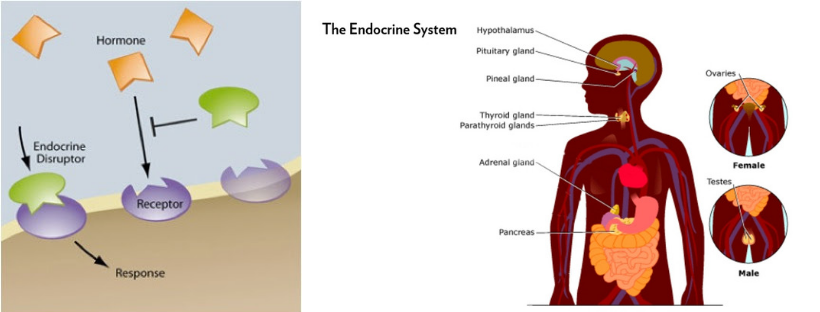 (Beyond Pesticides, July 1, 2019) France made a decision in May to ban a widely-used fungicide because it damages the endocrine system. In contrast, there has been a stark failure to protect health in the U.S. Despite a Congressional mandate, EPA is not acting on
  (Beyond Pesticides, June 28, 2019) As is the case in many countries, the conversation about the use of pesticides has been especially vigorous in the past few years. Switzerland is a case in point: it is undergoing deep scrutiny of pesticide use, and the
 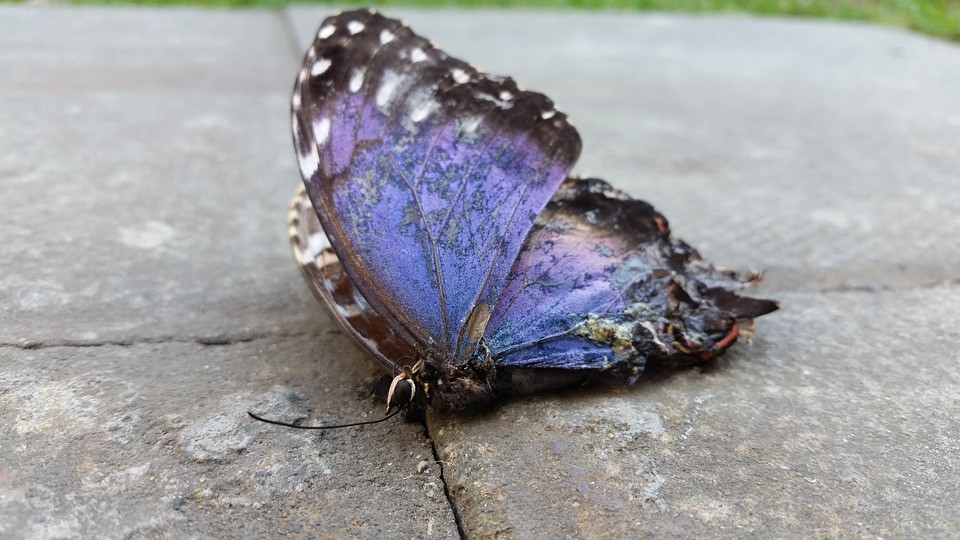 (Beyond Pesticides, June 27, 2019) A review of scientific literature urges for swift societal action on the collapse of insect populations worldwide, according to authors of a study. The authors point out that while there is a need for more research on the extent of the phenomenon as well as causal factors, there is currently sufficient evidence to spur and inform transformational policy in response to a definite worldwide crisis. The paper, Declines in insect abundance and diversity: We know enough to act now, provides a run-down of actions to take—from national policy to apartment balconies.
 (Beyond Pesticides, June 26, 2019) “We were drooling excessively. My eyes would not stop watering,”
  (Beyond Pesticides, June 24, 2019) A
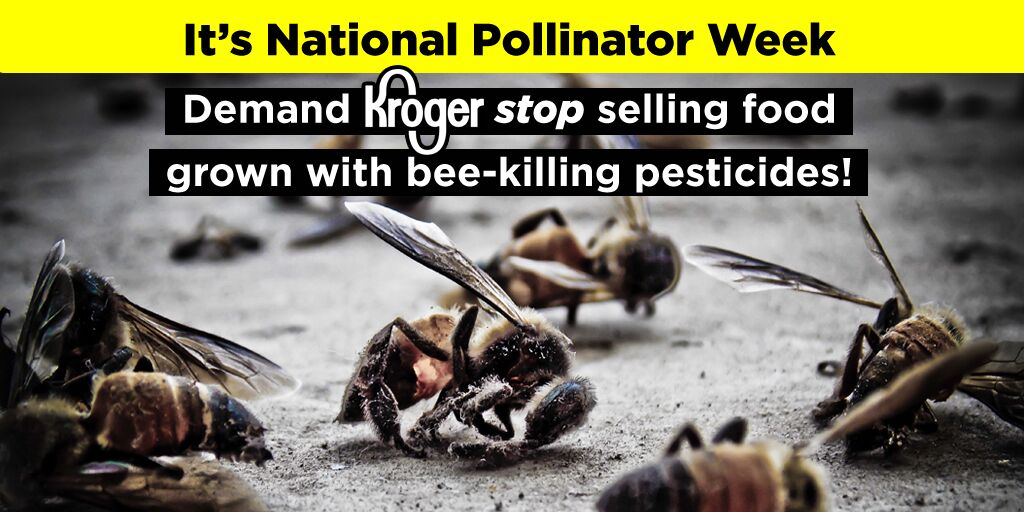 (Beyond Pesticides, June 19, 2019) To mark National Pollinator Week (June 17-23), more than 10,000 people across the country are joining to demand that Kroger (NYSE: KR) help stop the extreme decline of pollinators. Customers are delivering letters to stores asking the nation’s largest conventional grocery store to eliminate pollinator-toxic pesticides from its food supply chain and increase domestic organic food offerings to help stop the catastrophic decline of pollinators and other insects.
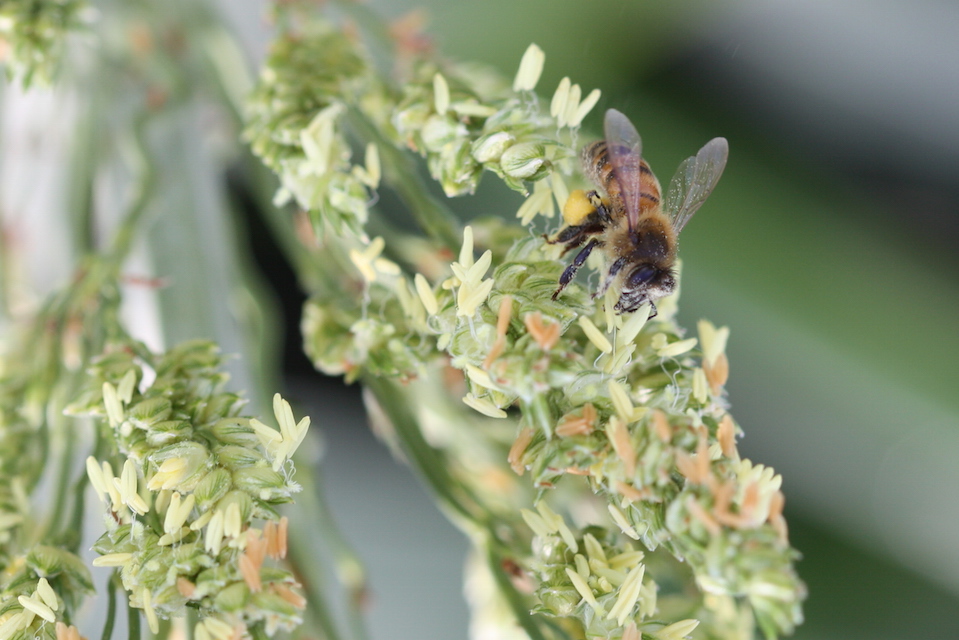 (Beyond Pesticides, June 19, 2019) On June 17, 2019, the Environmental Protection Agency (EPA) once again approved “emergency” uses of sulfoxaflor, a bee-toxic insecticide, on millions of acres of crops that are attractive to bees. Sulfoxaflor is functionally identical to the neonicotinoid class of
  (Beyond Pesticides, June 18, 2019) As the New York Times wrote in November 2018, “
 (Beyond Pesticides, June 17, 2019) During Pollinator Week, starting June 17, ask your elected representative in Congress to support pollinators by co-sponsoring Saving America’s Pollinators Act (SAPA). If they are already a cosponsor, use the occasion to thank them for their leadership on this critical issue.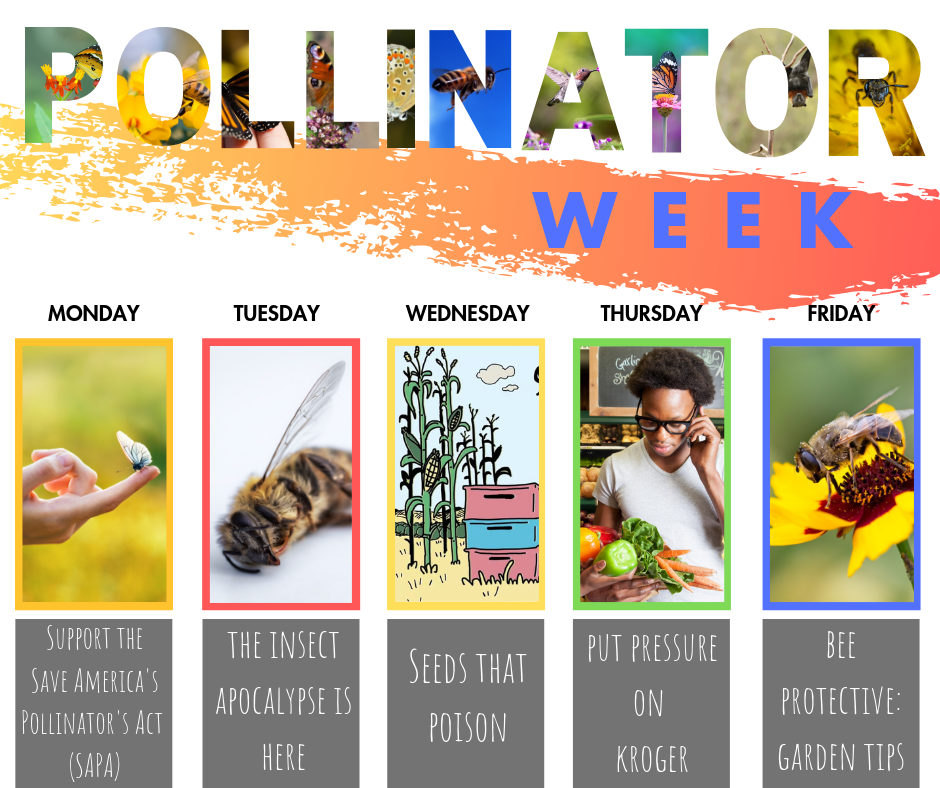
 (Beyond Pesticides, June 13, 2019) The U.S. allows the use of 85 pesticides that have been banned or are being phased out in the European Union, China or Brazil, according to a
 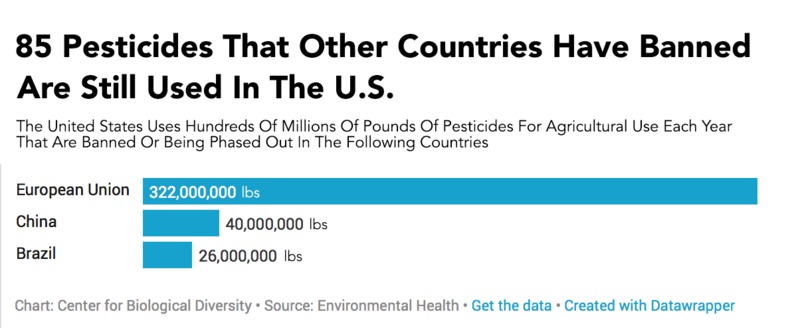 “It’s appalling the U.S. lags so far behind these major agricultural powers in banning harmful pesticides,” said Nathan Donley, PhD, a senior scientist with the Center for Biological Diversity and author of the study. “The fact that we’re still using hundreds of millions of pounds of poisons other nations have wisely rejected as too risky spotlights our dangerously lax approach to phasing out hazardous pesticides.”
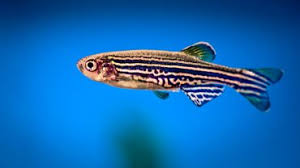 (Beyond Pesticides, June 12, 2019) A new study finds that the widespread insecticide fipronil causes transgenerational toxicity across generations of zebrafish. Fipronil, already known to be highly toxic to aquatic organisms, is now implicated in causing even more damage than previously thought. Even individuals who are not themselves directly exposed are shown to suffer from maternally transmitted toxic effects, including a more than doubled mortality rate.
 (Beyond Pesticides, June 11, 2019) Genetically engineered (GE) wheat developed to tolerate repeated applications of Bayer Monsanto’s Roundup herbicide has been discovered in a farm field in Washington State. The U.S. Department of Agriculture (USDA) has never approved a GE wheat variety for commercial production, making the incident a potential economic export risk. In the past, Asian and European countries have temporarily blocked purchases of U.S. wheat as a result of GE contamination. Organic and non-GE farmers are also at risk as any contamination with non-GE varieties can result in loss of certifications and price premiums.
 (Beyond Pesticides, June 10, 2019) On May 20, U.S. Representative Nydia Velazquez, with 18 co-sponsors, introduced H.R. 2854, “To amend the National Wildlife Refuge System Administration Act of 1966 to prohibit the use of neonicotinoids in a National Wildlife Refuge, and for other purposes.” The bill follows an August 2018 Trump administration announcement that reversed a 2014 U.S. Fish and Wildlife Service (FWS) decision to ban neonicotinoid insecticides on National Wildlife Refuges.
 (Beyond Pesticides, June 7, 2019) Fruit orchards and vineyards endure some of the most intensive chemical management in all of agriculture. What has not been investigated — until now — is how pesticide drift from such agricultural sites may be affecting nearby public spaces. A recent,


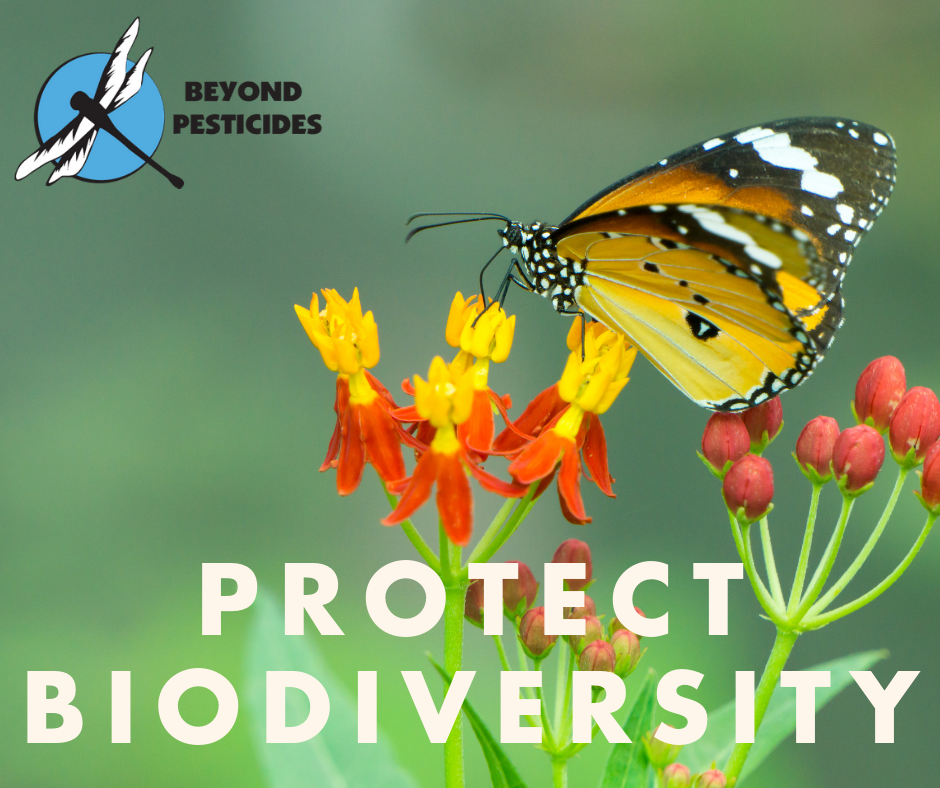 (Beyond Pesticides, June 3, 2019) As the signs of environmental crises tied to pesticide use escalate and the need for action becomes more urgent, elected officials at the state level must step up to meet the challenges to protect biodiversity and ecosystems essential to life. Waiting on Congress to act allows precious time to pass without critically needed action. The White House fails to acknowledge scientific findings about adverse effects that threaten the sustainability of the environment and human survival. In the last several months, key pieces of science call for dramatic action to eliminate toxic pesticide use and put organic and sustainable practices in place.