





24
Jan
Study Reveals Pollinator Conservation Necessitates Social Justice Perspective
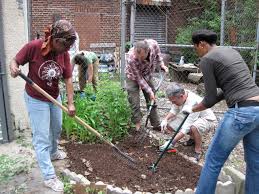 (Beyond Pesticides, January 24, 2019) A UK Study has concluded that the expansion of community gardens, identified as “pollinator hotspots” with “high pollinator diversity,” offer an important opportunity for assisting ailing pollinator species and improving community quality of life, particularly in low income neighborhoods. Consequently, researchers suggest towns and cities can be planned and managed more effectively to steward existing urban biodiversity to create essential havens for pollinators and people under stress.
The study finds that, “A high level of community robustness to species loss is increasingly recognized as an important goal in restoration ecology, since robust communities are better able to withstand perturbations.”
As previous research has shown that organic agriculture boosts local economies, researchers account for and compare a key socioeconomic factor; household income. Affluent neighborhoods have larger, more numerous, and more consistently maintained gardens and green spaces. To increase city-scale robustness, researchers suggest increasing community garden allotments, planting perennial flowering plants in cemeteries, and improving management of public parks. However, researchers explain that increasing the number of community gardens, particularly in communities of low-income, would be the best strategy per unit area, as it would expand viable habitat for pollinators throughout cities while providing much-needed green space and food sources for people.
To identify conservation opportunities, the study examined all major land uses and their impact on floral availability in the cities Bristol, Edinburgh, Leeds and Reading in the United Kingdom (UK). The nine major land use categories selected for sampling, include: (1) allotments (community gardens); (2) cemeteries; (3) residential gardens; (4) man-made impermeable surfaces; (5) urban nature reserves; (6) other green spaces (including school playing fields and yards); (7) public parks; (8) pavements; and (9) road verges (plant strips in-between roadways and sidewalks). For each city, ten sampling sites were chosen randomly. Every site was sampled three times between April and September of 2012 and 2013.
Results correlate floral abundance with pollinator abundance. Bees, hoverflies and non-syrphid Diptera (such as the common fly), represent 90% of flower visitors. For all four cities, residential and community gardens contain 54–83% of pollinators. Unsurprisingly, plant species commonly called “weeds” were shown to be critical for pollinator survival as they provide a varied array of nutrient resources.
Overall, Dandelion (Taraxacum), were visited most often, and common daisy least often. Other pollinator favorites are Creeping buttercup: Ranunculus repens, Hogweed, or cow parsnip (Heracleum sphondylium), and a perennial species, Creeping Thistle (Cirsium arvense).
In all four cities, residential gardens at houses with higher median income showed higher floral abundance, along with higher numbers of pollinators present.
“[Community gardens] are incredibly important at a city level, despite their small area,” said lead-author Katherine Baldock, PhD, School of Biological Sciences, at the University of Bristol, UK. “They are a good place for pollinators to hang out and provide a win-win situation, as they are also good for food growing and for people’s health.”
The influence of socioeconomic factors in constraining pollinator conservation cannot be discounted. Especially with climate change bringing stronger storms and heavy rains, building communities resilient to storm surges and food shortages can be the only measure of success. In this way, urban planning for sustainability will necessitate the expansion of community gardens and robust local food systems.
Take Action: In light of the shortcomings of federal action and industry groups working to weaken and derail any pesticide reforms at state and local levels, gardeners have an important role to play in pollinator conservation, quality of life, and availability of local organic food community-wide across all income groups. Organize with community leaders and arrange meetings with city officials to discuss expanding garden resources and training programs, such as arranging planting demonstrations.
For parks, advocate for organic land management with city officials. One simple strategy; reduced mowing, comes with immediate cost-savings, and with it, increased floral abundance for urban pollinators in distress. What more can you do? For comprehensive protection, ensure new pollinator habitat be kept pesticide-free, as designated pollinator habitat areas can still put pollinators at risk if pesticides are used.
Before you mow, consider allowing flowering plants, like clover and dandelions to bloom. Consider turning your yard into an organic, low-maintenance garden, or let a portion of your property re-wild altogether. Preserve biodiversity as if life depends on it. For more information and guidelines to get you started, read “Hedgerows for Biodiversity” by Terry Shistar, Ph.D. You can also visit “Managing Landscapes with Pollinators in Mind” for help deciding which plants are right for your region and the type of pollinators you want to attract.
All unattributed positions and opinions in this piece are those of Beyond Pesticides.
Sources: The Guardian, Nature Ecology & Evolution

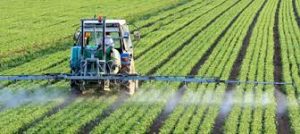 (Beyond Pesticides, January, 23, 2019) Individuals that have been acutely poisoned by pesticides at some time in their life may be more likely to lose their sense of smell, according to a
 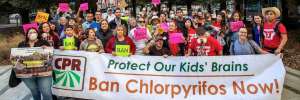 (Beyond Pesticides, January 22, 2019) Earlier this month, U.S. Representative Nydia Velásquez (D-NY) introduced The Ban Toxic Pesticides Act, H.R.230 which bans the insecticide chlorpyrifos from commerce.
 (Beyond Pesticides, January 18, 2019)
 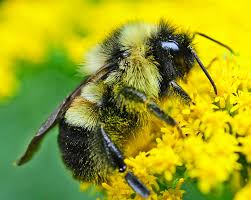 (Beyond Pesticides, January 17, 2019) Although the rusty patched bumblebee was placed on the endangered species list in 2017, the Trump Administration has failed to put in place legally required safeguards for the species. As a result, the Natural Resources Defense Council (NRDC) is suing the Administration’s Department of the Interior (DOI) for failing to designate locations where additional protections could help restore the endangered bumblebee’s population. Advocates say DOI’s failure to comply with requirements under the Endangered Species Act (ESA) is consistent with the Trump Administration’s
 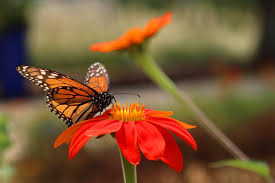 (Beyond Pesticides, January 16, 2019) Preliminary counts in California indicate the western monarch butterfly population dropped 86% from 2017 to 2018. The survey is a result of an
  (Beyond Pesticides, January 14, 2019)
  (Beyond Pesticides, January 14, 2019) Tell Congress to stop the Trump administration from opening the floodgates to permit widespread use of antibiotics in citrus production (grapefruits, oranges and tangerines).
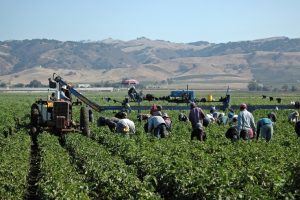 (Beyond Pesticides, January 11, 2019) Plans to weaken farmworker protections from toxic pesticides were dropped by Acting U.S. Environmental Protection Agency (EPA) Administrator Andrew Wheeler, according to an undated letter sent to Senator Tom Carper (D-DE) late last year. Reports indicate the action was part of a deal cut by both parties that permitted confirmation of
 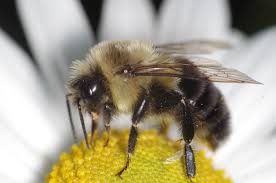 (Beyond Pesticides, January 9, 2019) It is news to approximately no one that pollinators are in trouble worldwide. A series of papers by biologists at the University of Guelph, Ontario, posits that pesticide regulations aimed at protection of honey bees fall far short of the critical task of protecting the multitude of bee species that are important pollinators of human food crops. These recent papers arose from 2017 workshops that involved 40 bee researchers from various universities, and representatives from Canadian, U.S., and European regulatory agencies, and from the agrochemical industry.
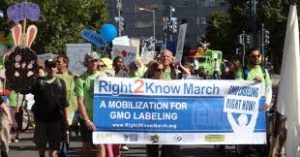 (Beyond Pesticides, January 8, 2019) At the end of December, the U.S. Department of Agriculture (USDA) finalized

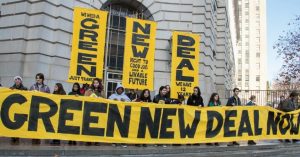 (Beyond Pesticides, January 7, 2019) As the dust settles on the final Farm Bill, which passed the U.S. Senate and House of Representatives last month, it is clear that neither the substance nor the process on a range of issues meet the urgent need to address key sustainability issues that put the future in peril.
 (Beyond Pesticides, January 4, 2019) First, the good news: plaintiffs in a
  (Beyond Pesticides, January 3, 2019) Bee-toxic pesticides
  (Beyond Pesticides, January 2, 2019) The “indoor microbiome” of yoga studios and other athletic facilities often contain significant levels of antibacterial chemicals like
  (Beyond Pesticides, December 21-31, 2018) As we look ahead to the new year, we wish you good health, extend our appreciation for your being a part of the Beyond Pesticides network, and ask you to consider a contribution to Beyond Pesticides. Your support is critical to our program and deeply appreciated.
 (Beyond Pesticides, December 21, 2019)
 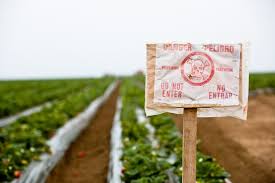 (Beyond Pesticides, December 20, 2018) Using low doses of the herbicide paraquat and common proteins found in food called lectins, researchers were able to recreate the symptoms of Parkinson’s disease in rats. Results of this study,
  (Beyond Pesticides, December 19, 2018) As the dust still settles on the final Farm Bill, which passed the U.S. Senate and House of Representatives last week, it is clear that neither the substance nor the process on a range of issues meet the urgent need to address key sustainability issues that put the future in peril.
 (Beyond Pesticides, December 18, 2018) The ingredients not listed on a pesticide product are not fully reviewed for their adverse effects may be the most toxic chemicals in the formulation. Recent research, Toxicity of formulants and heavy metals in glyphosate-based herbicides and other pesticides (Toxicology Reports 5, 2018), by Defarge, de Vendômois, and Séralini demonstrates the need to disclose and test all ingredients in pesticide products, as well as the full formulation that includes “inert” or nondisclosed ingredients. While glyphosate/Roundup is obviously not allowed to be used in organic production, this research reaffirms the need to evaluate full formulations of substances allowed for use in organic.
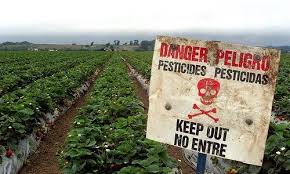 (Beyond Pesticides, December 17, 2018) Cardiovascular disease is a major cause of poor health and mortality across the world. Much is known about congenital and behavioral contributors to the disease, yet to date, little research has focused on potential environmental factors, including the possible contribution to cardiovascular disease (CVD) of exposures to toxic chemicals in the workplace.
  (Beyond Pesticides, December 14, 2018) The richness, diversity, and abundance of wild bumblebees in Vermont has plummeted over the last century, according to an


