 (Beyond Pesticides, March 1, 2019) The costs of pesticide use extend far beyond the invoices farmers pay for purchase of the chemicals to use on their crops. The real costs related to pesticide use and exposure include those of health care, lost productivity and income, and environmental damage (loss of environmental services and biodiversity; compromised air, water, and soil quality). There has been relatively little research focused on those real and extensive costs; this Daily News Blog turns its attention to several that have made the attempt.
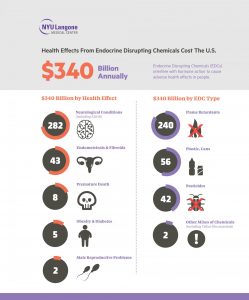
January 2019 saw the publication of a new book, Sicker Fatter Poorer: The Urgent Threat of Hormone-Disrupting Chemicals to Our Health and Future … and What We Can Do About It, by Leonardo Trasande, MD, MPP, which examines how some chemicals — including organophosphate and organochlorine pesticides — disrupt human endocrine (hormonal) function, and damage health, sometimes irreparably. The book further investigates the economic costs of associated diseases and other health problems to the U.S. economy — on the order of 2.3% of GDP (gross domestic product), or $340 billion, annually. As Dr. Trasande notes, “The reality is that policy predicts exposure, exposure predicts disease and disease ultimately costs our economy.”
Dr. Trasande is a leading researcher in children’s environmental health whose research focuses on organic contaminants as endocrine disruptors; he leads one of 35 centers that participate in the National Institute of Health’s Environmental Influences on Child Health Outcomes (ECHO) program. Dr. Trasande is the Jim G. Hendrick, MD Professor, Vice Chair for Research in the Department of Pediatrics, and Chief of the Division of Environmental Pediatrics at New York University (NYU) School of Medicine. He also directs the NYU Center for the Investigation of Environmental Hazards.
An endocrine-disrupting compound is an “exogenous substance that causes adverse health effects in an intact organism, or its progeny, secondary to changes in endocrine function.” The endocrine disruptive impacts of exposures to these compounds include “scrambling” of hormones’ chemical communications, which guide metabolic (and other) processes. Exposures can lead to infertility and other male and female reproductive dysfunctions, prostate and breast cancer, birth defects, cardiopulmonary disease, neurobehavioral and learning dysfunction, and immune dysregulation. Another very significant impact is on the body’s use of nutrients — exposure to endocrine disruptors (EDs) can influence the conversion of nutrients’ energy (primarily as glucose) into fat rather than muscle (or other kinds of tissue), and contribute to widespread obesity and diabetes.
The more than 1,000 chemicals that disrupt hormonal function fall into four categories: pesticides, used not only in agriculture, but also, for pest and weed management (on managed turf/landscapes, in buildings, on human and animal bodies, and in home gardens); bisphenol A (BPA), found in linings of aluminum cans, in some plastics, and on cash register receipts; brominated flame retardants, used in furniture, electronics, and mattresses; and phthalates, found in food packaging and personal care products.
The net recommendation of Dr. Trasande’s book for individuals is to reduce exposures to endocrine disruptors: avoid products with phthalates and those with flame retardants; avoid plastics and canned foods; and opt whenever possible for organically grown foods, which are protective of human health from the health impacts of pesticides.
As noted, the economic costs of pesticide use, because of disease and disability impacts, have received scant attention, but that may be changing. Dr. Trasande was the lead author (with 11 co-authors) of a 2015 investigation that attempted to estimate such costs: “Estimating Burden and Disease Costs of Exposure to Endocrine-Disrupting Chemicals in the European Union,” published in The Journal of Clinical Endocrinology & Metabolism. The study aimed to measure a range of both health and economic costs that can be reasonably attributed to endocrine-disrupting chemical exposures in the European Union (EU).
That study analyzed the incidence of health impacts from endocrine disruptor exposures and the estimated costs of these sequellae through a multivariate approach that included an assessment of the “fractional contribution” of the environment to causation of illness, a method developed in 1981 by the U.S. Institute of Medicine and in broad use until today.
The co-authors’ conclusions: “EDC [endocrine-disrupting chemicals] exposures in the EU are likely to contribute substantially to disease and dysfunction across the life course with costs in the hundreds of billions of Euros per year. These estimates represent only those EDCs with the highest probability of causation; a broader analysis would have produced greater estimates of burden of disease and costs. . . . The most substantial costs were related to loss of IQ and intellectual disability attributable to prenatal organophosphate exposure; base case estimates identified €146 billion in attributable costs, whereas sensitivity analyses suggested that costs might actually range from €46.8 to 195 billion annually. Phthalate-attributable adult obesity was the second largest driver of costs, at €15.6 billion per year. The total costs of all conditions probably attributable to EDCs were €191 billion, with sensitivity analyses suggesting costs ranging from €81.3 to 269 billion annually.”
The researchers pointedly comment on the failure of current policy and regulations to account for these impacts, and note that, because longitudinal studies of EDC exposure early in life are only just beginning to be done, the impacts could swell with those coming results. The co-authors are hopeful that this study will, in its use of this model, transform decision making by governments re: environmental health risks toward emphasis on complete assessment of the potential costs of failing to prevent chronic disease through the use of safer alternatives to EDCs.
The co-authors further comment: “These costs will accrue annually insofar as exposures that are harmful continue unabated. . . . Calculations of the health and economic benefits associated with reducing exposure to environmental chemicals have proven extremely informative to regulatory decision-making. . . . Regulatory action to limit exposure to the most widely prevalent and potentially hazardous EDCs is likely to produce substantial economic benefits. These economic benefits should inform decision-making on measures to protect public health.”
And notably, they point to the importance of this work for the U.S. and the developing world: “The findings described here suggest potentially large burdens of disease and associated costs in the developed world, insofar as exposures are similar. Future studies could extend and apply this approach to the U.S., where the National Health and Nutrition Examination Survey, among other studies, offers arguably more comprehensive and national reference points for extrapolation. In the industrializing world, the attributable disease burden and costs could well be higher in a much weaker regulatory framework.”
A number of other studies have looked at aspects of the “costs” issue, perhaps most recently, a 2018 investigation by Teresa M. Attina, MD, PhD, et al. (including, again, Dr. Trasande), published in the Journal of Clinical Epidemiology. “Racial/ethnic disparities in disease burden and costs related to exposure to endocrine-disrupting chemicals in the United States: an exploratory analysis” reminds readers that, baseline, racial and ethnic disparities exist in incidence of chronic disease, in access to appropriate healthcare, and notably, in exposures to ED chemicals as a function of the built environment, diet, and use of consumer products, all of which are influenced at least in part by socioeconomic status. (See the Beyond Pesticides Daily News Blog archive on Environmental Justice issues.) This investigation also expands the “costs” discussion by evidencing the disproportionate costs of ED exposures, and associated diseases and health impacts, across racial and ethnic groups.
The study looked at the distribution of ED exposures and levels of “disease burden” in populations identified as non-Hispanic white, non-Hispanic black, Mexican-American, Other Hispanic, and Other/Multicultural, and used the “fractional contribution” method (see above) to estimate costs of “environmentally mediated disease.” Total cost for exposure-related disease was $179.8 billion for non-Hispanic whites (52.3% of total costs); $56.8 billion for non-Hispanic black (16.5% of total); $50.1 billion for Mexican-Americans (14.6% of total); $5.7 billion for “other” Hispanics (1.6% of total); and $51.7 billion (15.0% of total) for those deemed Other/Multicultural. For context, those populations as percentages of total population are: non-Hispanic white, 66.1%; non-Hispanic black, 12.6%; Mexican-American, 13.5%; Other Hispanic, .4%; and Other/Multicultural, 7.4%.
Nearly all exposure levels and incidence of associated health issues were higher for the racial and/or ethnic minority groups (as proportions of the study’s target populations). The data show that, for example, the “loss of IQ points and intellectual disabilities” impacts due to organophosphate exposure, measured as a percentage of total cases across all racial/ethnic categories, were (in the same categorical order as above): 44.2%, 14.9%, 13.4%, 12.3%, and 14.7% — showing the proportionally outsize impacts on minority populations. Disparities are reflected, unsurprisingly, in the costs noted above, and in the disaggregated and proportional costs of the organophosphate exposures and health problems across groups.
The authors note that, “Persistent health disparities have been extensively documented in the United States, related to both medical and nonmedical factors. Access to care, insurance coverage, and ability to pay are among the more ‘conventional’ factors contributing to health disparities. . . . The higher levels of exposure in racial/ethnic minorities together with disparities in the availability of resources considered to be protective factors, such as green spaces or healthy food options, can have a cumulative effect, substantially contributing to racial/ethnic disparities in health. Our results are consistent with existing evidence that racial/ethnic minorities may be disproportionately affected by the negative health effects of toxic environmental exposure.”
They further opine, “Effective strategies [to reduce ED exposure] at the individual level need to be complemented by strategies that target the entire household, as well as state and federal policies. . . . Here we encourage a paradigm shift when evaluating health disparities, focusing on [those] driven by different exposures across race/ethnicity groups. We believe this shift may identify new opportunities for disease prevention in the demographic segments of the U.S. population who need it most, as well as offer opportunities to devise social policies that specifically address environmental inequalities.” Policy makers should attend to these realities in any case, but the cost arguments may provide additional incentive in establishing more-protective regulation of ED chemicals, and pesticides, in particular.
Beyond Pesticides has covered some aspects of the costs of pesticide use, including a look at a 2005 publication, in Environment, Development, and Sustainability, on “Environmental and Economic Costs of the Application of Pesticides Primarily in the United States,” by David Pimentel. This investigation conducted an assessment of the (then) approximately $10 billion in environmental and societal damages as a result of pesticide use. The author analyzed pesticide impacts on: “public health; livestock and livestock product losses; increased control expenses resulting from pesticide-related destruction of natural enemies and from the development of pesticide resistance in pests; crop pollination problems and honeybee losses; crop and crop product losses; bird, fish, and other wildlife losses; and governmental expenditures to reduce the environmental and social costs of the recommended application of pesticides.”
The study identified the annual major (as of 2005) economic and environmental losses attributable to pesticide use at $1.1 billion in public health costs; $1.5 billion due to developed pesticide resistance in organisms; $1.4 billion in crop losses caused by pesticides; $2.2 billion related to bird losses; and $2.0 billion due to groundwater contamination. Dr. Pimentel noted that this analysis was not comprehensive, and that had it been — i.e., “if the full environmental, public health, and social costs could be measured as a whole — the total cost might be nearly double. . . . Such a complete and long-term cost/benefit analysis of pesticide use would reduce the perceived profitability of pesticides,” and presumably, their widespread use.
More recently, Beyond Pesticides provided coverage of a 2016 study that set out the estimated cost of ED-induced reproductive disorders (uterine fibroids associated with exposure to the organochlorine DDE, or diphenyldichloroethene) in women in the EU — the equivalent in U.S. dollars of $1.4 billion annually. In 2017, a European study that showed that the costs of the disease burden and healthcare related to chemical environmental exposures, writ large, may constitute a figure somewhere north of 10% of global gross domestic product (GDP). That figure should shock everyone, motivate policymakers to become much more proactive on the chemical regulatory front, and move the public to help raise the alarm on the risks of the use of pesticides and other dangerous chemicals.
Read more from Beyond Pesticides about ED pesticides and chemicals, and ways to protect people from exposures, including eating organically and advocating for better regulatory policies generally, and through Beyond Pesticides’ Action of the Week. In addition, upcoming is a once-a-year opportunity to learn more, and to meet scientists and advocates at the Beyond Pesticides 36th National Pesticide Forum, April 13–14, 2019 in Irvine, California.
All unattributed positions and opinions in this piece are those of Beyond Pesticides.
Source: https://www.ncbi.nlm.nih.gov/pmc/articles/PMC4399291






 (Beyond Pesticides, March 12, 2019) Fifty years after the end of the Vietnam War, the Agent Orange byproduct dioxin continues to contaminate Vietnam’s soils and wildlife, and subsequently affect human health. In their review, scientists at Iowa State and the University of Illinois focus on the locations where hot spots and contaminated sediments have persisted after 130,000 fifty-five gallons drums of toxic herbicides were sprayed over Vietnam’s farm fields and jungle canopies during the war.
 (Beyond Pesticides, March 11, 2019) We must stop the expanded commercialization of genetically engineered pesticides. The failure of the U.S. Environmental Protection Agency (EPA) to fully evaluate environmental impacts of gene-manipulating pesticides raises serious concerns in light of the agency’s ongoing failure to predict ecological effects of pesticides, such as the dramatic decline of pollinators.
 (Beyond Pesticides, March 8, 2019) Researchers from the U.S. and Switzerland have
  (Beyond Pesticides, March 7, 2019) A
 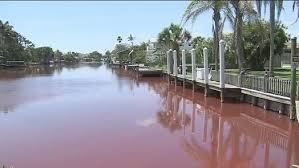 (Beyond Pesticides, March 6, 2019) After a brief hiatus, Florida Fish and Wildlife Conservation Commission (FWC) is continuing use of aquatic herbicides, including glyphosate, for invasive species management. Public pressure and feedback caused FWC to take a
  (Beyond Pesticides, March 5, 2019) Wild, edible plants subject to drift from the herbicide glyphosate during forestry operations can be contaminated with the chemical an entire year after an initial application, according to a
 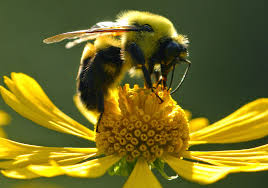 (Beyond Pesticides, March 4, 2019) Last week, U.S. Representative Earl Blumenauer (D-OR) reintroduced the
 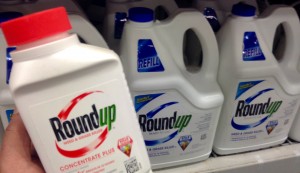 (Beyond Pesticides, February 28, 2019) Earlier this month, a team of U.S. scientists
  (Beyond Pesticides, February 27, 2019) U.S. PIRG tested 20 common beers and wines and found glyphosate residues in all but one. Glyphosate, the active ingredient in Roundup, is the most commonly used agrichemical in the world. Though it is linked to many health and environmental issues, there is no current EPA limit for glyphosate residues in beer or wine. The U.S. Department of Agriculture (USDA) does not regularly test for glyphosate on either food or beverages.
 (Beyond Pesticides, February 26, 2019) Breakfast cereal, apples, applesauce and pinto beans made and sold by Kroger contain residues of toxic pesticides linked to a range of series health and environmental problems, according to a
 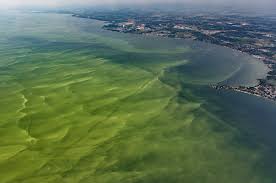 (Beyond Pesticides, February 22, 2019) Lake Erie, the 11th largest freshwater lake in the world, is once again plagued with pollution, although in this decade it is due primarily to agricultural runoff — as opposed to the raw sewage and industrial effluents that afflicted it in the mid-20th century. Concerned and weary Toledo, Ohio residents are seeking remedies through the adoption of a
  (Beyond Pesticides, February 21, 2019) In 2018, the Environmental Protection Agency (EPA)
 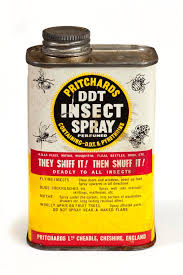 (Beyond Pesticides, February 20, 2019) Women exposed to DDT during ‘early windows of susceptibility’ in their childhood are at increased risk of developing breast cancer, according to
  (Beyond Pesticides, February 19, 2019) At the request of Beyond Pesticides, the Environmental Protection Agency (EPA) has extended its public comment period on antibiotics in citrus production until March 14. With this extra time, please share this action widely to stop this threat.
 (Beyond Pesticides, February 15, 2019) A
  (Beyond Pesticides, February 14, 2019) Over the course of the last two weeks in Bavaria – a southern state of Germany – locals rallied in an effort to save the bees.
  (Beyond Pesticides, February 11, 2019) A new
  (Beyond Pesticides, February 11, 2019) Aminocyclopyrachlor (ACP) is a tree-killing pesticide masquerading as a broadleaf herbicide. The Oregon Department of Agriculture (ODA) has the opportunity to lead the country in banning this inherently dangerous chemical. According to ODA, nearly 1,500 dead or dying trees have been reported along Oregon’s iconic Interstate 20, home to old growth ponderosa pines. Many of these 150- to 300-year old trees are now dead from ACP exposure. ODA indicated that “because [ACP] is a relatively new herbicide it is unknown how many trees stressed from past applications of [ACP] will die in the future.”
 (Beyond Pesticides, February 8, 2019) Scientists from the U.S. Geological Survey (USGS) and the University of Iowa (UI) have published
  (Beyond Pesticides, February 7, 2019) A


