





15
Jan
Petition Challenges Lack of Protection for Endangered Species from Pesticides
 (Beyond Pesticides, January 14, 2019) A petition submitted on January 7 by the Center for Biological Diversity calls on the National Marine Fisheries Service (NMFS) and the U.S. Fish and Wildlife Service (FWS) to initiate rulemaking to proscribe nearly all pesticide use in areas that are deemed critical habitat for endangered species. It asks these federal agencies to use the authority they have under the 1973 Endangered Species Act (ESA) to protect wildlife from the threats represented by pesticides — which threats both agencies have long recognized. The language of the ESA says its purpose is “to provide a means whereby the ecosystems upon which endangered species and threatened species depend may be conserved.”
In its press release on the petition, the Center for Biological Diversity (CBD) notes that it comes “after decades of intransigence by the Environmental Protection Agency, which has refused to comply with the legal mandates of the Endangered Species Act to protect the nation’s most imperiled species from highly toxic pesticides like chlorpyrifos and atrazine that are known to harm wildlife.” CBD environmental health director Lori Ann Burd said, “Pesticides pose a devastating danger to endangered wildlife, from coast to coast. If the EPA isn’t going to do what’s needed to protect America’s endangered species from pesticides, federal wildlife agencies need to step in.”
In a more sensical world, federal agency enforcement would comport with the dictates of the ESA. But as the petition itself notes, such “rulemaking is necessary because the facts and history overwhelmingly demonstrate that the Environmental Protection Agency (‘EPA’) is both unwilling and unable to comply with the clear statutory requirements to address the harm caused by pesticides to threatened and endangered species by consulting with the Services prior to the approval of a pesticide, as well as failing to comply with the Endangered Species Act on other discretionary agency actions taken under the Federal Insecticide Fungicide and Rodenticide Act (‘FIFRA’).” (See more on the ESA role in pesticide regulation below.)
The protective standard of the ESA is stronger than the “unreasonable adverse effects” FIFRA standard. The ESA law requires federal agencies to ensure that “actions they authorize, fund, or carry out are not likely to jeopardize the continued existence of any listed species or result in the destruction or adverse modification of habitat of such species which is determined by the Secretary, after consultation as appropriate with affected States, to be critical, unless such agency has been granted an exemption for such action. . . . In fulfilling the requirements of this paragraph each agency shall use the best scientific and commercial data
available.”
The statute also prohibits any unauthorized “take” of any listed species of endangered fish or wildlife (“take” being defined as any harm, harassment, pursuit, hunting, shooting, wounding, killing, trapping, capture, or collection). It is worth noting that the economic impacts of protecting endangered species are not, by statute, supposed to play a role in regulatory decisions to restrict pesticides. However, the current federal administration seeks to change the way cost-benefit analysis of regulation is enacted in federal agencies such that “cost to industry” enjoys increased importance in determinations.
The current request by CBD is one in a long series of lawsuits and petitions aimed at getting EPA to follow the law, including compliance with the mandates of the Endangered Species Act. Petitioner and plaintiff organizations involved in these efforts have approached the task from a variety of angles, and have used the more-stringent language of the ESA to secure greater protection for both wildlife and ecosystems. (See a litany of such actions, below.)
Some back story is in order: When EPA registers pesticides for use under the Federal Insecticide, Fungicide, and Rodenticide Act (FIFRA) — the federal law under which EPA can enable and regulate use of pesticides — it must meet not only the requirements of FIFRA, but also, its legal responsibility to consult with the agencies charged with implementation of ESA to ensure that pesticide use patterns do not cause harm to endangered and threated species. Those agencies are the National Marine Fisheries Service, which operates under the aegis of the National Oceanic and Atmospheric Agency (NOAA), and the U.S. Fish and Wildlife Service, which operates out of the Department of the Interior.
[Fun fact: NOAA operates under the Department of Commerce, rather than the Department of the Interior, where it used to reside. This is a weird artifact of some administrative shenanigans on the part of President Nixon to punish then-Secretary of the Interior Wally Hickel for his criticism of Nixon’s Vietnam War policy.]
FWS and NMFS decide whether a species is either “threatened” or “endangered,” and should be listed under the ESA. (Generally, FWS has authority over terrestrial and freshwater species, and NMFS over marine species.) Once listed as “endangered” or “threatened” under ESA, a species is afforded certain legal protections. The required consultation process starts with the “action” agency’s (often EPA’s) request for information on whether any species listed (or proposed to be listed) under the ESA is present in the area of a proposed action. The agency then conducts a biological assessment to identify whether those species are likely to be affected by the proposed action. If there is a determination that any species may be present and is likely to be affected by the proposed action, consultation continues with FWS and/or NMFS.
The relevant Service then prepares a biological opinion that identifies impacts on the subject species. If it finds that the action would jeopardize the continued existence of the species or adversely affect critical habitat (a “jeopardy opinion”), the Service must suggest reasonable and prudent alternatives to avoid the adverse impacts. If there are no such alternatives, the agency may not proceed with the project unless the Endangered Species Act Committee grants an exception. If the Service does not issue a jeopardy opinion (a “non-jeopardy opinion”), it must inform the agency whether there are any “reasonable and prudent measures” that should be applied to the project.
The federal regulatory landscape for pesticides can be pretty complicated. Essentially, EPA regulates pesticides primarily under the dictates of two laws: FIFRA and the Federal Food, Drug, and Cosmetic Act (FFDCA), as well as by two amendments to them: the Food Quality Protection Act (FQPA) of 1996, and the Pesticide Registration Improvement Act (PRIA) of 2003. But the ESA is also active in this landscape. FIFRA requires all pesticides sold or distributed in the U.S. to be registered by EPA. Pesticides become legal for us (with some exceptions) when EPA completes its process for registering them. The role of the ESA in this process is outlined here.
The FFDCA mandates establishment of a maximum permissible level of pesticide residue in or on human food and animal feed (a so-called “tolerance”). The FQPA amends both FIFRA and FFDCA, and sets out that EPA must determine that a pesticide poses a “reasonable certainty of no harm” before it can be registered, and that such registration must be reviewed at least once every 15 years. The PRIA sets out administrative requirements related to fee payment for registration and meeting deadlines for decision making.
The litany of attempts to make EPA follow the law includes a 2002 suit involving impacts of 54 pesticides on Northwest salmon populations (EarthJustice offers a useful history), and a 2011 suit that claimed that EPA failed to consult with FWS and NMFS (a pattern identified in several such suits) on the impacts of one or more of 381 chemicals on 214 endangered and threatened species in violation of the Endangered Species Act (ESA). More recently, a long-standing case had a somewhat encouraging resolution: Beyond Pesticides, CBD, and fellow plaintiffs enjoyed a small victory when a settlement was reached in the case, the outcomes of which will include the eventual cancellation of registrations for 12 neonicotinoid-containing pesticides.
In a series of lawsuits beginning in 2014, plaintiffs have repeatedly acted to compel EPA to cancel approvals of a new pesticide, Dow AgroSciences’ Enlist Duo, which contains 2,4-D and glyphosate. After that, the Obama administration agreed to reanalyze some of the toxic new pesticide’s impacts, but EPA then reaffirmed its original approval and dramatically expanded it, allowing Enlist Duo to be sprayed in more than twice as many states and on cotton, in addition to corn and soybeans. The next suit, in 2015, in which Beyond Pesticides was a plaintiff, charged that EPA had inappropriately given the nod to use of the pesticide, and again failed to consult, as it legally must, with FWS about its impacts on two endangered species (the whooping crane and the Indiana bat). Later in the year, in response to that litigation, EPA announced that it would revoke its own approval of Enlist Duo.
The agency then went on to register Enlist Duo, triggering another lawsuit brought by Beyond Pesticides, CBD, and other groups, charging that approval of the compound “will lead to sharply increased spraying of toxic pesticides, harming farmers, neighboring crops, and wildlife . . . and will lead to as much as a seven-fold increase in its use in agriculture, significantly increasing exposure to farmers.” After EPA expanded approval for Enlist Duo use to 34 states and additional crops in 2017, environmental advocates (including Beyond Pesticides) once again sued EPA, in early 2018, seeking reversal of EPA approval of the compound.
Keep tabs on developments in the regulation of pesticides in the U.S., as well as other nation’s efforts to protect human and environmental health via Beyond Pesticides’ Daily News Blog.
All unattributed positions and opinions in this piece are those of Beyond Pesticides.
Source: https://www.biologicaldiversity.org/news/press_releases/2019/pesticides-01-07-2019.php

 (Beyond Pesticides, January 14, 2019) Tell Congress to stop the Trump administration from opening the floodgates to permit widespread use of antibiotics in citrus production (grapefruits, oranges and tangerines).
 (Beyond Pesticides, January 11, 2019) Plans to weaken farmworker protections from toxic pesticides were dropped by Acting U.S. Environmental Protection Agency (EPA) Administrator Andrew Wheeler, according to an undated letter sent to Senator Tom Carper (D-DE) late last year. Reports indicate the action was part of a deal cut by both parties that permitted confirmation of
 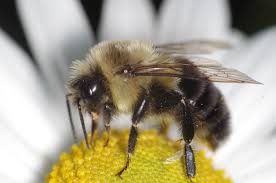 (Beyond Pesticides, January 9, 2019) It is news to approximately no one that pollinators are in trouble worldwide. A series of papers by biologists at the University of Guelph, Ontario, posits that pesticide regulations aimed at protection of honey bees fall far short of the critical task of protecting the multitude of bee species that are important pollinators of human food crops. These recent papers arose from 2017 workshops that involved 40 bee researchers from various universities, and representatives from Canadian, U.S., and European regulatory agencies, and from the agrochemical industry.
 (Beyond Pesticides, January 8, 2019) At the end of December, the U.S. Department of Agriculture (USDA) finalized

 (Beyond Pesticides, January 7, 2019) As the dust settles on the final Farm Bill, which passed the U.S. Senate and House of Representatives last month, it is clear that neither the substance nor the process on a range of issues meet the urgent need to address key sustainability issues that put the future in peril.
 (Beyond Pesticides, January 4, 2019) First, the good news: plaintiffs in a
 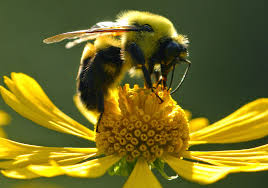 (Beyond Pesticides, January 3, 2019) Bee-toxic pesticides
  (Beyond Pesticides, January 2, 2019) The “indoor microbiome” of yoga studios and other athletic facilities often contain significant levels of antibacterial chemicals like
  (Beyond Pesticides, December 21-31, 2018) As we look ahead to the new year, we wish you good health, extend our appreciation for your being a part of the Beyond Pesticides network, and ask you to consider a contribution to Beyond Pesticides. Your support is critical to our program and deeply appreciated.
 (Beyond Pesticides, December 21, 2019)
 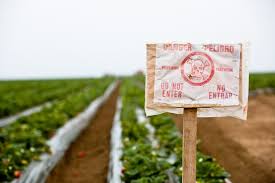 (Beyond Pesticides, December 20, 2018) Using low doses of the herbicide paraquat and common proteins found in food called lectins, researchers were able to recreate the symptoms of Parkinson’s disease in rats. Results of this study,
  (Beyond Pesticides, December 19, 2018) As the dust still settles on the final Farm Bill, which passed the U.S. Senate and House of Representatives last week, it is clear that neither the substance nor the process on a range of issues meet the urgent need to address key sustainability issues that put the future in peril.
 (Beyond Pesticides, December 18, 2018) The ingredients not listed on a pesticide product are not fully reviewed for their adverse effects may be the most toxic chemicals in the formulation. Recent research, Toxicity of formulants and heavy metals in glyphosate-based herbicides and other pesticides (Toxicology Reports 5, 2018), by Defarge, de Vendômois, and Séralini demonstrates the need to disclose and test all ingredients in pesticide products, as well as the full formulation that includes “inert” or nondisclosed ingredients. While glyphosate/Roundup is obviously not allowed to be used in organic production, this research reaffirms the need to evaluate full formulations of substances allowed for use in organic.
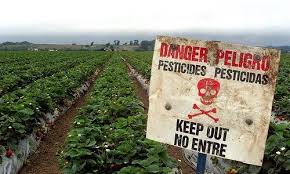 (Beyond Pesticides, December 17, 2018) Cardiovascular disease is a major cause of poor health and mortality across the world. Much is known about congenital and behavioral contributors to the disease, yet to date, little research has focused on potential environmental factors, including the possible contribution to cardiovascular disease (CVD) of exposures to toxic chemicals in the workplace.
 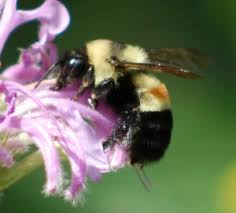 (Beyond Pesticides, December 14, 2018) The richness, diversity, and abundance of wild bumblebees in Vermont has plummeted over the last century, according to an
 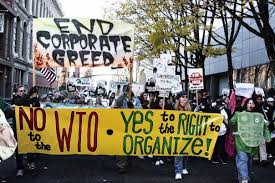 (Beyond Pesticides, December 13, 2018) The U.S. is pushing back against international standards that restrict pesticides by appealing to the World Trade Organization (WTO) to intervene. At issue are new EU maximum residue levels (MRLs) on food for the following pesticides: buprofezin, diflubenzuron, ethoxysulfurom, ioxynil, molinate, picoxystrobin and tepraloxydim.
 (Beyond Pesticides, December 12, 2018) Costa Rica is currently experiencing exponential growth in its banana and pineapple farming industries and with it an increase in intensive pesticide applications. Recent
  (Beyond Pesticides, December 11, 2018) Meltwater and runoff from Alaskan glaciers contain detectable levels of organochlorine pesticides that bioconcentrate in fish and put individuals at risk, according to a new study from researchers at the
 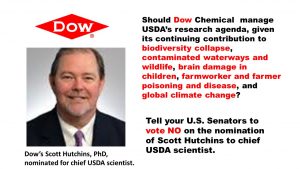 (Beyond Pesticides, December 10, 2018) The Senate Agriculture Committee has cleared the way for the whole U.S. Senate to vote on the confirmation of Scott Hutchins, PhD, recently retired from research and management at what is now the agricultural division of DowDuPont, as chief scientist at the U.S. Department of Agriculture (USDA). If confirmed, he will become the third member of Dow’s pesticide and seed division to hold a high-level position in the Trump administration’s USDA.
 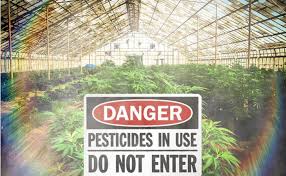 (Beyond Pesticides, December 7, 2018) As medicinal and recreational marijuana continue to be legalized in various states,
  (Beyond Pesticides, December 6, 2018) A


