

24
Jun
Senate GOP Farm Bill Tees Up Fight Over Protections in Agriculture, the Environment, and Food Security
(Beyond Pesticides, June 24, 2026) Yesterday, U.S. Senator Boozman (R-AK), chair of the Senate Agriculture, Nutrition, and Forestry Committee, released the Senate GOP Farm Bill, the Agricultural Act of 2026, with provisions that undermine public and environmental health, according to farm, farmworker, and environmental advocates. The bill, drafted without input from Senate Democrats, redefines underlying standards and practices to increase dependency on petrochemical pesticides and fertilizers in agriculture. Rather than investing in organic agriculture and supporting farmers’ transition to nontoxic practices—in response to health, biodiversity, and climate crises, as well as the high cost of synthetic fertilizers—the bill reduces oversight of organic production by loosening inspection and certification requirements.
The text is largely the same as the version passed by the U.S. House of Representatives in April, the Farm, Food, and National Security of 2026 (H.R. 7567). The House vote made history when 73 Republicans joined the majority of the Democratic caucus to strip out a pesticide manufacturers’ liability shield (Section 10205), federal preemption of state and local pesticide laws (Section 10206), and the weakening of bedrock environmental law and their ability to regulate pesticides (Section 10207). [A decision is expected this week or next in a case before the Supreme Court, Monsanto v. Durnell, in which Bayer/Monsanto argues that they have no responsibility under pesticide law to have warned on their product labels those who have been harmed by product use.]
The Senate GOP Farm bill will adversely affect a wide range of social and conservation issues, including the protection of family farms, food security, and environmental and public health, according to a cross-section of groups representing these interests. Overall, critics say, the Republican bill increases dependency on petrochemical fertilizers (which contribute to escalating toxic pesticide use), ignores hunger (despite a historically large $186 billion cut to the Supplemental Nutrition Assistance Program/SNAP), dismisses the notion of a fair, responsible, and accessible family farm safety net, and rolls back successful conservation investments. A markup on the Senate Farm Bill is expected before the Senate’s August recess.
Poison Pill Provisions in Senate GOP Bill
Subtitle C, Part 1, of Title X, entitled Regulatory Reform, contains the following provisions that weaken the U.S. Environmental Protection Agency (EPA), undermine environmental protections, and threaten the health of farmers, farmworkers, and consumers.
- Section 10201 [Section 10201 in House bill]: Exemption of safety review. Permanently exempts dozens of hazardous chemicals used in industrial agriculture from human health and environmental safety reviews that are currently required under the Federal Insecticide, Fungicide, and Rodenticide Act. In addition, by expanding the incorporation of biological materials in plants as pesticides, with Plant Incorporated Protectants (PIPs), resistance in target and nontarget organisms builds, undermining the value of organic-compatible materials in organic agriculture.
- Section 10203 [Section 10203 in House bill]: Weakens protection of endangered species. Undermines the integrity of the Endangered Species Act (ESA) in an unprecedented manner by delaying protections for threatened and endangered species against dangerous pesticides by giving an internal interagency workgroup a de facto veto on any efforts to protect endangered species from pesticides. The provision will certainly delay and weaken critical conservation measures despite the “no take” prohibition under the ESA for threatened and endangered species.
- Section 10207 [Section 10204 in House bill]: Pushes the deadline for pesticide reviews and years of missing critical safety reviews. Delays the review of hundreds of pesticides for harms to human health, endangered wildlife, and endocrine disruption until 2031, leaving potentially dangerous pesticides on the market and in widespread use without any updated protective measures.
- Section 10209 [Section 10202 in House bill]: Diminishes and delays regulatory authority under pesticide law. Weakens and delays efforts to protect children, farmworkers, and public health from dangerous pesticides by giving unprecedented authority to the USDA’s Office of Pest Management Policy and pesticide manufacturers to review and potentially veto any environmental or human health safeguards determined to be necessary by EPA. Undermines the health-based standard for setting allowable pesticide residues (tolerances) in food by considering the availability of alternative chemicals.
- Section 10210 [Section 10211 in House bill]. Threatens collection of information on farming practices. Discontinues statutory funding of the previous Farm Bill for surveys, which provide baseline information to communities and farmers to inform practices and outcomes—particularly problematic during a period of severe budget cuts and agency dismantling.
Additional poison pill sections that remain in the Senate draft version include:
- Focus on Precision Agriculture as the Alternative Food System Approach: The Senate Farm Bill—throughout the Conservation Title (Title II), including the Environmental Quality Incentives Program subtitle (Subtitle B), the Credit Title (Title V), the Rural Development Title (Title VI), the Research Title (Title VII), and in the Miscellaneous Title (Title XII)—will codify continued reliance on petrochemical fertilizers through the promotion of “precision agriculture.” With the use of drones, satellites, and artificial intelligence, precision agriculture is touted by the industry and USDA as a great environmental achievement, focused on soil biology and lower or variable application rates of petrochemical pesticides and fertilizers—but ignores the dramatic damage it causes to soil biology, complex biological communities, and the economic value of healthy ecosystems and ecosystem services that naturally cycle plant nutrients.
- Closing of USDA Beltsville National Bee Laboratory and Related Research. This Farm Bill does not address the USDA reorganization plan, including the devastating implications of shutting down research facilities at Beltsville Agricultural Research Center (BARC) in Beltsville, Maryland, including the Bee Research Laboratory (aka Bee Lab). Maryland’s Congressional delegation has pointed out that the closing of BARC is also illegal. By moving forward with the decommissioning of BARC, USDA is violating several provisions laid out in the Fiscal Year 2026 Agriculture Appropriations Act, enacted into law on November 12, 2025, including a clear directive to USDA to keep BARC open.
- SNAP Cuts Remain in this Bill. The Senate GOP Farm Bill would continue to codify the initial statutory changes from last summer’s reconciliation bill H.R.1, including shifting the costs to state governments while minimizing cost-share from the federal government from 50 percent to 25 percent, expanding work requirements to 64 years of age from 54 years of age, prohibiting non-citizens from accessing the program, among other deleterious impacts that could be address in this legislation.
Poison Pill Provisions to Monitor
While the most toxic sections of Subtitle C, Part 1, of Title X, were stripped from the House-passed version of the bill, it is important to note that there may be attempts to include the following type of language into the Senate-side version through the conference committee process (from the original House Agriculture Committee bill):
- Section 10205: Immunizes pesticide companies from their duty to warn the public about dangerous chemicals in their pesticide formulations, potentially eliminating access to the federal courts for thousands of individuals with cancer, Parkinson’s disease, and other health issues scientifically linked to pesticide exposure. See Stop Chemical Company Secrecy of Pesticide Product Hazards.
- Section 10206: Eliminates the six-decade-old authority of state and local governments to implement additional local and state-focused restrictions on the use of dangerous pesticides to protect children, farmworkers, pollinators, public health, and the environment.
- Section 10207: Erases important, long-standing safeguards to protect people and wildlife from pesticide pollution discharged directly into waterways through the Clean Water Act Pesticide General Permit (“PGP”), though the broad language would exempt pesticide approvals from the Endangered Species Act, Clean Air Act, and other bedrock environmental laws.
The Save Our Bacon Act (Section 12006 in the House), which is a continuation of the Ending Agricultural Trade Suppression (EATS) Act from the previous Congress (see Daily News here and here), was not included in the Senate draft; however, this does not stop industry interest in seeing the language introduced as an amendment. This language would undermine local and state food safety and animal welfare laws currently on the books. In a follow-up to their analysis of EATS in 2023, Harvard Law School’s Animal Law and Policy Program published a report earlier this year outlining their analysis of Section 12006 in H.R. 7567. Critics of this language are concerned on a number of fronts, including but not limited to:
- Use of undefined terms that will “require judicial interpretation to determine their exact meaning and application, creating lengthy uncertainty for producers and regulators.”
- Broad implications beyond “covered livestock”, which could implicate sectors ranging from “animal feed, animal vaccines, livestock reproductive materials, and other livestock input industries.”
- Preempts +700 state food laws, undermining the authority of local governments to respond to crises and support their own constituents
***
Pollinator Week 2026 [Thursday]—Parks for a Sustainable Future—Become an Advocate!
Does your community have a pesticide-free park managed with organic practices? Do you wish it did? The time to take action to protect those parks and create new ones is now!
What can we do? Become a parks advocate! Beyond Pesticides is interested in working with you to encourage your community to transition to organic. Our training program starts small, with two demonstration sites, but often becomes the basis for broader change to land care practices throughout the entire community.
For more information on the program launch, and to learn more about how YOU can bring the Parks for a Sustainable Future Program to a community near you, please contact Rika Gopinath, Community Policy and Action Manager at [email protected]!
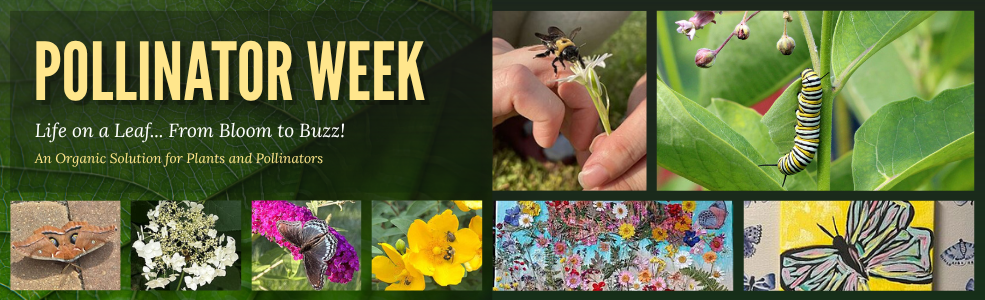
Banner image credits—Featuring the “Art of Life”, from top to bottom and left to right: Sam from Easton, MD, “Oscar, the Bee”; Trix from Petersburg, NY, “Monarch Caterpillar on Common Milkweed”; Evan from Melbourne Beach, FL, “Winged Watcher”; Jocelyn from Contoocook, NH, “Life on a Leaf… Blooms and Buzz!”; Ashley from Oxford, MI, “Butterflies Forever”; Sara from Denton, MD, “Pollen Song”; Janet from Concord, MA, “Spring is Coming”; and, Stephanie from Hamilton, OH, “Butterfly.”
All unattributed positions and opinions in this piece are those of Beyond Pesticides.