(Beyond Pesticides, November 13, 2020) The toxic herbicide dicamba is once again at the center of a larger story about states’ authority to regulate pesticides beyond federal dictates. The Trump EPA (Environmental Protection Agency) has just made it much harder for state regulations to be more protective than federal rules are. It did so via a footnote embedded in dozens of pages of regulatory documents related to EPA’s registration of three new dicamba products. Given conservatives’ long-standing lip service to “states’ rights,” this EPA’s thwarting of the wishes of individual states to respond to their respective circumstances could easily be regarded as an odd — though, during this administration, hardly singular — stance. This latest development underscores EPA’s continuing failures to protect people and the environment, and the increasing tension between centralized, federal regulation and more-local regulation, whether by states or smaller localities.
For nearly 30 years, state regulators have used a Section 24 provision of FIFRA, the Federal, Insecticide, Fungicide and Rodenticide Act — the law that gives EPA authority to regulate pesticides — to establish specific restrictions, on use of federally registered pesticide products, that go beyond what EPA has mandated. The agency has long allowed states to add to the edicts of federal pesticide labels in order to protect workers, crops, and/or the environment under particular local circumstances.
Section 24 harbors two subsections at issue, as Progressive Farmer notes: “Section 24(a) establishes that states have the right to regulate federal pesticides through state legislatures or rulemaking procedures, a time-consuming and often political process that can take years. Section 24(c) is more nimble. It grants states the right to issue ‘special local needs labels’ on an annual basis, to address local agricultural, environmental or public health needs by granting ‘additional uses’ to federal pesticide labels.” Historically, the 24(c) provision has been used extensively to expand pesticide uses allowed on product labels by federal registrations.
For several decades, EPA has construed 24(c) to mean that states can establish more-restrictive regulations than the federal. Indeed, in 1996, it published this as guidance for states. In the past few years, especially, as EPA has failed to enact constraints on the uses of dicamba, which has caused massive devastation to non-target crops and trees (as well as to wildlife), many states have moved to establish additional controls on the pesticide’s use.
Beyond Pesticides reported in 2019 that “A number of states, including Indiana, Minnesota, Missouri, South Dakota, North Dakota, Illinois, and Arkansas, have instituted restrictions on [dicamba] use that surpass those accompanying the federal registration of the compound. Texas, Iowa, Georgia, Kentucky, Alabama, and North Carolina are all eyeing 24(c) requests [for stricter-than-federal controls] for tighter application windows, additional training requirements, better record keeping, new fine structures for violations, and other modifications of the federal label.”
This new (and stealthily announced) EPA impediment to states’ ability to create additional constraints hinges on the agency’s decision to reinterpret what states can do under Section 24(c) of FIFRA. EPA confirmed that the subject footnote represents an official policy change, saying, “EPA has determined that moving forward, EPA may disapprove any state registrations under FIFRA section 24(c) that further restrict use of pesticides registered by EPA, regardless of the chemicals involved. If a state wishes to further restrict use of a pesticide, they must do so under section 24(a) of FIFRA.”
This change means that state regulators will now have to navigate state legislative or rulemaking processes per Section 24(a) in order to enact such protections — far less “nimble” approaches to often urgent, seasonal circumstances. In the case of dicamba, states have frequently chosen to control the timing, nature, location, or quantity of applications of the pesticide in efforts to diminish the damage it causes to non-target plants and organisms. In addition, this reversal by EPA overturns decades of precedent, and as Progressive Farmer reports, “breaks EPA’s past promises to the states and threatens to damage the longstanding cooperative relationship between federal and state regulators.”
Although EPA did foreshadow this change in March 2019, state regulators are feeling blindsided. Back then, EPA announced — during one wave of state additions to federal labels on dicamba — that it might alter its handling of states’ requests to enact stricter controls, claiming that the actual language of 24(c) allows states only to permit additional uses of a federally registered pesticide. EPA was apparently disturbed by the magnitude of use of 24(c) by states to restrict dicamba, particularly in the South and Midwest.
EPA said at the time, “Due to the fact that section 24(a) allows states to regulate the use of any federally registered pesticide, and the fact that some states have instead used 24(c) to implement cut-off dates (and/or impose other restrictions), EPA is now re-evaluating its approach to reviewing 24(c) requests and the circumstances under which it will exercise its authority to disapprove those requests.” State regulators reacted to this announcement with great concern: officials from 10 different states urged EPA not to adopt the policy change, as did the National Association of State Departments of Agriculture and the Association of American Pesticide Control Officials (AAPCO).
Here’s where the blindsiding arises: EPA Office of Pesticide Programs director Rick Keigwin said, alongside the 2019 announcement, that no changes would be made to the agency’s 24(c) interpretation without the input of state regulators. “Before adopting any changes in this regard, we will solicit public comment on our proposed new approaches,” he wrote in the spring and summer of 2019. “We look forward to a robust public dialogue with our stakeholders, partners and co-regulators on this matter.”
But that did not happen, state regulators report. “There was no public comment period, no consultation,” said Leo Reed, an Indiana pesticide regulator and president of AAPCO. Rose Kachadoorian, a pesticide regulator from Oregon (where many 24(c) registrations have occurred) said, “We are co-regulators with EPA, and we believe we have a good relationship with EPA. But this doesn’t feel like a co-regulator relationship. A change in the agency’s interpretation of a law should go through a public process, especially when it deviates from a longstanding practice that EPA has said was fine in [its written guidance].” She also notes that state regulators are frustrated because it seems that EPA is changing its 24(c) policy in order to address its annoyance over state action on one pesticide, dicamba, “potentially at the expense of countless other pesticides that require state-specific restrictive 24(c) labels.”
The existing guidance on 24(c) remains on the EPA website, creating confusion and a “legal limbo” for state regulators. Brook Duer, a staff attorney at Penn State’s Center for Agricultural and Shale Law, opined that even if the literal text of 24(c) comports with EPA’s new interpretation, the decades-old, published interpretation and guidance represent a “binding norm” under federal administrative law. He commented: “So unilaterally reversing it through a footnote, without a more transparent and public process — like what EPA previously represented would be undertaken — is certainly unorthodox and may even create the basis for litigation to prevent the reversal.”
Further, Mr. Duer said, “This is still totally up in the air. There’s no guidance on what happens to restrictive 24(c) labels that are in effect right now — is this a blanket invalidation of them all?” He expects that states may have a hard time getting the clarity they need from any court, in large part because states do not have the budgetary resources to press the matter legally, given both generally declining resources during the pandemic and the significant resource drain that dealing with dicamba has been — even as those states see another season of dicamba use coming in 2021.
These tussles over who can regulate pesticide use beyond federal registration rules, and in what circumstances, happen not only at the federal–state juncture. Many U.S. localities, such as counties and municipalities (often supported by the advocacy of community and nonprofit groups), have sought to act more protectively on pesticide use for their jurisdictions — and often found it tough going.
Typically, a locality will establish stricter regulations, and nearly inevitably, preemption — the ability of a “higher” level of government to override laws or regulations of a lower level, sometimes promoted by industry interests — takes center stage as feds preempt state efforts, or states preempt those of counties or municipalities. An example of the latter was covered by Beyond Pesticides from 2017–2019, when an initiative in Lincoln County, Oregon to ban aerial pesticide spraying had initial success, but was ultimately struck down by a court, citing state preemption.
Beyond Pesticides noted in its coverage of that 2019 EPA announcement on 24(c) that, “[The] issue of preemption of localities’ desires to protect their populations and environment has become an increasingly dynamic frontier at the nexus of pesticide use, health, and environment.” Localities generally face an uphill slog in trying to protect their residents, lands, and resources from the assaults of pesticides, GMOs (genetically modified organisms), factory farms, fracking sites, or a host of other ills that communities may find objectionable because of health, safety, and/or environmental concerns.
Beyond Pesticides has previously provided “explainers” on how preemption operates, and the source of some of the conflict about preemption at the state–local nexus. Salient excerpts are offered here.
On the origin of pre-emption, from a 2017 Daily News Blog article: “The tension between states’ preemptive authority, and the emerging insistence on greater local control to protect its residents, goes to the very heart of not only how governments at state and local levels derive their authority in a democratic system, but also, how that authority is shared — or not. The Supremacy Clause of the U.S. Constitution (Article VI, Clause 2) clearly establishes that the Constitution, federal laws made pursuant to it, and treaties made under its authority, constitute the supreme law of the land. At the state level, things can become a bit less clear. Each state has its own Constitution, of course, its own interpretive history of the document, and its own assignations of authority regarding the host of issues with which governments concern themselves.”
Then, from a 2019 Daily News Blog entry: “In 1991, the U.S. Supreme Court ruled, in Wisconsin Public Intervenor v. Mortier, that the federal law known as FIFRA — the Federal Insecticide, Fungicide and Rodenticide Act — which regulates pesticide distribution, sale, and use, does not preempt local jurisdictions from creating more-stringent pesticide regulation. Thus, it was ruled that FIFRA nowhere expressly supersedes local regulation. However, and critically, the court left intact the ability of states to preempt such regulations. The essential argument of localities, and of Beyond Pesticides in the many cases in which it has participated, is that state preemption laws effectively deny local residents and decision makers their democratic right to better protection when a community decides that minimum standards set by state and federal law are insufficient.
“This tussle between ‘higher’ and ‘lower’ levels of government re: which [can] claim authority to regulate factors in public health and safety, which has played out across communities in the U.S., goes to some of the fundamental principles on which the American democratic experiment is based. In 2012, Beyond Pesticides Executive Director Jay Feldman wrote, ‘This is a very interesting story in American democracy. How did we get to this point in the history of the [U.S.] that we have taken away the local police powers of our local jurisdictions to protect the local public health of our people? This challenges a basic tenet that this country is based on — local governance.’”
Even in this challenging context, some localities have succeeded in passing and enacting ordinances that restrict pesticide use more stringently than federal and state regulations would. In 2013, Takoma Park, Maryland was the first in the nation to restrict the use of cosmetic lawn pesticides on both private and public property within the city.
More recently, Montgomery County, Maryland has successfully adopted its Healthy Lawns Act, which restricts toxic pesticide use on public and private property; the City of Gaithersburg has recently opted in to that law. Prince George’s County (also in Maryland) and Baltimore are considering similar ordinances. The pesticide industry spent years challenging Montgomery County’s law; after numerous court proceedings, the Maryland Court of Appeals granted the county the authority to restrict pesticides on all property, public and private, within its jurisdiction. With the court case settled, communities in the state that had long wanted to rein in use of toxic pesticides that degrade residents’ and environmental health can now do so.
In addition, both Portland and South Portland, Maine have successfully established stricter-than-state regulations on pesticide use. Both municipalities have banned toxic pesticide use on public and private property. None of these local initiatives passed (and survived legal challenges) without very hard work and well-run education and advocacy campaigns. But localities can adopt protective ordinances governing the use of pesticides, and even in states that are more problematic, may be able to do so at least for public lands.
Beyond Pesticides has long asserted the rights of local governments to protect public health and the environment, especially when federal and state governments fail to enact adequate protections. Localities across the country continue the work to pass statutes that would better safeguard residents and resources. Organized people — at local and state levels — can act, whether on dicamba on agricultural fields or glyphosate in public parks, to protect their communities. Learn more about how with Beyond Pesticides’ factsheet on preemption, its Lawn and Landscape Tools for Change, its webpage of Organizational Resources, and the Beyond Pesticides and Organic Consumers Association map of U.S. Pesticide Reform Policies.
Source: https://www.dtnpf.com/agriculture/web/ag/crops/article/2020/11/06/epa-throws-roadblock-state-dicamba
All unattributed positions and opinions in this piece are those of Beyond Pesticides.







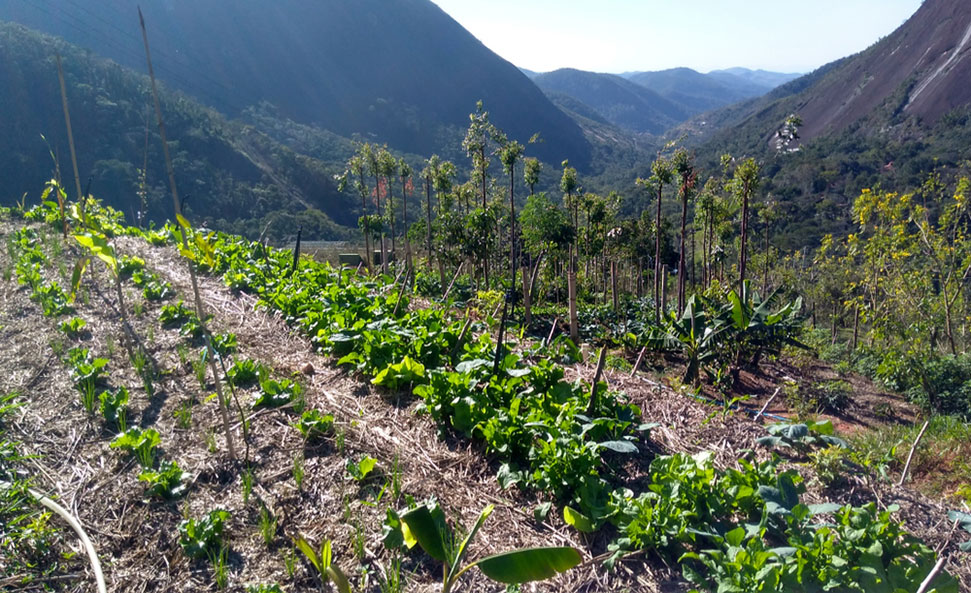 (Beyond Pesticides, November 10, 2020) Higher rates of plant diversity can limit pest pressure and reduce the need for pesticide use, finds
  (Beyond Pesticides, November 5, 2020) Research at the University of California San Francisco (UCSF) finds that pesticide exposure increases the risk of developing Parkinson’s disease (PD), regardless of whether disease onset is idiopathic (spontaneous) or genetic (GBA genetic risk variant). Although the exact etiology of PD remains unknown, epidemiological and toxicological research repeatedly identifies exposure to pesticides, as well as specific gene-pesticide interactions, as significant adverse risk factors that contribute to PD. Furthermore, this study, “
 (Beyond Pesticides, November 2, 2020) It’s not just the top of the ballot that deserves our attention. The facts are the facts. The records of elected U.S. Senators and U.S. Representatives speak for themselves. The decisions affecting public health and the environment of the past four years—with real impact now and for future generations—do not happen without the support of the majority in the U.S. Senate. If you’ve been taking action with Beyond Pesticides Action of the Week, you know this because you have been communicating with Congress for the past four years on key issues that determine whether there will be a sustainable future.


