30
Jul
Protect the Endangered Species Act from Sneak Attacks
 (Beyond Pesticides, July 30, 2018) In place of open debate, Congressional Republicans have once again used riders in three must-pass funding and authorization bills to remove protection from endangered species. It adds up to a huge attack on an immensely popular law. From wolves and grizzly bears to monarchs and burying beetlehttps://action.beyondpesticides.org/p/dia/action4/common/public/?action_KEY=26387s, everyone is at risk.
Wolves could lose protection nationwide. Toxic pesticides could be exempt from environmental review. Threatened wildlife could be forced to wait for lifesaving protection while industry gets the green light to destroy our public lands. And that’s just a glimpse of what Congress is trying to get away with.
Tell your U.S. Senators to oppose these attacks on the Endangered Species Act.
Avoiding direct conflict with a law supported by about 83 percent of Americans (including a large majority of conservatives), according to an Ohio State University poll, Congress has launched hundreds of backdoor attempts to gut the Endangered Species Act and sidestep the laws that protect our air, water, and public lands. If passed, they would change which species get protected, how critical habitat is chosen, and whether climate change can be considered a factor at all. The sneak attacks include:
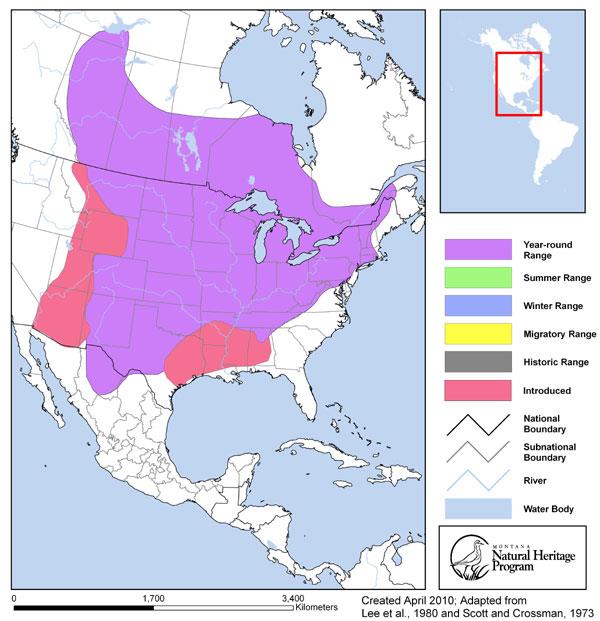
National Defense Authorization Act: The act contains provisions that would undermine the Endangered Species Act. They include two provisions that would wrongfully prohibit the U.S. Fish and Wildlife Service from listing the greater sage grouse and lesser prairie chicken for at least 10 years; one that would prematurely remove protection for American burying beetles; and language targeting vulnerable whales, dolphins, and sea turtles, and robbing them of safeguards under the Marine Mammal Protection Act.
2018 Farm Bill: Two versions of the bill must be reconciled in conference committee, but under consideration are provisions that attack some of our nation’s most iconic species, threaten to pollute our waters, and jeopardize our public lands. If enacted into law, critical safeguards protecting our drinking water and wildlife will be dismantled, as requested by the pesticide lobby.
Fiscal Year 2019 Interior and EPA Appropriations Bill: This bill contains a rider that would prematurely remove protection for gray wolves, both in the Great Lakes region and nationwide. This rider also blocks judicial review, impeding every citizen’s right to hold our government accountable when it acts unlawfully. The best way to get a species off the endangered list is to fully fund the implementation of the Endangered Species Act, and allow it to do its job of recovering species. The bill also attacks wildlife refuges, prohibiting the funding of any refuge that limits planting of genetically modified crops. Use of GMOs in our refuges reduces biodiversity and harms native plants and animals.
Tell your U.S. Senators to oppose these attacks on the Endangered Species Act.
Letter to Senators:
Subject: Protect Endangered Species From Sneak Attacks.
I’m asking you to put a stop to the continuous string of back door attacks by Congress on the environment. In particular, you must reject harmful riders in the National Defense Authorization Act, 2018 Farm Bill, and FY19 Interior–EPA Appropriations Bill. Policy riders attacking our environment and imperiled species don’t belong in unrelated must-pass bills and will have devastating consequences if enacted into law.
Specifically, I ask you to be on guard and to vote against any legislation that includes the following provisions:
— National Defense Authorization Act: Provisions within the bill would undermine the Endangered Species Act, which has staved off extinction for 99 percent of the plants and animals under its care and put hundreds on the road to recovery. The bill includes two provisions that would wrongfully prohibit the U.S. Fish and Wildlife Service from listing the greater sage grouse and lesser prairie chicken for at least 10 years; one that would prematurely remove protection for American burying beetles; language targeting vulnerable whales, dolphins, and sea turtles, and robbing them of safeguards under the Marine Mammal Protection Act.
— 2018 Farm Bill: Two versions of the bill must be reconciled in conference committee, but under consideration are provisions that attack some of our nation’s most iconic species, threaten to pollute our waters, and jeopardize our public lands. If enacted into law, critical safeguards protecting our drinking water and wildlife will be dismantled, as requested by the pesticide lobby.
— FY19 Interior–EPA Appropriations Bill: This bill contains a rider that would prematurely remove protection for gray wolves, both in the Great Lakes region and nationwide. Legislatively delisting wolves is inappropriate, especially in must-pass bills. This rider also blocks judicial review, impeding every citizen’s right to hold our government accountable when it acts unlawfully. The best way to get a species off the endangered list is to fully fund the implementation of the Endangered Species Act and allow it to do its job of recovering species. The bill also attacks wildlife refuges, prohibiting the funding of any refuge that limits planting of genetically modified crops. Use of GMOs in our refuges reduces biodiversity and harms native plants and animals.
Along with the vast majority of Americans, I understand the interdependence of humans, other species, and natural resources. I am appalled by all the backdoor attempts to undermine our environmental laws. Please do the right thing and vote against any legislation that includes these dangerous provisions.
Sincerely,

 (Beyond Pesticides, July 27, 2018) The American Academy of Pediatrics (AAP) has issued new guidelines for measures to lower children’s exposures to chemicals in food and food packaging that are tied to health problems such as obesity, metabolic changes, decreased birth weight, and endocrine disrupting effects, including reduced fertility. Exposures to these chemicals–added to food during processing or in food packaging–are disproportionately high among minority and low-income populations, according to the report, especially given inadequate federal regulation and oversight.
 (Beyond Pesticides, July 26, 2018) A
  (Beyond Pesticides, July 25, 2018) The Village of Franklin Park has become the third and latest community in the state of Illinois to
 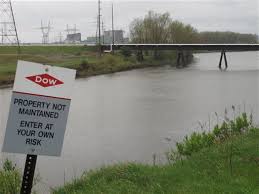 (Beyond Pesticides, July 24, 2018) The White House named Scott Hutchins, PhD, former Dow Chemical Company executive, as Undersecretary of Agriculture for Research, Education and Economics for the U.S. Department of Agriculture (USDA). Dr. Hutchins is now the third Dow alumnus to be hired by the Trump Administration. As a scientist who oversaw Dow’s pesticide research and development, his appointment, if confirmed, has troubling consequences to USDA’s research programs.
 (Beyond Pesticides, July 23, 2018) Whole Foods Quietly Put Its Comprehensive GMO Labeling Policy on Hold. As
 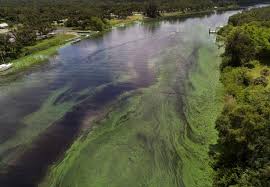 (Beyond Pesticides, July 20, 2018) Algae are elemental to life on Earth as generators of most of the planet’s oxygen and as food for myriad organisms. In the food chain, as in all systems, balance is key;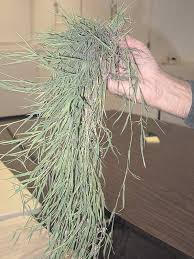
 (Beyond Pesticides, July 18, 2018) Empire State Consumer Project (ESCP), a regional group in Upstate New York, has published its
  (Beyond Pesticides, July 17, 2018) Last week, closing arguments were made in the 9th Circuit Court of Appeals challenging the U.S. Environmental Protection Agency’s (EPA) refusal to ban chlorpyrifos, the pesticide science links to a host of neurological impairments in children. A coalition of labor and health organizations represented by Earthjustice asked a panel of three judges to overturn former EPA Administrator Scott Pruitt’s decision not to ban chlorpyrifos.
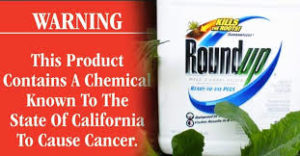 (Beyond Pesticides, July 16, 2018) Legislative Sneak Attacks Continue. Yet another bill has been introduced in Congress to remove accountability from Monsanto/Bayer for its glyphosate herbicide Roundup.™ The so-called “Accurate Labels Act” (S.3019/H.R.6022) would repeal most, if not all, existing labeling and information disclosure laws adopted by state or local governments, including California’s Safe Drinking Water and Toxic Enforcement Act (Prop 65), which has been responsible for the removal of hundreds of dangerous toxic chemicals, including lead, cadmium, and mercury, from commercial and consumer products nationwide.
  (Beyond Pesticides, July 13, 2018) Earlier this year,
  (Beyond Pesticides, July 12, 2018) Neonicotinoid insecticides have become notorious for their
 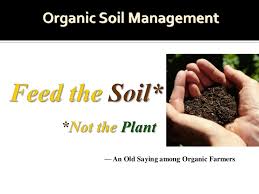 (Beyond Pesticides, July 11, 2018) Ecologically-based farming systems contain far fewer pests and generate much higher profits than their conventional, chemical-based counterparts according to research
 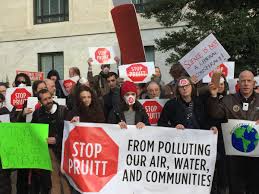 (Beyond Pesticides, July 10, 2018) Scott Pruitt’s resignation as Administrator of the U.S. Environmental Protection Agency (EPA) took effect Monday under a cloud of ethics investigations and alleged collusion with industry to systematically undermine, dismantle, and reverse critical protections for air, water, and workers. Deputy Administrator Andrew Wheeler will take the helm as Acting Administrator after serving as Deputy Administrator, a position that required Senate confirmation. Mr. Wheeler, a lawyer who worked in the toxics office at EPA under Presidents George H.W. Bush ad Bill Clinton, as an aide to U.S. Senator Jim Inhofe (R-OK) – a denier of climate change – and the Senate Committee on Environment and Public Works (EPW), and as a lobbyist for the coal and chemical industry, told the Washington Post: “[I] would say that the agenda for the agency was set out by President Trump. And Administrator Pruitt has been working to implement that. I will try to work to implement the president’s agenda as well. I don’t think the overall agenda is going to change that much, because we’re implementing what the president has laid out for the agency. He made several campaign promises that we are working to fulfill here.”
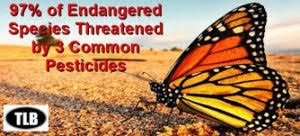 (Beyond Pesticides, July 9, 2018) The Center for Biological Diversity (CBD) is urging the U.S. Fish and Wildlife Service (FWS) to take action to protect 23 wildlife species in the Southeast that are at risk of extinction. Citing deep concerns about unprecedented assaults on the Endangered Species Act (ESA),
  (Beyond Pesticides, July 6, 2018) Two years ago, thirteen bald eagles were found dead on a farm in Maryland. Now the investigation has revealed that these birds died after ingesting the highly toxic pesticide, carbofuran. Carbofuran, whose use has been phased out in the U.S., is so toxic to birds that one granule is all it takes to kill. Irresponsible and illegal use of pesticides is still responsible for primary and secondary poisonings of wildlife, as is the case of these bald eagles.
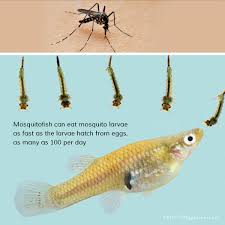 (Beyond Pesticides, July 5, 2018) With mosquito season in full swing throughout the U.S., land managers and abatement districts can be well served by employing biological controls in the form of fathead minnows (
 (Beyond Pesticides, July 2, 2018) The U.S. House of Representatives is considering
  (Beyond Pesticides, June 29, 2018) It is widely known that pollinators are in trouble. In light of this,
  (Beyond Pesticides, June 28, 2018) Having voted to allow retail recreational cannabis sales as of January 1, 2018,
  (Beyond Pesticides, June 27, 2018)