





06
Dec
Groups Urge Trump Administration to Protect Monarch Butterflies
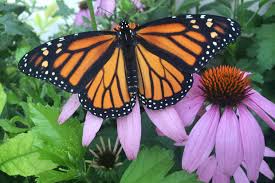 (Beyond Pesticides, December 6, 2017) Last week over 100 conservation and environmental groups urged the federal government to increase funding to protect and conserve monarch butterflies. These iconic butterflies, native to North America, have seen drastic declines in their populations. Surveys report over 80 percent reductions in populations over the last 20 years. Pesticide use, habitat loss, and climate change have all been identified as stressors to these butterflies.
The groups, led by the Center for Biological Diversity, Defenders of Wildlife, and the Humane Society, sent a letter to the U.S. Department of Agriculture (USDA) to do more to help the imperiled butterfly. The letter requests the agency increase the allotment of conservation funds from $4 million- spent last year- to $100 million. The increase in funds is needed for efforts to increase milkweed habitat. In contrast, the government spent over $500 million on sage grouse initiatives to prevent that animal’s listing under the Endangered Species Act (ESA), even though the Trump Administration is seeking to overturn these initiatives.
Currently, the agency has taken some steps to protect monarchs. These include the implementation of the Monarch Butterfly Habitat Development Project and support of the Monarch Butterfly Conservation Fund. But, according to the letter, “Restoring the monarch butterfly and its habitat will require a substantial contribution from the agricultural sector and strong leadership…” Monarch populations have fallen more than 80 percent over the last 20 years, and it is estimated that there is a 60 percent chance the multigenerational migration of these butterflies would completely collapse in the next 20 years. Milkweed, the only forage for monarchs has decreased by 21 percent, especially in the midwest, where agricultural fields and pesticide use have expanded. Monarch butterflies are hatched on milkweed plants and spend much of their juvenile periods foraging there. The letter notes that to restore millions of acres of milkweed, it would cost at least $100 million per year, according to government assessments.
The U.S. Fish and Wildlife Service (FWS) is set to determine whether to protect monarch butterflies under the Endangered Species Act. An agreement was made with Center for Food Safety and the Center for Biological Diversity in July 2016 that requires the agency to decide by June 2019 whether the butterflies will receive federal protection. This agreement came in response to a lawsuit earlier that year to force the agency to set a legally binding deadline for a decision on a 2014 petition calling for protection of the species. Many see FWS’ consideration of federal protection for monarchs as a positive step toward improving habitat and raising awareness about the decline of the butterfly, as well as the plight of other pollinator populations.
The monarch butterfly is one of many important pollinator species that have experienced drastic declines in recent years. Along with threats from glyphosate use and habitat loss, the use of pesticides, like neonicotinoids, has also been linked to monarch declines. The use of genetically engineered (GE) crops (Roundup-ready crops) allows the use of Monsanto’s glyphosate in cropland, an important factor in the decline of the monarch. Glyphosate eradicates milkweed and the dramatic surge in Roundup use and “Roundup Ready” crops has virtually wiped out milkweed plants in midwestern corn and soybean fields. It is estimated that these butterflies have lost more than 165 million acres of habitat. A 2016 study found that the increasing use of neonicotinoid insecticides is correlated with a steep decline in butterfly health and reproductive success. This study looked at 67 species of butterfly in Northern California and found a correlation between butterfly population decline and increasing neonicotinoid applications, which also appeats to be more severe for smaller-bodied species. According to the researchers, the results suggest that neonicotinoids could influence non-target insect populations when applied nearby. Pesticides like neonicotinoids also harm other non-target pollinators like honey bees and other bee species. Studies show an association with decreased learning, foraging and navigational ability, as well as increased vulnerability to pathogens and parasites, in bees.
Critical to the survival of monarchs, other pollinators, and organisms essential to ecological balance is the large-scale adoption of organic farming practices. Beyond Pesticides supports organic agriculture as effecting good land stewardship and a reduction in hazardous chemical exposures for workers on the farm. The pesticide reform movement, citing pesticide problems associated with chemical agriculture, from groundwater contamination and runoff to drift, views organic as the solution to a serious public health and environmental threat.
All unattributed positions and opinions in this piece are those of Beyond Pesticides.
Source: Center for Biological Diversity

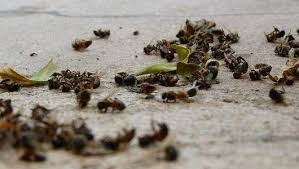 (Beyond Pesticides, December 5, 2017) Fungicides are likely playing an important role in the decline of North American bumblebee populations, according to new research published by a team at Cornell University. While overwhelming data continue to indicate that insecticides, particularly the neonicotinoid class of chemicals, are the leading factor in overall pollinator declines, Cornell scientists discovered that fungicides, in particular the chemical chlorothalonil, are likely compounding risk and toxicity for U.S. bumblebee species. As new studies continue to expand the chemical culprits in pollinator declines, calls for a wholesale change in agricultural practices toward more sustainable organic production are reinforced.
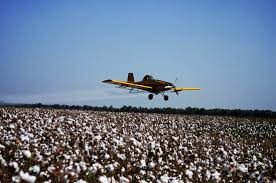 (Beyond Pesticides, December 4, 2017) You told the Arkansas Plant Board to exercise its authority to protect farmers, consumers, and the environment from use of the herbicide dicamba on genetically engineered (GE) soybeans, and the board listened. Now, we need to ask the board to stop the use of
 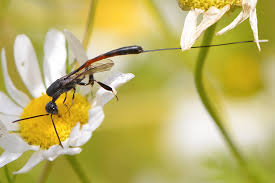 (Beyond Pesticides, December 1, 2017) Ichneumonid wasps (family Ichneumonidae), are a widely distributed parasitoid wasp family within the order Hymenoptera. The name “ichneumonid” comes from Greek words meaning “tracker” and “footprint.” And females do indeed hunt for suitable “hosts” by first identifying the organism’s food source. Once a suitable host is found, females deposit eggs onto the unsuspecting insect larvae where, within ten days to several weeks, the Ichneumonid larva kills the host by feeding on its body fluids before it emerges. They are also known as “scorpion wasps” for the extreme length and curving motion of their segmented abdomens. Note: both adult males and females are stingless, and feed on nectar.
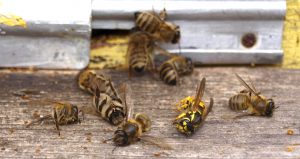 both contain the active ingredient, sulfoxaflor, which is highly toxic to bees. The ruling overturned the decision by France’s health and environment agency, ANSES, to allow the use of the sulfoxaflor products. Sulfoxaflor use was also challenged in the U.S. by beekeepers concerned about its impact on already declining bee populations.
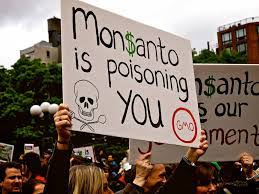 industry-fueled attacks on its reputation in the wake of
 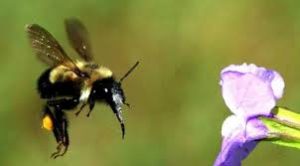 (Beyond Pesticides, November 28, 2017) Bumblebees exposed to field-realistic levels of neonicotinoid insecticides have problems with “buzz pollination” that results in reduced pollen collection, according to new research published in
  (Beyond Pesticides, November 27, 2017) Congress is working on the 2018 Farm Bill, which will determine how $956 billion of our tax money will be spent over the coming years in shaping our food system. This year, U.S. Representative Earl Blumenauer (D-OR) has introduced a
  (Beyond Pesticides, November 22-23, 2017) As we sit with friends and family this Thanksgiving, let us appreciate how our delicious meal got to your table. The turkey, potatoes, stuffing, and cider all originated in fields far from our homes, and those working in those fields deserve our thanks. They deserve our thanks because many of these workers work long hours, under deplorable conditions, and are exposed to pesticides that put their health and that of their families at risk. So, as we enjoy our pumpkin pie, cranberry sauce, and apple crumble, remember all the hardworking farmworkers who have helped to bring our meal to the Thanksgiving table. At the same time, we give thanks for the environment that is so plentiful and nurturing of life, and remember the importance of pollinators and biodiversity in sustaining life.
 according to the latest research from New Zealand scientists,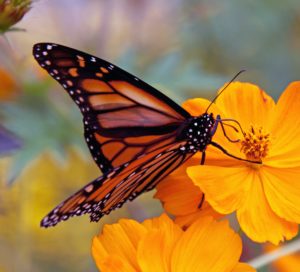
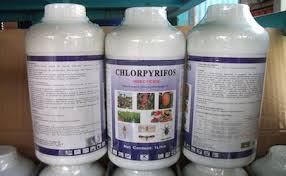 findings on the risk of three highly toxic organophosphate pesticides to endangered species. The move is widely seen by environmental advocates as influenced by the chemical industry, in particular the
 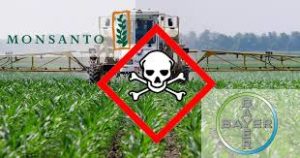 proposed merger of Bayer (BAYN) and Monsanto (MON). The signatures were delivered as two new reports reveal devastating impacts that will be caused by the merger on consumers and farmers, including higher food prices, less innovation, limited seed choices, and escalating dependency of toxic chemical inputs in food production.
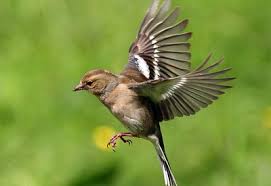 Reports. With the organophosphate
 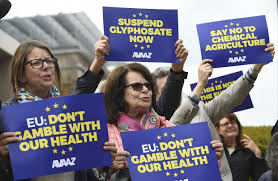 Member states voted last week, but failed to approve, continued use even after months of deliberation over the controversial herbicide. Glyphosate (Roundup) is also up for review in the U.S., but many expect the herbicide to be reregistered by the U.S. Environmental Protection Agency (EPA), despite health concerns.
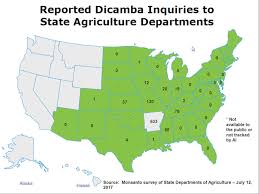 damage, the Arkansas State Plant Board (ASPB) voted earlier this week to prohibit the use of the weedkiller in agriculture during the next growing season. If officially approved by a subcommittee of the state legislature, the new regulations will make dicamba applications between April 16 and October 31, 2018, illegal for Arkansas farmers. The move by the State Plant Board is a huge blow to multinational agrichemical companies Monsanto and BASF, both of which have developed genetically engineered (GE) soybean crops tolerant of dicamba herbicides.
 Affairs (VA) Secretary David Shulkin announced last week he intends to delay a decision to expand coverage to new illnesses. Despite a
  product, NemaStrike, for nematode or roundworm control (nematicide) have been reporting skin irritation, including rashes that occurred after use. Now the seed giant is pausing a full rollout of the product, while blaming farmers for not using gloves and other protective equipment to handle the treated seeds. This is another blunder from Monsanto and the latest incident highlighting the deficiencies in the U.S. Environmental Protection Agency’s (EPA) pesticide registration process in light of the millions of acres of crop damage from Monsanto products green-lighted by EPA.
 retiring board member Francis Thicke, Ph.D., in one of the farmer positions, highlighted ways that big ag has perverted the mission of organic, as originally conceived by organic practitioners, consumers, and environmentalists. Dr. Thicke mentioned “organic” CAFO (concentrated animal feeding operation) dairies with 15,000 cows in a desert feedlot, “organic” chicken CAFOs without outdoor access, fraud in “organic” grain shipments, and, now, “organic” hydroponics. His frustrations mirror those of hundreds who protested against “organic” hydroponics at the Jacksonville, Florida meeting and in written comments.
 research and strengthening enforcement of the organic standards:
 and other techniques in attempts to become pregnant, according to new research published by Harvard University doctors in the
 Fun fact: The Baltimore orioles’ slender beaks allow them to feed in an unusual way. By first piercing soft fruits with their closed bills, the birds open their mouths to cut a strip through the juicy fruit, allowing them to drink the gushing liquid with their brushy-tipped tongues, in a process called “gaping.”


