





19
Dec
EPA Beginning to Backtrack on Farmworker Health Protections from Toxic Pesticides
(Beyond Pesticides, December 19, 2017) The U.S. Environmental Protection Agency (EPA) plans to revisit, and potentially weaken, rules passed in 2015 to update farmworker protections from hazardous pesticides. Improvements to Agricultural Worker Protection Standards (AWPS) were proposed under the 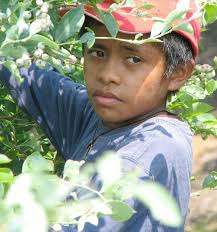 Obama Administration after over a 20-year delay. While certain provisions will go into effect next year, the Trump Administration and EPA Administrator Scott Pruitt will nonetheless propose new changes that are likely to significantly weaken safeguards for farmworker health. Health and farmworker groups are deriding the move as another signal that the current Administration is carrying out the orders of the pesticide industry.
Most workers in the U.S. look to the Occupational Safety and Health Administration (OSHA) for standards to protect them from exposure to hazardous chemicals. However, farmworkers are not eligible for protection under these rules. Protection for farmworkers from pesticides is left to EPA’s authority under AWPS, a standard that is far less protective than OSHA.
EPA announced in a press release that three aspects of the Obama-era AWPS would be revisited: i) a requirement that the farmworker be a minimum age of 18 to apply toxic pesticides; ii) a provision that establishes 25 to 100 ft ‘exclusion zones’ after toxic pesticide applications; and iii) a clause which allows farmworkers to have a ‘designated representative’ obtain information about where and when pesticides were applied.
Changes to these aspects of AWPS are viewed as a benefit to the pesticide industry, which says the rules will be too expensive to implement, and weaken health protections for farmworkers. What parent would want their child to apply restricted use pesticides, the most toxic chemicals on the market? How is it acceptable to expose any human to known carcinogens or neurotoxicants without reasonable buffer zones or areas to take shelter? Why should individuals, their doctors, or their attorneys be denied information about chemical exposure that could help address health problems or bring accountability to dangerous business practices?
Despite the plan to propose new rulemaking, EPA does plan to allow the Certification of Pesticide Applicators Rule within the AWPS to go into effect on May 22, 2018, nearly a year after originally intended. These rules provide new training and compliance requirements for pesticide applicators. In June 2017, farmworker and health organizations, including Earthjustice and Farmworker Justice, sued EPA for delaying the rule, which the agency provided the public only four days to comment on before making the move.
Farmworkers encounter both acute and chronic risks from pesticide exposure. A report published in late 2016 by the Center for Disease Control and Prevention (CDC) determined that between 2007 and 2011, over 2,600 cases of acute pesticide poisoning occurred among pesticide workers in 12 states. Poisoning incidents of agricultural pesticide applicators was over 37 times those of nonagricultural workers. A separate report from the state of California in 2016 found substantial increases in pesticide poisoning incidents.
Farmworkers and pesticide applicators are at increased risk for a range of diseases as a result of their frequent exposure to toxic pesticides. Research from the United States’ long-running Agricultural Health Study found earlier this year that male pesticide applicators who were part of a pesticide spill or related accident were more likely to experience DNA changes that make them more susceptible to prostate cancer.
While the Obama-era update to AWPS was not ideal, and could have been further strengthened, the process considered a wide range of stakeholder input, including both industry and farmworker advocates. Opening back up the rules will benefit only one group of stakeholders, the pesticide industry. To protect farmworkers in the face of government inaction and backsliding, help effect a shift in consumer preference away from foods laced with toxic pesticides. Vote with your food dollars by purchasing organic whenever possible. By choosing organic, consumers help grow a system that eschews the use of toxic pesticides, protecting the health of farmworkers and their families. To learn more about how buying organic food can help safeguard farmworkers from toxic pesticides, see Beyond Pesticides’ Eating with a Conscience guide. And for more information on how you can get educated and active in protecting farmworkers and changing our agricultural system towards safer practices, see Beyond Pesticides Agricultural Justice webpage.
All unattributed positions and opinions in this piece are those of Beyond Pesticides.
Source: EPA Press Release, Bloomberg BNA

 share offer a modest, partial (75 percent) reimbursement of up to $750 annually per certification, to help defray these costs. Having a diversity of scale of operations involved in organic production helps to maintain the integrity, vitality and opportunity of the U.S. organic sector.
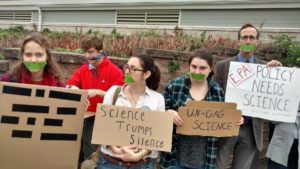 would not pass Senate confirmation due to his deep connections to the chemical industry. In a letter obtained by the Associated Press, Dr. Dourson indicated his move “avoids unnecessarily politicizing the important environmental protection goals of Administrator Pruitt.” Health and environmental groups, including
  neonicotinoids, the class of chemicals highly toxic to bees and aquatic invertebrates. And now, although neonicotinoids were banned from use on certain crops in the European Union (EU) in 2013, an EU vote to extend the ban has been delayed.
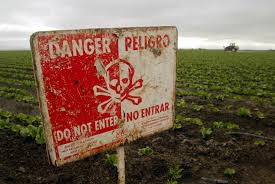 and societies. This European study combined cost calculations for exposures to environmental chemicals, including pesticides, air pollution, and endocrine disrupting substances, and suggests that a shift in priority setting for environmental policy is needed.
 drift-prone dicamba-based herbicide next season, despite links to widespread crop damage that has pitted neighbor against neighbor in agricultural communities throughout the country. The move comes as more and more states enact or consider restrictions on use of the herbicide, which is intended to be paired with genetically engineered (GE) soybean seeds resistant to both dicamba and another controversial herbicide produced by Monsanto, glyphosate.
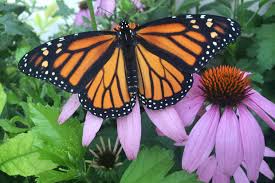 (Beyond Pesticides, December 11, 2017)
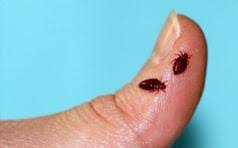 bugs, according to a study published this month in the
  (Beyond Pesticides, December 7, 2017) European health and environmental groups Global 2000 and Pesticide Action Network (PAN) have announced plans to sue European Union authorities over their assessment of the herbicide glyphosate, the active ingredient in Roundup products produced by the chemical company Monsanto. The groups claim that the German regulatory authority, the Federal Institute for Risk Assessment (BfR), and the European Food Safety Authority (EFSA) used material directly from Monsanto in their report over the safety of glyphosate without making clear that the data came from Monsanto itself. “Both the BfR and the EFSA were in breach of the requirement obliging them to make an independent, objective and transparent assessment,” the groups said in a statement
 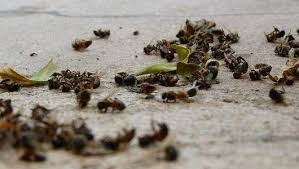 (Beyond Pesticides, December 5, 2017) Fungicides are likely playing an important role in the decline of North American bumblebee populations, according to new research published by a team at Cornell University. While overwhelming data continue to indicate that insecticides, particularly the neonicotinoid class of chemicals, are the leading factor in overall pollinator declines, Cornell scientists discovered that fungicides, in particular the chemical chlorothalonil, are likely compounding risk and toxicity for U.S. bumblebee species. As new studies continue to expand the chemical culprits in pollinator declines, calls for a wholesale change in agricultural practices toward more sustainable organic production are reinforced.
 (Beyond Pesticides, December 4, 2017) You told the Arkansas Plant Board to exercise its authority to protect farmers, consumers, and the environment from use of the herbicide dicamba on genetically engineered (GE) soybeans, and the board listened. Now, we need to ask the board to stop the use of
 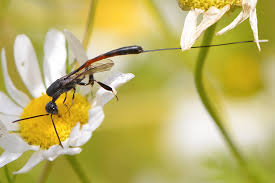 (Beyond Pesticides, December 1, 2017) Ichneumonid wasps (family Ichneumonidae), are a widely distributed parasitoid wasp family within the order Hymenoptera. The name “ichneumonid” comes from Greek words meaning “tracker” and “footprint.” And females do indeed hunt for suitable “hosts” by first identifying the organism’s food source. Once a suitable host is found, females deposit eggs onto the unsuspecting insect larvae where, within ten days to several weeks, the Ichneumonid larva kills the host by feeding on its body fluids before it emerges. They are also known as “scorpion wasps” for the extreme length and curving motion of their segmented abdomens. Note: both adult males and females are stingless, and feed on nectar.
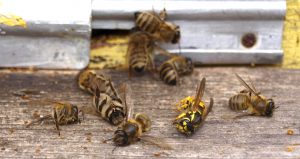 both contain the active ingredient, sulfoxaflor, which is highly toxic to bees. The ruling overturned the decision by France’s health and environment agency, ANSES, to allow the use of the sulfoxaflor products. Sulfoxaflor use was also challenged in the U.S. by beekeepers concerned about its impact on already declining bee populations.
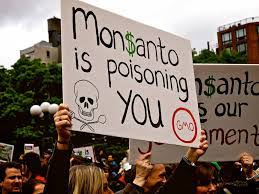 industry-fueled attacks on its reputation in the wake of
 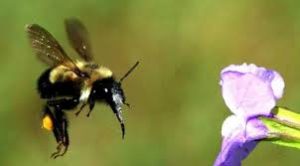 (Beyond Pesticides, November 28, 2017) Bumblebees exposed to field-realistic levels of neonicotinoid insecticides have problems with “buzz pollination” that results in reduced pollen collection, according to new research published in
  (Beyond Pesticides, November 27, 2017) Congress is working on the 2018 Farm Bill, which will determine how $956 billion of our tax money will be spent over the coming years in shaping our food system. This year, U.S. Representative Earl Blumenauer (D-OR) has introduced a
  (Beyond Pesticides, November 22-23, 2017) As we sit with friends and family this Thanksgiving, let us appreciate how our delicious meal got to your table. The turkey, potatoes, stuffing, and cider all originated in fields far from our homes, and those working in those fields deserve our thanks. They deserve our thanks because many of these workers work long hours, under deplorable conditions, and are exposed to pesticides that put their health and that of their families at risk. So, as we enjoy our pumpkin pie, cranberry sauce, and apple crumble, remember all the hardworking farmworkers who have helped to bring our meal to the Thanksgiving table. At the same time, we give thanks for the environment that is so plentiful and nurturing of life, and remember the importance of pollinators and biodiversity in sustaining life.
 according to the latest research from New Zealand scientists,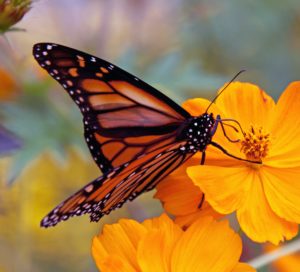
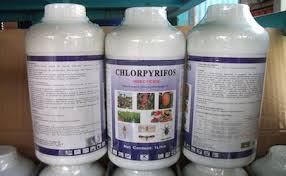 findings on the risk of three highly toxic organophosphate pesticides to endangered species. The move is widely seen by environmental advocates as influenced by the chemical industry, in particular the
  proposed merger of Bayer (BAYN) and Monsanto (MON). The signatures were delivered as two new reports reveal devastating impacts that will be caused by the merger on consumers and farmers, including higher food prices, less innovation, limited seed choices, and escalating dependency of toxic chemical inputs in food production.
 Reports. With the organophosphate


