





07
Dec
Environmental Groups Plan to Sue EU Regulators over Glyphosate Decision
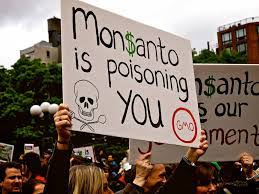
 (Beyond Pesticides, December 7, 2017) European health and environmental groups Global 2000 and Pesticide Action Network (PAN) have announced plans to sue European Union authorities over their assessment of the herbicide glyphosate, the active ingredient in Roundup products produced by the chemical company Monsanto. The groups claim that the German regulatory authority, the Federal Institute for Risk Assessment (BfR), and the European Food Safety Authority (EFSA) used material directly from Monsanto in their report over the safety of glyphosate without making clear that the data came from Monsanto itself. “Both the BfR and the EFSA were in breach of the requirement obliging them to make an independent, objective and transparent assessment,” the groups said in a statement provided to Reuters.
PAN and Global 2000 filed legal complaints with investigators in both Berlin and Vienna, and plan to follow up with suits in France and Italy. The groups cite Austrian criminal code in their complaint, which indicates that “incorrect or falsified data” could be cause for commercial fraud. The two groups are also alleging that EFSA and BfR willfully endangered the public and the environment. Although the next steps are unclear, groups indicate to Reuters that they plan to work these cases through domestic courts and eventually toward the European Court of Justice.
The lawsuit against these agencies comes as the European Commission of 28 member states voted late last month to extend the allowed use of glyphosate in the continent for five years. The close vote, which saw nine against, and one abstention, pitted Germany against France, with the former country winning out after swaying the vote in favor of continued allowance of the chemical. Despite the decision, France announced it remains committed to eliminating the herbicide from use within its home county as soon as possible, and will continue to engage at the pan-European level to abolish glyphosate use.
Both EFSA and BfR have been accused of working closely with Monsanto to sway their final decisions on the controversial chemical. In 2015, reports indicated that BfR based its glyphosate renewal assessment almost solely on industry science and classified industry reports from an industry greenwashing group called the Glyphosate Task Force. It was also found that three scientists on Germany’s scientific panel on pesticides work for the pesticide industry.
In 2017, another report found that EFSA copied “dozens of pages” of documents submitted by the Glyphosate Task Force when it released its renewal assessment report recommending continued use of the chemical. Beyond concerns over collusion is the fact that neither BfR nor EFSA looked at formulated glyphosate products like Roundup. Both evaluations, including of course the Glyphosate Task Force evaluation, only considered pure, technical grade glyphosate in their assessment of the chemical’s health impacts. When the World Health Organization deemed glyphosate carcinogenic, it looked at the health effects of both the active ingredient and formulated products such as Roundup.
Monsanto indicated at the time of the report that EFSA wrote it the way it did because of the large number of studies that it needed to assess. However, both EFSA and the German regulatory agencies continue to refuse to disclose two key chronic toxicity studies that were pivotal to the decision, citing them as confidential business information.
While the EU five-year authorization is a setback, environmental and health groups will continue to challenge these decisions in the courts, as well as at the national level within EU member states. The U.S. is no less subject to the influence of multi-national chemical companies like Monsanto. Eliminating glyphosate and other toxic chemical use in the U.S. may also require continued court action, such as the numerous personal injury lawsuits against Monsanto’s Roundup, as well as sustained grassroots advocacy. Start your own local movement to stop toxic pesticide use in your community by arming yourself with the latest science on toxic chemicals and their alternatives, building a coalition of concerned residents, and taking your concerns to elected officials. Contact Beyond Pesticides at [email protected] or 202-543-5450 for assistance.
All unattributed positions and opinions in this piece are those of Beyond Pesticides.
Source: Reuters

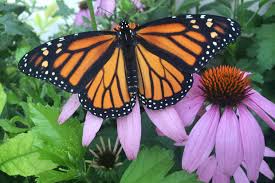 (Beyond Pesticides, December 6, 2017) Last week over 100 conservation and environmental groups urged the federal government to increase funding to protect and conserve monarch butterflies. These iconic butterflies, native to North America, have seen drastic declines in their populations. Surveys report over 80 percent reductions in populations over the last 20 years. Pesticide use, habitat loss, and climate change have all been identified as stressors to these butterflies.
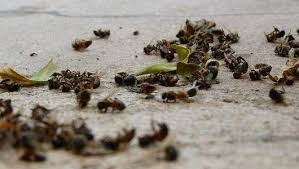 (Beyond Pesticides, December 5, 2017) Fungicides are likely playing an important role in the decline of North American bumblebee populations, according to new research published by a team at Cornell University. While overwhelming data continue to indicate that insecticides, particularly the neonicotinoid class of chemicals, are the leading factor in overall pollinator declines, Cornell scientists discovered that fungicides, in particular the chemical chlorothalonil, are likely compounding risk and toxicity for U.S. bumblebee species. As new studies continue to expand the chemical culprits in pollinator declines, calls for a wholesale change in agricultural practices toward more sustainable organic production are reinforced.
 (Beyond Pesticides, December 4, 2017) You told the Arkansas Plant Board to exercise its authority to protect farmers, consumers, and the environment from use of the herbicide dicamba on genetically engineered (GE) soybeans, and the board listened. Now, we need to ask the board to stop the use of
 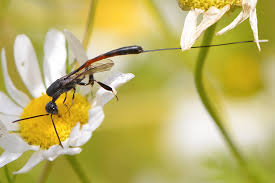 (Beyond Pesticides, December 1, 2017) Ichneumonid wasps (family Ichneumonidae), are a widely distributed parasitoid wasp family within the order Hymenoptera. The name “ichneumonid” comes from Greek words meaning “tracker” and “footprint.” And females do indeed hunt for suitable “hosts” by first identifying the organism’s food source. Once a suitable host is found, females deposit eggs onto the unsuspecting insect larvae where, within ten days to several weeks, the Ichneumonid larva kills the host by feeding on its body fluids before it emerges. They are also known as “scorpion wasps” for the extreme length and curving motion of their segmented abdomens. Note: both adult males and females are stingless, and feed on nectar.
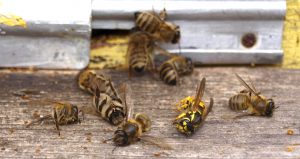 both contain the active ingredient, sulfoxaflor, which is highly toxic to bees. The ruling overturned the decision by France’s health and environment agency, ANSES, to allow the use of the sulfoxaflor products. Sulfoxaflor use was also challenged in the U.S. by beekeepers concerned about its impact on already declining bee populations.
 industry-fueled attacks on its reputation in the wake of
 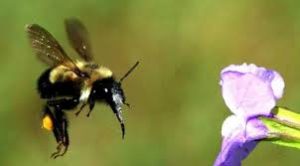 (Beyond Pesticides, November 28, 2017) Bumblebees exposed to field-realistic levels of neonicotinoid insecticides have problems with “buzz pollination” that results in reduced pollen collection, according to new research published in
  (Beyond Pesticides, November 27, 2017) Congress is working on the 2018 Farm Bill, which will determine how $956 billion of our tax money will be spent over the coming years in shaping our food system. This year, U.S. Representative Earl Blumenauer (D-OR) has introduced a
  (Beyond Pesticides, November 22-23, 2017) As we sit with friends and family this Thanksgiving, let us appreciate how our delicious meal got to your table. The turkey, potatoes, stuffing, and cider all originated in fields far from our homes, and those working in those fields deserve our thanks. They deserve our thanks because many of these workers work long hours, under deplorable conditions, and are exposed to pesticides that put their health and that of their families at risk. So, as we enjoy our pumpkin pie, cranberry sauce, and apple crumble, remember all the hardworking farmworkers who have helped to bring our meal to the Thanksgiving table. At the same time, we give thanks for the environment that is so plentiful and nurturing of life, and remember the importance of pollinators and biodiversity in sustaining life.
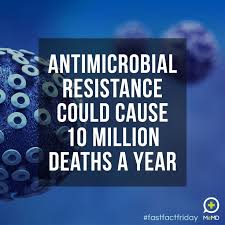 according to the latest research from New Zealand scientists,
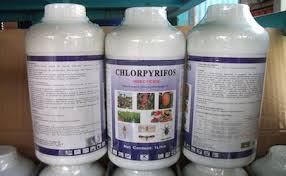 findings on the risk of three highly toxic organophosphate pesticides to endangered species. The move is widely seen by environmental advocates as influenced by the chemical industry, in particular the
  proposed merger of Bayer (BAYN) and Monsanto (MON). The signatures were delivered as two new reports reveal devastating impacts that will be caused by the merger on consumers and farmers, including higher food prices, less innovation, limited seed choices, and escalating dependency of toxic chemical inputs in food production.
 Reports. With the organophosphate
 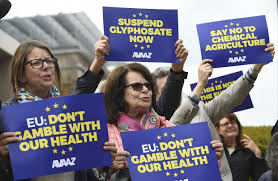 Member states voted last week, but failed to approve, continued use even after months of deliberation over the controversial herbicide. Glyphosate (Roundup) is also up for review in the U.S., but many expect the herbicide to be reregistered by the U.S. Environmental Protection Agency (EPA), despite health concerns.
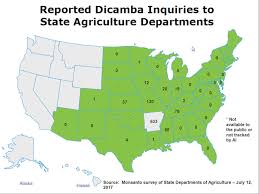 damage, the Arkansas State Plant Board (ASPB) voted earlier this week to prohibit the use of the weedkiller in agriculture during the next growing season. If officially approved by a subcommittee of the state legislature, the new regulations will make dicamba applications between April 16 and October 31, 2018, illegal for Arkansas farmers. The move by the State Plant Board is a huge blow to multinational agrichemical companies Monsanto and BASF, both of which have developed genetically engineered (GE) soybean crops tolerant of dicamba herbicides.
 Affairs (VA) Secretary David Shulkin announced last week he intends to delay a decision to expand coverage to new illnesses. Despite a
  product, NemaStrike, for nematode or roundworm control (nematicide) have been reporting skin irritation, including rashes that occurred after use. Now the seed giant is pausing a full rollout of the product, while blaming farmers for not using gloves and other protective equipment to handle the treated seeds. This is another blunder from Monsanto and the latest incident highlighting the deficiencies in the U.S. Environmental Protection Agency’s (EPA) pesticide registration process in light of the millions of acres of crop damage from Monsanto products green-lighted by EPA.
 retiring board member Francis Thicke, Ph.D., in one of the farmer positions, highlighted ways that big ag has perverted the mission of organic, as originally conceived by organic practitioners, consumers, and environmentalists. Dr. Thicke mentioned “organic” CAFO (concentrated animal feeding operation) dairies with 15,000 cows in a desert feedlot, “organic” chicken CAFOs without outdoor access, fraud in “organic” grain shipments, and, now, “organic” hydroponics. His frustrations mirror those of hundreds who protested against “organic” hydroponics at the Jacksonville, Florida meeting and in written comments.
 research and strengthening enforcement of the organic standards:
 and other techniques in attempts to become pregnant, according to new research published by Harvard University doctors in the



