





18
Jan
More Documentation of EPA’s Failures in Allowing Use of Roundup, as French Court Bans It
 (Beyond Pesticides, January 18, 2019) A new analysis by Charles Benbrook, PhD, published in the journal Environmental Sciences Europe, adds to the chronicle of the failures of the U.S. Environmental Protection Agency (EPA) to protect human health from toxic pesticides, and in this subject instance, from glyphosate. Meanwhile, a French Court has pulled the license for a Roundup product, citing the French government’s failure to protect public health.
In his paper, Dr. Benbrook examines the divergent positions on the carcinogenicity of glyphosate — the active ingredient in a number of herbicides, most notably Monsanto’s (now Bayer’s) Roundup — taken by the International Agency for Research on Cancer (IARC) and by EPA. The paper calls out EPA’s handling of science related to the safety of glyphosate, suggesting that the agency has discounted evidence of the compound’s association with genotoxicity — destructive effects on cellular genetic material that can cause mutations — which can result in cancer.
Dr. Benbrook is an American agricultural economist, former executive director of the National Academy of Sciences board on agriculture, and former research professor at the Center for Sustaining Agriculture and Natural Resources at Washington State University. He has long studied pesticide use related to genetically engineered crops in the U.S., as well as their health impacts; see previous coverage by Beyond Pesticides here and here.
Publication of this paper follows the August 2018 San Francisco County Superior Court landmark decision for plaintiff DeWayne “Lee” Johnson, a former school groundskeeper exposed regularly to Roundup in the course of his job duties, who was diagnosed with Non-Hodgkins Lymphoma at age 42 and became terminally ill. The jury awarded Mr. Johnson $39 million in compensatory damages, and $250 million in punitive damages in his suit against Monsanto, then-maker of Roundup. (The judge later cut the total $289 million figure to $78 million.)
The analysis also precedes the first scheduled federal trial about whether glyphosate compounds can cause cancer. That suit, by California resident Edwin Hardeman, which will be heard in federal district court in San Francisco starting on February 25, will be the first to go to a jury among more than 620 cases pending in federal litigation. Dr. Benbrook testified as an expert witness in Mr. Johnson’s case, and is expected to testify for the plaintiff in Mr. Hardeman’s. Unsurprisingly, the defendant in the federal court case is seeking to have Dr. Benbrook’s testimony excluded.
The difference between the IARC and EPA positions on the carcinogenicity of glyphosate is this: in March 2015, IARC classified glyphosate (as well as malathion and diazinon) as “probably carcinogenic to humans.” (Upon IARC’s announcement, Beyond Pesticides called on EPA and the U.S. Department of Agriculture (USDA) to stop the use of the herbicide, given that ruling.) EPA, on the other hand, continues to classify glyphosate as “not likely to be carcinogenic to humans,” despite scientific evidence.
Dr. Benbrook’s analysis considered the number and nature of the glyphosate studies evaluated by IARC and EPA. His conclusion? “Clearly, compared to EPA’s genotoxicity review, the IARC review is grounded on more recent, more sensitive, and more sophisticated genotoxic studies, and more accurately reflects real-world exposures.” In addition, he noted that EPA has relied for its fundamental assessment of glyphosate on dozens of studies paid for by Monsanto (and other makers of glyphosate products) that found no evidence of association with the development of cancer in those exposed.
EPA has maintained that its review of glyphosate has been comprehensive and vigorous, that glyphosate represents a “low toxicity” risk for humans, and that glyphosate-based products are safe to use when label directions are followed. Dr. Benbrook, however, says that very little of the research EPA has used in its review of glyphosate actually evaluates the compound in the formulations that are sold in the marketplace and used “on the ground.” In its classification decision, IARC highlighted concerns about herbicide formulations that combine glyphosate with other ingredients to enhance weed killing effectiveness.
In fact, EPA began to collaborate only in 2016 — after glyphosate herbicides had been on the market for 42 years — with the U.S. National Toxicology Program (NTP) to assess the relative toxicity of the various glyphosate formulations. Early results of that assessment (released in 2018) point to evidence that Roundup and other formulations are potentially more toxic to human cells than is the active ingredient alone. Acting Chief of NTP Mike DeVito said that its early findings are clear on one key point. “We see the formulations are much more toxic. The formulations were killing the cells.”
Although Dr. Benbrook’s analysis is the first to do a deep dive on how and why the EPA and IARC drew such different conclusions, other scientists (including some from EPA’s Office of Research and Development, and from a panel of scientific experts convened by the EPA) have also identified problems with the agency’s classification of glyphosate as “not likely to be carcinogenic to humans.” He reviewed the citations for genotoxicity testing in EPA and IARC reports — both those that were published in peer-reviewed journals and the unpublished ones given to EPA by Monsanto (and other companies).
Environmental Health News reports that Dr. Benbrook’s analysis revealed that, within the body of available evidence, EPA relied on 151 studies; 115 showed no evidence of genotoxicity, and 36 that had positive results (i.e., showed evidence of genotoxicity). IARC cited 191 studies; 45 showed negative results (no evidence of genotoxicity), and 146 showed evidence of genotoxicity. On that basis, IARC reported that within these studies it found “strong evidence that exposure to glyphosate or glyphosate-based formulations is genotoxic.”
Dr. Benbrook’s analysis also found that at least 27 other studies published during the past three years have addressed potential mechanisms of genotoxic action for glyphosate and/or glyphosate-based herbicide formulations, and all but one reported one or more positive result. According to Dr. Benbrook, EPA’s failure to focus on these formulations is dangerous because they “account for all commercial uses and human exposures (no herbicide products contain just glyphosate),” and much more research is needed on real-world exposures.
Concerns about the safety of glyphosate-based herbicides is hardly confined to the U.S. After a great deal of “churn” about the issue in Western Europe, including a proposed 10-year extension of use approval, in early 2018, the European Parliament convened a Special Oversight Committee to review the European Union’s authorization procedure for pesticides, largely because of its controversial review of glyphosate.
Now comes news that a French court has canceled the license for, and instituted an immediately effective ban on, Roundup Pro 360, one of Bayer’s (Monsanto’s) glyphosate-based herbicides. A court in Lyon ruled that the 2017 approval of Roundup Pro 360 by French environment agency ANSES (Agence nationale de sécurité sanitaire de l’alimentation, de l’environnement et du travail) had not respected a “precautionary principle” in failing to consider potential health risks.
Concern was apparently great enough that the court took this step even in the context of President Emanuel Macron’s pledge to phase out glyphosate-based herbicides by 2021. In a summary, the court said, “Despite the European Union’s approval of the active substance (glyphosate), the court considered that scientific studies and animal experiments showed Roundup Pro 360 . . . is a potentially carcinogenic product for humans, suspected of being toxic for human reproduction and for aquatic organisms.” Bayer, of course, disagreed with the decision and is considering its legal options. It has cited regulatory rulings as well as scientific studies that “found glyphosate to be safe.”
With thousands of court cases pending in the U.S. alone, Bayer and other pesticide producers may have a rough road ahead, and judicial action may eventually force regulators to act more ambitiously on protection of human health from glyphosate-based products. Beyond Pesticides will monitor developments on the glyphosate frontier; keep informed through its Daily News Blog.
All unattributed positions and opinions in this piece are those of Beyond Pesticides.
Sources: https://www.ehn.org/glyphosate-cancer-epa-2625974133.html and https://www.reuters.com/article/us-bayer-monsanto-france/french-court-cancels-monsanto-weedkiller-permit-on-safety-grounds-idUSKCN1P91F6

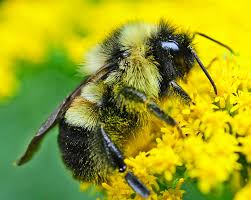 (Beyond Pesticides, January 17, 2019) Although the rusty patched bumblebee was placed on the endangered species list in 2017, the Trump Administration has failed to put in place legally required safeguards for the species. As a result, the Natural Resources Defense Council (NRDC) is suing the Administration’s Department of the Interior (DOI) for failing to designate locations where additional protections could help restore the endangered bumblebee’s population. Advocates say DOI’s failure to comply with requirements under the Endangered Species Act (ESA) is consistent with the Trump Administration’s
  (Beyond Pesticides, January 16, 2019) Preliminary counts in California indicate the western monarch butterfly population dropped 86% from 2017 to 2018. The survey is a result of an
  (Beyond Pesticides, January 14, 2019)
  (Beyond Pesticides, January 14, 2019) Tell Congress to stop the Trump administration from opening the floodgates to permit widespread use of antibiotics in citrus production (grapefruits, oranges and tangerines).
 (Beyond Pesticides, January 11, 2019) Plans to weaken farmworker protections from toxic pesticides were dropped by Acting U.S. Environmental Protection Agency (EPA) Administrator Andrew Wheeler, according to an undated letter sent to Senator Tom Carper (D-DE) late last year. Reports indicate the action was part of a deal cut by both parties that permitted confirmation of
 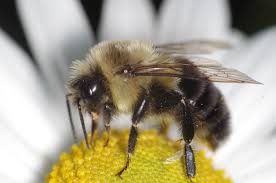 (Beyond Pesticides, January 9, 2019) It is news to approximately no one that pollinators are in trouble worldwide. A series of papers by biologists at the University of Guelph, Ontario, posits that pesticide regulations aimed at protection of honey bees fall far short of the critical task of protecting the multitude of bee species that are important pollinators of human food crops. These recent papers arose from 2017 workshops that involved 40 bee researchers from various universities, and representatives from Canadian, U.S., and European regulatory agencies, and from the agrochemical industry.
 (Beyond Pesticides, January 8, 2019) At the end of December, the U.S. Department of Agriculture (USDA) finalized

 (Beyond Pesticides, January 7, 2019) As the dust settles on the final Farm Bill, which passed the U.S. Senate and House of Representatives last month, it is clear that neither the substance nor the process on a range of issues meet the urgent need to address key sustainability issues that put the future in peril.
 (Beyond Pesticides, January 4, 2019) First, the good news: plaintiffs in a
 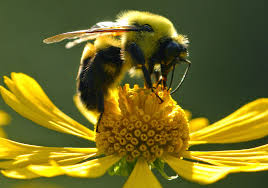 (Beyond Pesticides, January 3, 2019) Bee-toxic pesticides
  (Beyond Pesticides, January 2, 2019) The “indoor microbiome” of yoga studios and other athletic facilities often contain significant levels of antibacterial chemicals like
  (Beyond Pesticides, December 21-31, 2018) As we look ahead to the new year, we wish you good health, extend our appreciation for your being a part of the Beyond Pesticides network, and ask you to consider a contribution to Beyond Pesticides. Your support is critical to our program and deeply appreciated.
 (Beyond Pesticides, December 21, 2019)
  (Beyond Pesticides, December 20, 2018) Using low doses of the herbicide paraquat and common proteins found in food called lectins, researchers were able to recreate the symptoms of Parkinson’s disease in rats. Results of this study,
  (Beyond Pesticides, December 19, 2018) As the dust still settles on the final Farm Bill, which passed the U.S. Senate and House of Representatives last week, it is clear that neither the substance nor the process on a range of issues meet the urgent need to address key sustainability issues that put the future in peril.
 (Beyond Pesticides, December 18, 2018) The ingredients not listed on a pesticide product are not fully reviewed for their adverse effects may be the most toxic chemicals in the formulation. Recent research, Toxicity of formulants and heavy metals in glyphosate-based herbicides and other pesticides (Toxicology Reports 5, 2018), by Defarge, de Vendômois, and Séralini demonstrates the need to disclose and test all ingredients in pesticide products, as well as the full formulation that includes “inert” or nondisclosed ingredients. While glyphosate/Roundup is obviously not allowed to be used in organic production, this research reaffirms the need to evaluate full formulations of substances allowed for use in organic.
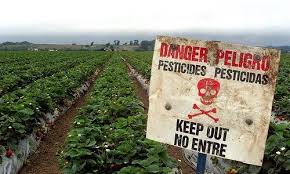 (Beyond Pesticides, December 17, 2018) Cardiovascular disease is a major cause of poor health and mortality across the world. Much is known about congenital and behavioral contributors to the disease, yet to date, little research has focused on potential environmental factors, including the possible contribution to cardiovascular disease (CVD) of exposures to toxic chemicals in the workplace.
 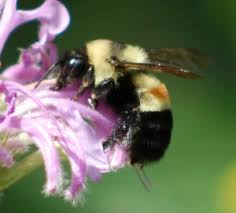 (Beyond Pesticides, December 14, 2018) The richness, diversity, and abundance of wild bumblebees in Vermont has plummeted over the last century, according to an
 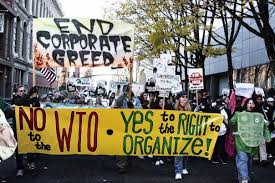 (Beyond Pesticides, December 13, 2018) The U.S. is pushing back against international standards that restrict pesticides by appealing to the World Trade Organization (WTO) to intervene. At issue are new EU maximum residue levels (MRLs) on food for the following pesticides: buprofezin, diflubenzuron, ethoxysulfurom, ioxynil, molinate, picoxystrobin and tepraloxydim.
 (Beyond Pesticides, December 12, 2018) Costa Rica is currently experiencing exponential growth in its banana and pineapple farming industries and with it an increase in intensive pesticide applications. Recent
  (Beyond Pesticides, December 11, 2018) Meltwater and runoff from Alaskan glaciers contain detectable levels of organochlorine pesticides that bioconcentrate in fish and put individuals at risk, according to a new study from researchers at the


