25
Jul
Franklin Park, IL Joins Other Towns in Asking State Legislature to Repeal Prohibition (Preemption) of Local Pesticide Laws
 (Beyond Pesticides, July 25, 2018) The Village of Franklin Park has become the third and latest community in the state of Illinois to pass a resolution urging the state legislature to repeal its preemption statute, which prevents localities from passing laws that are stricter than the state’s pesticide law. The victory in Franklin Park comes after the Village of Oak Park and town of Evanston, IL both passed their own preemption repeal resolutions in February 2017. Advocates who pushed for these resolutions, including regional groups Go Green Oak Park and Midwest Pesticide Action Center (MPAC), are hoping Franklin Park’s move is a sign of more local action to come on this critical democratic principle. Meanwhile, Congress is considering a provision in the Farm Bill that will prohibit, or preempt, local municipalities from restricting pesticides in their jurisdictions.
“Illinois beekeepers reported the second highest bee mortality rate in 2015,” said MPAC’s Assistant Director and Communications Manager Ryan Anderson. “MPAC supports local action over state action in these cases where state pesticide regulations do not do enough to protect pollinators, children, and wildlife.”
A 1991 Supreme Court Case, Wisconsin Public Intervenor v. Mortier, established that federal pesticide law – the Federal Insecticide Fungicide and Rodenticide Act (FIFRA) – created a policy floor, rather than ceiling. In other words, the Supreme Court indicated that states and communities were allowed to build stricter laws on top of the federal pesticide law. However, the Court nonetheless permitted states to pass laws that would create a ceiling for local communities within the state. This meant that local communities would be unable to build laws stricter than those the state has already passed. In response to the 1991 case, the pesticide industry went state by state to enact state-level preemption laws that prohibited localities from imposing stricter requirements around pesticide use.
In the case of Illinois, its preemption clause reads (p 15): “The regulation of pesticides by any political subdivision of this State, including home rule units, is specifically prohibited except for counties and municipalities with a population over 2,000,000. The regulation of pesticides under this Act is an exclusive power and function of the State…” This clause preempts all communities in the state save for Chicago and Cook County.
When first learning about preemption, local advocates are often shocked. This is because, in effect, these laws stop any potential for local governments to pass laws that apply to private property. That means the TruGreen truck that’s applied pesticides to homes throughout one’s neighborhood, or the uninformed neighbor constantly overspraying their property, are granted relative immunity to any local law aiming to restrict their hazardous practices.
“Forty three states have been preempted,” said Peggy McGrath, local organizer with Go Green Oak Park. “We truly need to to encourage as many municipalities as possible to adopt this resolution, not only in Illinois but other states as well. Otherwise no state general assembly will listen and amend the law to enable communities to regulate pesticides themselves. We all know corporations are presently winning, yet with no regard to the health effects for all of us, especially our children.”
But, as Franklin Park shows, there are ways local communities can fight back against democratic state preemption laws. First, local governments can establish themselves as models for their residents by passing laws that restrict pesticides applied to local government owned properties. Franklin Park’s integrated pest management policy does a good job of this by restricting highly toxic pesticides, using any toxic pesticides as a last resort, and encouraging alternative methods to manage pests and weeds. Reports indicate Franklin Park does not use pesticides on their local parks or other properties. The community’s sustainability webpage also encourages residents to follow natural lawn care practices, and provides links to helpful resources. After passing a law addressing public property, local governments in Illinois and in any state with pesticide preemption can follow the lead of Franklin Park, Oak Park, and Evanston by passing resolutions urging their state legislature to repeal preemption.
Franklin Park Mayor Barrett Pedersen told the Chicago Tribune of the resolution, “It’s the reason I got involved in public office — sustainability.”
Where there is not pesticide preemption, such as in the state of Maine, localities have shown a strong desire to pass laws that reflect their local values. Nearly 20 communities in Maine have restricted pesticide use on private property in some way, including comprehensive cosmetic pesticide restrictions passed in Ogunquit, South Portland, and earlier this year the most populous City in the state, Portland.
Despite progress at the local level, there are efforts in the 2018 Farm Bill to rewrite the nation’s pesticide law, FIFRA, to federally preempt all localities in the country. Although the House Farm Bill contains this disturbing language, the Senate version does not. Local and national groups are on the alert for this “poison pill” when the legislation goes into conference committee. In other words, advocates say that regardless of advances that may be in the Farm Bill, nothing is worth undermining the local democratic authority to advance sustainable practices and protect the health and environment at the community level.
Take action by contacting your local, state, and federal elected officials about this important issue. Individuals in Illinois can reach out to MPAC’s organizing team, and residents across the country can reach out to Beyond Pesticides at [email protected] of 202-543-5450 for assistance in changing their state’s preemption law. And, let your congressional delegation know that it is undemocratic to prohibit local authority to address pesticide issues and federal preemption of local authority in the Farm Bill is unacceptable. Click here to send a message to Congress.
All unattributed positions and opinions in this piece are those of Beyond Pesticides.
Source: Franklin Park Resolution, Chicago Tribune

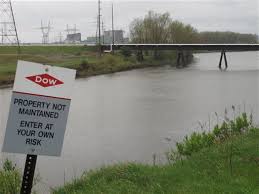 (Beyond Pesticides, July 24, 2018) The White House named Scott Hutchins, PhD, former Dow Chemical Company executive, as Undersecretary of Agriculture for Research, Education and Economics for the U.S. Department of Agriculture (USDA). Dr. Hutchins is now the third Dow alumnus to be hired by the Trump Administration. As a scientist who oversaw Dow’s pesticide research and development, his appointment, if confirmed, has troubling consequences to USDA’s research programs.
 (Beyond Pesticides, July 23, 2018) Whole Foods Quietly Put Its Comprehensive GMO Labeling Policy on Hold. As
 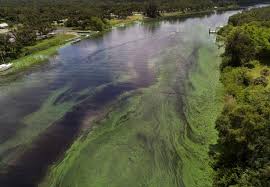 (Beyond Pesticides, July 20, 2018) Algae are elemental to life on Earth as generators of most of the planet’s oxygen and as food for myriad organisms. In the food chain, as in all systems, balance is key;
 (Beyond Pesticides, July 18, 2018) Empire State Consumer Project (ESCP), a regional group in Upstate New York, has published its
  (Beyond Pesticides, July 17, 2018) Last week, closing arguments were made in the 9th Circuit Court of Appeals challenging the U.S. Environmental Protection Agency’s (EPA) refusal to ban chlorpyrifos, the pesticide science links to a host of neurological impairments in children. A coalition of labor and health organizations represented by Earthjustice asked a panel of three judges to overturn former EPA Administrator Scott Pruitt’s decision not to ban chlorpyrifos.
 (Beyond Pesticides, July 16, 2018) Legislative Sneak Attacks Continue. Yet another bill has been introduced in Congress to remove accountability from Monsanto/Bayer for its glyphosate herbicide Roundup.™ The so-called “Accurate Labels Act” (S.3019/H.R.6022) would repeal most, if not all, existing labeling and information disclosure laws adopted by state or local governments, including California’s Safe Drinking Water and Toxic Enforcement Act (Prop 65), which has been responsible for the removal of hundreds of dangerous toxic chemicals, including lead, cadmium, and mercury, from commercial and consumer products nationwide.
  (Beyond Pesticides, July 13, 2018) Earlier this year,
  (Beyond Pesticides, July 12, 2018) Neonicotinoid insecticides have become notorious for their
  (Beyond Pesticides, July 11, 2018) Ecologically-based farming systems contain far fewer pests and generate much higher profits than their conventional, chemical-based counterparts according to research
 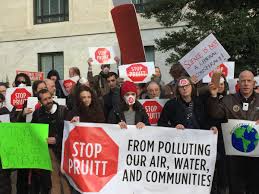 (Beyond Pesticides, July 10, 2018) Scott Pruitt’s resignation as Administrator of the U.S. Environmental Protection Agency (EPA) took effect Monday under a cloud of ethics investigations and alleged collusion with industry to systematically undermine, dismantle, and reverse critical protections for air, water, and workers. Deputy Administrator Andrew Wheeler will take the helm as Acting Administrator after serving as Deputy Administrator, a position that required Senate confirmation. Mr. Wheeler, a lawyer who worked in the toxics office at EPA under Presidents George H.W. Bush ad Bill Clinton, as an aide to U.S. Senator Jim Inhofe (R-OK) – a denier of climate change – and the Senate Committee on Environment and Public Works (EPW), and as a lobbyist for the coal and chemical industry, told the Washington Post: “[I] would say that the agenda for the agency was set out by President Trump. And Administrator Pruitt has been working to implement that. I will try to work to implement the president’s agenda as well. I don’t think the overall agenda is going to change that much, because we’re implementing what the president has laid out for the agency. He made several campaign promises that we are working to fulfill here.”
 (Beyond Pesticides, July 9, 2018) The Center for Biological Diversity (CBD) is urging the U.S. Fish and Wildlife Service (FWS) to take action to protect 23 wildlife species in the Southeast that are at risk of extinction. Citing deep concerns about unprecedented assaults on the Endangered Species Act (ESA),
  (Beyond Pesticides, July 6, 2018) Two years ago, thirteen bald eagles were found dead on a farm in Maryland. Now the investigation has revealed that these birds died after ingesting the highly toxic pesticide, carbofuran. Carbofuran, whose use has been phased out in the U.S., is so toxic to birds that one granule is all it takes to kill. Irresponsible and illegal use of pesticides is still responsible for primary and secondary poisonings of wildlife, as is the case of these bald eagles.
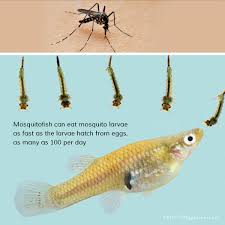 (Beyond Pesticides, July 5, 2018) With mosquito season in full swing throughout the U.S., land managers and abatement districts can be well served by employing biological controls in the form of fathead minnows (
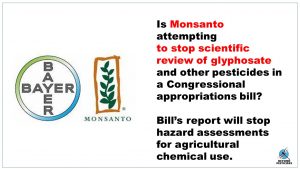 (Beyond Pesticides, July 2, 2018) The U.S. House of Representatives is considering
  (Beyond Pesticides, June 29, 2018) It is widely known that pollinators are in trouble. In light of this,
  (Beyond Pesticides, June 28, 2018) Having voted to allow retail recreational cannabis sales as of January 1, 2018,
  (Beyond Pesticides, June 27, 2018)
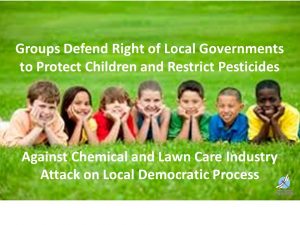 (Beyond Pesticides, June 25, 2018) Ten organizations filed an Amicus brief last week in support of a 2015 landmark Montgomery County, Maryland ordinance that restricts the use of toxic pesticides on public and private land within its jurisdiction. The law, intended to protect children, pets, wildlife, and the wider environment from the hazards of lawn and landscape pesticide use, is on appeal from a Circuit Court ruling in August 2017 which struck down aspects of the ordinance that apply to private property. The Montgomery County Council decided to appeal the Circuit Court ruling based on an outpouring of public support, and the advice of its legal team that the County has a reasonable chance of prevailing. The case will now be heard in front of the Court of Special Appeals of Maryland.
 (Beyond Pesticides, June 22, 2018) Mosquito misters pose a threat to human health. They also harm bees and other flying pollinators and are the least effective way to deal with biting mosquitoes. These devices are typically placed outdoors and spray insecticides –mostly in an attempt to control mosquitoes. In May, the Connecticut state legislature