 (Beyond Pesticides, May 14, 2018) Under EPA Administrator Pruitt’s proposed “transparency” plan, the public will still lack access to key data about the effects and efficacy of commercial poisons approved for sale and application in their communities and homes.
Tell EPA to adopt a real transparency plan for pesticides!
The proposed policy, posted on April 30 in the Federal Register, declares that it will “help ensure that EPA is pursuing its mission of public health and the environment in a manner that the public can trust and understand,” yet it applies only to a very limited set of studies used to support certain EPA regulations. The pesticide registration and review processes are particularly lacking in transparency, opportunity for public review, and access to data. Because pesticides are toxic chemicals broadcast into the environment, nowhere is transparency more important than in pesticide registration.
The proposed new policy does not cover pesticide registrations, warning labels, use restrictions, or proof of effectiveness. In the current process, the pesticide manufacturer produces the underlying data for these EPA approvals and controls access to them. Thus, despite Pruitt’s sweeping claims of “transparency in regulatory science”:
- The public does not have access to the underlying data provided by the manufacturer to justify registering a new pesticide for commercial distribution;
- Industry will not have to provide the data used to assess health and environmental effects and farmworker impacts to set allowable dietary and non-dietary exposure limits; and
- On the product’s efficacy, the public also does not have access to the underlying data, nor does EPA even review manufacturer data on product effectiveness, except for very limited purposes.
To ensure full review, it is critical that the public and independent scientific community have complete access to safety testing data before poisonous pesticide products enter the marketplace. If EPA applies the proposed policy to pesticides, the failure to allow consideration of independent study results without disclosing confidential patient information will cripple the validity of EPA safety reviews. Furthermore, the failure to label all ingredients in pesticide products used by the public runs contrary to the basic principle of informed decision making.
Mr. Pruitt’s plan does not enable the public to have any meaningful information about “environmental health risk or safety risk,” as he claims. Under a false flag of scientific transparency, Mr. Pruitt’s scheme hobbles scientific work used to protect the public, but shields industry data that may demonstrate a public health peril.
EPA pesticide regulation is based on secret science.
Although EPA has proposed a rulemaking that purports to make science used in EPA regulatory decision making transparent and available to the public, the proposal applies only to “significant” EPA rulemakings, but not to matters such as pesticide registrations, through which private companies seek authorization to market products that may be harmful to public health and the environment. The pesticide registration and review processes are particularly lacking in transparency and opportunity for public review and access to data.
Data used to approve pesticides are not available to the public.
Pesticides are registered (authorized for use) based on studies and data submitted by the manufacturer (registrant) —not based on science conducted or commissioned by EPA. Such registrant data are not available for public review until after the pesticide is registered. The nonpublic data submitted by the registrant are used by EPA to assess health and environmental effects of the pesticide and impacts on farmworkers, and to set allowable human exposures through dietary and non-dietary routes —all without any opportunity for public review of the underlying data.
After registration, the public can access the materials on the basis of which the registration was granted only through making requests under the Freedom of Information Act (FOIA), a lengthy process. Even then, much information is withheld as purportedly “confidential.” If problems are identified that uncover a hazard from the pesticide, a member of the public would need to petition for a proceeding to cancel the registration, a long and unwieldy process during which the pesticide remains on the market.
EPA’s registration, registration review, and cancellation of pesticides raise numerous issues regarding the application of legitimate scientific process, risk assessment, exposure assumptions, sensitive populations, and the “reasonableness” of what are found to be “acceptable” hazards. Transparency of agency processes and underlying data is key to allowing public participation concerning these issues.
Full disclosure of known and unknown adverse effects is needed.
EPA does not currently require that registrants disclose data submitted to EPA or label pesticides (including household pesticides) with data concerning the full extent of knowledge and/or ignorance of possible adverse effects, including data gaps and chronic health effects. Registrants’ exposure and toxicology studies are not released to the public so that any interested stakeholder can review them prior to a product being permitted on the market.
Conditional registration is missing crucial data.
Pesticide registrations under special circumstances, known as “conditional registrations,” allow widespread use of toxic chemicals that are not fully tested. Conditional registration of pesticides allows market entry for a product in the absence of certain data normally required for registration. As one glaring example, EPA came under scrutiny when it conditionally registered the neonicotinoid pesticide clothianidin, tied to dramatic declines in pollinators, without required pertinent field data on honeybees, even though the pesticide is known to pose risks to these vulnerable pollinators.
Efficacy data on pesticide products are lacking.
The public does not have access to, and EPA does not review, manufacturer data on pesticide efficacy, even though the statutory registration standard requires weighing the risks of pesticides against their benefits. Without efficacy information, the real benefits of a pesticide are unknown, and the reasonableness of pesticide use cannot be assessed. The lack of efficacy data review results in escalating and predictable insect and weed resistance, unnecessary increases in pesticide use, and increased risk for farmers of crop loss and economic damage. The only instance in which EPA evaluates pesticide efficacy is as a part of public health (not agricultural) pesticide registrations, and even this is without public disclosure or opportunity for comment.
Secret ingredients in pesticide products are not disclosed.
Currently, pesticide labels do not identify “inert” ingredients that have been classified as hazardous under a variety of environmental laws, including the Clean Air Act, the Clean Water Act, and the Emergency Planning and Community Right to Know Act. Disclosure would provide information about almost 400 hazardous chemicals in pesticide products.
Only active ingredients, not formulations, are tested.
EPA does not require testing data on the full formulation of a pesticide product, including all of the “inert” ingredients. Thus, data on the human health and environmental effects of the actual product on the market are entirely lacking.
The federal government needs a vision for pesticide policy across relevant agencies that seeks to replace outdated approaches and technologies, reliant on toxic chemicals, with green approaches advanced through incentives, assistance, and restrictions. This cannot be achieved without full transparency and disclosure of toxic hazards of pesticide products in the marketplace. Without full information on pesticide hazards, access to underlying data on hazards, and a transparent assessment of the reasonableness of risk (given the availability of less or non-toxic alternatives), the public is left in the dark. Credible reviews, subject to public oversight, are essential in EPA’s regulation of pesticides to prevent contamination of air, land, water, and food.
Tell EPA to adopt a real transparency plan for pesticides!
Letter to EPA Docket (Docket No. EPA-HQ-OA-2018-0259)
[Send to [email protected]]
Under the proposed “transparency” plan, the public will still lack access to key data about the effects and efficacy of commercial poisons approved for sale and application in their communities and homes. The proposed policy declares that it will “help ensure that EPA is pursuing its mission of public health and the environment in a manner that the public can trust and understand,” yet it applies only to a very limited set of studies used to support certain EPA regulations. The pesticide registration and review processes are particularly lacking in transparency, opportunity for public review, and access to data. Because pesticides are toxic chemicals broadcast into the environment, nowhere is transparency more important than pesticide registration.
The proposed new policy does not cover pesticide registrations, warning labels, use restrictions, or proof of effectiveness. Because the pesticide manufacturer produces the underlying data for these EPA approvals and controls access to them, no transparency will be provided in pesticide registration, in which:
* The public does not have access to the underlying data provided by the manufacturer to justify registering a new pesticide for commercial distribution;
* Industry will not have to provide the data used to assess health and environmental effects and farmworker impacts to set allowable dietary and non-dietary exposure limits; and
* Neither the public nor EPA has access to the underlying efficacy data, except for very limited purposes.
To ensure full review, it is critical that the public and independent scientific community have complete access to safety testing data before pesticide products enter the marketplace. If EPA applies the proposed policy to pesticides, the failure to allow consideration of independent study results without disclosing confidential patient information will cripple the validity of EPA safety reviews. Furthermore, the failure to label all ingredients in pesticide products used by the public runs contrary to the basic principle of informed decision making.
The proposal does not prevent EPA from issuing conditional registrations in the absence of required data, nor does it require industry to make that data publicly available at a later date.
It does not grant the public access to meaningful information about “environmental health risk or safety risk,” as claimed. Instead, the policy hobbles scientific work used to protect the public while shielding industry data that may demonstrate the public health peril.
EPA pesticide regulation is based on secret science.
Although the proposed rulemaking purports to make science used in EPA regulatory decision making transparent and available to the public, by its own terms it applies only to “significant” EPA rulemakings, where EPA is seeking to protect public health and the environment, but not to matters such as pesticide registrations, through which private companies seek authorization to market products that may be harmful to public health and the environment. The pesticide registration and review processes are particularly lacking in transparency and opportunity for public review and access to data.
Data used to approve pesticides are not available to the public.
Pesticides are registered (authorized for use) based on studies and data submitted by the manufacturer (registrant). Such registrant data are not available for public review until after the pesticide is registered. The nonpublic data submitted by the registrant are used by EPA to assess health and environmental effects of the pesticide and impacts on farmworkers, and to set allowable human exposures through dietary and non-dietary routes –all without any opportunity for public review of the underlying data.
After registration, the public can access the materials on the basis of which the registration was granted (which still may not include all underlying data) only through the Freedom of Information Act (FOIA), a lengthy process. Even then, much information is withheld as purportedly “confidential.” If problems are identified that uncover a hazard from the pesticide, a member of the public would need to petition for a proceeding to cancel the registration, a long and unwieldy process during which the pesticide remains on the market.
EPA’s registration, registration review, and cancellation of pesticides raise numerous issues regarding the application of legitimate scientific process, risk assessment, exposure assumptions, sensitive populations, and the “reasonableness” of what are found to be “acceptable” hazards. True transparency of agency processes and underlying data is key to allowing public participation concerning these issues.
Full disclosure of known and unknown adverse effects is needed.
EPA does not currently require that registrants disclose data submitted to EPA or label pesticides (including household pesticides) with data concerning the full extent of knowledge and/or ignorance of possible adverse effects, including data gaps and chronic health effects. Registrants’ exposure and toxicology studies are not released to the public so that any interested stakeholder can review them prior to a product being permitted on the market.
Conditional registration is missing crucial data.
Conditional registrations allow widespread use of toxic chemicals that are not fully tested. Conditional registration of pesticides allows market entry for a product in the absence of certain data normally required for registration. As one glaring example, EPA came under scrutiny when it conditionally registered the neonicotinoid pesticide chlothianidin, tied to dramatic declines in pollinators, without required pertinent field data on honeybees, even though the pesticide is known to pose risks to these vulnerable pollinators.
Efficacy data on pesticide products are lacking.
The public does not have access to, and EPA does not review, manufacturer data on pesticide efficacy, even though the statutory registration standard requires weighing the risks of pesticides against their benefits. Without efficacy information, the real benefits of a pesticide are unknown, and the reasonableness of pesticide use cannot be assessed. The lack of efficacy data review results in escalating and predictable insect and weed resistance, unnecessary increases in pesticide use, and increased risk for farmers of crop loss and economic damage. The only instance in which EPA evaluates pesticide efficacy is as a part of public health (not agricultural) pesticide registrations, and even this is without public disclosure or opportunity for comment.
“Secret ingredients” in pesticide products are not disclosed.
Currently, pesticide labels do not identify “inert” ingredients that have been classified as hazardous under a variety of environmental laws, including the Clean Air Act, the Clean Water Act, and the Emergency Planning and Community Right to Know Act. Disclosure would provide information about almost 400 hazardous chemicals in pesticide products.
Only active ingredients, not formulations, are tested.
EPA does not require testing data on the full formulation of a pesticide product, including all of the “inert” ingredients. Thus, data on the human health and environmental effects of the actual product on the market are entirely lacking.
The federal government needs a vision for pesticide policy across relevant agencies that seeks to replace outdated approaches and technologies, reliant on toxic chemicals, with green approaches advanced through incentives, assistance and restrictions. This cannot be achieved without full transparency and disclosure of toxic hazards of pesticide products in the marketplace. Without full information on pesticide hazards, access to underlying data on hazards, and a transparent assessment of the reasonableness of risk (given the availability of less or non-toxic alternatives), the public is left in the dark. Credible reviews, subject to public oversight, are essential in EPA’s regulation of pesticides to prevent contamination of air, land, water, and food.
Sincerely,






 (Beyond Pesticides, June 12, 2018) Two recent studies are contributing to the growing understanding that challenges basic toxicological precepts as inadequate to comprehensive assessments of impacts, particularly in the realm of human exposures to chemicals. One investigation tackles the role of chemical pesticide exposures in the risk of developing Parkinson’s Disease. That study appeared in The FASEB (Federation of American Societies for Experimental Biology) Journal in April 2018. The other, published earlier this year in the journal Food and Chemical Toxicology, assesses potential negative health outcomes of long-term, low-dose exposure to admixtures of chemicals that more realistically represent real-life exposures than those typically created in a lab setting — one chemical at a time.
 (Beyond Pesticides, June 11, 2018) With
  (Beyond Pesticides, June 8, 2018) In the wake
 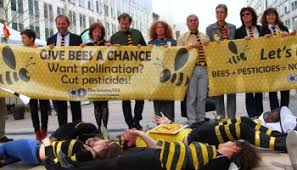 (Beyond Pesticides, June 7, 2018) Health Canada is proposing to phase out a number of uses of neonicotinoids in order to mitigate risks to pollinators. The agency has completed its review of clothianidin and thiamethoxam — two neonicotinoids that have been linked to pollinator decline and finds risks of concern for bees. However, these measures do not go as far as those recently made in the European Union, but further than label restrictions issued by the U.S. Environmental Protection Agency (EPA).
 (Beyond Pesticides, June 6, 2018) By the close of 2018, three top neonicotinoid (neonic) pesticides, linked to the worldwide decline in bee populations, will be banned for outdoor use in the European Union (EU), based on the
  (Beyond Pesticides, June 5, 2018) After more than 100,000 Swiss citizens signed a petition calling for a ban on pesticides, Switzerland will soon have to vote on a complete ban on the use of synthetic pesticides. The ban would apply to farmers, industries, and imported goods, and advocates hope this measure would cause other EU nations to follow.
 (Beyond Pesticides, June 1, 2018) States and civil society organizations launched new lawsuits in late May against the Pruitt Environmental Protection Agency (EPA) for its continued attack against farmworker health and safety. Two separate lawsuits, one filed by attorneys general in the states of California, Maryland, and New York, and another by health and justice advocates represented by Earthjustice and Farmworker Justice take aim at EPA’s decision to delay the implementation of training requirements designed to protect farmworkers and their families. This is the latest in a series of lawsuits which began when EPA announced
  (Beyond Pesticides, May 31, 2018) Deforestation in tropical regions helps spread malaria, concludes a
  (Beyond Pesticides, May 30, 2018) Six environmental groups have sued the Trump Administration for reversing a long standing interpretation of the Migratory Bird Treat Act (MBTA) that provides migratory bird protections from incidental killing or “taking” caused by industrial activities. The lawsuit,
  (Beyond Pesticides, May 29, 2018) The Farm Bill is beginning to move in the U.S. Senate Committee on Agriculture, Nutrition, and Forestry, and your voice is critically needed to help stop provisions that are harmful to health and the environment.
 (Beyond Pesticides, May 25, 2018) The results of a pilot study conducted by an international team of researchers finds that exposure to the
  (Beyond Pesticides, May 24, 2018) California’s Department of Pesticide Regulation (DPR) is falling short of protecting vulnerable communities in the state, especially low-income and communities of color. This, according to a new report by California Environmental Justice Alliance (CEJA), which assesses state agencies on eight environmental justice principles. The poor showing by DPR comes at the forefront of reports that the state’s pesticide use has increased, nearing record highs.
 (Beyond Pesticides, May 23, 2018) Earlier this month, the Connecticut state legislature voted to ban the use of residential pesticide misting systems. (These are devices that are typically placed outdoors and spray insecticides –mostly in an attempt to control mosquitoes.) This is the latest move from a state legislature that has also recently banned the use of
 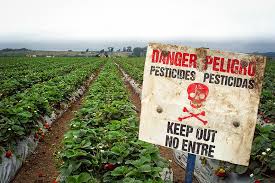 (Beyond Pesticides, May 22, 2018) A staggering
 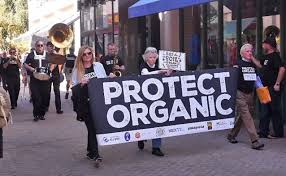 (Beyond Pesticides, May 18, 2018) The U.S. Department of Agriculture (USDA) is putting an end to the process of
  (Beyond Pesticides, May 17, 2018) Among the many reports of the salutary effects of nature on human health and well-being comes
  (Beyond Pesticides, May 16, 2018) Northern Harvest Sea Farms, an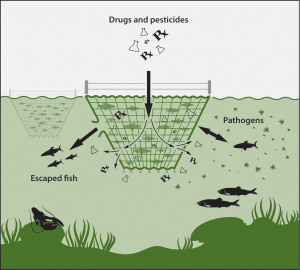
 (Beyond Pesticides, May 15, 2018) According to a new report from the Center for Biological Diversity (CBD), hundreds of thousands of pounds of pesticides are sprayed on lands that are designated as refuges for wildlife and protected under U.S. law. Approximately 490,000 pounds of pesticides have been sprayed on crops grown in national wildlife refuges in 2016 alone. Pesticide use in these sensitive areas poses risks to pollinators, aquatic organisms, migratory birds, and other wildlife on refuges that were created to protect them.
 (Beyond Pesticides, May 10, 2018) Rodenticides like bromadiolone, used to kill vole populations on farms, act like “super-predators” that imperil ecosystem health, according to preliminary results


