





08
May
Pesticide Safety Data Transparency a Blind Spot under EPA Policy
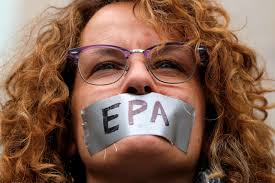 (Beyond Pesticides, May 8, 2018) U.S. Environmental Protection Agency Administrator Scott Pruitt’s controversial plan for disclosing the underlying data supporting its regulatory science has a big blind spot –pesticides. An analysis released today by Beyond Pesticides and Public Employees for Environmental Responsibility (PEER) points out that under Pruitt’s plan the public will still lack access to key data about the effects and efficacy of commercial poisons approved for sale and application in their communities and homes.
The proposed policy posted on April 30 in the Federal Register declares that it will “help ensure that EPA is pursuing its mission of public health and the environment in a manner that the public can trust and understand” yet it only applies to a very limited set of studies used to support certain EPA regulations.
It does not cover pesticide registrations, warning labels, use restrictions, or proof of effectiveness. In the current process, the pesticide manufacturer produces the underlying data for these EPA approvals and controls access to it. Thus, despite Pruitt’s sweeping claims of “transparency in regulatory science” –
- The public does not have access to the underlying data provided by the manufacturer to justify registering a new pesticide for commercial distribution;
- Industry will not have to provide the data used to assess health and environmental effects and farmworker impacts to set allowable dietary and non-dietary exposure limits; and
- On the product’s efficacy, the public also does not have access to the underlying data nor does EPA even review manufacturer data on product effectiveness, except for very limited purposes.
“To ensure full review, it is critical that the public and independent scientific community have complete access to safety testing data before poisonous pesticide products enter the marketplace,” said J. Routt Reigart, M.D., president of Beyond Pesticides. “Furthermore, the failure to label all ingredients in pesticide products used by the public runs contrary to the basic principle of informed decision making.”
In some pesticide decisions, such as conditional registrations, EPA grants new registrations and product labels without full information based on an agreement the manufacturer provides the data at a later date. Pruitt’s plan does not require industry to present its data up front or to make that data publicly available.
“Pruitt’s plan does not enable the public to have any meaningful information about ‘environmental health risk or safety risk’ as he claims,” stated PEER General Counsel Paula Dinerstein. “Under a false flag of scientific transparency, Pruitt’s scheme hobbles scientific work used to protect the public but shields industry data that may demonstrate the public health peril.”
Secret Science in EPA Pesticide Regulation
Access to data on pesticides is critical to protection of health and the environment EPA has proposed a rulemaking that purports to make science used in EPA regulatory decision making transparent and available to the public. However, the proposal by its terms applies only to significant EPA rulemakings where EPA is seeking to protect public health and the environment, but not to matters such as pesticide registrations, where private companies are seeking authorization to market products that may be harmful to public health and the environment. The pesticide registration and review processes are particularly lacking in transparency and opportunity for public review and access to data.
Data used to approve pesticides not available to the public
Pesticides are registered (authorized for use) based on studies and data submitted by the manufacturer (registrant), not based on science conducted or commissioned by EPA. This registrant data is not available for public review until after the pesticide is registered. The nonpublic data submitted by the registrant is used by EPA to assess health and environmental effects of the pesticide, impacts on farmworkers, and to set allowable human exposures through dietary and non-dietary routes – all without any opportunity for public review of the underlying data.
After registration, the public can access the materials upon which the registration was granted (which still may not include all underlying data) only through making requests under the Freedom of Information Act (FOIA), a lengthy process. Even then, much information is withheld as purportedly “confidential.” If problems are identified that uncover a hazard from the pesticide, a member of the public would need to petition for a proceeding to cancel the registration, a much longer and unwieldy process during which the pesticide remains on the market.
EPA’s registration, registration review and cancellation of pesticides raise numerous issues regarding the application of legitimate scientific process, risk assessment, exposure assumptions, sensitive populations, and the “reasonableness” of what are found to be “acceptable” hazards. Transparency of agency processes and underlying data is key to allowing public participation concerning these issues. Full disclosure of known and unknown adverse effects needed EPA does not currently require that registrants disclose data submitted to EPA or placed on pesticide labels (including household pesticides) concerning the full extent of knowledge and/or ignorance of possible adverse effects, including data gaps and chronic health effects. Registrants’ exposure and toxicology studies are not released to the public so that any interested stakeholder can review them prior to a product being permitted on the market.
Conditional registration missing crucial data
Pesticide registrations under special circumstances, also known as “conditional registration,” allow widespread use of toxic chemicals that are not fully tested. Conditional registration of pesticides allows market entry for a product in the absence of certain data normally required for registration. As one glaring example, the agency came under scrutiny when it conditionally registered the neonicotinoid pesticide, chlothianidin, tied to dramatic declines in pollinators, without pertinent field data required on honeybees, even though the pesticide is known to pose risks to these vulnerable pollinators.
Efficacy data on pesticide products
The public does not have access to, and EPA does not review, manufacturer data on pesticide efficacy, even though the statutory registration standard requires weighing the risks of pesticides against their benefits. Without efficacy information, the real benefits of a pesticide are unknown, and the reasonableness of pesticide use cannot be assessed. The lack of efficacy data review results in escalating and predictable insect and weed resistance, unnecessarily increases in pesticide use, and putting farmers at risk of crop loss and economic damage. The only instance in which EPA evaluates pesticide efficacy is as a part of public health (not agricultural) pesticide registrations, and even this is without public disclosure or opportunity for comment.
“Secret ingredients” in pesticide products not disclosed
Currently, pesticide labels do not identify “inert” ingredients that have been classified as hazardous under a variety of environmental laws, including the Clean Air Act, the Clean Water Act, and the Emergency Planning and Community Right to Know Act. Disclosure would provide information about almost 400 hazardous chemicals in pesticide products.
Only active ingredients, not formulations tested
EPA does not require testing data on the full formulation of a pesticide product, including all of the inert ingredients. Thus, data on the human health and environmental effects of the actual product on the market is entirely lacking.
The federal government needs a vision for pesticide policy across relevant agencies that seeks to replace outdated approaches and technologies reliant on toxic chemicals with green approaches advanced through incentives, assistance and restrictions. This cannot be achieved without full transparency and disclosure of toxic hazards of pesticide products in the marketplace. Without full information on pesticide hazards, access to underlying data on hazards, and a transparent assessment of the reasonableness of risk given the availability of less or non-toxic alternatives, the public is left in the dark. Credible reviews, subject to public oversight, are essential in EPA’s regulation of pesticides to prevent contamination of air, land, water, and food.
All unattributed positions and opinions in this piece are those of Beyond Pesticides.
Sources: Paula Dinerstein [PEER] (202) 265-7337; Jay Feldman [Beyond Pesticides] (202) 543-5450

 (Beyond Pesticides, May 7, 2018) Beyond Pesticides and The Organic Consumers Association (OCA) today responded to a federal judge’s ruling against Monsanto Co.’s motion to dismiss the groups’
  (Beyond Pesticides, May 6, 2018) The Washington State Department of Ecology (Ecology)
  (Beyond Pesticides, May 4, 2018)
 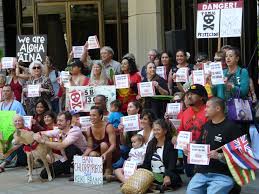 (Beyond Pesticides, May 3, 2018) Hawaii’s bill to ban the dangerous, neurotoxic pesticide, chlorpyrifos, passed its final hurdle this week in the state legislature. Governor David Ige is expected to readily sign
 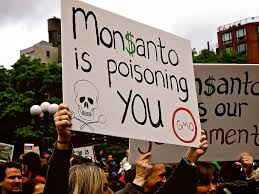 (Beyond Pesticides, May 2, 2018) Granola, cereal, and wheat crackers all contain “a fair amount” of glyphosate, the herbicide in Monsanto’s popular Roundup, according to internal emails from the Food and Drug Administration (FDA). Although the results of these tests have not been formally released, FDA had stated it will be conducting tests for glyphosate in food. Previous reports have detailed the presence of glyphosate, the chemical classified as a “probable carcinogen,” in a wide range of foods and in people’s bodies.
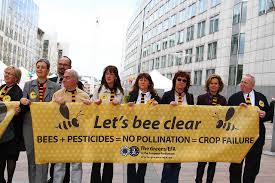 (Beyond Pesticides, May 1, 2018) On April 27, 2018, European Union (EU) member states backed a proposal to further restrict uses of bee-toxic neonicotinoids finding the pesticides’ outdoor uses harm bees. These restrictions go beyond those already put in place in 2013, and now all outdoor uses of clothianidin, imidacloprid, and thiamethoxam will be banned. Uses will only be allowed in permanent greenhouses where contact with bees is not expected. This historic move in Europe comes as the U.S. Environmental Protection Agency (EPA) still drags its feet on finding neonicotinoids are too toxic for bees and other organisms and bans their use.
 (Beyond Pesticides, April 27, 2018) After more than five years of intensive negotiations, European Members of Parliament (MEP) overwhelmingly passed the long-anticipated, new
  (Beyond Pesticides, April 26, 2018) Each year, the
 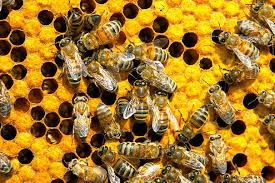 (Beyond Pesticides, April 25, 2018) A class-action lawsuit against two manufacturers of neonicotinoid insecticides is moving ahead in Quebec, Canada after an appeal to block the case by the Canadian government and the chemical companies, Bayer and Syngenta, was dismissed. In February 2018, the case, brought by a beekeeper, was allowed to proceed to trial by the Quebec Superior Court.
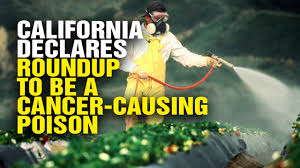
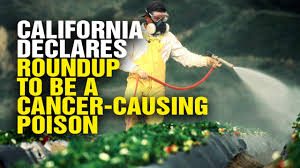 (Beyond Pesticides, April, 24, 2018) On April 19, 2018, an Appellate Court in California sided with the State of California, affirming that Monsanto’s glyphosate can be listed as a probable carcinogen under the state’s Proposition 65 and rejecting Monsanto’s challenge to law. The state will not only move ahead with warning labels on products that contain glyphosate but also prohibit discharge of the pesticide into public waterways.
 (Beyond Pesticides, April 20, 2018) There is an extraordinary attack on local community rights to protect people and the environment from pesticides in the Republican Farm Bill, passed by the Agriculture Committee in the U.S. House of Representatives on April 18 on a straight party line vote. The language inserted in the Farm Bill amends the federal pesticide law with a provision that prohibits local governments from restricting pesticide use on private property within their jurisdictions. Local laws in two states, Maine and Maryland, will be overturned with final passage of this law in the U.S. House and Senate. In those 43 states that forbid local pesticide laws by state law, future reconsideration of this prohibition, pushed by the chemical and pest management industry, will be foreclosed. Local laws protecting the environment and public health have historically emerged out of local governments, with laws related to recycling, smoking, pet waste, building codes, and zoning.
 (Beyond Pesticides, April 19, 2018) With the passage yesterday of the Republican amendments to the 2018 Farm Bill,
  (Beyond Pesticides, April 18, 2018)
  (Beyond Pesticides, April 17, 2018) In a case that appalled the nation, the U.S. Justice Department finally last week secured an indictment against an applicator who illegally applied a fumigant at a U.S. Virgin Island resort,
 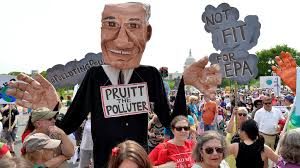 (Beyond Pesticides, April 16, 2018) Ethics scandals pile up regarding Environmental Protection Agency Administrator Scott Pruitt’s failure to do his job, leading to the
  (Beyond Pesticides, April 13, 2018) Hawaii is poised to become the first state in the nation to prohibit the use of pesticides containing the developmental neurotoxicant, chlorpyrifos.
  (Beyond Pesticides, April 12, 2018) The Justice Department will allow two notorious agrichemical corporations, Bayer and Monsanto, to merge, according to reports published earlier this week. Despite
 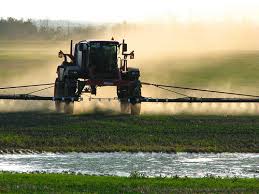 (Beyond Pesticides, April 10, 2018) Current strategies aimed at managing herbicide resistant weeds in agriculture are not effective and may exacerbate weed problems, according to
  (Beyond Pesticides, April 9, 2018) A new international study finds that the unsustainable exploitation of natural resources worldwide has reached critical proportions, causing biodiversity loss and land degradation that threaten the food and water security of an estimated 3.2 billion people. Congress must act for the U.S. to become a signatory to the United Nations Convention on Biodiversity, joining the global community in working to develop and implement solutions to the biodiversity crisis.


