21
Feb
(Beyond Pesticides, February 21, 2018) Officials in Quebec announced this week that the  Canadian province will implement new restrictions on the use of five highly toxic pesticides. As part of efforts to fulfill the vision of the Quebec Pesticide Strategy, a progressive, forward-thinking framework for pesticide regulation announced in 2015, atrazine, chlorpyrifos, and the neonicotinoids imidacloprid, clothianidin, and thiamethoxam will have new limits placed on their use. “Together with the groups involved, we have found a balanced regulatory solution to protect the health of our farmers, aquatic ecosystems and pollinators,” Isabelle Melancon, Quebec’s Minister of Sustainable Development, Environment, and the Fight Against Climate Change (Environment Ministry) said in a press release. “We hope to obtain in this way a significant reduction in the use of the most at-risk pesticides in Quebec, in a framework of transparency and integrity.”
Quebec’s new rules offer a range of positive developments for human health and wildlife. The changes will require the following:
- Prior to any application of atrazine, chlorpyrifos, or neonicotinoid class insecticide, farmers will need the approval of a certified agronomist from the Ordre des agronomes du Quebec (OAQ).
- Agricultural producers will be required to keep a record of all pesticides applied, as well as declare their annual sales of pesticides. The Quebec Environment Ministry will publish a report on retail sales.
- Seeds coated in neonicotinoid insecticides will be considered pesticides and subject to the same requirements therein.
- Residential and commercial use of neonicotinoids on lawns will be prohibited.
To ensure the implementation of these new regulations goes smoothly, the Environment Ministry will establish a monitoring committee to oversee the process. The province has already allocated $14 million over five years to assist farmers in reducing pesticide risks and adapting to the new measures.
Prior approval requirements at such a large scale represent a novel approach to pesticide regulation that has only otherwise been seen in local policies, such as Portland, ME’s recent pesticide restrictions, which require a waiver approval by a committee in order to apply toxic pesticides. Michel Duval, President of OAQ, is confident that the system will be successful. “Protecting the health of the population, pollinators and the environment is paramount,” he said in press release. “As stakeholders who play an important role in the implementation of integrated pest management in agricultural enterprises, agronomists are happy to put their knowledge and skills to work for the preservation of quality of the environment and the welfare of bees. Agronomic justification, as well as the support and training of farmers, seem to us to be a winning formula for establishing better agri-environmental practices.”
The imposition of record-keeping is basic measure to protect public health. Publicly accessible reports on pesticide use can provide critical information, particularly in agricultural regions, that physicians and those that suspect they were poisoned by pesticides can use to treat possible pesticide-related illnesses. Recordkeeping can also increase accountability for pesticide incidents when they occur to non-target species or are found at concerning levels in waterways.
The reclassification of neonicotinoid-coated seeds as regular pesticides is an important development, because at the federal level in the U.S. and Canada, regulatory loopholes have allowed the chemical industry to categorize neonicotinoid coated seeds as “treated articles,” exempt from the safety requirements other registered pesticides must follow. Prior approval of neonicotinoid coated seeds should never occur under a smart pest management strategy, as peer-reviewed research finds these coatings, while presenting a significant risk to pollinators and birds, increase pesticide dependency, and do little to improve yields. Neighboring Ontario province took action against neonicotinoid coated seeds in 2014, aiming to reduce the use of these products by 80% to improve the health of its beekeeping industry. In the U.S., the state of Vermont passed a law in 2016 providing the state authority to regulate treated seeds as registered pesticides.
To further protect pollinators, restrictions on the use of neonicotinoids in turf will significantly impact urban areas. The range of scientific data on neonicotinoids’ harm to pollinators, coupled with reports on the contamination of “bee-friendly plants” with these chemicals has led many retailers throughout the world, including Lowes, Home Depot, Walmart, Tru Value, Woolworths, to stop their sale. Scotts Miracle-Gro began phasing neonicotinoids out of their Ortho brand in mid-2016. These actions have followed increasing activity in U.S. states to restrict their use in residential settings, as Maryland and Connecticut have done. In this regard, Quebec’s move follows actions by their largest city, Montreal, which completely banned neonicotinoid use within the city in 2015.
Quebec’s new rules on toxic pesticides represent a compromise for both farmers and health advocates. These chemicals may continue to be used, but inserting agronomic experts with an eye for both the economic and health concerns surrounding the use of highly toxic pesticides into the process may be a strategy to significantly reduce pesticide use. The good news is that by also improving record-keeping, Quebec’s strategy can be closely evaluated to ensure the approval process is not simply a rubber stamp for pesticide use.
See Beyond Pesticides’ Pesticide Gateway for more information on the health and environmental effects of the pesticides targeted by Quebec’s Environment Ministry. And take action to restrict bee-toxic chemicals in the U.S. by asking your member of Congress to join in support of the Saving America’s Pollinators Act, which would suspend the use of neonicotinoids until EPA shows that they do not harm pollinators.
All unattributed positions and opinions in this piece are those of Beyond Pesticides.
Source: Quebec Environment Ministry Press Release (google translate)
Posted in Uncategorized by: Beyond Pesticides
No Comments
20
Feb
(Beyond Pesticides, February 20, 2018) The U.S. Centers for Disease Control and Prevention (CDC) finds that the U.S.  Environmental Protection Agency (EPA) label restrictions on total release foggers, otherwise known as “bug bombs,” are a public health failure. Bug bombs pose a significant risk of acute illness to individuals even when they attempt to follow new label instructions. Beyond Pesticides has long called for bug bombs to be banned, as there are a myriad of non-toxic alternative strategies to successfully manage household pests.
Urge your Governor to ban bug bombs in your state!
Bug bombs are small cans primarily comprised of an insecticide, often a synthetic pyrethroid, a synergist such as piperonyl butoxide (PBO), and an aerosol propellant. In addition to the explosion/fire risk if the aerosol product is used in an unattended home near a pilot light or other spark-producing appliance, both synthetic pyrethroids and PBO pose acute and chronic human health risks. PBO is added to pesticide formulations to increase the toxicity of synthetic pyrethroids, and has been linked to childhood cough. Peer-reviewed research associates synthetic pyrethroids with behavioral disorders, ADHD, and delayed cognitive and motor development, and premature puberty in boys. Not only can bug bombs acutely poison, but once applied these chemicals can persist in the home for over a year, putting individuals and families at risk of chronic exposure and subsequent health issues.
CDC’s report, Acute Illnesses and Injuries Related to Total Release Foggers, updates a previous study released in 2008 with new data reveals that EPA’s attempt to reduce bug bomb illness and injury through label changes was unsuccessful. Looking at records from 2007-2015, a total of 3,222 unique cases of illness and injury were reported. The report indicates, “No statistically significant reduction in overall incidence of TRF [total release fogger]-associated injuries and illnesses was observed in the first 3 years after the label revisions took effect.” Incidents ranged from failing to leave an area after releasing the bug bomb, reentering the premises too early, use of too many products for the space provided, and even explosions related to the ignition of aerosols released from the product.
Urge your Governor to ban bug bombs in your state!
With EPA’s failure to protect people from the aptly named “bombs,” it is important for states to take action to protect citizens. If you have had problems with these products, please add your own experience to the suggested letter below.
Letter to Governor:
The U.S. Centers for Disease Control and Prevention (CDC) finds that EPA label restrictions on total release foggers, otherwise known as “bug bombs,” are a public health failure. Bug bombs pose a significant risk of acute illness to individuals even when attempting to follow new label instructions. There are a myriad of non-toxic alternative strategies to successfully manage household pests. Most common pest problems can be successfully dealt with by eliminating pest entryways into the home (i.e. caulking cracks/crevices, door sweeps, repairs, etc.), and sealing off access to food, water, and shelter (i.e. clean often, remove clutter, seal food in airtight containers, tight lid on trash can). Remaining pests can be dealt with through least-toxic products such as boric acid bait stations and desiccating dusts. (Use a mask when using these products.) Many pests, such as bed bugs, display widespread resistance to the pyrethroid insecticides contained in most bug bombs.
Several high profile incidents, including a 10-month-old boy in Williamston, SC who died after his mother used several bug bombs in their home, prompted EPA to conduct an evaluation of total release foggers, resulting in the ineffective label changes. The New York City Department of Health asked EPA to make these products restricted use, and the state of New York began moving toward similar actions at the state level, but to date no substantive restrictions have been placed on bug bombs by EPA.
Ventilation, as recommended by EPA, is not sufficient. The CDC report notes, “Some users ventilated treated premises for the recommended length of time or longer, but still became ill, suggesting that ventilation might be inadequate or the recommended period might be insufficient to fully eliminate TRF [total release fogger] residuals before occupancy.”
Please protect our citizens from these dangerous “bombs.” Thank you.
Urge your Governor to ban bug bombs in your state!
Posted in ADHD, Centers for Disease Control and Prevention (CDC), Chemicals, Fumigants, Nervous System Effects, PBO, Piperonyl butoxide (PBO), Synthetic Pyrethroid, Take Action, Uncategorized by: Beyond Pesticides
No Comments
16
Feb
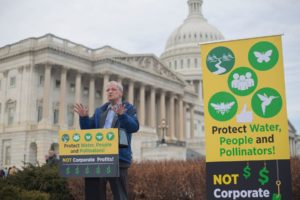
U.S. Rep. Earl Blumenauer (D-OR) discussing Saving America’s Pollinators Act.
(Beyond Pesticides, February 16, 2018) U.S. Representatives Blumenauer (D-OR) and Jim McGovern (D-MA) this week announced plans to reintroduce the Saving America’s Pollinators Act, (previously H.R. 3040) which suspends the registration of certain neonicotinoid insecticides until the U.S. Environmental Protection Agency conducts a full scientific review that ensures these chemicals do not harm pollinators. Beyond Pesticides joined Rep. Blumenauer and other experts from environmental, conservation, whistleblower and farmworker health groups on Capitol Hill to urge Congress to take action to protect pollinators in the face of ongoing obstruction by an increasingly industry-influenced EPA.
“Pollinators are the backbone of America’s agriculture system. Acting now to protect them and stop their decline is essential to the sustainability of our nation’s food supply,” Rep. McGovern said. “Simply taking the word of the manufacturers that their products are safe is not an option. Consumers need strong oversight. That is why I am proud to join Congressman Blumenauer in demanding the EPA fully investigate the effect that certain harmful pesticides may have on the vitality of our pollinators.”
Numerous scientific studies implicate neonicotinoid pesticides as key contributors to the global decline of pollinator populations. EPA’s own scientists have found that neonicotinoids pose far-reaching risks to birds and aquatic invertebrates. Last week, at the request of industry, EPA extended its comment period on preliminary ecological and human health risk assessments for the neonicotinoids clothianidin, thiamethoxam and dinotefuran, and a preliminary ecological risk assessment for the neonicotinoid imidacloprid. EPA’s risk assessments find deadly impacts to birds from neonicotinoid-treated seeds, poisoned insect prey, and contaminated grasses.
“EPA’s recent assessment confirms what the science has already shown: that neonicotinoids are highly toxic not just to bees, but to aquatic species and birds. To protect our waterways and pollinators it is imperative that action be taken to ban these chemicals,” said Nichelle Harriott, science and regulatory director at Beyond Pesticides.
University researchers have found that tiny amounts of neonicotinoids are enough to cause migrating songbirds to lose their sense of direction and become emaciated. A recent study by U.S. Geological Survey (USGS) researchers found neonics widespread in the Great Lakes at levels that harm aquatic insects, or the aquatic food web—the foundation of healthy aquatic ecosystems.
“The health of our food system depends on the health of our pollinators. The status quo is like flying blind – we shouldn’t be using these pesticides when we don’t know their full impact,” said Rep. Blumenauer. “The EPA has a responsibility to get to the bottom of this issue and protect pollinators.”
Canada’s pesticide regulatory agency has recommended banning the most widely used neonicotinoid, imidacloprid, based on harms to aquatic ecosystems. Europe has instituted a temporary ban on neonicotinoids based on their harms to pollinators, and the European Commission recently proposed extending the ban indefinitely and eliminating all agricultural uses of the chemicals.
Given the ongoing obstruction by EPA leadership, however, Representatives Blumenauer and McGovern are offering a legislative remedy to address the national pollinator crisis. But Congress won’t act unless members hear from their constituents. Help push EPA to take substantive action on neonicotinoids by urging your Representative to support the Saving America’s Pollinators Act. With managed honey bee losses remaining at unsustainable levels and many wild pollinators at risk of extinction (1, 2, 3), it’s time, for the future of food and our environment, for the U.S. to finally protect pollinators.
Source: Representative Blumenauer Press Release
All unattributed positions and opinions in this piece are those of Beyond Pesticides.
Posted in Bayer, Clothianidin, dinotefuron, Environmental Protection Agency (EPA), Imidacloprid, neonicotinoids, Pesticide Regulation, Pollinators, Take Action, Thiamethoxam, Uncategorized by: Beyond Pesticides
No Comments
15
Feb
(Beyond Pesticides, February 15, 2018) The U.S. Environmental Protection Agency (EPA) settled  claims against pesticide giant, Syngenta, after dozens of workers in Kuai, Hawaii were exposed to the neurotoxic pesticide chlorpyrifos in 2016 and 2017. EPA backed away from the $4.8 million settlement that it was initially seeking from Syngenta and negotiated a civil penalty of $150,000.
Nineteen workers were exposed to chlorpyrifos after Syngenta sprayed the insecticide on a field of genetically engineered (GE) corn at its Kekaha farm. According to the complaint, the workers were allowed to reenter the field before the reentry period expired and without protective equipment. Ten workers were taken to the hospital and three were held overnight. This incident occurred in 2016, however a second incident occurred in 2017 when Syngenta failed to post warnings for worker crews containing 42 employees after applying chlorpyrifos. At the time of the incident, an inspector from the Hawaii Department of Agriculture (HDOA) was present on the Syngenta farm, which triggered an immediate investigation from the state. Consequently, a civil administrative enforcement action was brought against Syngenta seeking $4.8 million for violating multiple federal statues including worker protection standards, allegedly affecting as many as 77 workers and leading to the 388-count complaint. With maximum penalties as high as $19,000 per violation.
According to reports, the settlement, finalized last week, now amounts to about $387 per count. This is about three percent of the $4.8 million the EPA initially was seeking for the 2016 incident alone. Alexis Strauss, acting regional administrator for the EPA’s Region 9, acknowledged that the settlement was far less than the maximum allowed under the Federal Insecticide, Fungicide, and Rodenticide Act (FIFRA) and its regulations designed to protect workers. In addition, EPA found that Syngenta failed to provide both adequate decontamination supplies on-site and prompt transportation to a medical facility for exposed workers.
Ms. Strauss said it “would be lovely” if the EPA had been able to impose a higher penalty, but she added, “You don’t get to settle with a company by getting the maximum amount for every violation.”
In addition to the $150,000 penalty, Syngenta will also spend $400,000 on worker protection training sessions for growers under the agreement, and the company will develop a curriculum and training materials tailored to local growers who face pesticide compliance challenges related to language, literacy, geographic, and cultural factors.
Ms. Strauss, who has been with the EPA for 39 years, said the decision to back down from the stiff fine for Syngenta was not the product of politics, but rather a desire to reach a conclusion and help communities. But EPA’s new Administrator Scott Pruitt has made it clear he intends to severely limit the agency ability to protect the environment and people from pesticides and other contaminants. One of his first acts in office was to rescind the proposal to ban chlorpyrifos in agriculture. This, despite findings and recommendations of EPA’s own scientists and a 2016 Scientific Advisory Panel (SAP), claiming more evidence was needed. Mr. Pruitt and his team are aiming to reduce the staff of what was nearly 15,000 to below 8,000. Without adequate staff, thorough vetting and oversight of pesticides products and their impacts under FIFRA for their impact on human health and the environment is likely to suffer, while giving a free pass to the industry. Administrator Pruitt has also issued a directive banning scientists who receive grant funding from the EPA from serving on its advisory board. This leads an EPA to be more beholden to industry “science” and its priorities of profit and unlimited pollution.
Chlorpyrifos is highly neurotoxic, organophosphate pesticide and the scientific literature is filled with evidence of chlorpyrifos’ impact on children’s developing brains and long-term impact on cognitive function, IQs and neurological disorders like ADHD and autism. Epidemiological data also points to subpopulations that are disproportionately affected by chlorpyrifos exposures. Low-income African-American and Latino families, including farmworker families, continue to suffer the most, and this disproportionate impact creates an environmental justice issue that the agency has ignored. A 2014 study conducted by the UC Davis Mind Institute also found that pregnant women who lived within a mile of fields where chlorpyrifos was sprayed more than tripled their chances of giving birth to a child with autism. Recently, researchers at the University of California, Santa Barbara, analyzing 500,000 birth observations, report that exposure to pesticides as a result of living in the agriculturally dominated San Joaquin Valley increases the risk of giving birth to a baby with abnormalities.
Native Hawaiian communities have spent nearly a decade long battle against multinational pesticide corporations on the islands. Data released in 2014 reveal that high levels of restricted use pesticides, in some cases almost double the pounds per acre average of other states, are being used in Kauai County. According to the Center for Food Safety, in 2014 alone, there were 1,381 field test sites in Hawaii, compared to only 178 sites in California, a large agricultural state. Most of these field test sites are used for crops genetically engineered to be herbicide-tolerant. Testing these crops means repeated spraying of dangerous chemicals in Native Hawaiian communities. Chemical companies continue to advocate for the status quo, which allows them to maintain current levels of pesticide use with little oversight.
Hawaii is now considering bills in the state House and Senate to ban chlorpyrifos, as well as a proposal to require farmers to notify the public when they use certain pesticides and to create buffer zones around some schools.
For more information on the history and background of the fight for sensible pesticide protections in Hawaii, see Beyond Pesticides’ Daily News Blog entries on the state.
Source: Civil Beat
Posted in Agriculture, Chlorpyrifos, contamination, Farmworkers, Syngenta by: Beyond Pesticides
No Comments
14
Feb
(Beyond Pesticides, February 14, 2018) Total release foggers, otherwise known as bug bombs,  received updated labels from the U.S. Environmental Protection Agency (EPA) in 2011 as part of efforts to reduce accidental poisonings, but a new report from the U.S. Centers for Disease Control and Prevention (CDC) finds that EPA restrictions are a public health failure. Bug bombs pose a significant risk of acute illness to individuals even when attempting to follow new label instructions. Beyond Pesticides has long called for bug bombs to be banned, as there are a myriad of non-toxic alternative strategies to successfully manage household pests.
CDC’s report, Acute Illnesses and Injuries Related to Total Release Foggers, updates a previous study released in 2008 which found significant safety concerns about bug bombs and ultimately prompted EPA to revise the labels of these products. At the time, CDC found a total of 466 illnesses or injuries associated with the use of total release foggers between 2001-2006. Incidents ranged from failing to leave an area after releasing the bug bomb, reentering the premises too early, use of too many products for the space provided, and even explosions related to the ignition of aerosols released from the product.
Bug bombs are small cans primarily comprised of an insecticide, often a synthetic pyrethroid, a synergist such as piperonyl butoxide (PBO), and an aerosol propellant. In addition to the explosion/fire risk, if the aerosol product is used in an unattended home near a pilot light or other spark-producing appliance, both synthetic pyrethroids and PBO pose acute and chronic human health risks. PBO is added to pesticide formulations to increase the toxicity of synthetic pyrethroids, and has been linked to childhood cough. Peer-reviewed research associates synthetic pyrethroids with externalizing and internalizing disorders, ADHD, and delayed cognitive and motor development, and premature puberty in boys. Not only can bug bombs acutely poison, but once applied these chemicals can persist in the home for over a year, putting individuals and families at risk of chronic exposure and subsequent health issues.
In response to the report and several high profile incidents, including a 10 month old boy in Williamston, SC who died after his mother used several bug bombs in their home, EPA conducted an evaluation of total release foggers. The agency determined at the time that incidents were “overwhelmingly minor in nature,” resulting from “a few basic errors” and concluded that “label improvements can mitigate these risks.” This response was strongly criticized by Beyond Pesticides and other health groups, who called for increased education on alternative pest management strategies, and bans on the residential use of bug bombs by the general public. The New York City Department of Health asked EPA to make these products restricted use, and the state of New York began moving towards similar actions at the state level, but to date no substantive restrictions have been placed on bug bombs by EPA or any particular state.
CDC’s new data reveals that EPA’s attempt to reduce bug bomb illness and injury through label changes was unsuccessful. Looking at records from 2007-2015, a total of 3,222 unique cases of illness and injury were reported. The report indicates, “No statistically significant reduction in overall incidence of TRF [total release fogger]-associated injuries and illnesses was observed in the first 3 years after the label revisions took effect.” Reasons why changed little from the previous report, with CDC indicating the most reported causes were failure to vacate a treated premise, and early reentry.
Rather than clarify, EPA’s new labels may have caused more problems. For instance, EPA added pictures to the labels to show required steps. One step indicates that, after fogging, individuals should allow the premises to air out. However, the labels do not provide guidance on how to minimize exposure when ventilating, so many are injured during that process. And. as is too often the case, even following EPA’s new product labels did not eliminate illnesses. The CDC report notes, “Some users ventilated treated premises for the recommended length of time or longer, but still became ill, suggesting that ventilation might be inadequate or the recommended period might be insufficient to fully eliminate TRF [total release fogger] residuals before occupancy.”
The continued poisoning and injury of individuals from bug bombs due to insufficient protections is a regulatory failure that EPA has repeated in numerous arenas. How has the agency attempted to address the pollinator crisis? New labels. Problems with Monsanto’s dicamba herbicide drifting onto other farm fields and damaging crops? New labels. Beyond Pesticides is calling for the establishment of an alternatives assessment within EPA. Under an alternatives assessment, when pesticides are found to have adverse effects on human health or the environment, focus shifts to employing less-toxic alternatives to their use, rather than attempting to mitigate risk by revising labels that very few read or adequately comprehend.
Before reaching for a bug bomb to manage household pests, consider the factors that led the pest into the building in the first place. Most common pest problems can be successfully dealt with by eliminating pest entryways into the home (i.e. caulking cracks/crevices, doorsweeps, repairs, etc.), and sealing off access to food, water, and shelter (i.e. clean often, remove clutter, seal food in airtight containers, tight lid on trash can). Remaining pests can be dealt with through least toxic products such as boric acid bait stations and desiccating dusts. Also remember that many pests, such as bed bugs, display widespread resistance to the pyrethroid insecticides contained in most bug bombs.
Beyond Pesticides ManageSafe webpage can assist with many common household and landscape pest problems to prevent the need to use toxic pesticides. For detailed information and specific pest questions individuals can call 202-543-5450 or email [email protected].
All unattributed positions and opinions in this piece are those of Beyond Pesticides.
Source: Morbidity and Mortality Weekly (CDC)
Posted in Centers for Disease Control and Prevention (CDC), Environmental Protection Agency (EPA), PBO, Synthetic Pyrethroids, Uncategorized by: Beyond Pesticides
No Comments
13
Feb
 (Beyond Pesticides, February 13, 2018) Arguments by the U.S. Food and Drug Administration (FDA) to withhold from public and court review key documents revealing how it approved the first genetically engineered (GE) salmon were rejected by the Ninth Circuit Court of Appeals. Now, documents detailing how the agency reviewed and approved the GE animal will have to be produced for court review in the ongoing case challenging its controversial approval.
Thousands of pages of government documents pertaining to the 2015 approval of GE salmon for human consumption were being withheld even after plaintiffs challenging the approval demanded that FDA provide all the information the agency considered in its decision. The case, Institute for Fisheries Resources v. Burwell, Case No. 3:16-cv-01574-VC, brought by the Center for Food Safety (CFS) and Earthjustice on behalf the Institute for Fisheries Resources, Pacific Coast Federation of Fishermen’s Associations, Golden Gate Salmon Association, Kennebec Reborn, Friends of Merrymeeting Bay, Cascadia Wildlands, Ecology Action Center, Friends of the Earth, Center for Biological Diversity, Food and Water Watch, and the Quinault Indian Nation, was filed in 2016 after FDA approved its first-ever GE food animal, an Atlantic salmon engineered to grow quickly.
The lawsuit challenges FDA’s claim that it has authority to approve and regulate GE animals as “animal drugs” under the 1938 Federal Food, Drug, and Cosmetic Act. Those provisions were meant to ensure the safety of veterinary drugs administered to treat disease in livestock and were not intended to address entirely new GE animals that can pass along their altered genes to the next generation. Many are concerned that the approval of GE salmon opens the door to other GE animals like chickens, cows, sheep, goats, rabbits, and pigs that are reportedly in development.
The plaintiffs demanded that FDA provide all of the documents the agency considered in its decision and last January, the lower court agreed. Several months later, FDA sought to overturn that decision by seeking a writ of mandamus from the appeals court, an extraordinary mechanism that is hardly ever used for routine document disputes. In its mandamus petition, the Trump Administration raised a dangerous argument, with severe ramifications for effective court review of government actions—that defendant agencies can determine unilaterally what information to give to courts reviewing their decisions, and do not have to disclose any internal materials, even if the agency considered those materials in its decision. If adopted, this view would cause far-reaching damage to public review of agency decisions that have major impacts on everyday life.
“Our courts provide a level playing field where not even the federal government is above the law,” said Steve Mashuda, managing attorney for Oceans at Earthjustice and counsel in the case. “Federal agencies cannot avoid accountability by omitting inconvenient facts and presenting a fictional account of their decisions.”
Last month, the Ninth Circuit agreed, issuing a short order denying the appeal. FDA will now have to produce the rest of the GE salmon documents. Last summer, the plaintiffs opposed FDA’s appeal, as did two dozen law professors who are experts on administrative and environmental law.
“Dictatorial secrecy is antithetical to democracy. This is a safeguarding win for government transparency, accountability, and meaningful judicial review of government decisions,” said George Kimbrell, of CFS and counsel in the case. “We look forward to the next stages of this case.”
In approving the GE salmon, FDA determined it would not require labeling of the GE fish to let consumers know what they are buying. FDA’s approval also ignored comments from nearly 2 million people opposed to the approval because the agency failed to analyze and prevent risks to wild salmon and the environment, as well as fishing communities.
CFS notes that the lawsuit also highlights FDA’s failure to protect the environment and consult wildlife agencies in its review process, as required by federal law. U.S. Atlantic salmon and many populations of Pacific salmon are protected by the Endangered Species Act and in danger of extinction. Of concern is the risk of GE salmon escaping or accidental release into the environment. The new species could threaten wild populations by mating with endangered salmon species, outcompeting them for scarce resources and habitat, and/or introducing new diseases. There is a high risk for GE organisms to escape into the natural environment, and that GE salmon can crossbreed with native fish.
For more information on the human environmental hazards associated with GE technology, and national and local efforts to label GE food, visit Beyond Pesticides’ Genetic Engineering webpage.
All unattributed positions and opinions in this piece are those of Beyond Pesticides.
Source: Center for Food Safety
Posted in Federal Agencies, Genetic Engineering, Litigation by: Beyond Pesticides
No Comments
12
Feb
(Beyond Pesticides, February 12, 2018) The most recent findings on the development of Parkinson’s disease after  exposure to the highly toxic paraquat add to the well-established body of scientific literature linking the herbicide to Parkinson’s — which should lead to finally eliminating the use of the herbicide in the U.S. The chemical was banned in the European Union in 2007, and many health groups, including Beyond Pesticides and The Michael J. Fox Foundation for Parkinson’s Research, are calling on the U.S. Environmental Protection Agency (EPA) to stop the use of paraquat by denying its upcoming reregistration.
In addition to its connection with Parkinson’s disease, paraquat is known to be highly acutely toxic. By generating free radicals, it essentially burns its way through the body, targeting the lungs —causing lung fibrosis— and other organs. Most acutely toxic exposures result in death, sometimes delayed by as much as three weeks.
Although paraquat is a restricted use pesticide (RUP), EPA is proposing to eliminate the minimum age for applying RUPs, which would permit teenagers to use it.
Tell EPA and Congress to ban paraquat! This link will send the following message to EPA and your Congressional delegation:
I urge EPA to join other countries in banning the use of paraquat.
Recent research confirms paraquat’s link to Parkinson’s disease. Parkinson’s disease, which affects an estimated 750,000 to one million Americans, is a chronic and progressive neurodegenerative brain disorder caused by a loss of neurons and dopamine, the neurotransmitter they produce. There is currently no cure or therapy to slow, stop, or reverse the progression of the disease.
Research linking Parkinson’s disease with exposure to paraquat has been mounting for years. Last month, in the journal Cell Reports (Chinta, et al.) reported that exposure to paraquat induces senescence of cells (loss of the cells’ power), which may account for paraquat’s neurotoxicity. Other recent studies show:
- exposure to paraquat increases the likelihood of Parkinson’s disease;
- the effect is dose dependent; and
- the risk increases when combined with other factors, such as genetic disposition and exposure to other pesticides.
The economic — and emotional — costs of living with Parkinson’s are too high to allow the continued use of a chemical so strongly linked to the disease. The cost of providing care in the U.S. for a person with Parkinson’s is conservatively $26,400 per year, resulting in an annual economic burden of $19.8 to $26.4 billion.
In addition, paraquat’s acute toxicity has long been a concern. There is no antidote, and paraquat causes thousands of deaths annually, mostly by pulmonary fibrosis. By generating free radicals, it essentially burns its way through the body, targeting the lungs and other organs. Most acutely toxic exposures result in death, sometimes delayed as much as three weeks.
Please join with 32 other countries in banning the use of this dangerous pesticide.
Thank you.
Tell EPA and Congress to ban paraquat!
All unattributed positions and opinions in this piece are those of Beyond Pesticides.
Posted in Agriculture, Environmental Protection Agency (EPA), Paraquat, Take Action, Uncategorized by: Beyond Pesticides
No Comments
09
Feb
(Beyond Pesticides, February 9, 2018) Attorneys General in eleven states join Monsanto and the 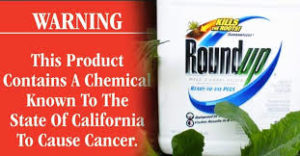 National Wheat Growers Association last month in challenging California’s listing of glyphosate as a carcinogen under the state’s Proposition 65 law. California added glyphosate to the list of cancer-causing chemicals in July 2017, but has since been attacked by Monsanto and its allies for carrying out state law that requires carcinogens to be labeled and monitored.
The plaintiffs, led by the National Association of Wheat Growers, argue that listing glyphosate as a carcinogen under Prop 65 will irreparably harm the agriculture industry, adversely affecting farmers and consumers throughout the U.S. The case, seeking a stay of the listing, was filed in the in Federal Court in the Eastern District of California in November, 2017. Earlier last year, Monsanto lost its case before a state Superior Court in which it sought to stay the Prop 65 listing.
Idaho, Indiana, Iowa, Kansas, Louisiana, Michigan, Missouri, North Dakota, Oklahoma, South Dakota and Wisconsin have filed an amicus brief in support of the preliminary injunction sought by agriculture groups against California’s Prop 65 regulation. The U.S. Chamber of Commerce and the California Chamber of Commerce filed their own amicus brief in support of the preliminary injunction to halt the regulation. (Nat’l Ass’n of Wheat Growers, et al. v. Zeise, et al., No. 2:17-cv-02401WBS). In their amicus brief, states point out that California’s Prop 65 mandates impede the duty of states to protect their own citizen-consumers as well as states’ economic freedoms to stimulate growth, and “encroaches on the equal sovereignty of other States”
According to Lexology, the plaintiffs are arguing (1) that the First Amendment prohibits the government from compelling individuals or entities to engage in speech; and (2) that the Supremacy Clause requires state laws that conflict with federal laws to be preempted. Labeling for glyphosate is governed by certain federal regulations implemented and enforced by the U.S. Environmental Protection Agency (EPA). They have requested that the federal court declare California’s action to be improper and enjoin the state from continuing to list glyphosate as a chemical that requires a Prop 65 warning.
Further, Monsanto and the agricultural interests allege that they are already being adversely affected by the decision, but state officials maintain that there is no need to issue a preliminary injunction on the listing, rejecting the allegation that they are already being adversely impacted by the decision. Monsanto, the chemical giant that makes glyphosate (Roundup), requested the state reconsider its listing but was rejected last summer.
Under the Labor Code listing mechanism of Proposition 65, substances identified by the International Agency for Research on Cancer (IARC) must be listed in the state of California as known to cause cancer. This listing requires warning labels on products and the listed substances are subject to limits on discharges into surface waters. In March 2015, IARC found that there was sufficient evidence of carcinogenicity in experimental organisms to classify glyphosate as “probably carcinogenic to humans” (Group 2A).
Industry has since challenged IARC’s finding, arguing that it is an outlier as an “overwhelming majority of government regulators and other experts” have found glyphosate is not carcinogenic and have “flatly rejected” IARC’s conclusion. In its request for a preliminary injunction, industry argues that they are facing “imminent harm” from the warning label requirements. The state rejects that claim, noting that the requirements will not enter into effect until July 2018 and that it has yet to determine which products will have to be labeled. The plaintiffs may speculate that a Prop 65 warning requirement will cause “an array of harm, from loss of reputation to disruption of food supply and private enforcement litigation” but their “sky-is-falling speculations” do not justify a preliminary injunction. The state agency adds that Prop 65 does not “dictate the text of the warning,” providing companies the right to “tailor to its individual situation” and to “place the cancer risk in context” for the public.
Monsanto has been trying to undermine findings that show its flagship product, glyphosate, is anything other than “safe.” However, its attempts to unduly influence and undermine scientific research and government review of its product has been disclosed widely in the press. This has prompted the European Parliament to set up a special committee to look into the European Union’s (EU) authorization procedure for pesticides, in light of their recent controversial review of glyphosate. It was reported that the European Food Safety Authority (EFSA) copied dozens of pages from a Monsanto study in reaching its conclusion that glyphosate is “unlikely to pose a carcinogenic hazard to humans.” EFSA’s recommendation was supposed to provide an independent analysis for EU member states when deciding to renew the chemical. Last year, the European Parliament banned Monsanto lobbyists from committee meetings and digital resources, as well as prohibiting Monsanto lobbyists from meeting with any Member of the European Parliament. This was an attempt to limit Monsanto’s influence on the EU review process amid mounting public pressure. Similarly, The New York Times reported on Monsanto’s internal emails and email traffic between the company and U.S. federal regulators that suggested that Monsanto had ghostwritten research on glyphosate, which was later attributed to academics. In December 2017, the U.S. Environmental Protection Agency (EPA), declared that glyphosate is likely not carcinogenic, conflicting with IARC’s 2015 classification. Some charge that EPA’s assessment relied heavily on industry studies to arrive at its conclusion, and ignored its own guidelines for assessing cancer risks.
In California, the Court is set to hear arguments on the motion on February 20th.
Fight back against Monsanto’s attempt to undermine the scientific and democratic process by getting involved at the local level. Work to pass policies that restrict not only glyphosate, but the entire range of toxic synthetic pesticides registered by EPA. Beyond Pesticides has resources to help you get started, including an organizing guide, model policy, and list of less toxic, organic compatible products. For more information on IARC’s glyphosate cancer classification and the IARC review process, see Beyond Pesticides’ article in our journal Pesticides and You.
Source: The Fence Post, Legal Scoops
Posted in Agriculture, California, Cancer, Glyphosate, Uncategorized by: Beyond Pesticides
No Comments
08
Feb
 (Beyond Pesticides, February 8, 2018) New trials are being launched in the United Kingdom (UK) to monitor fields that have long strips of wildflowers planted through croplands to boost natural predators and potentially reduce pesticide spraying. The large-scale trials are meant to determine how effective these strips can be as a tool for practitioners wishing to enhance biological pest control in the field.
The field trials, carried out by the Centre for Ecology and Hydrology (CEH), are being conducted on 15 large arable farms in central and eastern England and would be monitored for five years. Until now, wildflower strips have been placed at the edge of fields as refuges. However, natural predators in these strips would be unable to access the center of large planted fields, and thereby unable to effectively target pests that are in the fields. In the new trials, six-meter wide strips of annual wild and cultivated plants – with 13 to 16 species – will be planted 100 meters apart so that predators will be able to attack aphids and other pests typically found in fields.
The researchers at CEH’s ASSIST program (Achieving Sustainable Agricultural Systems) will determine whether in-field strips are feasible tools for practitioners wishing to enhance biological pest control in the field. The most important focus is on supporting diverse communities of predatory and parasitic insects that kill pests. Research increasingly suggests that complex communities of predators and parasitoids are the most effective at controlling pests. Researchers will also be looking out for any sign that drawing the wild insects into the center of fields, and therefore closer to where pesticides are sprayed does more harm than good.
Resources provided by in-field strips and normal field margins benefit the greatest diversity of important predators. According to Ben Woodcock, PhD, ecological entomologist at CEH, sowing specific grasses and wildflowers in the field can support predators in the crop canopy or those that target internal pests living in stems or seed pods. Many parasitic wasps, for instance, need access to open flowers so that they can feed on pollen and nectar. Without this resource, the number of eggs they can lay is dramatically reduced and with it pest control.
Concern over the environmental damage caused by pesticides has grown rapidly in recent years, especially with the drastic decline in pollinator populations. Using wildflower margins to support insects including hoverflies, parasitic wasps and ground beetles have been shown to slash pest numbers in crops and even increase yields. Similar fields are underway in other parts of Europe where flowers such as cornflowers, coriander, buckwheat, poppy and dill are planted in strips. According to reports, densities of leaf beetle pests in fields of winter wheat were 40 to 53% lower than when no flower strips were sown. This low pest pressure even resulted in a 61% reduction in damage to the wheat plants.
Strips of flowering plants, especially with plants attractive to beneficial insects like pollinators, have been used to increased biodiversity on farms and provide refuge for these insects. Flower strips are also designed to provide early season pollen and nectar resources for important crop pollinators, such as bumblebees and solitary bees. In this respect, they provide dual benefits – enhanced natural pest control and crop pollination. In order for annual flower strips for beneficials to be fully maximized, it is important for them to be well integrated into linked perennial habitats with hedgerows, low-input meadows and wildflower strips, and secondly, for them to be combined with a management approach that protects beneficials. This also means protecting them from harmful pesticides. Previous research has shown that hedgerows improve a farm’s ecology and reduce the need for pesticides. Read Beyond Pesticides’ Hedgerows for Biodiversity: Habitat is needed to protect pollinators, other beneficial organisms, and healthy ecosystems.
Dr. Woodcock notes that strips can be easy to manage and readily re-established in another field or location in the same field. With GPS-linked farm machinery allowing the exact location of these strips to be known, this can reduce the chances of accidental spraying of the strips.
To attract beneficial insects and protect their habitats in your own backyard, there are several steps you can take. Like any other living organism, pollinators need food, water, and shelter in order to thrive. For more information, see Managing Landscapes with Pollinators in Mind
Source: The Guardian, CEH Blog
Posted in Agriculture, Beneficials, Biodiversity, Biological Control by: Beyond Pesticides
No Comments
07
Feb
(Beyond Pesticides, February 7, 2018) New data from the California monarch butterfly count indicate that the western 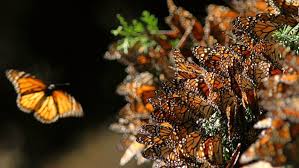 population of the species is continuing to decline at an alarming rate, with scientists and conservation groups pointing to man-made factors like logging, climate change, and herbicide use on genetically engineered (GE) crop fields as primary drivers. The annual California count of western monarch butterflies stationed volunteers at 262 sites, more than ever before, yet at 200,000 butterflies counted, the numbers nearly matched the lowest level recorded this decade, when only 145,000 butterflies were seen in 2012. The decline of these iconic butterflies demands swift action from lawmakers and regulators to protect their dwindling numbers.
Dramatic declines in monarch populations mirror continuing declines in honey bees and other wild pollinator species. Species declines may be even broader than pollinators, affecting all insects in general. Research from Germany recently found that insect abundance declined 75% over the last 30 years, owing the results primarily to agricultural intensification.
The western population of monarch butterflies – those found west of the Rocky Mountains – overwinter in coastal California forests. Throughout the warmer months, female butterflies will lay eggs only on milkweed, making these plants critical to the survival of the species. Adults forage on nectar from a range of flowers in Arizona, California, Idaho, Nevada, Oregon, Washington, and Utah, before returning back to their forest groves for the winter.
According to past data from the Xerces Society, which began its annual monarch count in 1997, at that time over 1.2 million monarch butterflies were found to overwinter in California’s central coast. When compared to the count that took place just one year before in 2016, western monarch numbers are down by 100,000 butterflies. In the 1980s, over 10 million monarchs spent the winter in California forestland.
A study conducted by the U.S. Fish and Wildlife Service last year on the butterfly’s dwindling population indicates that western monarchs have an extinction risk of 86% within the next 50 years. Within only 20 years, the risk is still 72%. “This study doesn’t just show that there are fewer monarchs now than 35 years ago,” said study author Cheryl Schultz, PhD, an associate professor at Washington State University Vancouver. “It also tells us that, if things stay the same, western monarchs probably won’t be around as we know them in another 35 years.”
Eastern monarch populations have also been declining over the past several decades. A 2017 study by the World Wildlife Fund and other conservation groups determined that the population has decreased by 80% since the 1990s, further warning that within 20 years eastern monarch’s iconic migration route from Canada to Mexico could completely, and likely irreversibly, collapse.
A range of factors have been linked to monarch declines. Natural events such as extreme weather, wildfires and smoke have been discussed, but a greater emphasis has been placed on manmade impacts. Climate change can alter the migration patterns. Legal and illegal logging and development in Mexico and coastal California has eliminated significant habitat for monarch overwintering. And milkweed, the sole source for female monarchs to lay eggs and perpetuate the species, once abundant throughout the entirety of the United States, is now nearly eradicated around farmland through which the species makes its annual migration.
Those wishing to support their local monarch populations can find sources of milkweed for their particular climate by visiting the Xerces Society milkweed seed finder. Individual residents taking action is a critical part of the long-term solution for monarchs, but broader changes in land-use and agriculture are needed to ensure that these species will still be around for another 50 years.
GE crops, able to tolerate repeated sprayings of a particular herbicide, whether glyphosate, dicamba, or 2,4-D, are making the edges and roadsides around farm fields where milkweed often grows desolate, lifeless areas. Further compounding a lack of milkweed is the additional use of insecticides on these fields. Chemical company encourage farmers to use systemic neonicotinoids to coat the outer layer of their GE seeds in an unnecessary attempt to protect it from pests. Unfortunately, both herbicides and insecticides don’t stay where they’re originally applied. Herbicide use on GE-tolerant crops drift and kill milkweed and other plants pollinators rely on. Coated seeds will often drift during planting, or run-off into soil and groundwater afterwards, contaminating these same pollinator-friendly plants. Research published in 2015 found that milkweed contamination from drifting neonicotinoids made the plants toxic to larvae which rely on it as its sole source of food once hatched.
Changing the way we farm can make an immense difference for the protection of monarchs and other pollinators. Help pollinators by only purchasing products that don’t allow GE crops or toxic systemic insecticides. Certified organic agricultural practices successfully produce profitable yields while managing to not poison the air, water, soil, vegetation, and other wildlife around their farm.
But changing agriculture also requires additional authority to institute protections for these important pollinators. Take action today! Tell the National Resource Conservation Service to significantly increase the amount of funding spent on monarch conservation and the habitat restoration, and ensure that restored habitat is not poisoned with hazardous pesticides.
All unattributed positions and opinions in this piece are those of Beyond Pesticides.
Source: Xerces Society, Reuters
Posted in Uncategorized by: Beyond Pesticides
No Comments
06
Feb
(Beyond Pesticides, February, 6, 2018) Scientists, doctors, and environmental groups are pushing back against the  Environmental Protection Agency’s (EPA) efforts to purge academic scientists who had previously received EPA grants from sitting on the agency’s advisory committees. Last October, EPA issued a new policy that changes the makeup of its advisory boards by limiting the participation of scientists from academia and nonpartisan nonprofit organizations. Critics say the change attempts to fill these advisory committees with more industry-friendly officials whose belief systems are anti-environmental protection. On January 23, 2018, a group of scientists filed suit against EPA, citing the directive as arbitrary, without any factual or legal grounding and in violation of the Federal Advisory Committee Act, which requires advisory committees to be fairly balanced and protected from inappropriate influence by the appointing authority.
In 1978, Congress directed the EPA to establish the Science Advisory Board, which today is a 47-member panel, to provide scientific advice to the Administrator. EPA Administrator Scott Pruitt announced in October that he would exclude anyone from serving on any of the 23 EPA scientific advisory boards if they had received EPA grants to fund any of their research. Administrator Pruitt claims the policy change will prevent conflicts of interest. But, his decree means that the agency’s decision makers will not receive input from top scientific experts, many of whom rely on public grants to conduct independent studies.
The lawsuit explains that open exchange of accurate scientific information is a touchstone of a functioning democracy, and contends that the Administrator failed to explain why scientists and experts who receive similar funding from other sources — scientists affiliated with private industry or local governments — fall outside the scope of the purge. In singling out academic members of the scientific community who are receiving EPA grants, EPA’s directive “lays bare its real function: to stack the deck against scientific integrity.” The lawsuit asks the court to overturn Pruitt’s directive and prevent EPA staff from implementing the directive.
“This is an abuse of power and an affront to the scientific integrity of the EPA and the federal government,” said Joshua Goldman, senior legal analyst for the Union of Concerned Scientists. “This directive singles out scientists from the nonprofit and academic sector—recognized experts in their field who want to serve the public—and asks them to choose between public service and their scientific work. It’s another example of this administration’s hostility to independent scientific input and basing policy on impartial and balanced scientific evidence. The directive inherently prevents the agency from receiving independent scientific advice, and erects unnecessary barriers to scientists who want to use their expertise to serve the public.”
The lawsuit was filed in the U.S. Court for the District of Massachusetts by Protect Democracy, a nonpartisan nonprofit organization, and the law firm Jenner & Block, representing the Union of Concerned Scientists and Dr. Elizabeth A. (Lianne) Sheppard, professor at the University of Washington, School of Public Health.
This lawsuit comes one month after Earthjustice filed a similar complaint on behalf of Physicians for Social Responsibility, National Hispanic Medical Association, and the International Society for Children’s Health and Environment, challenging EPA’s attempt to remove scientists from the agency’s advisory committees. Earthjustice’s suit argues that the policy illegally overrides federal ethics rules and that it is arbitrarily biased in favor of corporate interests. Advisors picked by Administrator Pruitt to join the advisory boards, like Robert Phalen, once claimed that “modern air is a little too clean for optimum health.” Such advisors will inevitably tilt EPA decisions and programs in favor of polluters. Another Science Advisory Board appointees include a new chair, Michael Honeycutt, who has claimed that more smog would be a “health benefit.” As the lead toxicologist on Texas’ state environmental agency, he has opposed stricter limits on mercury and arsenic releases and undermined protections for benzene, a common and powerful carcinogen
The EPA’s Science Advisory Board now includes 14 new members who consult or work for the fossil fuel or chemical industries, which gave sizeable campaign contributions to Administrator Pruitt when he was an Oklahoma state senator and attorney general, according to the Union of Concerned Scientists. Science advisory boards also play a crucial watchdog role. Scientists from across the country from diverse backgrounds are relied on the review and provide council to EPA programs and decision-making, ensuring the science is robust, transparent and sufficiently assessed to provide adequate protections for the environment. According to Earthjustice, since 2012, industry allies in Congress have repeatedly proposed legislation that would prohibit scientists from serving on the boards if they receive EPA grants. Industry understands that academic experts rely upon these grants to a much greater extent than industry consultants do. Much of the grant money goes to support graduate students who conduct academic research while earning paltry stipends—$24,000 per year is typical. If academics must choose between receiving EPA grants and continuing to serve on science advisory boards, the choice they really face is whether to continue funding students. Unsurprisingly, many teachers are committed to their students and will choose to leave the boards rather than decline funding. Pruitt then can replace them with industry allies.
These changes to EPA’s science advisory boards in just one of a host of measures aimed at dismantling the agency and opening the gates for an industry take over. While environmentalists and public health experts have criticized EPA for lax or inadequate regulation, the administrator has been getting rid of EPA scientists and staff and attacking public health and the environment through proposed budget cuts by the Trump administration.
Source: Earthjustice, Think Progress
All unattributed positions and opinions in this piece are those of Beyond Pesticides.
Posted in Uncategorized by: Beyond Pesticides
No Comments
05
Feb
(Beyond Pesticides, February 5, 2018) We are all concerned about the workers  who grow and harvest our food. A sustainable food system must protect the land and the people who work the land, including the children and families of farmworkers. In two related actions, EPA is proposing to remove age requirements for application of pesticides. The actions involve changes to the Agricultural Worker Protection Standard (WPS), which went into effect this January and covers farmworkers hired to apply pesticides, and the Certification of Applicators (CA) rule, which will go into effect May 22 and covers those allowed to apply highly toxic restricted use pesticides (RUPs), the most toxic pesticides. The proposals to remove the age requirements present unacceptable risks to teenagers, who “are still developing in critical physical and emotional areas, with particular regard to their brains and reproductive systems,” according to the American Academy of Pediatricians (AAP).
Tell your Congressional delegation that EPA must not eliminate the minimum age requirement.
Under the Obama administration, EPA added a minimum age requirement of 18 to both rules. A 16-year-old may apply RUPs under the supervision of a certified applicator under the CA rule. Reportedly, the reason for removing the age requirement is that “teenagers often work for less money than older employees.”
The removal of the age requirement is opposed by farmworker and children’s health advocates. Farmworker Justice applauded the new rule, including the age requirement, then sued EPA to implement the rule earlier this year. AAP points out that dangers of pesticide exposures to teens include long-term damage to nervous and reproductive systems. It also points out that 16 to 17-year-old workers in other industries are prohibited from working with hazardous chemicals.
At a U.S. Senate oversight hearing last week, New Jersey Senator Cory Booker blasted EPA Administrator Scott Pruitt for his lack of concern over environmental justice issues. In particular, Sen. Booker noted the proposal to drop the minimum age requirement for agricultural workers who can use pesticides. Many of these workers, Sen. Booker noted, come from “communities of color, indigenous communities and low income communities.” When Sen. Booker asked, “Do you think that children handling dangerous pesticides is a good idea?” Mr. Pruitt responded –as he had to other Senators’ questions—by changing the subject.
Tell your Congressional delegation that EPA must not eliminate the minimum age requirement.
All unattributed positions and opinions in this piece are those of Beyond Pesticides.
Posted in Agriculture, Environmental Justice, Environmental Protection Agency (EPA), Farmworkers, Uncategorized by: Beyond Pesticides
No Comments
02
Feb
(Beyond Pesticides, February 2, 2018) California regulators may be  drastically underestimating chemical-intensive agriculture’s contribution to nitrogen oxide (NOx) caused air pollution, acid rain, and respiratory illness in the state, according to a new study published in Science Advances by researchers at University of California, Davis. While NOx pollution is usually associated with energy production and vehicle emissions, fertilizer use on crop fields is contributing to significant air pollution problems. Advocates say that the study is an urgent call for farmers to eliminate dependency on soluble, synthetic, nitrogen-based fertilizers and adopt the use of insoluble soil amendments that support soil biology that provide plants with nutrients.
NOx gasses are major sources of pollution in the U.S. and throughout the world, and include the compounds nitrogen oxide (NO) and nitrogen dioxide (NO2). Chemical-intensive, synthetic nitrogen fertilizers are applied in a form that is readily available to plants, while organic nitrogen fertilizers require the biological life in the soil to break down the fertilizer into a form that plants can use. These nitrogen fertilizers that are not immediately taken up by plants can cause pollution problems. Natural nitrogen in the atmosphere must be transformed to be able to be used by organisms as a source of nutrients through a range of biological factors in the soil. However, the pollution associated with the production of synthetic fertilizers that requires petroleum or natural gas, increasingly from fracking, and the introduction of synthetic nitrogen and other pollutants into the atmosphere contributes to environmental degradation, asthma, and other public health problems..
While some fertilizer not taken up by crops will eventually turn into harmless nitrogen (N2), other amounts can become hazardous nitrogen oxide gasses. Once out of soil and into the atmosphere, NOx gasses react with moisture, sunlight, and other chemicals to form pollution. The gasses can combine with other chemicals in the air to form particulate matter able to deeply penetrate and harm human lungs, create acid rain when interacting with water, and form haze that decreases visibility. A 2014 report from the World Health Organization indicates that 1 in 8 total global deaths, around 7 million people each year, die prematurely as a result of exposure to air pollution.
The results of this study stand in stark contrast to the state’s current estimation of NOx emissions from farmland soil. While the California Air Resources Board (CARB) indicates only 3.8% of NOx air pollution comes from croplands, researchers determined that the contribution may in fact be between as much as 20 to 51%.
The study suggests that the state’s methodology for recording cropland emissions may be at fault. CARB measures emissions using data obtained from farms only within 125 miles of Sacramento, thus failing to record higher NOx levels that emanate from areas with more intense agricultural production, such as California’s Central Valley.
Researchers took both a “top-down” and “bottom-up” approach to measuring NOx emissions. As part of the “top-down” approach, planes outfitted with scientific equipment took measurements of NOx emissions over California’s San Joaquin Valley, between Fresno and Visalia, a hotbed for agriculture and an area where some of the highest amounts of nitrogen fertilizer is applied. As part of the “bottom-up” approach, researchers compared results seen from direct measurements over the San Joaquin Valley to a model developed for the same region. The model created by researchers produced estimates only slightly higher than those discovered via plane measurements. Researchers then looked at NOx emissions compared to nitrogen application rates recorded by the state of California and the U.S. Department of Agriculture, finding that high rates of nitrogen fertilizer use in lined up neatly with high levels of NOx emissions.
Researchers determined that temperature, soil moisture, and the amount of nitrogen applied are the most significant factors in whether a soil will release NOx or inert forms of N2. Higher temperatures, more arid soil, and higher nitrogen fertilizer application rates act as the greatest risk factors for NOx emissions. However, the UC Davis scientists provided a range of suggested practices that farmers can implement to reduce harmful emissions. Lower application rates and precision fertilization, rather than broadcast applications, can help reduce excess nitrogen input into soils. Cover crops, and the creation of riparian areas around farmlands can help absorb residual nitrogen. Greater attention to irrigation practices can also ensure that inorganic nitrogen in the soil is not converted into nitrogen oxides. In organic farming systems, the nurturing of microbial activity in the soil food web (a feed-the-soil system) produces slow release nutrients including nitrogen that is taken up by he plants.
With population continuing to increase lock-step with demand for food, unless measures are taken to conserve nitrogen use, this trend is likely to accelerate. The good news is that many of these practices that support the soil food web are already being used on certified organic farms. And given the significance of this study, conventional farmers have a greater incentive to implement them as well. Speaking with the Fresno Bee, Jim Houston of the California Farm Bureau Federation said, “Farmers have a long history of adjusting their practices in response to emerging science, and we will watch to see if further studies verify the results reported here. It’s important to note that most of the steps the study suggests are already underway. Farmers want to use the appropriate amounts of fertilizer and have long relied on expertise from the University of California in making those applications.”
While the study focused on agricultural applications of nitrogen, imprudent use of the fertilizer on garden, lawns, and landscapes also can represent a significant source of non-point nitrogen pollution. For these areas, focus first on cultural practices, and if fertilizer is needed based on a soil test, use Beyond Pesticides list of organic certified fertilizers to choose a soil amendment that, in an organic system, is not likely to result in pollution problems. And to support a healthier future for farming and safer, cleaner air for those living in and around agricultural communities, support organic practices by buying organic.
All unattributed positions and opinions in this piece are those of Beyond Pesticides.
Source: Science Advances, Fresno Bee, ScienceNews,
Posted in Agriculture, Alternatives/Organics, Fracking, Respiratory Problems, Uncategorized by: Beyond Pesticides
No Comments
01
Feb
(Beyond Pesticides, February 1, 2018) Scientists at the European Institute  for the Biology of Aging are finding new information about how Parkinson’s disease manifests itself after exposure to the herbicide paraquat, in hopes of finding ways to prevent the progression of the disease. Despite a well-established body of scientific literature linking the paraquat to Parkinson’s, and a ban on the use of the chemical in the European Union that dates back to 2007, its use is still permitted in the U.S. Many health groups, including Beyond Pesticides and organizations like the Michael J Fox Foundation are calling on the U.S. Environmental Protection Agency stop the use of paraquat by denying its upcoming reregistration.
Published in the journal Cell Reports, this new research on Parkinson’s investigates the impact of “senescent” cells in the body. Senescent cells are those which, despite being able to divide, stop doing so in response to stress. This is an anti-cancer mechanism, as stress would otherwise cause the cells to multiply unchecked and create malignancies. Researchers suspected that despite the benefit of stopping cancer, senescent cells may be causing other problems in the body. Rather than dying, these cells can cause inflammation in the area around where the cell became senescent. Scientists focused in on one particular type of senescent cell, the astrocyte, which are essentially cells that send and receive neurons in the brain. It was hypothesized that senescent astrocytes could be causing localized inflammation that harms the neurons associated Parkinson’s disease. Parkinson’s is characterized by the death of neurons associated with dopamine production. While paraquat has long been associated with the direct death of these neurons, this new research shows that additional neurological impacts may be at play.
Scientists carried out different investigations to test the impact of senescent astrocytes on the development of Parkinson’s. First, they compared human brain tissue between Parkinson’s patients and those without the disease. Compared to those that never contracted Parkinson’s, individuals with the disease showed biomarkers associated with higher levels of senesced astrocytes. Researchers then looked at whether paraquat could cause senescence in a lab-cultured human astrocyte. Not only did paraquat stop astrocyte cell proliferation, it did better at inducing senescence than hydrogen peroxide and other traditional medical methods of inducing astrocyte senescence. Scientists found that, in line with epidemiological data that shows greater risk for Parkinson’s from chronic, low dose exposure than acute, one-time exposure, exposing the cultured astrocytes to paraquat for a longer time at a lower dose resulted in a greater number of senesced cells.
A final test was conducted on laboratory mice. After exposing mice to levels of paraquat indicated in the literature to result in Parkinson’s disease symptoms, results traced a very similar response to the human astrocyte cell culture. Senescent astrocytes increased after paraquat exposure, and mice displayed increased difficulties in movement and motor function. However, when researchers used a drug to flush senescent cells from the substantia nigra, the area of the brain where domapine-producing cells are located, the Parkinson’s-like symptoms of paraquat exposure subsided. “They are almost indistinguishable from the healthy mice,” said Marco Demaria, PhD, to The Guardian.
“As far as we know, this is the first time it’s been demonstrated in any neurodegeneration model that ablating [removing] senescent cells actually has an effect on disease progression,” said study co-author Julie Anderson, PhD to The Scientist. However, Dr. Anderson also noted to TheScientist that, “right now, we don’t know specifically what it is about paraquat that is inducing the senescence within the astrocytes.”
This complex study provides a route to potentially treat not only Parkinson’s but other diseases where senescent cells may play a role, such as ALS and Alzheimer’s. Future research will need to uncover how to flush out specific senescent cells while leaving others, which may be valuable in other areas, such as healing wounds, alone. “We know the cells we want to target, but at the moment we don’t have the therapeutics to do that,” said Dr. Demaria to The Guardian. “We cannot yet only target the bad cells.”
While the treatment developed by researchers in this study is promising, a better approach to reducing and eliminating the spread of pesticide-related diseases is to simply take the chemical off the market. Any products linked to devastating diseases such as ALS, Alzheimer’s, and Parkinson’s have no place in our environment. While paraquat’s use is restricted to certified applicators in the U.S., it can still be applied to agricultural land. Despite a ban on the chemical in Europe and a planned phase-out of use in China, over seven million lbs of paraquat were applied to 15 million acres of American farmland in 2015.
Support efforts to ban the continued use of paraquat. The U.S. Environmental Protection Agency is currently reviewing safety concerns about the chemical, but without public involvement, the agency’s decision could be similar to its continued allowance of another neurotoxic pesticide – chlorpyrifos. Keep up to date with Beyond Pesticides’ action alerts for updates, and for more information on the link between pesticides and Parkinson’s, see the Pesticide-Induced Diseases Database section on Parkinson’s disease.
All unattributed positions and opinions in this piece are those of Beyond Pesticides.
Source: The Guardian, The Scientist, Cell Reports
Posted in Agriculture, Disease/Health Effects, International, Paraquat, Parkinson's, Uncategorized by: Beyond Pesticides
No Comments
31
Jan
(Beyond Pesticides, January 31, 2018) Woolworths, one of Australia’s 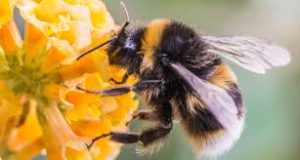 largest retailers, has decided to stop selling neonicotinoid products (neonics) linked to global declines in bee populations. This is the latest retailer in Australia to announce commitments to stop supplying the bee-toxic products.
After thousands of Australians signed a petition calling on retailers to stop selling insecticides containing neonicotinoids, Woolworth announced it has, in fact, succumbed to public pressure and would join Bunnings Warehouse, Mitre 10 and Coles stores in pulling neonic products from their shelves. The week prior, retail chain Bunnings announced it would pull all items containing neonicotinoids from their shelves. Woolworth said it would stop selling the products by June 2018. The retail commitments come as a result of efforts launched by global consumer group SumOfUs that called on Australian retailers to stop selling insecticide products containing neonicotinoids, including the popular home and garden product, Confidor, which has been stocked by Woolworths and contains imidacloprid as the active ingredient.
According to Australia’s The New Daily, about one-third of Australian fruit and vegetable crops are reliant on pollination. Speaking on the ban of neonic products, Katja Hogendoorn, PhD, of University of Adelaide, who researches the behavioral ecology and evolution of native bees, is quoted as saying there was “no doubt pesticides often kill bees. Having a beautiful garden is a luxury. Bees are not, they are essential,” Dr. Hogendoorn said. “The banning of neonicotinoids for home gardeners by Bunnings and Mitre 10 is a great development. I hope the other companies follow suit.”
The Australian government undertook a review of neonicotinoids and the health of honey bees in 2013, which found that “the introduction of the neonicotinoids has led to an overall reduction in the risks to the agricultural environment from the application of insecticides,” according to the Guardian
In the U.S., Walmart and True Value announced last year that they will be phasing out neonic pesticides from all retail supply chains. This follows 2015 commitments by Home Depot, the world’s largest home-improvement chain, that it will no longer use neonic pesticides in 80 percent of its flowering plants, and that it will complete its phase-out in plants by 2018. This was preceded by Lowe’s commitment to phase out the sale of neonic products within 48 months. Several regional garden stores are also working with suppliers to discontinue the use of neonicotinoids: Behnke Nurseries Co. in Maryland, Bachmans, MN, Cavano’s Perennials, MD, Blooming Nursery, OR.
Research on neonics has been consistent in linking their use to reduced learning in bees, as well as other impacts, such as those on colony size, and reproductive success. Studies looking at effects on birds reports that songbirds exposed to widely used insecticides, like neonicotinoids, fail to properly orient themselves for migration, the first such study that adds weight to arguments that pesticides are a likely cause in the decline of migratory bird populations. U.S. beekeepers lost an unsustainable 33% of their hives between 2016 and 2017. Neonics are also detected regularly in the nation’s waterways at concentrations that exceed acute and chronic toxicity values for sensitive organisms. A new report from the U.S. Geologic Survey (USGS) finds neonic contamination of the Great Lakes that threatens aquatic life.
EPA has already released the preliminary pollinator assessment for the neonicotinoids that identified risks to pollinators from a variety of uses on agricultural crops. The aquatic assessment for imidacloprid, also released last year, finds that imidacloprid threatens the health of U.S. waterways with significant risks to aquatic insects and cascading effects on aquatic food webs. As a result of risks to aquatic organisms, the Canadian pesticide regulatory agency has recommended banning imidacloprid, a decision on which has been delayed. In Europe, a recent survey finds that streams across the United Kingdom (UK) are contaminated with neonics. The European Commission met on December 12 and 13, 2017 to decide on a proposal to extend the 2013 neonicotinoid ban to all outdoor crops, but this decision was delayed. The issue is expected to be on the agenda again in early 2018. The UK government has reversed its previous stance on neonicotinoids, now saying that it should be banned due to their harm to pollinators.
Beyond Pesticides released Poisoned Waterways, a report which documents the persistence of neonicotinoids in U.S. waterbodies and the danger they cause to aquatic organisms, resulting in complex cascading impacts on the aquatic food web. The report also highlights current regulatory failures of EPA aquatic standards, which continue to underestimate risks to sensitive species due to a reliance on test protocols that do not reflect real-world exposures or susceptibilities. Aquatic standards, which have been underestimating risks to sensitive species due to a reliance on test protocols, do not reflect real-world exposures or susceptibilities.
Eliminating the sale of harmful pesticides does not mean that retailers will have nothing left to sell their customers. Beyond Pesticides released The Well-Stocked Hardware Store, an online toolkit that identifies organic compatible products for hardware stores seeking to find replacement products that can be used with an organic system approach to land management. Beyond Pesticides highlights the actions of Eldredge Lumber, a hardware store in Maine, through the video Making the Switch. “You’re protecting the environment, your family, your children and grandchildren, and your neighbors. Nobody wants to have pesticides drifting into their front or rear yard, and people are just loving it, they’re feeding into it. I couldn’t be happier,” says owner Scott Eldredge in the video.
All unattributed positions and opinions in this piece are those of Beyond Pesticides.
Source: The Guardian; The New Daily
Posted in neonicotinoids by: Beyond Pesticides
No Comments
30
Jan
(Beyond Pesticides, January 30, 2018) New data from the U.S. Geological Survey  (USGS) reveals the year-round presence of neonicotinoids (neonics) in the Great Lakes – the world’s largest freshwater ecosystem. Neonics, which are highly toxic to aquatic organisms and pollinators, are prevalent in the tributaries of the Great Lakes with concentrations and detections increasing during planting season. This new data adds to burgeoning demand for a federal ban of these insecticides in order to safeguard vulnerable aquatic ecosystems and pollinators.
The study, “Year-round presence of neonicotinoid insecticides in tributaries to the Great Lakes, USA,” sampled ten major tributaries to the Great Lakes from October 2015 to September 2016. Neonicotinoids were detected in every month sampled. At least one neonicotinoid was detected in 74 percent of the samples, with 10 percent of samples containing three neonicotinoids. The most frequently detected neonicotinoid was imidacloprid (53%), followed by clothianidin (44%), thiamethoxam (22%), acetamiprid (2%), and dinotefuran (1%).
The detections of clothianidin and thiamethoxam are significantly correlated with the percentage of agricultural land use. Similarly, concentrations increased in the spring and summer months when the planting of neonic-coated seeds and broadcast applications are the highest. For instance, in the agriculturally dominated basin (corn and soybean) along the Maumee River, Ohio, clothianidin, imidacloprid, thiamethoxam are ubiquitously detected in all water samples collected within the basin at the highest recorded for the study; maximum individual neonicotinoid concentration is 330 ng L−1 and maximum total neonicotinoid concentration is 670 ng L−1; median detected individual neonicotinoid concentration is 7.0 to 39 ng L−1. Alternatively, imidacloprid detections significantly increase as the percent of the urbanization increases, where home gardeners and golf courses use neonicotinoid turf and garden products.
Prior to the study, little was known about the chemicals’ presence in the Great Lakes region. From October 2015 to September 2016, USGS researchers took monthly samples from the following rivers that all drain into the Great Lakes: Manitowoc River (WI), Grand River (MI), St. Joseph River (MI), Indiana Harbor Canal (IN), Saginaw River (MI), River Rouge (MI), Maumee River (OH), Cuyahoga River (OH), Genesee River (NY), and Bad River (WI). Michelle Hladik, PhD, lead author of the new study and a research chemist at the USGS, said the major risk of these chemicals is to aquatic insects—an effect that could ripple up the food chain. “If these pesticides are affecting aquatic insects, causing lower populations, it could affect the food chain by removing a food source” for fish, she said.
Neonicotinoids are the most widely used insecticides in the U.S. and have been linked to neurological and immune system impairments in honey bees and other pollinator declines. However, emerging science is also showing that these chemicals are also highly toxic to aquatic organisms, especially aquatic insects on which whole ecosystems rely. Declines in these organisms can, therefore, have catastrophic results for organisms that depend on them for food, including fish and birds.
Last month, the U.S. Environmental Protection Agency (EPA) released preliminary ecological (non-pollinator) assessments for the neonicotinoids clothianidin, thiamethoxam, dinotefuran and the terrestrial ecological assessment for imidacloprid, finding that these pesticides pose both acute and chronic risks to aquatic life and birds. Treated seeds are identified as posing the highest dietary risks to birds, confirming previous research that neonics are highly hazardous not only to bees, but also, to birds, aquatic life, and other non-target organisms. EPA has already released the preliminary pollinator assessment for the neonics, which identifies risks to pollinators from a variety of uses on agricultural crops. The aquatic assessment for imidacloprid, also released last year, finds that it threatens the health of U.S. waterways with significant risks to aquatic insects and cascading effects on aquatic food webs.
Neonics are detected regularly in the nation’s waterways at concentrations that exceed acute and chronic toxicity values for sensitive organisms. As a result of risks to aquatic organisms, the Canadian pesticide regulatory agency has recommended banning imidacloprid, a decision that has been delayed. In Europe, a recent survey finds that streams across the United Kingdom (UK) are contaminated with neonics. The Beyond Pesticides report Poisoned Waterways documents the persistence of neonicotinoids in U.S. waterbodies and the danger they cause to aquatic organisms, resulting in complex cascading impacts on the aquatic food web. The report also highlights current regulatory failures of EPA aquatic standards, which continue to underestimate risks to sensitive species, due to a reliance on test protocols that do not reflect real-world exposures or susceptibilities.
Take Action: Tell EPA that neonics pose unacceptable risks to pollinators, aquatic life, and birds! And, ask your Congressional delegation push EPA to stop the use of neonicotinoids.
All unattributed positions and opinions in this piece are those of Beyond Pesticides.
Source: Environmental Health News
Posted in contamination, neonicotinoids, Water by: Beyond Pesticides
No Comments
29
Jan
(Beyond Pesticides, January 29, 2018) Scientists, public health managers, and others charged with protecting the health 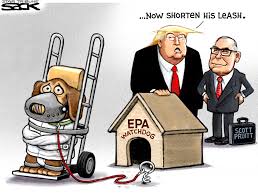 of the public and the environment at the U.S. Environmental Protection Agency (EPA) are being encouraged to exit the agency –as EPA Administrator Scott Pruitt plans to meet his goal of cutting agency staff and programs by 50 percent.
Tell your Congressional delegation that EPA’s staff and budget cuts are false economy!
Aides to Mr. Pruitt confirmed to the Washington Examiner that by the end of President Trump’s first term, the agency’s staff will be cut by nearly half. Administrator Pruitt told the Washington Examiner he was “proud” of his efforts to dismantle –some say cripple— the very agency he leads. This is false economy. It endangers the American public and its air, land, water, and biodiversity.
EPA is responsible for enforcing the Safe Drinking Water Act, with a goal of making the nation’s waters fishable and swimmable. EPA enforces the Clean Air Act, which has cleaned up American cities, reducing illness and property damage from smog. And EPA is responsible for overseeing the clean-up of contaminated sites, thus preventing further pollution and illness.
The agency also regulates pesticides under the Federal Insecticide, Fungicide, and Rodenticide Act (FIFRA).
All of EPA’s programs require the application of science to public policy. Among the people who are being encouraged to retire —via “buyouts” and attractive retirement benefits to incentivize exits— are more than 200 scientists and nearly 100 environmental protection specialists.
Since the Trump administration took office, more than 700 employees have left EPA. According to the Washington Examiner, as of January 3, 2018, the EPA had 14,162 employees. In fiscal year 1988, when Ronald Reagan was President, the EPA employee level was 14,440. Twenty-three percent of EPA employees are currently eligible to retire with full benefits, and another 4 percent can retire at the end of 2018. Additionally, another 20 percentwill be eligible to retire in the next five years. Taken together, nearly 50 percent of EPA staff will be encouraged to leave, in one way or another, over the next five years. One administration official is quoted, in the Washington Examiner, as saying, “We’re happy to be at Reagan-level employment numbers and the future retirements show a preview of how low we could get during this administration. It would be fair to say that anywhere from 25 to 47 percent of EPA could retire during this administration.”
EPA has been plagued with budget constraints for many years, but now, with such drastic cuts (both personnel and budgetary), programs spearheaded by EPA to protect air, water, people, and wildlife from toxic pollution will suffer —a goal made clear by the Trump Administration. Eliminating resources needed to prevent problems means that more money will need to be spent repairing damage and treating disease.
Although, as documented by Beyond Pesticides, EPA’s regulation of pesticides is flawed, the agency plays a critical role in reviewing science and implementing laws protecting human health and the environment. Science itself has been under attack by the Trump Administration, as evidenced by its issuance of scientific grant and hiring freezes at EPA and other agencies nationwide, along with a ban on science communications through social media platforms. Under a dismantled EPA, experts say that even the limited advances made will be undermined. For instance, the neurotoxic pesticide chlorpyrifos, which endangers children, was proposed to be revoked in 2015 due to findings and recommendations of EPA’s own scientists and a 2016 Scientific Advisory Panel (SAP). However, one of Administrator Scott Pruitt’s first acts in office was to rescind the proposal, claiming more evidence was needed.
Though environmentalists and public health experts have criticized EPA for lax or inadequate regulation of pesticides, the clear attacks on public health and the environment through proposed budget cuts, by the Trump administration and EPA’s Mr. Pruitt, demand urgent action.
Tell your Congressional delegation to hold the line on EPA’s budget to protect health, resources, and the economy!
All unattributed positions and opinions in this piece are those of Beyond Pesticides.
Posted in Environmental Protection Agency (EPA), Uncategorized by: Beyond Pesticides
No Comments
26
Jan
 (Beyond Pesticides, January 26, 2018) Triclosan may be on its way out in soaps and disinfectants, but its presence on toothbrushes could stick around for a long time, according to research published in Environmental Science and Technology by a group of scientists from University of Massachusetts, Amherst (UMass Amherst). The Food and Drug Administration (FDA) banned the use of over the counter triclosan-containing soap in 2016, and late last year extended the ban to include health care and hospital settings, but the toxic antibacterial can still be found in toothpaste and other consumer products. Many may have have checked their toothpaste label and switched to a non-triclosan toothpaste after the recent news, but scientists say that exposure to this persistent chemical may continue through toothbrushes, if triclosan toothpaste was previously used.
To test triclosan absorption while brushing, researchers purchased 22 different toothbrushes, each with different components, from bristles only, to those with polishing cups, gum protectors, or tongue cleaners. Different toothpastes, including six with and 15 without triclosan, were also used. A mixture used to imitate saliva was added to toothpaste and put into a vial that was then brushed with different toothbrushes over a 3 month period – the recommended average life of a toothbrush. The level of triclosan remaining on each toothbrush after brushing was determined by subtracting the amount originally applied by the amount that ended up in the toothpaste/saliva mixture after brushing.
Researchers found that most brushes did accumulate triclosan during the brushing process. However, those with additional components, such as polishing cups, tongue cleaners, or gum protectors, took in more triclosan than a regular brush-head toothbrush. Triclosan was initially absorbed at higher rates during the first several brushes, with a general decrease over the three month brushing period. However, toothbrushes with gum protectors, which are marketed to children to protect their sensitive gums, showed a more sustained absorption of triclosan over time when compared to other brush heads.
Triclosan is highly toxic and related to a number of human health impacts. The chemical has been widely detected in the human bodies, with one study showing 100% of pregnant women in Brooklyn, NY testing positive for the chemical in their urine. Triclosan can to pass from a pregnant mother to her fetus, and the chemical’s ability to disrupt the endocrine (hormone) system has led to concerns over its potential to complicate fetal growth and development. Although originally purported to be a solution to tough bacteria, studies have found the opposite to be true. Its inability to be filtered by water treatment plants means that it finds its way into local rivers and streams, where research shows it alters stream communities and actually increases bacterial resistance. Individuals exposed to triclosan are, in fact, more likely to carry worrisome staph bacteria. Triclosan contributes broadly to the worldwide crisis in bacterial resistance to antibiotics. Given this overwhelming evidence of danger, it is no surprise that over 200 scientists from around the world called on limits to the use of the chemical last year.
While those first hearing about the hazards that triclosan poses may take a second look at their toothpaste package and decide to change brands, UMass research indicates the need to go a step further. Triclosan absorbed into toothbrush heads was in fact released back into the mixture when switching from a triclosan to a non-triclosan toothpaste.
Thus, the only way to avoid triclosan exposure after using it on a toothbrush is to throw it away and purchase a new toothbrush or brush head. While limited data has shown that triclosan may alleviate some issues concerning gingivitis, there are viable alternatives, such as essential oils, such as thymol, menthol, and eucolyptol, that can do a good job at addressing gum disease without putting one at risk of other health effects.
The Colgate Total line of toothpastes remain the most popular brand of triclosan-containing toothpastes, however consumers should read the labels on their toothpaste packages to ensure their product does not contain this harmful chemical.
As FDA phases out triclosan in hand soaps, and consumers become more aware of the product in popular toothpastes, a range of concerning uses still remain. While FDA regulates personal cosmetics, EPA regulates other consumer goods, such as clothing, school products, like pencils, kitchenware, and other items where triclosan may be incorporated into the product in order to sell it as “antimicrobial.” Avoid items that use these keywords or indicate they contain Microban, as it is likely to contain triclosan or another hazardous antibacterial.
If you find triclosan in a product you use, take a stand against by telling that retailer to stop using triclosan products. To assist, Beyond Pesticides has a sample letter available for you to send. And for more information, including additional toxicity information and a comprehensive timeline of Beyond Pesticides fight to remove triclosan from the marketplace, see the article FDA 2016 Decision and History on the triclosan program page.
All unattributed positions and opinions in this piece are those of Beyond Pesticides.
Source: ScienceNewsforStudents
Posted in Antibacterial, Environmental Protection Agency (EPA), Triclosan, Uncategorized by: Beyond Pesticides
No Comments
25
Jan
(Beyond Pesticides, January 25, 2018) Monsanto’s herbicide dicamba, widely used on genetically engineered crops, will be prohibited from use in agriculture  from April 16 to October 31, 2018 in Arkansas, following a vote this week by the state’s Legislative Council. Action by lawmakers was the last step needed to make the ban official after the Arkansas State Plant Board (ASPB) voted last year to continue a temporary ban on the drift and damage-prone herbicide into 2018. The ban is a win for farmers and health advocates who have suffered from drift, health effects, and crop damage as a result of widespread dicamba use, as over 29,000 people, including many Beyond Pesticides supporters, voiced their support for ASPB’s proposal when it was announced in October.
Prior to the vote by the Arkansas Legislative Council lawmakers had delayed a vote on the ban, sending the proposal back to ASPB for review and potential revision. Under state law, the Legislative Council, which acts as a decision making body when the state legislature is not in session, must either approve or disapprove of regulations promulgated by ASPB; lawmakers cannot amend ASPB’s rules. Despite concerns from lawmakers friendly to the chemical industry, ASPB refused to revise its proposal, and sent it back again to the Legislative Council for an up or down vote. “The Plant Board give us some very good scientific information that they had studied and worked on for a long period of time, and I think the members realized that,” said State Senator Bill Sample (R), co-chairman of the Legislative Council to the Baxter Bulletin. Senator Sample had first backed efforts to revise the plan before voting in favor of its passage earlier this week.
As the state begins to enforce its ban, a lawsuit filed by Monsanto attempts to halt the ban remains in the courts. “We’ve committed to growers and our customers that we will pursue (the lawsuit) until it is complete to see if we can’t help them have access to modern technology and have the maximum amount of choice,” said Scott Partridge, Monsanto’s vice president of global strategy to the Associated Press. Unfortunately for farmers, it is evident that Monsanto’s drive to provide greater access to its products is what resulted in the current crisis in the first place.
Weed resistance to Monsanto’s Roundup-Ready genetically engineered (GE) crops, developed to tolerate repeated sprayings of Roundup’s active ingredient glyphosate throughout the growing season, led the company to reach for older, more toxic chemicals to incorporate into their new line of GE cropping systems. Glyphosate-tolerant corn and soy led to a rash of invasive weeds developing the same tolerance in farmer’s fields, leading to increases in labor and cost. Rather than encourage a greater emphasis on cover cropping, crop rotation, and alternative weed management techniques developed successfully by the organic industry, the company developed its new line of products based on an herbicide that was first registered in 1967 – dicamba.
The company released new seeds developed to tolerate dicamba, however it did so without a companion herbicide it was also developing, which was purported to present less issues with herbicide drift. Many believed the source of widespread reports of drift and damaged fields stemmed from farmers using older, off-label versions of dicamba on new GE seeds. The company eventually released its companion herbicide “Xtend,” a combination of glyphosate and dicamba, but reports of crop damage from drift continued. From Texan winegrowers, to Missouri peach farmers, the dicamba crisis has pitted neighbor against neighbor. In late 2016, NPR reported that a fight over dicamba damage led to the murder of one farmer in Arkansas.Despite Monsanto’s claim that its new Xtend herbicide wouldn’t include the drift problems dicamba is well known for, research by weed scientists found that the product does volatize enough to cause drift damage.
Now, Monsanto has two strategies in motion. First, sue to attempt to delay or eliminate any state-level action. Second, offer to pay farmers more than half the cost of the herbicide per acre in order to get them to continue using its toxic cropping system. With predictions that over 40 million acres will be planted with dicamba-tolerant soy in 2018, action by other states to restrict the use of dicamba is needed now. Restrictions are in place or being considered in a number of states, including Missouri, North Dakota, and Minnesota.
If you are concerned about the use of dicamba-based herbicides in agricultural areas where you live, contact your state department of agriculture and voice your concerns. Find their contact information through Beyond Pesticides’ state pages. For more information about the hazardous associated with GE agriculture, see our program page on genetic engineering.
All unattributed positions and opinions in this piece are those of Beyond Pesticides.
Source: The Baxter Bulletin, Memphis Daily News
Posted in Agriculture, Contamination, Dicamba, Genetic Engineering, Glyphosate, Uncategorized by: Beyond Pesticides
No Comments
24
Jan
(Beyond Pesticides, January 24, 2018) Poor nutrition coupled with exposure to a notorious class of insecticides known as neonicotinoids act synergistically to significantly reduce the 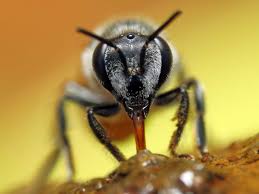 survival of honey bees and their colonies, according to research published by scientists from University of California, San Diego (UCSD). This is the first study to delve into the real-world effects pesticide exposure can have on honey bees also subject to nutritional stress, a common occurrence in the wild. The outcome of this research highlights the weaknesses of the U.S. Environmental Protection Agency’s (EPA) testing regime for registering pesticides, which does not account for the complex ecology surrounding catastrophic declines in honey bee and other wild pollinator populations.
UCSD scientists looked at two of the most popular neonicotinoids, chlothianidin and thiamethoxam, to investigate how realistic levels of exposure to the chemicals interacted with varying levels of available food. High and low levels of both chemicals, 1/5 and 1/25 of the LD50 (amount at which 50% of honey bees exposed would die) were added to sugar syrup solution containing a range of different nutrition levels. Sugar syrup, which mimics nectar and honey, is a critical source of carbohydrates for honey bees. The bees studied were either allowed to freely forage on sugar solution, or were limited to only a certain quantity of the syrup. Within those two groups, the richness of the sugar solution was broken down to three categories: rich (50% sugar/water), intermediate (32.5% sugar to water), or poor (15% sugar to water). Scientists also investigated honey bee survival based on a no-sugar solution containing only water. All of these scenarios were field-realistic, as honey bees will often go through periods of little to no nutrition at the beginning and end of the growing season, and during winter when honey stores may run out.
The results of the study provide clear evidence of synergistic interactions between nutritional availability and pesticide exposure. In general, bees fed high levels of the neonicotinoids had significantly lower survival rates than both control bees and those fed lower levels of the chemicals in their food. Bees that were limited to only a certain quantity of syrup, whether that syrup contained rich or poor levels of sugar to water, also showed reduced survival. When bees were able to freely forage on sugar solution spiked with insecticide, both intermediate and poor levels of sugar to water reduced survival. In only one instance were significant declines not recorded – when bees were provided rich sugar syrup they could freely forage on. Even when exposed to high or low levels of the neonicotinoids, these bees did not exhibit significantly reduced survival. Even bees fed no nutrients (only water) fared better than those receiving some nutrients spiked with insecticides. Lead author of the study, Simone Tosi, PhD, noted, “Our results provide the first demonstration that these stressors can synergistically interact and cause significant harm to animal survival.”
Of most significance to the ongoing pollinator crisis, the authors note that, when EPA requests studies on the impact of these chemicals on pollinators, it provides what would be classified in the study as a rich sugar solution (50% sugar/water), and allows bees to freely forage on the mixture. Thus, EPA’s tests would never capture the effects recorded in the new study, despite the fact that nutritional stressors are very common in the course of a honey bee and its colony’s life. “These findings should cause us to rethink our current pesticide risk assessment procedures, which, based upon our findings, may underestimate the toxic effects of pesticides on bees,” said Dr. Tosi.
Outside the ongoing pollinator crisis, the results of the study could conceivably apply to all animals. Co-author James Nieh, PhD, indicated that this research “may have even broader implications beyond honey bees because prior studies have not demonstrated a negative synergistic effect of pesticides and poor nutrition in animals.”
For many, it is likely common sense that a nutrient poor diet coupled with exposure to toxic chemicals leads to reduced survival. However, unless this issue is addressed in honey bees, it could very well be humans that are subject to a similar situation. A study published in 2015 by scientists at the University of Vermont and Harvard University found that the decline of pollinators, and thus pollination services, could lead to a devastating impact on diet and health, particularly for children and women in developing countries. Not only do pollinators contribute to 1 in 3 bites of food, their services help grow the most nutrient-dense fruits and vegetables available on the planet. Without them, diets would be limited to bland foods like corn and grains, with little nutrients- ultimately, as can be inferred from the present study, increasing risk of disease and death.
Stop the ongoing annihilation of pollinator populations by forgoing the use of toxic chemicals in your own yard, and encouraging local, state, and national governments to do the same. Plant pollinator friendly habitat to support existing populations as you work toward pesticide reform goals. Get ideas about what to plant around your home or business through the Bee Protective Habitat Guide, and find pollinator-friendly seeds through Beyond Pesticides’ Directory. Let us know that you are interested in working on this issue by indicating that you want a pesticide-free community today. Plan on meeting one of the authors of this study, Jame Nieh, PhD, at the upcoming 36th National Pesticide Forum, Organic Neighborhoods: For healthy children, families, and ecology, April 13-14, 2018 in Irvine, California.
All unattributed positions and opinions in this piece are those of Beyond Pesticides.
Source: Science Daily
Posted in Agriculture, Increased Vulnerability to Diseases from Chemical Exposure, neonicotinoids, Pollinators by: Beyond Pesticides
No Comments
23
Jan
(Beyond Pesticides, January 23, 2018) The European Parliament decided to set up a special committee to look into the  European Union’s (EU) authorization procedure for pesticides, in light of the controversial review of Monsanto’s glyphosate. The special committee is to assess the authorization procedure for pesticides in the EU and potential failures in how substances are scientifically evaluated and approved.
The Special Committee on Plant Protection Products, which will have 30 members and a nine-month term, was voted in last week to assess the authorization procedure for pesticides in the EU; potential failures in how substances are scientifically evaluated and approved; the role of the European Commission in renewing the glyphosate license; possible conflicts of interest in the approval procedure; and the role of EU agencies, and whether they are adequately staffed and financed to fulfill their obligations. It is scheduled to meet for the first time in March.
In a joint statement, Members of the European Parliament (MEPs) Marc Tarabella and Eric Andrieu, who called for the establishment of a committee last April, welcomed the move which will allow the Parliament to lay the foundations for “transparency and independence” of the European Union’s decision-making process. “The glyphosate case has revealed the structural failures of the European Commission,” added Mr. Andrieu and Mr. Tarabella.
The new committee is responsive to concerns raised about the risk posed by the herbicide glyphosate, which was granted renewal last November for just 5 years, after the European Commission’s initial failure to pass 15 and 10-year old renewal proposals. This came after months of controversy over the role of glyphosate’s maker, Monsanto, in the decision-making process, and its influence over scientific reports used to support glyphosate’s review. It was reported that the European Food Safety Authority (EFSA) copied dozens of pages from a Monsanto study in reaching its conclusion that glyphosate is “unlikely to pose a carcinogenic hazard to humans.” EFSA’s recommendation was supposed to provide an independent analysis for EU member states when deciding to renew the chemical.
Both EFSA and the German regulatory authority, known as the Federal Institute for Risk Assessment (BfR), have been accused of working closely with Monsanto to sway the EU’s final decisions on the controversial chemical, and of using material directly from Monsanto in their reports over the safety of glyphosate without making clear that the data came from Monsanto itself. In 2015, reports indicated that BfR based its glyphosate renewal assessment almost solely on industry science and classified industry reports from an industry greenwashing group called the Glyphosate Task Force. It was also found that three scientists on Germany’s scientific panel on pesticides work for the pesticide industry.
Molly Scott Cato, MEP, who sits on the European parliament’s agriculture committee, said the decision is a “victory” for Green groups in Europe, who have been pushing for a special committee to investigate the decision-making process for the renewal of glyphosate’s license in Europe.
“Greens have serious concerns about whether the rules have been respected during the decision-making process for glyphosate and why scientific studies demonstrating that glyphosate is dangerous have been ignored,” Ms. Cato said. “This committee will have a vital role in establishing how we can make the decision-making and evaluation processes transparent and objective. Secret science is not science: its time to shine a spotlight on who is pulling the strings when it comes to authorizing these potentially toxic and environmentally damaging products.”
Glyphosate and its maker Monsanto have been embroiled in controversy after the 2015 the World Health Organization’s (WHO) International Agency for Research on Cancer (IARC) classification of glyphosate as a “probable carcinogen.” Since then, Monsanto has been working overtime to discredit IARC and push its science on to regulatory agencies in the U.S. and Europe. Last year, the European Parliament banned Monsanto lobbyists from committee meetings and digital resources, as well as prohibiting Monsanto lobbyists from meeting with any Member of the European Parliament. This was an attempt to limit Monsanto’s influence on the EU review process amid mounting public pressure.
The New York Times reported on Monsanto’s internal emails and email traffic between the company and U.S. federal regulators that suggested that Monsanto had ghostwritten research on glyphosate, which was later attributed to academics. In December 2017, the U.S. Environmental Protection Agency (EPA), declared that glyphosate is likely not carcinogenic, conflicting with IARC’s 2015 classification. Some charge that EPA’s assessment relied heavily on industry studies to arrive at its conclusion, and ignored its own guidelines for assessing cancer risks.
Fight back against Monsanto’s attempt to undermine the scientific and democratic process by getting involved at the local level. Work to pass policies that restrict not only glyphosate but the entire range of toxic synthetic pesticides registered by the U.S. Environmental Protection Agency. Beyond Pesticides has resources to help you get started, including an organizing guide, model policy, and list of less toxic, organic compatible products. For more information on IARC’s glyphosate cancer classification and the IARC review process, see Beyond Pesticides’ article in our newsletter Pesticides and You.
All unattributed positions and opinions in this piece are those of Beyond Pesticides.
Source:
Farming UK
NewEurope
Posted in Glyphosate, Pesticide Regulation by: Beyond Pesticides
No Comments
22
Jan
(Beyond Pesticides, January 22, 2018) The organophosphate pesticides chlorpyrifos, malathion, and diazinon are likely to 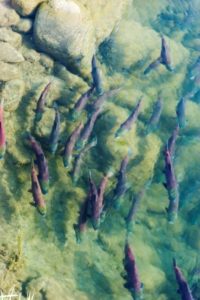 jeopardize the continued existence of endangered species and adversely modify their critical habitats, according to the newly released report from the National Marine Fisheries Service (NMFS). By law, the Environmental Protection Agency (EPA) must not allow their use.
Tell EPA to ban chlorpyrifos, malathion, and diazinon unless it can restrict uses to protect endangered species.
Under Section 7 of the Endangered Species Act (ESA), any agency action requires a finding that the action “is not likely to jeopardize the continued existence of any endangered species or threatened species or result in the destruction or adverse modification of habitat.” The December 31, 2017 Biological Opinion from NMFS followed an ecological assessment that relied upon multiple lines of evidence to determine effects on species and their designated habitats.
These impacts include:
• “the direct and indirect toxicity of each chemical to aquatic taxa groups (e.g., fish, mammals, invertebrates);
• specific chemical characteristics of each pesticide (e.g., degradation rates, bioaccumulation rates, sorption affinities, etc.);
• expected environmental concentrations calculated for generic aquatic habitats
• authorized pesticide product labels;
• maps showing the spatial overlap of listed species’ habitats with pesticide use areas; and
• species’ temporal use of those lands and/or aquatic habitats on which each pesticide has permitted uses.”
The Biological Opinion finds, “[P]esticides containing chlorpyrifos are likely to jeopardize the continued existence of 38 of the 77 listed species, and adversely modify 37 of the 50 designated critical habitats.” For malathion, 38 of 77 listed species are likely to be jeopardized and 37 of the 50 designated critical habitats adversely modified. Likewise, diazinon likely jeopardizes 25 of 77 listed species and adversely modifies 18 of the 50 designated critical habitats. Species affected include salmon, steelhead, sturgeon, coral, and sea turtles, as well as orcas and seals that depend on salmon as a food source.
This Biological Opinion, which resulted from a lawsuit filed against EPA in 2014 for failure to comply with the ESA, is in line with the 2016 findings by EPA that chlorpyrifos and malathion are “likely to adversely affect” 97% of listed and candidate species, and diazinon “likely to adversely affect” 79% of endangered species under the ESA. Although EPA is required to consult with the Fish and Wildlife Service (FWS) and NMFS when registering a pesticide, the agencies have been sued over the years for disregarding this requirement and failing to ensure adequate protections for endangered species. A 2013 report from the National Academy of Sciences identified deficiencies and provided recommendations for all the agencies involved in pesticide consultations.
Tell EPA to ban chlorpyrifos, malathion, and diazinon unless it can restrict uses to protect endangered species.
The three organophosphates are highly toxic to mammals, fish, and aquatic invertebrates, and are used widely in agriculture, as well as on forested lands, and even in mosquito spraying. According to NMFS, current application of these pesticides produces aquatic concentrations that are likely to harm aquatic species, as well as contaminate their designated critical habitats. Species and their prey residing in shallow aquatic habitats proximal to pesticide-use sites are expected to be at greatest risk. NMFS made several risk-reduction recommendations, including no-spray buffer zones of more than 300 meters alongside habitats, and removal of high-risk label uses.
According to Earthjustice, federal inaction against these pesticides puts at risk billions of dollars and thousands of jobs. Salmon and steelhead fishing in Oregon, Washington, Idaho, and Northern California is responsible for $1.25 billion in the regional economy, and supports more than 62,000 family wage jobs. But salmon populations have declined over the years due to damming activity, climate change, widespread habitat loss, and pesticide runoff. Scientists have found that, even at low levels, pesticides can cause the abnormal sexual development of salmon and impair their swimming ability, growth, development, behavior, and reproduction.
All unattributed positions and opinions in this piece are those of Beyond Pesticides.
Posted in Antibacterial, Uncategorized by: Beyond Pesticides
No Comments
19
Jan
(Beyond Pesticides, January 19, 2018) Scientists, public health managers, and others 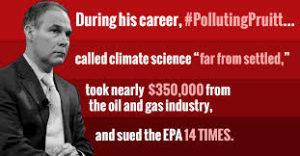 charged with protecting the health of the public and the environment at the U.S. Environmental Protection Agency (EPA) are being encouraged to exit the agency. This, as EPA Administrator Scott Pruitt plans to meet his goal of cutting agency staff and programs by 50 percent.
Aides to Mr. Pruitt confirmed to the Washington Examiner that by the end of President Trump’s first term, the agency’s staff will be cut by nearly half. Administrator Pruitt told the Washington Examiner he was “proud” of his efforts to dismantle, some say cripple, the very agency he leads, which is responsible for enforcing the Safe Drinking Water Act, the Clean Air Act, the pesticide registration program the Federal Insecticide, Fungicide and Rodenticide Act (FIFRA), and the Superfund toxic waste cleanup program, among others. By early 2021, Mr. Pruitt and his team are aiming to reduce the staff of what was nearly 15,000 to below 8,000. Among the people who are being encouraged to “retire” are more than 200 scientists and nearly 100 environmental protection specialists.
According to the Washington Examiner, as of January 3, 2018, the EPA has 14,162 employees. The last time EPA was at an actual employment level of 14,440 was in the fiscal year 1988 when Ronald Reagan was president. Twenty-three percent of EPA employees can retire with full benefits and another four percent can retire at the end of 2018. Additionally, another 20 percent of EPA employees will be eligible to “retire” in the next five years. Taken together, nearly 50 percent of EPA staff will be encouraged to “retire” in the next 5 years.
One administration official is quoted as saying, “We’re happy to be at Reagan-level employment numbers and the future retirements show a preview of how low we could get during this administration. It would be fair to say anywhere from 25 to 47 percent of EPA could retire during this administration.”
Late last year, Administrator Pruitt was on Capitol Hill to talk about, “The Mission of the U.S. Environmental Protection Agency,” and a “Back to Basics” vision. However, EPA has been plagued with budget constraints for many years, but now with such drastic cuts, programs spearheaded by EPA to protect air, water, people and wildlife from toxic pollution will suffer – a goal made clear by the Administration. Without adequate staff, thorough vetting and oversight of pesticides products and their impacts under FIFRA for their impact on human health and the environment is likely to suffer, while giving a free pass to the industry. As the attorney general of Oklahoma before his appointment by President Trump to the highest EPA post, Mr. Pruitt, according to The New York Times, was a litigant in numerous lawsuits against the agency, challenging rules on air pollution, limits on mercury, efforts to reduce ozone pollution, protection of scenic vistas in certain national parks, a determination that greenhouse gas pollution endangers health and the environment, a clean power plan intended to curb climate change, and a clean water rule.
Already the Trump Administration has issued an executive order proposing that for every new regulation promulgated, two must be repealed, an initiative that could have a dramatic and devastating effect on environmental protections. While,
as documented by Beyond Pesticides, EPA’s regulation of pesticides is flawed, EPA plays a critical role in reviewing science and implementing laws protecting human health and the environment. Science itself has been under attack by the Trump Administration, as evidenced by its issuance of scientific grant and hiring freezes at EPA and other agencies nationwide, along with a ban on science communications through social media platforms. Agency scientists now face an unspecified vetting process before sharing their work outside the agency. Administrator Pruitt also
issued a directive banning scientists who receive grant funding from the EPA from serving on its advisory board. This leads an EPA to be more beholden to industry “science” and its priorities of profit and unlimited pollution.
Under a dismantled EPA, experts say that even the limited advances will be undermined. For instance, the neurotoxic pesticide chlorpyrifos that endangers children was proposed to be revoked in 2015 due to findings and recommendations of EPA’s own scientists and a 2016 Scientific Advisory Panel (SAP). However, one of Administrator Scott Pruitt’s first acts in office was to rescind the proposal, claiming more evidence was needed.
While environmentalists and public health experts have criticized EPA for lax or inadequate regulation of pesticides, the clear attacks on public health and the environment through proposed budget cuts by the Trump administration and EPA Mr. Pruitt demands urgent action. Beyond Pesticides is collaborating with other organizations to protect an agency that Congress established to advance clean water, clean air, safe food, farmworker protection, and healthy natural resources.
All unattributed positions and opinions in this piece are those of Beyond Pesticides.
Source: EWG Press Release, Washington Examiner
Posted in Environmental Protection Agency (EPA), Hydroponics by: Beyond Pesticides
5 Comments