





25
Apr
Deadly Fungal Infection Raises Concerns about Fungicides Used in Agriculture
 (Beyond Pesticides, April 25, 2019) As reported by Mother Jones, the New York Times (NYT) published, on April 6, a distressing report about a deadly fungus that has been advancing steadily across the world during the past five years. Candida auris is an emerging fungal pathogen that threatens those with compromised or immature immune systems, such as infants, the elderly, people taking steroids for autoimmune disorders, diabetics, those undergoing chemotherapy, and even smokers. Nearly half of those who contract a C. auris infection die within 90 days. One of the factors making this fungus so deadly is that it has developed resistance to existing antifungal medicines, with 90% of infections resistant to one drug, and 30% to two or more. As is true for resistant bacteria, culprits in C. auris’s development of resistance may be the overuse of antifungal medications in health care and overreliance on fungicides in agriculture.
The Centers for Disease Control and Prevention (CDC) has added C. auris to its list of pathogens considered “urgent threats.” It is an “emerging fungal pathogen,” meaning that the incidence of infection has been increasing across multiple countries since it was first recognized in 2009 in Japan (although a different strain had been identified in South Korea in 1996). It has recently shown up in hospital units and nursing homes in Venezuela, Colombia, Panama, Spain, France, Britain, Germany, India, Pakistan, Saudi Arabia, Russia, China, Australia, Kenya, South Africa, Canada, and now, cases have been confirmed in New Jersey, New York, and Illinois; U.S. cases thus far have been primarily in nursing homes and other long-term care facilities. C. auris is impervious to major antifungal medications, and is difficult to eradicate in patient surrounds, never mind in human bodies.
After an elderly man at the Brooklyn branch of Mount Sinai hospital contracted the fungal infection — and eventually died — the hospital launched an effort to eradicate the pathogen from his hospital room. As the NYT reported, “Tests showed it was everywhere in his room, so invasive that the hospital needed special cleaning equipment and had to rip out some of the ceiling and floor tiles to eradicate it. ‘Everything was positive — the walls, the bed, the doors, the curtains, the phones, the sink, the whiteboard, the poles, the pump,’ said Scott Lorin, M.D., the hospital’s president. ‘The mattress, the bed rails, the canister holes, the window shades, the ceiling, everything in the room was positive.’”
Echoing the development of resistance in bacteria, there have lately been resistant fungi showing up in hospitals and labs, adding to the already considerable worry in the medical community about how to treat people who contract infections caused by resistant pathogens. Matthew Fisher, Ph.D, a professor of fungal epidemiology at Imperial College London, has said, “It’s an enormous problem. We depend on being able to treat those patients with antifungals.” Fungi, just like other organisms, adaptively exploit genetic mutations to defend against what would kill them — in this case, antifungal medications.
Despite admonishments from researchers and leaders in global healthcare to rein in the use of all antimicrobial pharmaceuticals (antibiotics and antifungals, in particular), the medical community has continued to overuse them. But medical overuse may not, by a long shot, be the only culprit: farmers across the globe rely heavily on, essentially, the same chemical compounds to fight pathogens — on crops and in livestock — that medicine depends on when those pathogens invade the human body. These important tools in fighting infections have been used to excess for non-medical purposes: antibiotics for prophylaxis and for accelerated weight gain in farm animals, and fungicides on crops to prevent certain kinds of blight and rot. In addition, there are “crossover” uses: several fungicides are also registered for managing bacterial diseases in fruits, vegetables, grains, and other food crops.
In research published in May 2018 in the journal Science, Dr. Fisher, et al. noted that, “The recent rate of emergence of pathogenic fungi that are resistant to the limited number of commonly used antifungal agents is unprecedented. The azoles, for example, are used not only for human and animal health care and crop protection, but also in antifouling coatings and timber preservation. The ubiquity and multiple uses of azoles have hastened the independent evolution of resistance in many environments. One consequence is an increasing risk in human health care from naturally occurring opportunistic fungal pathogens that have acquired resistance to this broad class of chemicals.”
Mother Jones reports that one subset of azoles (systemic antifungal agents), the triazoles, are the most commonly used category of fungicides (antifungals), comprising more than 25% of all fungicides used in European agriculture. Agricultural use of triazoles has spiked, in the U.S., to a 2015 level of 3,000 metric tons. A causal link between fungicides used in agriculture and C. auris has not been proven, but U.S. and European scientists suspect that such use may have been a “trigger” for its emergence.
Dutch researcher Jacques Meis, M.D., Ph.D. believes that drug-resistant fungi are developing thanks to heavy use of fungicides on crops. He first paid attention to the resistance–agricultural use link when a patient in the Netherlands died in 2005 from the fungus Aspergillus, which proved resistant to the antifungal itraconazole — that compound being a virtual copy of the azole fungicides used worldwide to treat crops, and accounting for more than one-third of all fungicide sales. Research in 2013 demonstrated a link between areas where azole fungicides are used and the flourishing of the Aspergillus fungus, showing up in 12% of Dutch soil samples. In 2018, Dr. Meis visited the CDC to talk about his conviction that a similar thing is happening with C. auris: azoles created an environment so hostile that fungi are evolving, with resistant strains — such as C. auris —surviving and “thriving.”
According to the NYT, the CDC’s Tom Chiller, chief of the Mycotic Diseases Branch, who calls C. auris “a creature from the black lagoon,” also believe that its resistance and “explosion” may have “benefited from the heavy use of fungicides.” According to Mother Jones, Dr. Chiller “reiterated the possibility of a link. With triazole fungicides killing fungi over large swaths of farmland, ‘the ones that are going to survive are the ones that are resistant — and they’re going to flourish. And so you could see how that could select for a relatively rare Candida like Candida auris.’”
The issue of resistance and its causes is not well understood by much of the public, perhaps in part because of science illiteracy, but also in part, as the NYT reports, “because the very existence of resistant infections is often cloaked in secrecy. With bacter[ial] and fung[al infections] alike, hospitals and local governments are reluctant to disclose outbreaks for fear of being seen as infection hubs. Even the C.D.C., under its agreement with states, is not allowed to make public the location or name of hospitals involved in outbreaks. State governments have in many cases declined to publicly share information beyond acknowledging that they have had cases.”
Even serious outbreaks in England (50 cases in one hospital in 2015) and Spain (85 cases, reported in 2018) were kept on the down low by hospitals worried about institutional reputation and that such reports are “bad for business.” Some in the healthcare industry defend the hush on such outbreaks of C. auris infections, saying that disclosure frightens patients and alarms the public about a situation that healthcare professionals do not have effective ways of managing. But patients and healthcare advocates find this attitude maddening. Says Kevin Kavanagh, M.D., a Kentucky doctor and chair of Health Watch USA (a nonprofit that promotes healthcare transparency, quality, and affordability), “Why the heck are we reading about an outbreak almost a year and a half later — and not have it front-page news the day after it happens? You wouldn’t tolerate this at a restaurant with a food poisoning outbreak.” In addition, the difficulty of managing C. auris can unnerve facility staff members, given its significant lethality and the challenges of eradication from patient surrounds.
The concern about human infection by antifungal-resistant fungi is a distinct echo of the mounting worry about infection by antibiotic-resistant bacteria. Beyond Pesticides has chronicled developments in the emergence of both fungicide resistance and pesticide/antibiotic resistance. The burgeoning resistance problem derives, in part, from the intensive use of pesticide products (including insecticides, herbicides, fungicides, and others) in plant and animal agriculture. Use of these compounds inevitably drives the problem: as Beyond Pesticides wrote last year in its journal, Pesticides and You, “Broadscale and repeated use of a pesticide sets in motion the factors that drive the evolution of resistance in the target pest. Those that are not killed by the pesticide pass down the genes that allowed them to survive, perpetuating a toxic cycle.”
The agrochemical industry’s response to the development of resistance has typically been to develop new compounds to target the same pest or bacterial or fungal problem, and/or to “layer” use of multiple pesticides, sometimes causing actual increases in the amounts of pesticides used. Conventional farming is so extensively shaped by what these companies develop and recommend that many farmers, faced with a pest problem on which existing pesticides have become ineffective, will simply move to the next chemical “fix” that industry develops. This dynamic is a recipe for ecological entropy and not a solution. Chemical interventions to “control” pests of any sort, beyond all the potential toxicity issues, fundamentally cause imbalances in micro and macro ecological systems.
When humans use toxic synthetic chemicals to protect “systems” that violate natural and ecological laws — such as monocrops (think huge fields of commodity corn, soy, wheat, cotton, et al.), or great swaths of grassy lawns — the natural predators that exist in ecosystems can be destroyed or challenged, reducing the balanced and cyclical nature of predator and prey. (In nature, populations of all organisms wax and wane, with available food sources and level of predation.) Chemical inputs in agriculture reduce the biodiversity that keeps these systems functional; pesticide use begets more pesticide use as part of what is known as the “pesticide treadmill.”
Fraught as it is with negative impacts on human and environmental health, including the mounting resistance issues, chemically intensive agriculture should be understood as a sign of the ineffectiveness of conventional, chemical approaches to pest control. Organic agricultural practices, which proscribe the use of harmful pesticides, support biodiversity, intact ecosystems, and human health. Organic agriculture seeks to prevent pest problems by creating healthy agroecosystems. Adoption of organic approaches diminishes the resistance problem and can potentially help preserve important antibiotic and antifungal medicines for treatment of human infection.
Be a part of the critical shift from chemical agriculture to organics. Learn more about organic agriculture, advocate for it, and “vote” for organics by creating market demand for organic food.
Sources: https://www.nytimes.com/2019/04/06/health/drug-resistant-candida-auris.html?smid=fb-nytscience&smtyp=cur&fbclid=IwAR06V0Oh4dMwtnaCTfrnS2kS6v9u-k6ewtwfxmC01FpPPs8zR4iOY0NO1WI and https://www.motherjones.com/environment/2019/04/whats-causing-an-outbreak-of-a-mysterious-fungal-infection-americas-farms-offer-a-clue/

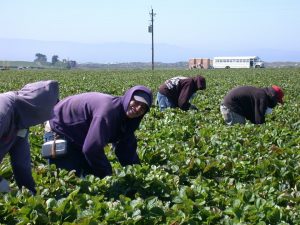 (Beyond Pesticides, April 24, 2019) On April 19, the U.S. Court of Appeals for the 9th Circuit ordered the U.S. Environmental Protection Agency (EPA) to provide a justification for why
  (Beyond Pesticides, April 23, 2019) “

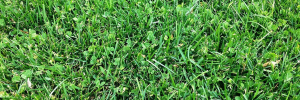
 Planting clover in your lawn is a small and easy way to help bolster pollinator populations.

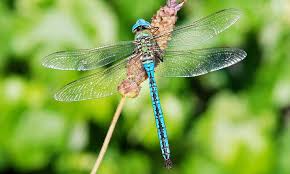 (Beyond Pesticides, April 19, 2019) Flying insects exposed to neonicotinoid insecticides or its breakdown products experience visual impairment and difficulty flying, according to a study
 (Beyond Pesticides, April 16, 2019) Help stop another attack on local authority in Maine – a bellwether state that has upheld local pesticide restrictions and leads the nation. Maine has led the nation in supporting the local democratic process as communities across the state have adopted pesticide use standards on public and private property that are more restrictive than state laws.
 Without question, the highlight of the National Pesticide Forum took place on Saturday night at the showing of the excellent documentary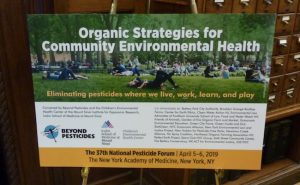


 (Beyond Pesticides, April 12, 2019) The Center for Biological Diversity (CBD)
  (Beyond Pesticides, April 11, 2019) A
  (Beyond Pesticides, April 10, 2019) Last month, the Washington State Senate unanimously passed HB 1906, designating April 10 as Dolores Huerta Day. In July of 2018, a similar California law proclaimed April 10 Dolores Huerta Day in that state. In an interview with Vida del Valle, Ms. Huerta stated, “I’m happy to hear that our young learners will have the opportunity to learn more about social justice and civil rights, because there is still a lot of work to do by the Dolores Huerta Foundation.”
 (Beyond Pesticides, April 8, 2019) Officials in Europe and the U.S. focus on banning problem pesticides, raising concerns about their replacements in the face of pesticide-intensive management strategies, while organic advocates call for a systems change in land management. In reference to widespread community bans of Roundup/glyphosate, Cary Gillam, author of Whitewash, told last year’s Beyond Pesticides’ Forum, “Glyphosate is the poster child for the bigger pesticide problem.” She continues, “If it goes away tomorrow, we are not okay.” Because of this, Beyond Pesticides has strategically sought to transform our country’s approach to pest management, both agricultural and residential/structural, by eliminating a reliance on pesticides and advancing organic management practices that do not rely on toxic inputs. This
  (Beyond Pesticides, April 5, 2019) Beyond Pesticides’ 37th National Pesticide Forum,
  (Beyond Pesticides, April 4, 2019) Contamination of drinking water with toxic breakdown products and risks to fish and and amphibians has led to a ban on the fungicide
  (Beyond Pesticides, April 2, 2019) Throughout the month of April, and in celebration of Earth Day on April 22, Natural Grocers is inviting the community
 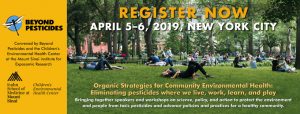 (Beyond Pesticides, April 2, 2019) The new documentary film “Ground War” will have its New York City premiere screening on Saturday, April 6, 2019, 7:30pm at Florence Gould Hall, 55 East 59th Street, New York, NY. The film is a moving depiction of a son’s quest for answers about the cause of his father’s cancer—which takes him into the world of doctors, scientists, pesticide regulators, victims of pesticide poisoning, activists, and land managers. The issue is exposure to pesticides used to manage lawns and playing fields and the father’s exposure as an avid golfer. The son, who is the filmmaker, finds others on the same search for answers because of harm or death of a loved one, then finds a solution in the work of activists and organic land managers.
 (Beyond Pesticides, April 1, 2019) National Organic Standards Board (NOSB) meets next month in Seattle, Washington to debate issues concerning what goes into your organic food. Written comments are due April 4. The format for messaging the NOSB requires copying and pasting comments into regulations.gov, so we apologize that this is not a “single click” action. Please add a personal message about why this is important to you at the top of your comments, if possible.
 (Beyond Pesticides, March 29, 2019) The U.S. Environmental Protection Agency (
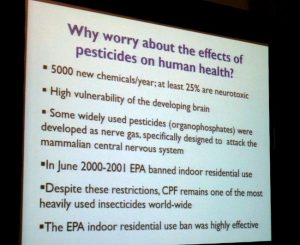
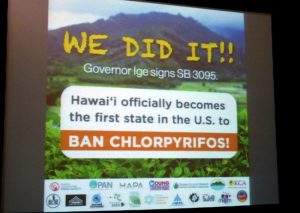
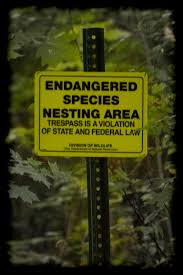 (Beyond Pesticides, March 28, 2019) A set of documents obtained by the Center for Biological Diversity reveals that the Trump administration has known for over a year – and actively concealed – that the organophosphate insecticide chlorpyrifos jeopardizes the existence of 1,399 endangered species. Top officials at the U.S. Department of the Interior, including Acting Secretary David Bernhardt, were privy to and prevented the release of a “biological opinion,” completed by the Fish and Wildlife Service (FWS) in 2017, which contains a full analysis of the extensive environmental impacts wrought by three organophosphate insecticides.
 (Beyond Pesticides, March 27, 2019) Exposure to commonly used pesticides in the womb and during the first year of life is linked to a higher risk of developing autism, according to the study, “Prenatal and infant exposure to ambient pesticides and autism spectrum disorder in children: population based case-control study,”



.png)