16
Oct
Roundup, Other Herbicides Advance Antibiotic Resistance
 (Beyond Pesticides, October 16, 2018) Bacteria exposed to widely used herbicides like Roundup develop antibiotic resistance 100,000 times faster than average, according to new research published by New Zealand scientists in PeerJ. The results have ominous implications for the modern world’s ability to avert a post-antibiotic era. Even if new antibiotics are discovered, or existing compounds used more judiciously, scientists say that will not be enough to prevent the ongoing crisis – the world is also confronting bacterial exposure to herbicides and other non-antibiotic agents that have the ability to rapidly induce resistance.
“Herbicides are among the most widely used and dispersed manufactured products on Earth. Some form of exposure for people, pets and livestock can be routinely expected,” study author Jack Heinemann, PhD, told Newsweek. “Meanwhile, antibiotics are used at high rates particularly on people, pets and livestock. Therefore, the combination of exposures for bacteria that live on us is all but guaranteed.”
This current round of research by Dr. Heinemann and his team is the outgrowth of previous studies (1, 2) that established the ability of common herbicides to induce antibiotic resistance in strains of pathogenic bacteria Salmonella eterica and Escherichia coli. Now, the scientists are drilling into the real-world implications of these phenomena, investigating whether realistic levels of exposure to Roundup (glyphosate) and Kamba (dicamba) herbicides can precipitate the evolution of resistant populations.
Scientists conducted a number of tests, which fell into two broad categories. Where herbicides were shown to increase the minimum amount of an antibiotic required to control bacterial growth, scientists investigated whether the bacteria that survived would pass those traits on. Where herbicides were found to lower the minimum amount an antibiotic required to control bacterial growth, scientists investigated whether the herbicide changed the sub-lethal amount known to induce resistance in subsequent microbial populations.
Results showed that bacteria continually exposed to herbicides and the antibiotic ciprofloxacin (cipro) rapidly developed offspring that required higher amounts of antibiotics to control. Researchers calculated that the combination of Kamba with cipro and S. typhimurium resulted in resistance developing at rates 100 times faster than usual, while a Roundup, cipro, and E. coli combination led to rates 100,000 faster than average.
When herbicides had the effect of lowering the minimum amount required to control bacteria, scientists found that a combination of herbicide and antibiotic exposure resulted in the development of offspring that required higher amounts of antibiotics to control. E. coli exposed to Roundup and Kamba, in combination with either tetracycline or streptomycin, ultimately led to microbial populations that required higher amounts of antibiotics to control. “We are inclined to think that when a drug or other chemical makes antibiotics more potent, that should be a good thing,” says Dr. Heinemann. “But it also makes the antibiotic more effective at promoting resistance when the antibiotic is at lower concentrations, as we more often find in the environment. Such combinations can be like trying to put out the raging fire of antibiotic resistance with gasoline.”
Bacteria exposed to herbicides alone did not create antibiotic resistance. However, scientists also found that bacteria exposed to both herbicides and antibiotics with mutagenic properties could develop resistance as a result of higher rates of random mutations.
Antibiotic resistance represents and existential threat to modern civilization. As the study authors’ note, “antibiotic resistance in our pathogens is medicine’s climate change: caused by human activity, and resulting in more extreme outcomes.” Like climate change, we successfully address growing antibiotic resistance, but there must be the cultural and political will to make the shift. Advocates already working towards pesticide reform can add another reason for policymakers to shift away from toxic herbicides and other pesticides: stopping antibiotic resistance.
For more information on the connection between the herbicide Roundup and bacteria in our environment, see the article Monsanto’s Roundup (Glyphosate) Exposed. Help support organic agriculture, which eliminated the allowed use of antibiotics for fruit production due to concerns over resistance.
All unattributed positions and opinions in this piece are those of Beyond Pesticides.
Source: University of Canterbury,PeerJ, Newsweek

 (Beyond Pesticides, October 15, 2018) As a leader in organic sales, it is critical that Kroger take additional expedited steps to increase the market share of organic food and eliminate the use of toxic pesticides harmful to public health and the environment. Kroger is among the major food retailers that sells food that has been grown with toxic pesticides, such as the extremely hazardous insecticide chlorpyrifos which causes neurological and brain damage in children. Kroger should immediately end its misleading and fraudulent advertising and labeling of food products as “natural” and replace these with certified organic products. In fact, by misleading consumers with “natural” labeling and advertising of food, Kroger supports chemical-intensive agriculture that poisons children, causes cancer, and threatens biodiversity through the use of toxic chemicals like chlorpyrifos, glyphosate, and neonicotinoids. This is unnecessary and unacceptable.
 (Beyond Pesticides, October 12, 2018) For the first time in its history, the Vermont Department of Environmental Conservation (DEC) denied a permit to apply toxic pesticides to a local waterbody, according to reports from the regional nonprofit organization Toxics Action Center. The DEC decision responded to an application from the Town of Williston, VT to use the herbicide SePRO Sonar AS® on Lake Iroquois, a 237 acre spring-fed body of water used for public recreation, in order to control Eurasian watermilfoil. DEC ruled that use of the herbicide posed risks to the holistic integrity of the lake waters, the Champlain watershed, and surrounding ecology.
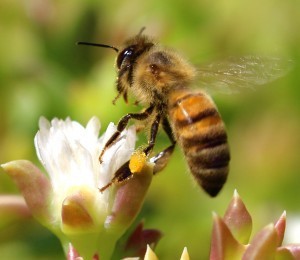 (Beyond Pesticides, October 11, 2018) Healthy, stable populations of bees and butterflies are best preserved in farm fields that are certified organic, according to an extensive, three-year study conducted by Swedish researchers at Lund University. The research, published last month in the journal
  (Beyond Pesticides, October 10, 2018) Nearly one-third of General Mills shareholders called on the company last month to improve product stewardship and eliminate pesticides like bee-toxic
  (Beyond Pesticides, October 9, 2018) In two separate moves, EPA
  (Beyond Pesticides, October 5, 2018) The Oregon Department of Agriculture (ODA) is
  (Beyond Pesticides, October 4, 2018) According to new research from the University of Texas at Austin, glyphosate, the world’s most widely used agrichemical weed killer, may also be killing bees by impairing their gut microbiota, and subsequently, their immune systems. The study, published in the journal Proceedings of the National Academy of Sciences, titled
  (Beyond Pesticides, October 3, 2018) REMINDER: The Fall 2018 NOSB public comments are due by Thursday, October 4, 2018. Your comments and participation are critical to the integrity of the organic label. Written comments may be submitted through
  (Beyond Pesticides, October 2, 2018) The U.S. Environmental Protection Agency (EPA) is asking an appeals court to rehear a case that previously ruled EPA must immediately ban the brain-harming pesticide
  (Beyond Pesticides, October 1, 2018) Last year, pesticide manufacturers tried to undo local pesticide ordinances in a large state-by-state lobbying effort. That failed. Now they are trying to get Congress to undo these local rules in one fell swoop through an amendment in the Farm Bill.
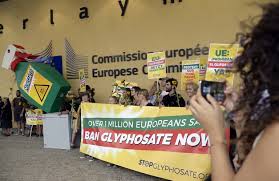 (Beyond Pesticides, September 28, 2018) Despite French President, Emmanuel Macron’s pledge to see glyphosate banned in his country, French ministers of parliament (MPs) have once again refused to enter the banning of glyphosate into legislation. Glyphosate’s use in Europe has come under scrutiny and heated debate. But despite evidence of harms, and interference by Monsanto, the European Union (EU) extended its license last year. However, France has pledged to ban the chemical within a few years.
 (Beyond Pesticides, September 27, 2018) The U.S. Environmental Protection Agency’s (EPA) Office of the Inspector General (OIG) released a
 (Beyond Pesticides, September 25, 2018) Last week the pioneering yogurt maker
  Beyond Pesticides, September 24, 2018) In a move that critics fear may be a pretext for gutting federal agricultural research, U.S. Secretary of Agriculture Sonny Perdue has proposed overhauling two federal offices overseeing food and agriculture research and moving them out of the Washington, DC area. A plan announced in August to relocate one of the U.S. Department of Agriculture’s (USDA) top research office — the Economic Research Service — into the Office of the Secretary, a political branch of the U.S. Department of Agriculture, is raising alarm from scientists. Concerned researchers see the move as a way to cut funding to important projects on climate change and nutrition, among others, consistent with
  (Beyond Pesticides, September 20, 2018) Babies exposed to higher levels of organochlorine compounds in the womb go on to have worse lung function in childhood, according to new research presented at the European Respiratory Society International Congress. Previous studies have found a link between low lung function in early adulthood and respiratory, cardiovascular, and metabolic issues in later life. Beyond Pesticides has covered in its Daily News studies on a range of adverse effects, including
  (Beyond Pesticides, September 19, 2018) “‘Don’t get pregnant at George Air Force Base’” was the
 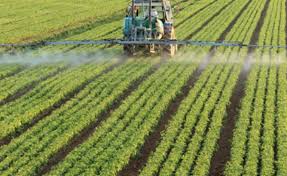 (Beyond Pesticides, September 18, 2018) While climate change campaigners have long warned of increased pest pressure as a result of a warming planet, new research published in Science has begun to envisage the true extent of this expanding crisis for agriculture and crop yields. An Earth warmed by 2 degrees Celsius will see significant increases in insect metabolism and population growth, increasing global food scarcity. The study underlines the need to move towards more sustainable agricultural models that can better handle pests and other stressors brought about by climate change.
 (Beyond Pesticides, September 14, 2018) A lawsuit