





19
Nov
Tell the Secretary of Agriculture to Restore Fairness to Organic Dairy
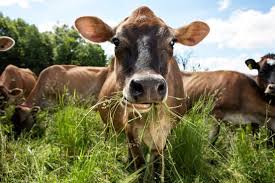 (Beyond Pesticides, November 19, 2018) The Organic Foods Production Act (OFPA) requires organic milk and dairy products labeled as organic to come from dairy cows continuously managed as organic from the last third of gestation. Because of the short supply of organic dairy breeder stock when the law was passed in 1990, a one-time conversion of conventional dairy cows to organic was allowed, as long as they are managed organically.
Unfortunately, the National Organic Program (NOP) allowed two interpretations of this provision, turning the provision into a loophole that has allowed some large dairy operations to circumvent the last third of gestation requirement altogether, and bringing conventionally managed animals into their operations on a continuous basis.
In 2015, USDA proposed an Origin of Livestock rule to clarify that section of the law and ensure consistent enforcement of the standards, but appears to have no plans to finalize the rule. In its October 2018 meeting, the National Organic Standards Board (NOSB) recognized the unfairness that allows large organic dairies to profit at the expense of smaller dairies who follow the spirit of the law. In a rare demonstration of unity, the NOSB unanimously passed this resolution:
It has come to the attention of the National Organic Standards Board (NOSB) that the continued state of varying interpretations and practices around the Origin of Livestock standards is creating market instability for organic producers. The 2015 USDA Origin of Livestock Proposed Rule was based on six recommendations from the NOSB between 1994 and 2006. The proposed rule responds to findings from the July 2013 USDA Office of Inspector General (OIG) audit report on organic milk operations stating that certifying agents were interpreting the origin of livestock requirements differently. Rulemaking is necessary to ensure consistent interpretation and enforcement of the standards for origin of livestock and provide industry with additional clarity of application of the organic dairy standards. In early 2017 the Origin of Livestock Proposed Rule was removed from the Unified Agenda of Regulatory and Deregulatory Actions. Support for this rule has been expressed through public comment by the majority of organic stakeholders. Strong federal oversight is essential for creating a fair and level playing field for all certified organic operations.
Therefore, be it resolved by unanimous vote, the National Organic Standards Board—as USDA’s Federal Advisory Board on organic issues and representing organic farmers, ranchers, processors, retailers and consumers—urges the Secretary to directly issue a final rule for Origin of Livestock that incorporates public comments submitted in response to the Proposed Rule (Docket Number AMS-NOP-11-0009).
Letter to Secretary Perdue [address in Salsa], AMS Administrator Bruce Summers [email protected], and NOP Deputy Administrator Jenny Tucker [email protected]
The Organic Foods Production Act (OFPA) requires organic milk and dairy products labeled as organic to come from dairy cows continuously managed as organic from the last third of gestation. Because of the short supply of organic dairy breeder stock when the law was passed in 1990, a one-time conversion of conventional dairy cows to organic was allowed, as long as they are managed organically.
Unfortunately, certifiers allowed two interpretations of this provision, turning the provision into a loophole that has allowed some large dairy operations to circumvent the last third of gestation requirement altogether, and bringing conventionally managed animals into their operations on a continuous basis.
In 2015, USDA proposed an Origin of Livestock rule to clarify that section of the law and ensure consistent enforcement of the standards, but appears to have no plans to finalize the rule. In its October 2018 meeting, the National Organic Standards Board (NOSB) recognized the unfairness that allows large organic dairies to profit at the expense of smaller dairies who follow the spirit of the law. In a rare demonstration of unity, the NOSB unanimously passed this resolution:
It has come to the attention of the National Organic Standards Board (NOSB) that the continued state of varying interpretations and practices around the Origin of Livestock standards is creating market instability for organic producers. The 2015 USDA Origin of Livestock Proposed Rule was based on six recommendations from the NOSB between 1994 and 2006. The proposed rule responds to findings from the July 2013 USDA Office of Inspector General (OIG) audit report on organic milk operations stating that certifying agents were interpreting the origin of livestock requirements differently. Rulemaking is necessary to ensure consistent interpretation and enforcement of the standards for origin of livestock and provide industry with additional clarity of application of the organic dairy standards. In early 2017 the Origin of Livestock Proposed Rule was removed from the Unified Agenda of Regulatory and Deregulatory Actions. Support for this rule has been expressed through public comment by the majority of organic stakeholders. Strong federal oversight is essential for creating a fair and level playing field for all certified organic operations.
Therefore, be it resolved by unanimous vote, the National Organic Standards Board—as USDA’s Federal Advisory Board on organic issues and representing organic farmers, ranchers, processors, retailers and consumers—urges the Secretary to directly issue a final rule for Origin of Livestock that incorporates public comments submitted in response to the Proposed Rule (Docket Number AMS-NOP-11-0009).
Please adopt a final rule for Origin of Organic Livestock that creates consistency across production and incorporates the public comments that the agency received.
Thank you.
Sincerely,

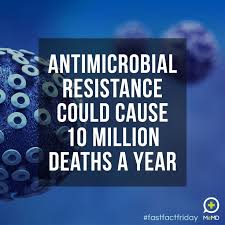 (Beyond Pesticides, November 16, 2018) Pesticides and biocides used to control bacterial infections in humans and weeds and pests in agriculture are surpassing ‘planetary boundaries’ within which human civilization can continue to rely on these biocides,
  (Beyond Pesticides, November 15, 2018) Neonicotinoids are
 (Beyond Pesticides, November 14, 2018) Monarch butterflies are in the midst of a staggering decades-long population decline that has rapidly accelerated since 2005, research
  (Beyond Pesticides, November 13, 2018) We are living in extraordinary times that call for bold action. We face serious public health and environmental challenges and know that we must work to advance local, state, and federal action. Our program relies on your support, which elevates independent science to call for action. While the November 6 election results offer some important opportunities in our communities, state, and nation, we continue to face the power of the pro-pesticide lobby and those seeking to weaken the integrity of organic standards in the Farm Bill.
 (Beyond Pesticides, November 9, 2018)
  (Beyond Pesticides, November 8, 2018) Two months after publishing its
 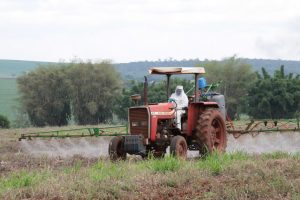 (Beyond Pesticides, November 7, 2018) Brazil’s rapid industrialization of its agricultural sector may be coming at the cost of resident health, according to a new study published in
  (Beyond Pesticides, November 6, 2018) Scientists working for USDA’s Agricultural Research Service in Lincoln, Nebraska have discovered natural compounds derived from coconut oil that are more effective than DEET at repelling mosquitoes, ticks, biting flies, bed bugs and other insects. Given the long-lasting efficacy of the compounds researchers tested, commercialization could make the regular use of toxic insect repellents, like DEET, obsolete. Advocates are praising USDA researchers for the results, indicating that this is exactly the type of research government agencies should be funding and promoting.
 (Beyond Pesticides, November 5, 2018) As you know, the stakes in this midterm election are high. Many races are too close to call and will be decided by voter turnout. As we have read, our vote will make a difference!
 (Beyond Pesticides, November 1, 2018) A new
  (Beyond Pesticides, October 31, 2018) Residents in the town of Great Barrington, MA are concerned about the health effects that could result from creosote-coated railroad ties stored in their neighborhood. According to a report in the
  (Beyond Pesticides, October 30, 2018) The
  (Beyond Pesticides, October 29, 2018) Protect the integrity of the organic standard setting process that determines whether a synthetic substance will be allowed in food labeled organic. Help stop an attack on the meaning of the organic label in the Farm Bill, which may be voted out of conference committee by the end of November. By changing the substance review process, a provision will open the floodgates to allowed synthetic chemicals in organic production, handling, and processing under the
 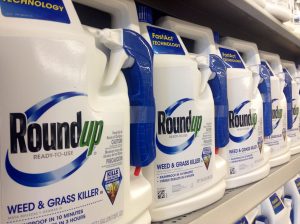 (Beyond Pesticides, October 26, 2018) California Superior Court Judge Suzanne Bolanos is upholding a jury’s verdict that exposure to the herbicide glyphosate caused school groundkeeper Dewayne Johnson to develop cancer. The ruling comes after concern that Judge Bolanos would intervene and
  (Beyond Pesticides, October 25, 2018) A
  (Beyond Pesticides, October 24, 2018) Bottlenose dolphins found along Florida’s west coast contain detectable levels of phthalates, chemicals used in plastics, cosmetics and as
  (Beyond Pesticides, October 23, 2018) The
 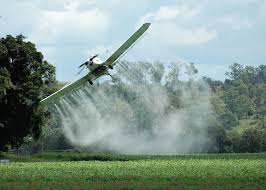 (Beyond Pesticides, October 22, 2018) The California Department of Pesticide Regulation (DPR) is accepting comments on its proposal to classify chlorpyrifos as a toxic air pollutant. The classification would require DPR to develop control measures that adequately protect public health. What happens in California affects all of us because products of California agriculture are available all over the country –and the world. In addition, policies set by the state of California are often examples for other states and the federal government.
 (Beyond Pesticides, October 19, 2018) Pollinator advocates and the Center for Biological Diversity (CBD) are imploring the U.S. Environmental Protection Agency (EPA) to deny Bayer CropScience’s application for use of “Sivanto,”a pesticide product with the active ingredient
  (Beyond Pesticides, October 18, 2018) Pesticide residue doesn’t announce itself –it isn’t colored, it doesn’t glow or reflect light, and after an initial application doesn’t put out a discernible odor – but it is likely ubiquitous in rural U.S. homes, according to a
  (Beyond Pesticides, October 17, 2018) The unsustainable life cycle management of pesticides during the past seven decades has created huge stockpiles of these (and other toxic) chemicals across much of the globe, including Eastern Europe, Africa, the Middle East, and Latin America. The journal



