





20
Apr
Sneak Attack on Local Pesticide Laws by Chemical and Pest Management Industry in Farm Bill Passed by House Agriculture Committee
 (Beyond Pesticides, April 20, 2018) There is an extraordinary attack on local community rights to protect people and the environment from pesticides in the Republican Farm Bill, passed by the Agriculture Committee in the U.S. House of Representatives on April 18 on a straight party line vote. The language inserted in the Farm Bill amends the federal pesticide law with a provision that prohibits local governments from restricting pesticide use on private property within their jurisdictions. Local laws in two states, Maine and Maryland, will be overturned with final passage of this law in the U.S. House and Senate. In those 43 states that forbid local pesticide laws by state law, future reconsideration of this prohibition, pushed by the chemical and pest management industry, will be foreclosed. Local laws protecting the environment and public health have historically emerged out of local governments, with laws related to recycling, smoking, pet waste, building codes, and zoning.
The fight to defend the authority of local governments to protect people and the environment has been ongoing for decades, reaching the U.S. Supreme Court in 1991. The Court specifically upheld the authority of local governments to restrict pesticides throughout their jurisdictions under federal pesticide law. In Wisconsin Public Intervenor v. Mortier, the Court ruled that federal pesticide law does not prohibit, or preempt, local jurisdictions from restricting the use of pesticides more stringently than the federal government. According to Mortier, however, states do retain authority to take away local control. In response to the Supreme Court decision, the pesticide lobby immediately formed a coalition, called the Coalition for Sensible Pesticide Policy, and developed boilerplate legislative language that restricts local municipalities from passing ordinances on the use of pesticides on private property. The Coalition’s lobbyists descended on states across the country, seeking and passing, in most cases, preemption legislation that was often identical to the Coalition’s wording.
Since the passage of those state laws, there have been numerous efforts to preempt local authority in states that do not prohibit local action on pesticides, most recently in Maine. An industry-backed attempt to enact pesticide preemption in the state of Maine failed after bill LD 1853 was voted down in March. The bill resembled a similar bill that failed in the same legislative committee in 2017. Similarly, in Maryland, the chemical industry was unsuccessful in its attempts in the mid-1990s to pass legislation seeking explicit preemption in Maryland. With an ever increasing number of communities stepping up to protect their residents and unique local environment from pesticide poisoning and contamination, the repeated introduction of preemption legislation means that health advocates and forward-thinking communities must continue to remain vigilant, and ready to fight to maintain their right to home rule. Having failed to curtail local action and the growing number of communities deciding to act, the chemical industry is flexing its muscle with a sneak attack in a Congress friendly to its position.
Contact your member of Congress, and let them know that legislation that takes away local authority to restrict pesticides throughout local jurisdictions is undemocratic and dangerous to the protection of people and the environment. Tell your elected officials (see suggested language below) that Subtitle B, Section (b) Uniform Regulation of Pesticides, (3) Condition on More Restrictive Regulation must be removed from the 2018 Farm Bill, H.R. 2. To find links, go to the contact pages for your U.S. Representative, click here, and for your U.S. Senators, click here.
Suggested Language
Letter to Members of U.S. House of Representatives and Senate
Language in the Farm Bill amends federal pesticide law to prohibit local governments from restricting pesticide use on private property within their jurisdictions. However, the rights of local governmental jurisdictions under existing pesticide law, the Federal Insecticide, Fungicide and Rodenticide Act (FIFRA), has been left to the states since the law’s adoption. In fact, local laws protecting the environment and public health have historically emerged out of local governments, with laws related to recycling, smoking, pet waste, building codes, and zoning.
The rights of local governments to protect people and the environment was upheld by the U.S. Supreme Court in 1991. The Court specifically upheld the authority of local governments to restrict pesticides throughout their jurisdictions under federal pesticide law. In Wisconsin Public Intervenor v. Mortier, the Court ruled that FIFRA does not prohibit, or preempt, local jurisdictions from restricting the use of pesticides more stringently than the federal government. According to Mortier, however, states may restrict local control as a matter of state authority.
Please make sure that the provision preempting local authority, included in the House Agriculture Committee passed Farm Bill, does not become law. Please remove this language: Subtitle B, Section (b) Uniform Regulation of Pesticides,”(3) CONDITION ON MORE RESTRICTIVE REGULATION.—Section 24(a) of the Federal Insecticide, Fungicide, and Rodenticide Act (7 U.S.C. 136v(a)) is amended by striking ‘‘A State may’’ and inserting ‘‘A State, but not a political subdivision of a State, may.’’
Please let me know your position on this provision, destructive to the democratic decision making process that protects health and the environment.
Sincerely,
[Name]
Legislation that passed the Agriculture Committee of the U.S. House of Representatives on April 18, 2019:
Subtitle B—Regulatory Reform PART I—STATE LEAD AGENCIES UNDER FEDERAL INSECTICIDE, FUNGICIDE, AND RODENTICIDE ACT SEC. 9101. RECOGNITION AND ROLE OF STATE LEAD AGENCIES.
(b) UNIFORM REGULATION OF PESTICIDES.—
. . .
(2) AUTHORITY TO ESTABLISH AND MAINTAINUNIFORM REGULATIONS.—Section 23(a)(1) of the Federal Insecticide, Fungicide, and Rodenticide Act (7 U.S.C. 136u(a)(1)) is amended by inserting after ‘‘enforcement of this Act,’’ the following: ‘‘to authorize the State or Indian tribe to establish and maintain uniform regulation of pesticides within the State or for the Indian tribe,’’.
(3) CONDITION ON MORE RESTRICTIVE REGULATION.—Section 24(a) of the Federal Insecticide, Fungicide, and Rodenticide Act (7 U.S.C. 136v(a)) is amended by striking ‘‘A State may’’ and inserting ‘‘A State, but not a political subdivision of a State, may.’’
Amends:
7 U.S. Code § 136v [Federal Insecticide, Fungicide and Rodenticide Act (FIFRA)]- Authority of States
(a) In general
A State may regulate the sale or use of any federally registered pesticide or device in the State, but only if and to the extent the regulation does not permit any sale or use prohibited by this subchapter.
All unattributed positions and opinions in this piece are those of Beyond Pesticides.

 (Beyond Pesticides, April 19, 2018) With the passage yesterday of the Republican amendments to the 2018 Farm Bill,
  (Beyond Pesticides, April 18, 2018)
  (Beyond Pesticides, April 17, 2018) In a case that appalled the nation, the U.S. Justice Department finally last week secured an indictment against an applicator who illegally applied a fumigant at a U.S. Virgin Island resort,
 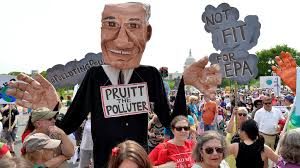 (Beyond Pesticides, April 16, 2018) Ethics scandals pile up regarding Environmental Protection Agency Administrator Scott Pruitt’s failure to do his job, leading to the
  (Beyond Pesticides, April 13, 2018) Hawaii is poised to become the first state in the nation to prohibit the use of pesticides containing the developmental neurotoxicant, chlorpyrifos.
  (Beyond Pesticides, April 12, 2018) The Justice Department will allow two notorious agrichemical corporations, Bayer and Monsanto, to merge, according to reports published earlier this week. Despite
  (Beyond Pesticides, April 11, 2018) The request by shellfish growers in Washington State to apply the neonicotinoid insecticide, imidacloprid, on oyster and clams beds to control native burrowing shrimp was denied by the Department of Ecology (Ecology) after it determined “environmental harm from this neonicotinoid pesticide would be too great.” Concerned resident and environmental advocates have been opposed to the proposed use citing harms to aquatic life including fish habitat, and long-term ecological damage.
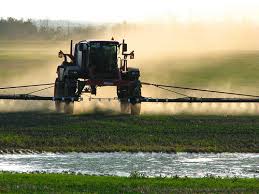 (Beyond Pesticides, April 10, 2018) Current strategies aimed at managing herbicide resistant weeds in agriculture are not effective and may exacerbate weed problems, according to
  (Beyond Pesticides, April 9, 2018) A new international study finds that the unsustainable exploitation of natural resources worldwide has reached critical proportions, causing biodiversity loss and land degradation that threaten the food and water security of an estimated 3.2 billion people. Congress must act for the U.S. to become a signatory to the United Nations Convention on Biodiversity, joining the global community in working to develop and implement solutions to the biodiversity crisis.
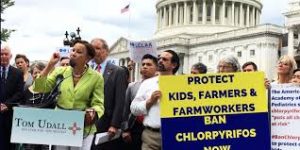 (Beyond Pesticides, April 6, 2018) Scott Pruitt, Administrator of the U.S. Environmental Protection Agency (EPA), is getting plenty of attention for what the public and some members of Congress see as his spendthrift and potentially corrupt behaviors since taking office in early 2017.
 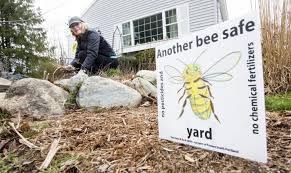 (Beyond Pesticides, April 5, 2018) An industry-backed attempt to enact pesticide preemption in the state of Maine is officially over after bill
 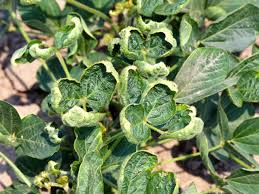 (Beyond Pesticides, April 4, 2018) In late March, the Missouri Department of Agriculture hosted a public hearing to discuss a proposed emergency rule restricting the sale and use of the herbicides dicamba and 2,4-D – which are known for their ability to drift off-site and damage sensitive crops. The emergency rule was introduced to prevent off-label use of specific dicamba or 2,4-D products. Thus far, dicamba is responsible for damaging approximately 325,000 acres of soybeans in the state last year.
 (Beyond Pesticides, April 3, 2018) Humans’ unsustainable exploitation of natural resources, worldwide, has reached critical proportions, threatening the ability of an estimated 3.2 billion people to have food and water security, according to a new international study. The
  (Beyond Pesticides, April 2, 2018) The comment period closes Wednesday, April 4 at 11:59 pm for the Spring 2018 National Organic Standards Board (NOSB) Meeting.
 (Beyond Pesticides, March 30, 2018) While conventional farming practices rely primarily on new sources of synthetic nitrogen fertilizer to grow crops, organic agriculture conserves nitrogen by using recycled sources, as detailed by
  (Beyond Pesticides, March 29, 2018) Rising use of antibacterials like
  (Beyond Pesticides, March 28, 2018)
 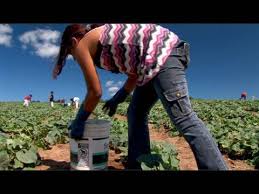 (Beyond Pesticides, March 27, 2018) In a major win for farmworker and health groups, the U.S. District Court for the Northern District of California
  (Beyond Pesticides, March 26, 2018)
  (Beyond Pesticides, March 23, 2018) French scientists and ornithologists say parts of the country’s forests, streams, and bucolic landscapes could be completely devoid of birdsong this year, as the results of two recent studies show staggering declines in bird populations throughout the nation linked to the intensification of agricultural practices and pesticide use. The advent of so many significant wildlife declines at the same time –now recognized in birds, but also seen in
  (Beyond Pesticides, March 22, 2018) Last week Environmental Protection Agency (EPA) Administrator Scott Pruitt received a letter from twenty-eight U.S. Senators urging the preservation of rules that would protect farmworkers and disallow minors to handle highly toxic pesticides. At issue are two proposals from Administrator Scott Pruitt’s EPA that would roll back Agricultural Worker Protection Standards (AWPS) and the Certification of Pesticide Applicators (CPA) rules put in place during the Obama Administration. In their letter, the Senators stress the impact of any potential changes, noting “the lives of children and families across the country at stake.”
 high levels of glyphosate in their bodies are more likely to have shorter pregnancies. Shorter pregnancies can lead to children with reduced learning and brain development. This is the first study to suggest that exposures to glyphosate can influence the long-term well-being of children.


