





07
May
Judge Rules Non-Profits Can Sue Monsanto for Misleading Safety Labeling of Popular Herbicide Roundup
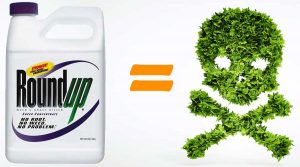 (Beyond Pesticides, May 7, 2018) Beyond Pesticides and The Organic Consumers Association (OCA) today responded to a federal judge’s ruling against Monsanto Co.’s motion to dismiss the groups’ lawsuit, filed in April, 2017. The lawsuit challenged Monsanto’s safety claim on its Roundup (glyphosate) products as misleading and fraudulent. Monsanto displays a claim on its Roundup product label that states that the chemicals in the product “targets an enzyme bound in plants but not in people or pets,” when, in fact, the chemical adversely affects beneficial bacteria essential to the gut biome and normal body functions.
Jay Feldman, executive director of Beyond Pesticides, the lead plaintiff in the case, said:
“In the face of EPA’s poor regulation of pesticides, misleading pesticide product labeling cannot be left unchecked. The court’s decision to allow our case to move forward, in denying Monsanto’s motion to dismiss, is critical to showing that the company is deceiving the public with a safety claim on its Roundup (glyphosate) label. Its advertising and labeling claim that Roundup ‘targets an enzyme found in plants but not in people or pets’ is false, given the devastating harm that glyphosate has on beneficial bacteria in the gut biome. The disruption of the gut biome is associated with a host of 21st century diseases, including asthma, autism, bacterial vaginosis, cardiovascular disease, cancer, Crohn’s disease, depression, inflammatory bowel disease, leaky gut syndrome, multiple sclerosis, obesity, Type 1 and 2 diabetes, and Parkinson’s.
The science on the hazards of Roundup (glyphosate) are clear and Monsanto officials know it. With this case, we seek to ensure that the public is not misled by false advertising and product labeling in the marketplace. It is a critical step toward ensuring that people are fully informed before purchasing toxic products that can poison them, their families, and the communities where they live.”
OCA International Director, Ronnie Cummins said:
“Monsanto aggressively markets Roundup as ‘safe’ for humans and animals, despite newer studies indicating that glyphosate may be carcinogenic and its use may affect human and animal cardiovascular, endocrine, nervous and reproductive systems. No reasonable consumer seeing the claim on this product that glyphosate targets an enzyme not found ‘in people or pets’ would expect that Roundup actually targets an important bacterial enzyme found in humans and animals, affecting the health of their immune system.
Survey after survey shows that consumers rely on labels to guide their purchases and keep them and their families safe. When corporations mislead on the issue of a product’s effect on consumers and their families, they put everyone, but especially young children—in this case, playing in yards and parks—at risk, leaving the public no other recourse than to use the legal system to seek the removal of this misleading information.”
U.S. District Judge Timothy Kelly, a Trump appointee, ruled that Beyond Pesticides and OCA presented enough evidence to support that Monsanto’s labeling of its flagship weedkiller, Roundup, misleads consumers.
Through their attorneys, Richman Law Group, Beyond Pesticides and OCA sued Monsanto on behalf of the general public, in Washington D.C., under the District of Columbia’s Consumer Protection Procedures Act, for misleading the public by labeling its popular weedkiller Roundup as “target[ing] an enzyme found in plants but not in people or pets.” The nonprofits allege that this statement is false, deceptive and misleading, because the enzyme targeted by glyphosate, the active ingredient in Roundup, is, in fact, found in people and pets.
Beyond Pesticides is a national grassroots non-profit organization headquartered in the District of Columbia that works with allies in protecting public health and the environment to lead the transition to a world free of toxic pesticides. For more information, visit www.beyondpesticides.org.
The Organic Consumers Association (OCA) is an online and grassroots non-profit 501(c)3 public interest organization campaigning for health, justice, and sustainability. For more information, visit: www.organicconsumers.org.
Richman Law Group (RLG) is a boutique law firm specializing in consumer protection and civil rights. RLG is dedicated to serving the greater good by holding large corporations accountable for actions that harm consumers, the environment, and the general public. For more information, visit: www.richmanlawgroup.com.
CONTACT:
Jay Feldman, Beyond Pesticides, 202-543-5450, [email protected]
Katherine Paul, Organic Consumers Assoc.: (207) 653-3090, [email protected]

 (Beyond Pesticides, May 6, 2018) The Washington State Department of Ecology (Ecology)
  (Beyond Pesticides, May 4, 2018)
  (Beyond Pesticides, May 3, 2018) Hawaii’s bill to ban the dangerous, neurotoxic pesticide, chlorpyrifos, passed its final hurdle this week in the state legislature. Governor David Ige is expected to readily sign
 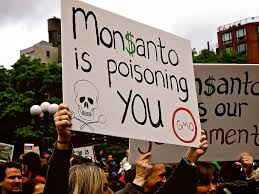 (Beyond Pesticides, May 2, 2018) Granola, cereal, and wheat crackers all contain “a fair amount” of glyphosate, the herbicide in Monsanto’s popular Roundup, according to internal emails from the Food and Drug Administration (FDA). Although the results of these tests have not been formally released, FDA had stated it will be conducting tests for glyphosate in food. Previous reports have detailed the presence of glyphosate, the chemical classified as a “probable carcinogen,” in a wide range of foods and in people’s bodies.
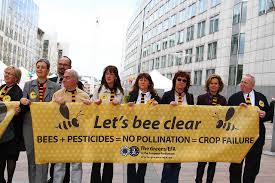 (Beyond Pesticides, May 1, 2018) On April 27, 2018, European Union (EU) member states backed a proposal to further restrict uses of bee-toxic neonicotinoids finding the pesticides’ outdoor uses harm bees. These restrictions go beyond those already put in place in 2013, and now all outdoor uses of clothianidin, imidacloprid, and thiamethoxam will be banned. Uses will only be allowed in permanent greenhouses where contact with bees is not expected. This historic move in Europe comes as the U.S. Environmental Protection Agency (EPA) still drags its feet on finding neonicotinoids are too toxic for bees and other organisms and bans their use.
 (Beyond Pesticides, April 27, 2018) After more than five years of intensive negotiations, European Members of Parliament (MEP) overwhelmingly passed the long-anticipated, new
  (Beyond Pesticides, April 26, 2018) Each year, the
 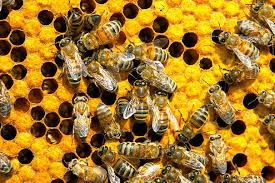 (Beyond Pesticides, April 25, 2018) A class-action lawsuit against two manufacturers of neonicotinoid insecticides is moving ahead in Quebec, Canada after an appeal to block the case by the Canadian government and the chemical companies, Bayer and Syngenta, was dismissed. In February 2018, the case, brought by a beekeeper, was allowed to proceed to trial by the Quebec Superior Court.
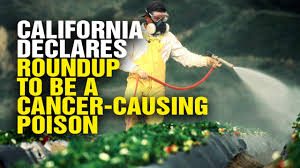 (Beyond Pesticides, April, 24, 2018) On April 19, 2018, an Appellate Court in California sided with the State of California, affirming that Monsanto’s glyphosate can be listed as a probable carcinogen under the state’s Proposition 65 and rejecting Monsanto’s challenge to law. The state will not only move ahead with warning labels on products that contain glyphosate but also prohibit discharge of the pesticide into public waterways.
 (Beyond Pesticides, April 20, 2018) There is an extraordinary attack on local community rights to protect people and the environment from pesticides in the Republican Farm Bill, passed by the Agriculture Committee in the U.S. House of Representatives on April 18 on a straight party line vote. The language inserted in the Farm Bill amends the federal pesticide law with a provision that prohibits local governments from restricting pesticide use on private property within their jurisdictions. Local laws in two states, Maine and Maryland, will be overturned with final passage of this law in the U.S. House and Senate. In those 43 states that forbid local pesticide laws by state law, future reconsideration of this prohibition, pushed by the chemical and pest management industry, will be foreclosed. Local laws protecting the environment and public health have historically emerged out of local governments, with laws related to recycling, smoking, pet waste, building codes, and zoning.
 (Beyond Pesticides, April 19, 2018) With the passage yesterday of the Republican amendments to the 2018 Farm Bill,
  (Beyond Pesticides, April 18, 2018)
  (Beyond Pesticides, April 17, 2018) In a case that appalled the nation, the U.S. Justice Department finally last week secured an indictment against an applicator who illegally applied a fumigant at a U.S. Virgin Island resort,
 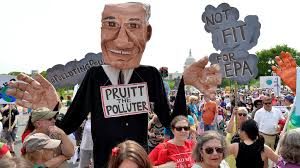 (Beyond Pesticides, April 16, 2018) Ethics scandals pile up regarding Environmental Protection Agency Administrator Scott Pruitt’s failure to do his job, leading to the
  (Beyond Pesticides, April 13, 2018) Hawaii is poised to become the first state in the nation to prohibit the use of pesticides containing the developmental neurotoxicant, chlorpyrifos.
  (Beyond Pesticides, April 12, 2018) The Justice Department will allow two notorious agrichemical corporations, Bayer and Monsanto, to merge, according to reports published earlier this week. Despite
  (Beyond Pesticides, April 10, 2018) Current strategies aimed at managing herbicide resistant weeds in agriculture are not effective and may exacerbate weed problems, according to
  (Beyond Pesticides, April 9, 2018) A new international study finds that the unsustainable exploitation of natural resources worldwide has reached critical proportions, causing biodiversity loss and land degradation that threaten the food and water security of an estimated 3.2 billion people. Congress must act for the U.S. to become a signatory to the United Nations Convention on Biodiversity, joining the global community in working to develop and implement solutions to the biodiversity crisis.
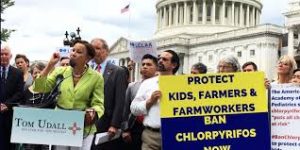 (Beyond Pesticides, April 6, 2018) Scott Pruitt, Administrator of the U.S. Environmental Protection Agency (EPA), is getting plenty of attention for what the public and some members of Congress see as his spendthrift and potentially corrupt behaviors since taking office in early 2017.


