





29
Aug
Neurotoxic Pesticide Detected in Air at High Levels in California County
(Beyond Pesticides, August 29, 2017) Air monitoring in Kern County, California, finds levels of the highly neurotoxic pesticide, chlorpyrifos, in excess of the levels of concern established by the U.S.  Environmental Protection Agency (EPA) for pregnant women. Chlorpyrifos is linked to low IQs, autism and other developmental neurological effects. Earlier this year, EPA Administrator Scott Pruitt refused to ban chlorpyrifos to the dismay of many scientists, medical professionals, and farmworker organizations.
The California Department of Pesticide Regulation (CDPR) released its 2016 air monitoring data where it was revealed that chlorpyrifos air concentrations for a one-month period at the air monitoring site on the campus of Shafter High School in Kern County was 39.4 nanograms per cubic meter (ng/m3) – more than 18 times higher than EPA’s level of concern for pregnant women (2.1 ng/m3). Shafter High School is some distance from fields in an area where chlorpyrifos use is not as high as in other parts of Kern County or elsewhere in California. More than 1.1 million pounds of chlorpyrifos was used in California in 2015, and more than a quarter of that is used in Kern County.
High chlorpyrifos levels at a school means that children and unsuspecting teachers and parents, especially those that may be pregnant, are breathing in unusually high levels of chlorpyrifos. Children exposed to high levels of chlorpyrifos have developmental delays, attention problems, attention-deficit/hyperactivity disorder problems, and pervasive developmental disorders. A 2014 study conducted by the UC Davis Mind Institute found that pregnant women who lived within a mile of fields where chlorpyrifos was sprayed more than tripled their chances of giving birth to a child with autism. Additionally, the UC Berkeley CHAMACOS team, studying organophosphate impacts on women and children in the Salinas Valley, found that every 522 pounds of combined organophosphate pesticide applications within one kilometer of a pregnant woman’s home correlates with a two point IQ loss in her children at seven years old.
Prior to CDPR’s release of its air monitoring data, two pesticide drift incidents involving chlorpyrifos occurred in Kern County that harmed dozens of farmworkers. As many as 37 workers in a crew of 48 cabbage pickers and packers at a field south of Bakersfield began feeling ill about an hour into their shift early on May 5th. Some began fainting and vomiting, and at least five workers received medical attention. The pesticides involved in the incident drifted a half-mile from where they were applied, in violation of California law. Another incident in early August affected seventy farmworkers harvesting garlic. Here, seven workers suffered exposure symptoms that included eye and skin irritation, nausea and headache. According to the Kern County Agriculture Commissioner, this incident is under investigation, and two companies have already been fined in the first incident. In these incidents, chlorpyrifos was not the only pesticide used nearby, however. The soil fumigant metam sodium was being used nearby in the second incident, and sulfur was also found on plants near workers at the site from the May 5th incident. Although pesticides are regulated individually, an increasing body of research indicates that workers are often exposed to pesticides in combination, which may interact in ways that are currently little understood.
New rules proposed by the California Department of Pesticide Regulation to protect children from exposure to hazardous agricultural pesticides include a quarter-mile buffer zone from 6am to 6pm on school days around schools and daycares for the most drift-prone application methods — a safeguard advocates point out would have been insufficient in this case.
In March 2017, EPA Administrator Scott Pruitt reversed a 2015 proposal to revoke food residue tolerances of chlorpyrifos, even though EPA’s own assessment found that the chemical is too toxic to children. A revocation of chlorpyrifos tolerances would have effectively banned the chemical from use in agriculture. Instead, Administrator Pruitt’s decision indicated the agency will continue to study chlorpyrifos and would not take any action until 2022. Epidemiological data also points to subpopulations that are disproportionately affected by chlorpyrifos exposures. Low-income African-American and Latino families, including farmworker families, continue to suffer the most, and this disproportionate impact creates an environmental justice problem that the agency cannot continue to ignore.
Currently, there is a bill, “Protect Children, Farmers and Farmworkers from Nerve Agent Pesticides Act,” S. 1624, that would amend the U.S. Federal Food, Drug, and Cosmetic Act (FFDCA) that oversees pesticide food exposures to prohibit all chlorpyrifos use. Introduced by Senators Tom Udall (D-NM) and Richard Blumenthal (D-CT), the bill also directs EPA to partner with the National Research Council to assess the neurodevelopmental and other low-dose effects of exposure to organophosphate pesticides to agricultural workers and children.
Take Action: Ask your U.S. Senators to co-sponsor legislation to ban chlorpyrifos after EPA Administrator Scott Pruitt reversed the previous administration’s proposal to discontinue its food uses. [The bill is currently co-sponsored by Senators Cory Booker (D-NJ), Ben Cardin (D-MD), Richard Durbin (D-IL), Kirsten Gillibrand (D-NY), Kamala Harris (D-CA), Ed Markey (D-MA), and Jeff Merkley (D-OR).]
All unattributed positions and opinions in this piece are those of Beyond Pesticides.

 (Beyond Pesticides, August 28, 2017) School policies must protect children from pesticides by adopting organic land and building management policies and serving organic food in cafeterias. At the start of the school year, it is critical for school administrators to make sure that students and teachers are learning and teaching in an environment where no hazardous pesticides are used in the school’s buildings or on playing fields. It is also essential that children have access to organic food in food programs and manage school gardens organically.
 (Beyond Pesticides, August 25, 2017) While organic agriculture still represents only a fraction of the world’s food production, organic food sales have enjoyed remarkable growth over the past couple of decades, which is captured in a recent article,
  (Beyond Pesticides, August 24, 2017) Common pesticides used on canola crops significantly reduce bumblebee egg laying and may lead to local population extinction, according to new research published in the journal Nature by scientists at the Royal Holloway University of London. This is the latest study to investigate how neonicotinoids, insecticides
  with an expansion of industrial shellfish aquaculture on the Washington state coast without any water quality or marine life protections from pesticide use and habitat loss. This is just the latest in efforts to protect sensitive coastal areas in Washington from shellfish farming that is contributing to increased pesticide use and environmental degradation.
 (Beyond Pesticides, August 22, 2017) Streams in the Midwestern U,S. are polluted with complex mixtures averaging over 50 pesticides each, according to a U.S. Geological Survey (USGS) report published earlier this month. This is the latest and also most extensive study on pesticide contamination in U.S. streams to date. The shocking results put many aquatic plants and animals at existential risk, leading health and environmental advocates to ask how the federal government can continue to permit U.S. streams to be used as a mixing bowl for toxic pesticide compounds.
 National Organic Program (NOP) is currently undermining this central organic principle. During a National Organic Standards Board (NOSB) webinar, NOP Deputy Administrator Miles McEvoy extolled the new “flexibility” of his program in allowing organic certification of operations not permitted by regulations. Although the webinar focused on the program’s allowance of hydroponics, Mr. McEvoy’s comments apply to a wide variety of permitted practices for which USDA has yet to approve standards.
 more interested in eating healthfully and knowing more about the sourcing of their food. The bloom may be coming off the rose just a bit, as people respond to a variety of concerns, including pricing; some perception of “preciousness” or elitism about the movement; the occasional “food fraud” — cutting corners and/or “greenwashing” — perpetrated by those looking to cash in on the trend without delivering the real goods; and ethical concerns rooted in a growing recognition of health, safety, and inequality problems in the U.S.
 2015, the
  contaminated with the insecticide
 inue its food uses. [The bill is currently co-sponsored by Senators Cory Booker (D-NJ), Ben Cardin (D-MD), Richard Durbin (D-IL), Kirsten Gillibrand (D-NY), Kamala Harris (D-CA), Ed Markey (D-MA), and Jeff Merkley (D-OR).]
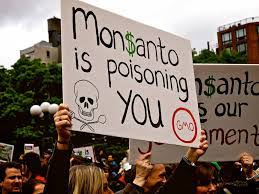 its efforts to hide information about impacts of its popular glyphosate-based herbicide, Roundup. This follows on the heels of the March 2017 unsealing, by federal judge Vince Chhabria, of internal Monsanto documents — the “
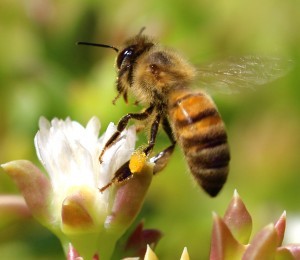 these numbers may seem to be a positive sign after over a decade of consistent pollinator declines, they are more indicative of a beekeeping industry that is using every available tactic possible to stay viable. With the continued use of highly toxic neonicotinoid insecticides in farms, gardens, and public spaces throughout the country, the long-term health honey bees and other pollinators continue to be in jeopardy.
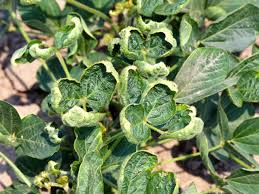 chemical used in genetically engineered (GE) fields. Dicamba, a toxic pesticide prone to drift off the target site, has been used in agriculture for decades. However, new GE crops developed by Monsanto must be paired with specific formulations of dicamba, and until now many believed these drift incidents were the result of illegal formulations of dicamba being applied to fields. But the extent of damage now being observed, covering over 2.5 million acres, is casting doubt on this theory, and raising more questions as to whether the new dicamba formulation is actually the cause of the widespread drift damage.
 during the cabbage planting cycle
 Grassroots advocates who supported passage of the Healthy Lawns Act to protect children, families and the environment are dismayed by the court’s ruling, but nevertheless vow to keep up the fight for protections from hazardous pesticides used in their community. “The court should have recognized that, in restricting lawn pesticides throughout its jurisdiction, Montgomery County is exercising a local democratic principle under Maryland and federal law to ensure the safety of the community, including children, pets, and the environment, from a known hazard not adequately regulated by the U.S. Environmental Protection Agency or the state,” said Jay Feldman, executive director of Beyond Pesticides. “After extensive hearings and study, the county council understands that toxic chemicals are dangerous and not needed to have beautiful lawns and landscapes,” Mr. Feldman said.
 (Beyond Pesticides, August 3, 2017) Working in close contact with pesticides over the course of one’s lifetime increases the risk of Chronic Obstructive Pulmonary Disease (COPD) and other breathing disorders, according to a
 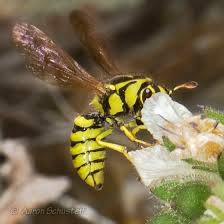 Masarinae are the only “vegetarian” wasp in the family Vespidae., They feed solely on nectar and pollen, unlike their more aggressive Vespid wasp cousins. There are 300 species of pollen wasp from 14 genera spread across the globe, however, in the U.S., all 14 species of pollen wasps originate from the genus Pseudomasaris.
 industry and the federal government to conceal from the public the real dangers associated with the use and manufacture of chemical products. The Bioscience Resource Project and the Center for Media and Democracy released more than 200,000 pages of these documents now accessible on the “
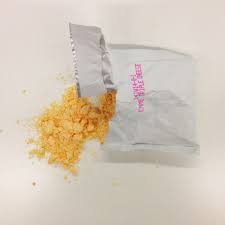 disrupting, industrial chemicals have been found in 10 varieties of macaroni and cheese products. The coalition is calling on food companies, especially the Kraft Heinz Company, maker of the iconic boxed mac and cheese, to eliminate sources of these chemicals from their cheese products.


