





13
May
Trump Officials Propose to Rollback Endangered Species Protection, Break Agreements to Act, and Block Public Review of Decisions
 (Beyond Pesticides, May 13, 2019) The Center for Biological Diversity (CBD) filed four lawsuits last week challenging the Trump administration’s failure to release a trove of documents detailing how the administration is regulating dangerous pesticides, especially as they relate to endangered species. Meanwhile, the U.S. Environmental Protection Agency (EPA) released a set of proposed changes last week that would dramatically reduce protections for the nation’s most endangered plants and animals from pesticides known to harm them. The proposals ignore the real-world, science-based assessments of pesticides’ harms, instead relying on arbitrary industry-created models.
The EPA proposals would, for example, gut protections for endangered plants that are pollinated by butterflies and other insects by ignoring the fact that animals routinely move back and forth between agricultural areas and places where endangered species live.
The proposals follow intensive efforts by Interior Secretary David Bernhardt to halt federal work on protecting wildlife from pesticides. They were released over a year after a draft biological opinion that was scuttled by the Trump administration found that the loss of pollinators from the insecticide chlorpyrifos would put hundreds of endangered species on a path to extinction.
The so-called “refinements” will make it easier for the EPA to claim that pesticides have no effects on endangered species, allowing pesticides to remain on the market without common-sense restrictions on their use to protect endangered species.
The proposal disregards the recommendations of the National Academy of Sciences and ignores the mandate of the Endangered Species Act to give imperiled wildlife and plants the benefit of the doubt when evaluating the range of impacts caused by exposure to pesticides. Records obtained through the Freedom of Information Act show that the refinements were driven by political-level appointees at the EPA, Department of the Interior, Department of Commerce and the White House.
The May 7 CBD lawsuits, involving 20 separate Freedom of Information Act requests, were filed in federal district court in Washington, D.C. The suits seek documents the Center requested from EPA, Department of the Interior, Fish and Wildlife Service, Department of Agriculture, Department of Commerce, National Marine Fisheries Service and Council on Environmental Quality.
“Federal agencies that are supposed to be protecting human health, wildlife and our environment from dangerous pesticides have fallen into a terrible pattern of withholding critical information from the American people,” said Lori Ann Burd, director of the Center’s environmental health program. “It’s ridiculous we have to sue to obtain public documents that are key to helping us understand how these dangerous poisons are, and are not, being regulated.”
The lawsuits
The first lawsuit seeks documents on the actual use of pesticides to evaluate the harm those pesticides cause to endangered species.
As reported by the New York Times, high-level Trump administration political appointees improperly halted the release of a scientific study detailing the harm that chlorpyrifos, malathion and diazinon cause to nearly 1,400 endangered plants and animals. In the scramble to justify this interference, they claimed to need additional actual use data, borrowing from the tobacco’s industry’s strategy of perpetually claiming a need for more data.
The second lawsuit seeks records of meetings between agency staff, including high-level Trump appointees and Croplife America, a pesticide industry trade group that has repeatedly lobbied to eliminate protections for endangered species from pesticides.
The third lawsuit seeks documents on the activities of an interagency working group of high-level Trump appointees created by disgraced former EPA administrator Scott Pruitt to weaken protections for endangered species.
The final lawsuit seeks records on whether the EPA has taken any steps to put in place conservation measures recommended by the National Marine Fisheries Service to prevent chlorpyrifos from jeopardizing the continued existence of 37 endangered species, including salmon, sturgeon and highly imperiled Puget Sound orcas.
The agencies have failed to disclose the documents responsive to these requests.
Documents previously obtained by the Center revealed that Fish and Wildlife Service scientists found that chlorpyrifos, the controversial pesticide linked to brain damage in children, jeopardizes the continued existence of 1,399 endangered plants and animals.
But at the request of pesticide companies, the Trump administration has worked to undermine the findings of government scientists and delay all further efforts to assess and reduce the impacts of chlorpyrifos and two other dangerous pesticides on endangered species.
“While the Trump appointees running these agencies scurry to do the bidding of the pesticide industry, endangered species like the San Joaquin kit fox are heading toward extinction,” said Ms. Burd. “You can bet that when we finally get these documents, they’ll reveal exactly why Team Trump worked so feverishly to hide them from public view.”
Background
The Fish and Wildlife Service was required to complete an analysis called a “biological opinion” on the impacts of three pesticides — chlorpyrifos, malathion and diazinon — as part of a legal settlement with the Center. In that settlement the agency agreed to assess by Dec. 31, 2017 the harms the three widely used pesticides pose to protected plants and animals, as required by the Endangered Species Act.
The assessments were on track to be completed and released to the public in 2017.
But shortly after contributing $1 million to President Trump’s inauguration, Dow Chemical, the maker of chlorpyrifos, directly requested that the assessments be scuttled.
In May 2017, the Service announced that the draft biological opinion assessing the three pesticides’ harms was nearly complete and would be ready for public comment within months.
As Fish and Wildlife Service career staffers were preparing to make the biological opinion available for public comment, on Oct. 25, 2017, they briefed Trump’s political appointees on the result of the agency’s nearly four years of rigorous scientific review. The officials briefed included then acting Interior Secretary David Bernhardt and Greg Sheehan, then acting director of the Fish and Wildlife Service.
After that meeting the consultation process halted, just as Dow had requested. The draft biological opinion was not released for public comment as promised. The agency missed the deadline it had agreed to in its settlement with the Center, and completion of the biological opinion has been indefinitely postponed.
Source: Center for Biological Diversity

 (Beyond Pesticides, May 10, 2019) The Earth, its natural systems, and as many as a million species are at enormous risk from human activity, says a
  (Beyond Pesticides, May 9, 2019) On Wednesday, the U.S. Environmental Protection Agency (EPA) issued a
  `
` (Beyond Pesticides, May, 7, 2019) Last week, the New York State legislature voted to phase out and eventually ban the use of the neurotoxic insecticide chlorpyrifos. The vote,
  (Beyond Pesticides, May 6, 2019) Beleaguered pollinators deal with a
  (Beyond Pesticides, May 3, 2019) A
  (Beyond Pesticides, May 2, 2019) Researchers
  (Beyond Pesticides, May 1, 2019) Evidence of the dangers of
  (Beyond Pesticides, April, 30, 2019) According to the latest
  (Beyond Pesticides, April 29, 2019) It Is Time to Stop the Attack on Organic and Protect the Family Farmers Who Safeguard the Earth and Our Health.
 (Beyond Pesticides, April 25, 2019) As
  (Beyond Pesticides, April 24, 2019) On April 19, the U.S. Court of Appeals for the 9th Circuit ordered the U.S. Environmental Protection Agency (EPA) to provide a justification for why


 Planting clover in your lawn is a small and easy way to help bolster pollinator populations.

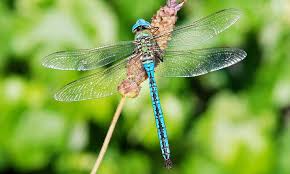 (Beyond Pesticides, April 19, 2019) Flying insects exposed to neonicotinoid insecticides or its breakdown products experience visual impairment and difficulty flying, according to a study
 (Beyond Pesticides, April 16, 2019) Help stop another attack on local authority in Maine – a bellwether state that has upheld local pesticide restrictions and leads the nation. Maine has led the nation in supporting the local democratic process as communities across the state have adopted pesticide use standards on public and private property that are more restrictive than state laws.
 Without question, the highlight of the National Pesticide Forum took place on Saturday night at the showing of the excellent documentary


 (Beyond Pesticides, April 12, 2019) The Center for Biological Diversity (CBD)
  (Beyond Pesticides, April 11, 2019) A


