





25
Apr
Canadian Beekeeper’s Class Action Neonicotinoid Lawsuit Moves Ahead
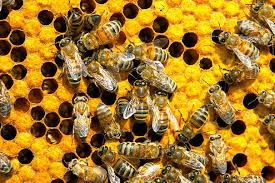 (Beyond Pesticides, April 25, 2018) A class-action lawsuit against two manufacturers of neonicotinoid insecticides is moving ahead in Quebec, Canada after an appeal to block the case by the Canadian government and the chemical companies, Bayer and Syngenta, was dismissed. In February 2018, the case, brought by a beekeeper, was allowed to proceed to trial by the Quebec Superior Court.
Quebec queen bee breeder, Steve Martineau, conducted tests on water and his dead and dying bees and found traces of neonicotinoids. His suit alleges that Bayer and Syngenta were negligent in the manufacture and sale of neonicotinoids in Quebec, and are responsible for damages that he and other class members suffered under Article 1457 of the Quebec Civil Code. Bayer and Syngenta challenged the application on a number of grounds including the assumption that they had manufactured the neonicotinoids which killed Martineau’s bees. The class in this case was authorized for all persons in Quebec who own or owned bees in the affected area since 2006. Mr. Martineau estimates he has lost about $20,000 a year to present due to the effects of neonicotinoids on his bee population (Martineau v. Bayer CropScience Inc. CALN/2018-007)
“We’re suing on behalf of Quebec beekeepers whose bees were non-productive or killed,” Mr. Martineau’s lawyer, Samy Elnemr said. In addition to the Quebec class-action suit, a Canada-wide lawsuit against neonicotinoid manufacturers is also being prepared to be filed and will be put before the courts soon.
On February 19, 2018, the provincial government introduced new restrictions on pesticides considered harmful to honey bees, including neonicotinoids. Under the changes, farmers will have to get permission from a certified agronomist before using certain pesticides on crops. The restricted pesticides include three types of neonicotinoids, as well as chlorpyrifos and atrazine, which has been banned in Europe for more than a decade. To ensure the implementation of these new regulations goes smoothly, the Environment Ministry will establish a monitoring committee to oversee the process. The province has already allocated $14 million over five years to assist farmers in reducing pesticide risks and adapting to the new measures. Advocates say the new rules represent a compromise. These chemicals may continue to be used, but inserting agronomic experts with an eye for both the economic and health concerns surrounding the use of highly toxic pesticides into the process may be a strategy to significantly reduce pesticide use. The good news is that by also improving recordkeeping, Quebec’s strategy can be closely evaluated to ensure the approval process is not simply a rubber stamp for pesticide use.
Numerous scientific studies implicate neonicotinoid pesticides as key contributors to the global decline of pollinator populations. Research on neonicotinoids has been consistent in linking their use to reduced learning in bees, as well as other impacts, such as those on colony size, and reproductive success. Studies looking at effects on birds reports that songbirds exposed to widely used insecticides, like neonicotinoids, fail to properly orient themselves for migration, the first such study that adds weight to arguments that pesticides are a likely cause in the decline of migratory bird populations. U.S. beekeepers lost an unsustainable 33% of their hives between 2016 and 2017.
Neonicotinoids are also detected regularly in the nation’s waterways at concentrations that exceed acute and chronic toxicity values for sensitive organisms. A new report from the U.S. Geologic Survey (USGS) finds neonicotinoid contamination of the Great Lakes that threatens aquatic life.The most recent aquatic assessment for imidacloprid finds that imidacloprid threatens the health of U.S. waterways with significant risks to aquatic insects and cascading effects on aquatic food webs. As a result of risks to aquatic organisms, the Canadian pesticide regulatory agency has recommended banning imidacloprid, a decision on which has been delayed. In Europe, a recent survey finds that streams across the United Kingdom (UK) are contaminated with neonicotinoids. The European Commission met on December 12 and 13, 2017 to decide on a proposal to extend the 2013 neonicotinoid ban to all outdoor crops, but this decision was delayed. The issue is expected to be on the agenda again in 2018.
Help push EPA to take substantive action on neonicotinoids by urging your Representative to support the Saving America’s Pollinators Act. With managed honey bee losses remaining at unsustainable levels and many wild pollinators at risk of extinction (1, 2, 3), it’s time, for the future of food and our environment, for the U.S. to finally protect pollinators.
Source: CBC Radio Canada

 (Beyond Pesticides, April, 24, 2018) On April 19, 2018, an Appellate Court in California sided with the State of California, affirming that Monsanto’s glyphosate can be listed as a probable carcinogen under the state’s Proposition 65 and rejecting Monsanto’s challenge to law. The state will not only move ahead with warning labels on products that contain glyphosate but also prohibit discharge of the pesticide into public waterways.
 (Beyond Pesticides, April 23, 2018) The U.S. Environmental Protection Agency (EPA) is accepting comments on its human health and environmental risk assessments of glyphosate (sold as Roundup™, Rodeo™, and many other products)
  (Beyond Pesticides, April 20, 2018) There is an extraordinary attack on local community rights to protect people and the environment from pesticides in the Republican Farm Bill, passed by the Agriculture Committee in the U.S. House of Representatives on April 18 on a straight party line vote. The language inserted in the Farm Bill amends the federal pesticide law with a provision that prohibits local governments from restricting pesticide use on private property within their jurisdictions. Local laws in two states, Maine and Maryland, will be overturned with final passage of this law in the U.S. House and Senate. In those 43 states that forbid local pesticide laws by state law, future reconsideration of this prohibition, pushed by the chemical and pest management industry, will be foreclosed. Local laws protecting the environment and public health have historically emerged out of local governments, with laws related to recycling, smoking, pet waste, building codes, and zoning.
 (Beyond Pesticides, April 19, 2018) With the passage yesterday of the Republican amendments to the 2018 Farm Bill,
 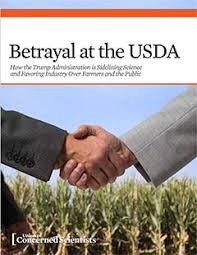 (Beyond Pesticides, April 18, 2018)
  (Beyond Pesticides, April 17, 2018) In a case that appalled the nation, the U.S. Justice Department finally last week secured an indictment against an applicator who illegally applied a fumigant at a U.S. Virgin Island resort,
 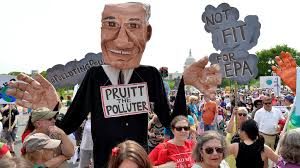 (Beyond Pesticides, April 16, 2018) Ethics scandals pile up regarding Environmental Protection Agency Administrator Scott Pruitt’s failure to do his job, leading to the
  (Beyond Pesticides, April 13, 2018) Hawaii is poised to become the first state in the nation to prohibit the use of pesticides containing the developmental neurotoxicant, chlorpyrifos.
 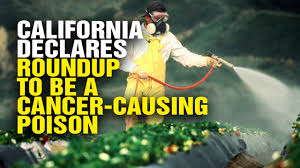 (Beyond Pesticides, April 12, 2018) The Justice Department will allow two notorious agrichemical corporations, Bayer and Monsanto, to merge, according to reports published earlier this week. Despite
  (Beyond Pesticides, April 11, 2018) The request by shellfish growers in Washington State to apply the neonicotinoid insecticide, imidacloprid, on oyster and clams beds to control native burrowing shrimp was denied by the Department of Ecology (Ecology) after it determined “environmental harm from this neonicotinoid pesticide would be too great.” Concerned resident and environmental advocates have been opposed to the proposed use citing harms to aquatic life including fish habitat, and long-term ecological damage.
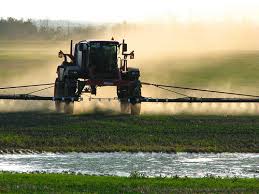 (Beyond Pesticides, April 10, 2018) Current strategies aimed at managing herbicide resistant weeds in agriculture are not effective and may exacerbate weed problems, according to
  (Beyond Pesticides, April 9, 2018) A new international study finds that the unsustainable exploitation of natural resources worldwide has reached critical proportions, causing biodiversity loss and land degradation that threaten the food and water security of an estimated 3.2 billion people. Congress must act for the U.S. to become a signatory to the United Nations Convention on Biodiversity, joining the global community in working to develop and implement solutions to the biodiversity crisis.
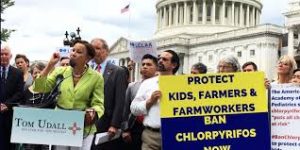 (Beyond Pesticides, April 6, 2018) Scott Pruitt, Administrator of the U.S. Environmental Protection Agency (EPA), is getting plenty of attention for what the public and some members of Congress see as his spendthrift and potentially corrupt behaviors since taking office in early 2017.
 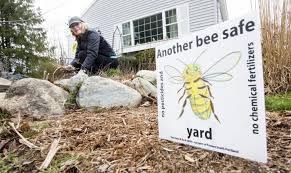 (Beyond Pesticides, April 5, 2018) An industry-backed attempt to enact pesticide preemption in the state of Maine is officially over after bill
 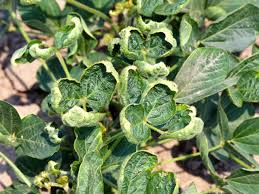 (Beyond Pesticides, April 4, 2018) In late March, the Missouri Department of Agriculture hosted a public hearing to discuss a proposed emergency rule restricting the sale and use of the herbicides dicamba and 2,4-D – which are known for their ability to drift off-site and damage sensitive crops. The emergency rule was introduced to prevent off-label use of specific dicamba or 2,4-D products. Thus far, dicamba is responsible for damaging approximately 325,000 acres of soybeans in the state last year.
 (Beyond Pesticides, April 3, 2018) Humans’ unsustainable exploitation of natural resources, worldwide, has reached critical proportions, threatening the ability of an estimated 3.2 billion people to have food and water security, according to a new international study. The
  (Beyond Pesticides, April 2, 2018) The comment period closes Wednesday, April 4 at 11:59 pm for the Spring 2018 National Organic Standards Board (NOSB) Meeting.
 (Beyond Pesticides, March 30, 2018) While conventional farming practices rely primarily on new sources of synthetic nitrogen fertilizer to grow crops, organic agriculture conserves nitrogen by using recycled sources, as detailed by
  (Beyond Pesticides, March 29, 2018) Rising use of antibacterials like
  (Beyond Pesticides, March 28, 2018)
 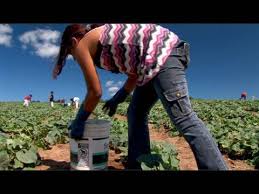 (Beyond Pesticides, March 27, 2018) In a major win for farmworker and health groups, the U.S. District Court for the Northern District of California
  (Beyond Pesticides, March 26, 2018)


