





29
Jun
Kroger Sets 2020 Phase-Out of Bee-Toxic Pesticides on Its Plants, Costco Encourages Suppliers to Change; Both Commit to Carry More Organic
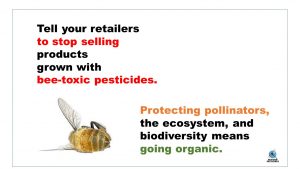 (Beyond Pesticides, June 29, 2018) It is widely known that pollinators are in trouble. In light of this, Kroger (which includes numerous other grocery chains, like Harris Teeter) announced in a press release last week — during National Pollinator Week — a phase-out by 2020 of live garden plants treated with the insecticides most closely associated with the decline of bee populations, the neonicotinoids. In May, Costco updated its pollinator policy, which “encourages” its suppliers of garden plants, fruits, and vegetables to limit the use of bee-toxic pesticides and adopt ecological practices. The company in 2016 announced a policy to encourage suppliers to change their pesticides.
In a statement that has broad implications for pollinator and environmental protection, Kroger included the following statement about organic food in its press release: “Kroger also offers one of the largest organic produce departments in America, which is desirable for customers looking to minimize potential exposure to synthetic pesticides. Representing nearly 20 percent of America’s annual organic produce business, Kroger sales reached $1 billion in 2017. A dedicated procurement team partners with more than 300 organic produce growers and suppliers every year to bring customers a growing selection of organic fruits and vegetables.” Costco is also encouraging an end to its suppliers’ use of insecticide chlorpyrifos, linked to brain damage in children, and will be significantly expand its offerings of organic food.
The dramatic decline in honey bees and native bees is increasingly documented in the scientific literature, with the research pointing to a family of toxic pesticides — neonicotinoids — as major contributors to colony collapse. A 2014 report found that over half of garden plant samples purchased at major retailers contain neonicotinoid (neonic) pesticides, which when applied make plants poisonous to bees and other wild pollinators. (Neonics include imidacloprid, clothianidin, acetamiprid, thiacloprid, dinotefuran, nithiazine, thiacloprid, and thiamethoxam.) Over the course of the last few years, some companies have begun to come around on the issue of the toxicity of neonicotinoid pesticides to pollinators by taking steps to move away from use of these chemicals.
Kroger has committed to the 2020 phase-out in its stores and garden operations. Even now, most of the live plants Kroger sells are not treated with neonicotinoids during their cultivation, but the company is pushing suppliers that still do use them to find alternatives by the 2020 deadline. The company’s significant penetration — 2,800 stores across 30 U.S. states — can mean a considerable reduction of neonic contamination in the marketplace.
A spokesperson for Kroger said, “The Kroger Co. recognizes the global honeybee population is vulnerable, with research indicating that a cause may include the use of pesticides containing neonicotinoids. Due to the potential risk to the honeybee population, we are committing to eliminate the sourcing of live outdoor plants in our stores and garden centers that have been treated with pesticides containing these neonicotinoids by the year 2020. This policy is inclusive of outdoor plants known to be pollinated by honeybees or known to attract honeybees.”
The company says it plans to rely on the expertise of the Environmental Protection agency (EPA) and other science authorities to evaluate any potential updates to this new policy. That may be less reassuring than it sounds: EPA guidance, especially during the current administration, may not be especially helpful to pollinators. According to advocates, the agency could be far more protective of public health and the environment than it has been, to date. The European Union, for example, banned all outdoor uses of neonicotinoids in April 2018; use will be permitted only in permanent greenhouses where contact with bees is not expected.
In addition, Costco is working with suppliers and growers to plant buffer zones around crops to provide pollinators with additional habitat. In establishing its original pollinator policy in 2016, the company said it was motivated by the dramatic decline in honeybee populations. At the time, Costco issued this statement: “Costco Wholesale understands that the honey bee population is declining and these bees are necessary for the life cycles of people, plants and the food we consume. We have invested in a multi-year research project to improve honey bee health and sustainability and are committed to following the continuing research, developments surrounding bee colony collapse and other areas of environmental concern.”
Other companies have taken similar steps. The Home Depot and BJ’s Wholesale took steps beginning in 2016 and 2014, respectively, to address the plight of pollinators. Since 2014, Home Depot has labeled plants treated with neonics, and 80% of the plants it sells are free of the pesticide. In 2014, BJ’s stopped selling neonics; in 2015, it required all vendors to disclose any use and label any treated plants with “Neonicotinoids applied. Caution around Pollinators,” and required vendors to submit plans for minimizing any effects of their use on pollinators. In 2016, it mandated that all suppliers provide only neonic-free plants (except for poinsettias and blueberries). The company was recognized by Friends of the Earth and the Pesticide Research Institute for its efforts on behalf of pollinators.
Lowe’s announced in April of 2015 that it would phase out the sale of neonic pesticide products within 48 months, and promised to include greater organic product selection in its stores, encourage growers to use biological control programs, and educate employees and consumers through brochures, fact sheets, and product labels. Scott’s Miracle-Gro committed to eliminating neonics from its Ortho brand by 2017. Tim Martin, general manager of the Ortho brand, said, “As the category leader, it is our responsibility to provide consumers with effective solutions that they know are safe for their family and the environment when used as directed. We encourage other companies and brands in the consumer pest control category to follow our lead.” In spring of 2017, Walmart and True Value began to phase out neonicotinoid pesticides from their respective retail supply chains. ACE Hardware lags behind with a vague commitment to protect pollinators.
These announcements follow numerous scientific studies that have consistently implicated neonics in the decline of honey bees and other wild pollinators. The decisions come in part from ongoing consumer and environmental campaigns urging retailers to stop selling plants treated with neonics and to remove products containing them from store shelves. Consumers have a role to play in reducing the use of such toxic pesticides, both in their own yards and gardens, and in advocating with local retailers to get rid of such products in their stores and in their supply chains. Choosing organically cultured plants and organic foods contributes to the transition away from bee-killing neonics and other pesticides. Beyond Pesticides offers helpful guidance on companies and organizations that sell organic seeds and plants to the general public. Included in this directory are seeds for vegetables, flowers, and herbs, as well as living plants and seedlings.
See Beyond Pesticides’ BeeProtective program for more information on science, policy, and advocacy. Watch and share the video Seeds that Poison for a short and concise explanation of the threat to pollinators and the solution.
All unattributed positions and opinions in this piece are those of Beyond Pesticides.

 (Beyond Pesticides, June 28, 2018) Having voted to allow retail recreational cannabis sales as of January 1, 2018,
  (Beyond Pesticides, June 27, 2018)
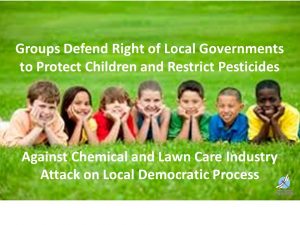 (Beyond Pesticides, June 25, 2018) Ten organizations filed an Amicus brief last week in support of a 2015 landmark Montgomery County, Maryland ordinance that restricts the use of toxic pesticides on public and private land within its jurisdiction. The law, intended to protect children, pets, wildlife, and the wider environment from the hazards of lawn and landscape pesticide use, is on appeal from a Circuit Court ruling in August 2017 which struck down aspects of the ordinance that apply to private property. The Montgomery County Council decided to appeal the Circuit Court ruling based on an outpouring of public support, and the advice of its legal team that the County has a reasonable chance of prevailing. The case will now be heard in front of the Court of Special Appeals of Maryland.
 (Beyond Pesticides, June 22, 2018) Mosquito misters pose a threat to human health. They also harm bees and other flying pollinators and are the least effective way to deal with biting mosquitoes. These devices are typically placed outdoors and spray insecticides –mostly in an attempt to control mosquitoes. In May, the Connecticut state legislature
  (Beyond Pesticides, June 21, 2018) In a letter sent by the Center for Biological Diversity (CBD), the U.S. Fish and Wildlife Service (FWS) is being urged to complete status reviews and listing proposals for 23 wildlife species in the Southeast that are at risk of extinction. Citing deep concerns about unprecedented assaults on the Endangered Species Act (ESA), the letter reiterates the critical need for FWS to provide timely protection to the most critically imperiled species.
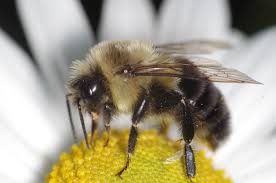 (Beyond Pesticides, June 20, 2018) Bumblebee queens that wake up from hibernation to a neonicotinoid-contaminated, monofloral landscape take longer to set up their nest and die-off at higher rates, according to new
  (Beyond Pesticides, June 19, 2018) Some 200 members of a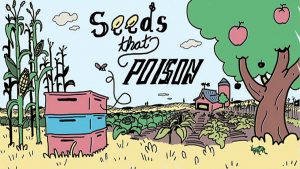
 (Beyond Pesticides, June 14, 2018) With nearly 40% of Americans diagnosed as clinically obese, leading to health care costs estimated at over $200 billion, researchers are focusing on ways individuals can reduce their exposure to chemicals that contribute to weight gain regardless of diet or exercise. These chemicals, known as “obesogens,” include a range of consumer products, from pesticides to plastics and flame retardants. While diet and exercise remain critically important to fighting the ongoing obesity epidemic, obesogens may be working to increase appetite, fat storage, or make it more difficult for the body to shed fat once it is gained.
 (Beyond Pesticides, June 13, 2018) On June 6, 2018, the New York State Department of Environmental Conservation (NYSDEC) released its final policy for the disclosure of cleaning product ingredients under its Household Cleansing Product Information Disclosure Program. The program will require full disclosure of ingredients on product labels or manufacturer website for all products sold in the state, as well as the identification of chemicals of concern. NYSDEC states the program is intended to protect consumers from harmful chemicals in household products.
 (Beyond Pesticides, June 11, 2018) With
  (Beyond Pesticides, June 8, 2018) In the wake
 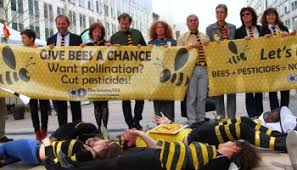 (Beyond Pesticides, June 7, 2018) Health Canada is proposing to phase out a number of uses of neonicotinoids in order to mitigate risks to pollinators. The agency has completed its review of clothianidin and thiamethoxam — two neonicotinoids that have been linked to pollinator decline and finds risks of concern for bees. However, these measures do not go as far as those recently made in the European Union, but further than label restrictions issued by the U.S. Environmental Protection Agency (EPA).
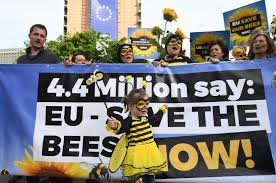 (Beyond Pesticides, June 6, 2018) By the close of 2018, three top neonicotinoid (neonic) pesticides, linked to the worldwide decline in bee populations, will be banned for outdoor use in the European Union (EU), based on the
 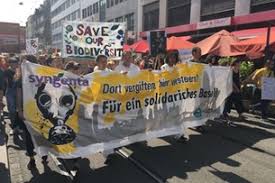 (Beyond Pesticides, June 5, 2018) After more than 100,000 Swiss citizens signed a petition calling for a ban on pesticides, Switzerland will soon have to vote on a complete ban on the use of synthetic pesticides. The ban would apply to farmers, industries, and imported goods, and advocates hope this measure would cause other EU nations to follow.
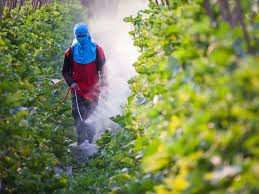 (Beyond Pesticides, June 1, 2018) States and civil society organizations launched new lawsuits in late May against the Pruitt Environmental Protection Agency (EPA) for its continued attack against farmworker health and safety. Two separate lawsuits, one filed by attorneys general in the states of California, Maryland, and New York, and another by health and justice advocates represented by Earthjustice and Farmworker Justice take aim at EPA’s decision to delay the implementation of training requirements designed to protect farmworkers and their families. This is the latest in a series of lawsuits which began when EPA announced
  (Beyond Pesticides, May 31, 2018) Deforestation in tropical regions helps spread malaria, concludes a
 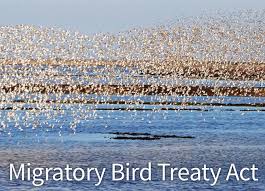 (Beyond Pesticides, May 30, 2018) Six environmental groups have sued the Trump Administration for reversing a long standing interpretation of the Migratory Bird Treat Act (MBTA) that provides migratory bird protections from incidental killing or “taking” caused by industrial activities. The lawsuit,


