21
Nov
Beekeepers at Risk of Losing Hives after Mosquito Insecticide Spraying
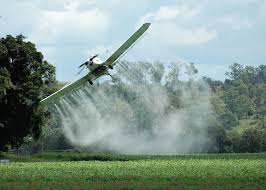
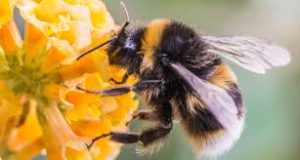
 (Beyond Pesticides, November 21, 2018) A study published last month in the Journal of Apicultural Research finds significant numbers of U.S. honey bees at risk after exposure to hazardous synthetic pesticides intended to control mosquitoes. With many beekeepers rarely given warning of insecticide spraying, researchers say the risk of losing colonies could increase. Advocates say fear of Zika and other mosquito-borne illnesses could result in counterproductive and reactionary insecticide spraying that will add further stress to managed and native pollinators already undergoing significant declines.
Researchers aimed to determine whether neighboring honey bee colonies could be similarly affected by aerial insecticide spraying. To calculate the percentage of colonies that could be affected, density of honey bee colonies by county was compared with projections of conditions thought to be prone to regional Zika virus outbreaks.
Researchers found 13 percent of U.S. beekeepers at risk of losing colonies from Zika spraying. In addition, it was determined that many regions of the U.S. best suited for beekeeping are also those with favorable conditions for Zika-prone mosquitoes to proliferate. These regions include the southeast, the Gulf Coast, and California’s Central Valley.
“[Considering] all the threats facing bees,” says study lead author Lewis Bartlett of the University of Exeter’s Center for Ecology and Conservation in a university press release, “even a small additional problem could become the straw that broke the camel’s back.”
In its 2016 report, Mosquito Control and Pollinator Health: Protecting Pollinators in the Age of Zika and Other Emerging Mosquito Diseases, Beyond Pesticides found, “The U.S. Environmental Protection Agency (EPA) has identified 76 pesticide chemicals that are highly acutely toxic to honey bees. These were singled out because they have an acute contact toxicity value of less than 11 micrograms per bee (LD50<11 micrograms/bee) and can be applied in ways that can expose bees. Of these, several are used to control mosquitoes, including malathion, naled, permethrin and phenothrin, which are the most commonly used for ultra-low volume aerial and ground spraying.” In the report, see Table, Pesticides Used for Mosquito Control, which identifies those mosquito control pesticides that are especially toxic to bees.
Given the scale and uniformity of modern agricultural systems, managed honey bees are increasingly used as supplementary pollinators to service large agricultural areas. Since these pollination services are temporary, farmers must be able to afford an apiarist’s service every year and numerous colony visits per season. With worker-bees already exposed to a range of insecticides while pollinating conventional crops, additional exposure through chemical-intensive mosquito management could cause many farmers to fall into unprecedented financial hardship, as the rental costs of managed-bee colonies increases.
Researchers worry that higher colony density in large agricultural regions demands policies to protect apiaries and the farmers who rely on them. Likewise, advocates say the risk of honey bee colony contamination demands policy makers conduct research to determine effective alternatives to toxic mosquito management methods.
“Many beekeepers live on the breadline,” says Mr. Bartlett, “and if [organophosphate spraying causes] beekeeping [to be] no longer profitable, there will be huge knock-on effects on farming and food prices.”
Entomologists from around the world already classify aerial and ground spraying of insecticides as the least efficient mosquito control technique. Entomologist Dino Martins, PhD, in a 2016 interview with The Guardian, said “We are basically fighting an arms race with mosquitoes rather than cleverly understanding its life cycle and solving the problem there…[R]esistance will always evolve to the use of pesticides….“[Spraying insecticides] is a quick fix but you pay for it. You kill other species that would have predated on the mosquitoes.”
Spraying Naled, the first pesticide recommended by Centers for Disease Control and Prevention to combat Zika, has been shown to be ineffective and known to carry consequences. In 2016, over two million bees were killed after aerial mosquito spraying in South Carolina. Beekeepers received insufficient warning for when aerial spraying would occur. One couple reported seeing thousands of dead bees scattered across their pool deck and driveway.
More research is needed to assess the broad ecological harms of mosquito spraying by including poisoning of native pollinators, whose pollination habits sustain a panoply of native plants.
Advocates feel that elected officials’ failure to account for pollinator activity in the decision to spray adds insult to injury. Many advocates wonder how many families could afford the increase in food prices as agricultural pollination costs increase.
With climate change increasing the range for many mosquito-borne diseases, take action locally. Educate your neighbors and community leaders by providing examples of proper mosquito management, such as: eliminating standing water, introducing mosquito-eating fish, encouraging predators like bats, birds, dragonflies and frogs, and using least-toxic larvacides like bacillus thuringiensis israelensis (Bti). Visit Beyond Pesticides’ Mosquito Management page for more information.
All unattributed positions and opinions in this piece are those of Beyond Pesticides.
Source: Journal of Apicultural Research

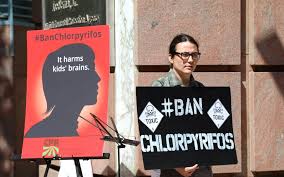 (Beyond Pesticides, November 20, 2018) Scientific conclusions used to support the registration of the insecticide
  (Beyond Pesticides, November 19, 2018) The Organic Foods Production Act (OFPA) requires organic milk and dairy products labeled as organic to come from dairy cows continuously managed as organic from the last third of gestation. Because of the short supply of organic dairy breeder stock when the law was passed in 1990, a one-time conversion of conventional dairy cows to organic was allowed, as long as they are managed organically.
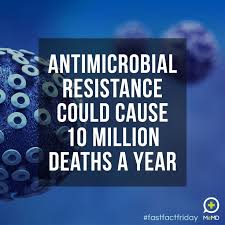 (Beyond Pesticides, November 16, 2018) Pesticides and biocides used to control bacterial infections in humans and weeds and pests in agriculture are surpassing ‘planetary boundaries’ within which human civilization can continue to rely on these biocides,
  (Beyond Pesticides, November 15, 2018) Neonicotinoids are
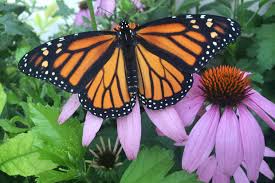 (Beyond Pesticides, November 14, 2018) Monarch butterflies are in the midst of a staggering decades-long population decline that has rapidly accelerated since 2005, research
  (Beyond Pesticides, November 13, 2018) We are living in extraordinary times that call for bold action. We face serious public health and environmental challenges and know that we must work to advance local, state, and federal action. Our program relies on your support, which elevates independent science to call for action. While the November 6 election results offer some important opportunities in our communities, state, and nation, we continue to face the power of the pro-pesticide lobby and those seeking to weaken the integrity of organic standards in the Farm Bill.
 (Beyond Pesticides, November 9, 2018)
  (Beyond Pesticides, November 8, 2018) Two months after publishing its
  (Beyond Pesticides, November 7, 2018) Brazil’s rapid industrialization of its agricultural sector may be coming at the cost of resident health, according to a new study published in
  (Beyond Pesticides, November 6, 2018) Scientists working for USDA’s Agricultural Research Service in Lincoln, Nebraska have discovered natural compounds derived from coconut oil that are more effective than DEET at repelling mosquitoes, ticks, biting flies, bed bugs and other insects. Given the long-lasting efficacy of the compounds researchers tested, commercialization could make the regular use of toxic insect repellents, like DEET, obsolete. Advocates are praising USDA researchers for the results, indicating that this is exactly the type of research government agencies should be funding and promoting.
 (Beyond Pesticides, November 5, 2018) As you know, the stakes in this midterm election are high. Many races are too close to call and will be decided by voter turnout. As we have read, our vote will make a difference!
 (Beyond Pesticides, November 1, 2018) A new
  (Beyond Pesticides, October 31, 2018) Residents in the town of Great Barrington, MA are concerned about the health effects that could result from creosote-coated railroad ties stored in their neighborhood. According to a report in the
  (Beyond Pesticides, October 30, 2018) The
  (Beyond Pesticides, October 29, 2018) Protect the integrity of the organic standard setting process that determines whether a synthetic substance will be allowed in food labeled organic. Help stop an attack on the meaning of the organic label in the Farm Bill, which may be voted out of conference committee by the end of November. By changing the substance review process, a provision will open the floodgates to allowed synthetic chemicals in organic production, handling, and processing under the
 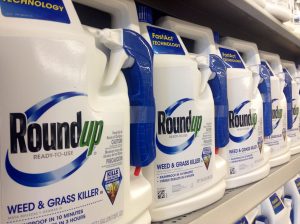 (Beyond Pesticides, October 26, 2018) California Superior Court Judge Suzanne Bolanos is upholding a jury’s verdict that exposure to the herbicide glyphosate caused school groundkeeper Dewayne Johnson to develop cancer. The ruling comes after concern that Judge Bolanos would intervene and
  (Beyond Pesticides, October 25, 2018) A
  (Beyond Pesticides, October 24, 2018) Bottlenose dolphins found along Florida’s west coast contain detectable levels of phthalates, chemicals used in plastics, cosmetics and as
  (Beyond Pesticides, October 23, 2018) The
  (Beyond Pesticides, October 22, 2018) The California Department of Pesticide Regulation (DPR) is accepting comments on its proposal to classify chlorpyrifos as a toxic air pollutant. The classification would require DPR to develop control measures that adequately protect public health. What happens in California affects all of us because products of California agriculture are available all over the country –and the world. In addition, policies set by the state of California are often examples for other states and the federal government.
 (Beyond Pesticides, October 19, 2018) Pollinator advocates and the Center for Biological Diversity (CBD) are imploring the U.S. Environmental Protection Agency (EPA) to deny Bayer CropScience’s application for use of “Sivanto,”a pesticide product with the active ingredient