





05
Jan
Portland, ME Becomes an Organic City, Banning Toxic Pesticides on Public and Private Property
(Beyond Pesticides, January 5, 2018) After 11:00 pm on January 3, the City Council of Portland, ME voted  unanimously (9-0) to restrict the use of toxic pesticides on all lawns and landscapes within the City, both public and private. Passage of the new pesticide ordinance, one of the strongest in the country, represents the culmination of nearly two and a half years of intense debate and discussion between residents, advocates, opponents, and City of Portland officials. Local and national health and environmental groups are praising the City for its diligence in addressing the issue, and its ultimate decision to restrict hazardous pesticide use in the face of insufficient protections from federal and state regulators. Read Beyond Pesticides’ and the Maine Organic Farmers and Gardeners Association’s (MOFGA) op-ed in the Portland Press Herald.
Outside of Maine, the City of Portland now joins neighboring South Portland and other jurisdictions in the state of Maryland (the City of Takoma Park and Montgomery County ), which have taken similar action. Twenty-eight jurisdictions throughout Maine have restricted pesticides in various ways, including on public property, but the comprehensive Portland-style ordinance stops virtually all hazardous pesticide use in the community, on private and public property. In support of the legislation, the Council received a letter from 31 medical and science professionals, who said, “As health professionals, it is our contention based on the molecular and microbiologic actions of these synthetic land care pesticides that the continued use of them must be challenged, banned, and replaced by practices and products that are not harmful to people and the environment.”
The ability to apply pesticide restrictions to private property is permitted within only a handful of states due to preemption laws which prevent localities from enacting pesticide policies stricter than the state’s. While Maine localities are not preempted, during the course of deliberations in Portland, Governor Paul LePage and other state lawmakers friendly to the pesticide industry launched a failed attempt to pass preemption legislation. The bill was rejected unanimously by a state legislature committee.
Avery Kamila, a leading advocate for pesticide reform in the City and co-founder of the local group Portland Protectors, is proud of the Portland City Council. “The council listened to the residents, organic experts and the independent science and decided to prioritize public health and environmental stewardship,” she said in an emailed statement. “I expect our new status as a leading organic city will make Portland even more attractive to young people and visitors.”
In August of 2015, Portland Protectors presented the City Council with a draft pesticide ordinance, and launched a petition which eventually received over 1,300 signatures. A subcommittee hearing scheduled in October of that year saw strong turnout, though city staff also presented their own version of an ordinance which was limited to public property, and included a number of exemptions. After several subsequent hearings, the Council decided to form a Task Force to further study the issue. Advocates viewed the Task Force as tilted toward industry interests, and its final recommendation reflected that notion, with language encouraging an outdated Integrated Pest Management approach that allowed the use of undefined “least-toxic” pesticides.
As Portland continued its debate, neighboring South Portland passed a model, comprehensive pesticide reform policy that specifically defined allowed pesticides as those permitted under organic production or considered minimum risk by the Environmental Protection Agency. Advocates in Portland seized on the passage of South Portland’s policy, and urged the City Council take up an ordinance modeled after their neighbor’s, rather than the recommendation of the Task Force.
Portland’s elected leaders listened to the concerns of their residents, and final debate over pesticide reform considered a South Portland-style ordinance. City staff recommended a range of changes to weaken the policy, however only two minor amendments were included within the final bill passed this week. These amendments delay the start date of the ordinance on public property from March 1, 2018 to July 1, 2018, and include an exemption for the use of toxic pesticides to control invasive plants on public property.
In addition to creating specific criteria for what pesticides are allowed for use in the City, the ordinance establishes a Pest Management Advisory Committee (PMAC) comprised of City staff, land care and pest control experts, and Portland residents. Within PMAC, a waiver committee will review requests to use more toxic pesticides, determining whether their use is necessary or would further endanger public health. The ordinance also includes a strong outreach and education campaign to ensure the community is aware of the changes, and of best practices for their lawns and landscapes. Violations of the ordinance will be subject to civil penalties as enforced by the City Manager. After the new July 1 start date for restrictions on public property, all private property will be subject to the ordinance beginning on January 1, 2019.
“Portland Protectors will closely monitor the implementation of this ordinance,” said Avery Kamila. Advocates are concerned about a clause they had hoped to remove from the final version of the ordinance exempting high use athletic fields for a period of time. As Ms. Kamila indicates, “the city used 2,200 pounds of high risk weed-and-feed on five student athletic fields last year. This use will be allowed until 2021, and we want to see it stop much sooner.”
“We also hope the council will come back later and restrict synthetic fertilizer use and restrict the sale of synthetic pesticides and fertilizers,” she said. There is growing recognition that the success of policies that restrict pesticides entail a change in management practices away from fertilizers which damage soil and undermine healthy turf. Beyond Pesticides’ list of fertilizers compatible with organic landscape management intends to help localities establish a foundation for healthy turf management.
After the passage of Portland’s ordinance, advocates are focusing on creating a strong PMAC committee, implementing the outreach and education program, and hoping that additional communities in the state will follow the City’s lead. As communities and states continue to rely on an increasingly lax and industry-friendly EPA for determinations about the safety of pesticides, more and more concerned residents are contacting their local elected leaders, and more and more leaders are listening, and acting on their constituent’s concerns. The passage of Portland’s ordinance is yet another example of the power of grassroots change to protect not only our own health, and particularly the health of children, but the also the air we breathe, the water we drink, the soil we use to grow our food, and wildlife and complex ecology upon which we all rely.
If you’re interested in getting active in your community and passing a policy like Portland’s, reach out to Beyond Pesticides for the tools and the strategy you need to succeed. Contact us at 202-543-5450 or email [email protected].
Read Portland’s ordinance here (an updated document including the two additional amendments voted on before final passage will be added when it becomes available).
All unattributed positions and opinions in this piece are those of Beyond Pesticides.
Source: Portland Press Herald; Beyond Pesticides Press Release

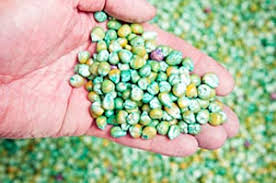 (EPA) released the preliminary ecological (non-pollinator) assessments for the neonicotinoids (neonics); clothianidin, thiamethoxam, dinotefuran, and the terrestrial ecological assessment for imidacloprid, finding that these pesticides pose both acute and chronic risks to aquatic life and birds. Treated seeds are identified as posing the highest dietary risks to birds, confirming previous research that neonics are highly hazardous not only to bees, but to birds, aquatic life, and other non-target organisms.
 required to submit to mandatory testing and will receive fines of up to $1 million if their product contains banned pesticides. The new measures announced by Health Canada come as the country prepares to launch its recreational market in July 2018, and
 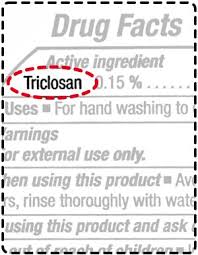 December 19, 2017 announced it was removing from the market 24 over-the-counter (OTC) disinfectants or antimicrobial ingredients, including
  in addition to our
  Transforming land management with organic practices
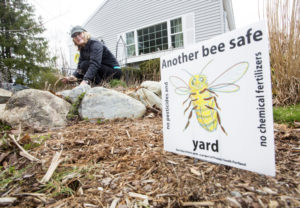 Local policies and practices
 advancement of organic, sustainable, and regenerative practices and policies. Topics have included toxic chemical use, pollinator protection, organic agriculture and land use, global climate change, and regulatory or enforcement violations. The topics range from people speaking up in opposition to the EPA decision that allows the continued use of the highly neurotoxic insecticide chlorpyrifos, reversing course on an earlier EPA proposal to prohibit residues in food, to opposing EPA budget cuts, mergers of chemical company giants, and sales of bee-toxic pesticides by Amazon. And, we suggested that people thank the U.S. Fish and Wildlife Service for listing the rusty patched bumblebee as an endangered species.
 National Organic Standards Board (NOSB), issue action alerts, and provide guidance and public comment suggestions through our

 Unique databases that inform local action
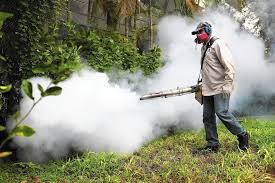 We challenged EPA on the use of the organophosphate mosquito insecticide Naled in response to the Zika virus, expressing concern about the pesticide’s potential adverse effects to children. We brought to an EPA meeting an elected member of the Collier County, Florida mosquito control commission who is concerned about the use of Naled and the relative lack of mosquito breeding prevention strategies.
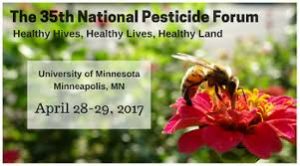 Getting together to discuss science, policy, and strategy —35th National Pesticide Forum
 watch our website for details and plan to join us in Irvine, California, April 13-14, 2018!
 Relatedly, after weeks of stalemate on a decision by European countries, the
  as the state has yet to fully phase-in its pesticide testing protocols. Donald Land, PhD, a chemistry professor at the University of California, Davis, who also works as a consultant for pesticide testing company Steep Hill Labs Inc. told the Associated Press, “Buyer beware.” Along with
 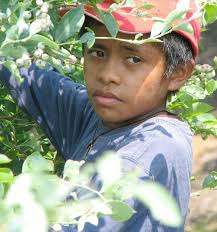 Obama Administration after over a 20-year delay. While certain provisions will go into effect next year, the Trump Administration and EPA Administrator Scott Pruitt will nonetheless propose new changes that are likely to significantly weaken safeguards for farmworker health. Health and farmworker groups are deriding the move as another signal that the current Administration is carrying out the orders of the pesticide industry.
 share offer a modest, partial (75 percent) reimbursement of up to $750 annually per certification, to help defray these costs. Having a diversity of scale of operations involved in organic production helps to maintain the integrity, vitality and opportunity of the U.S. organic sector.
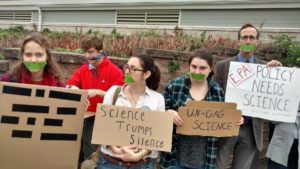 would not pass Senate confirmation due to his deep connections to the chemical industry. In a letter obtained by the Associated Press, Dr. Dourson indicated his move “avoids unnecessarily politicizing the important environmental protection goals of Administrator Pruitt.” Health and environmental groups, including
 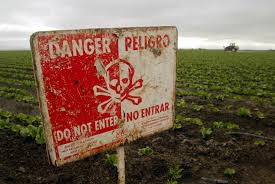 and societies. This European study combined cost calculations for exposures to environmental chemicals, including pesticides, air pollution, and endocrine disrupting substances, and suggests that a shift in priority setting for environmental policy is needed.
 drift-prone dicamba-based herbicide next season, despite links to widespread crop damage that has pitted neighbor against neighbor in agricultural communities throughout the country. The move comes as more and more states enact or consider restrictions on use of the herbicide, which is intended to be paired with genetically engineered (GE) soybean seeds resistant to both dicamba and another controversial herbicide produced by Monsanto, glyphosate.
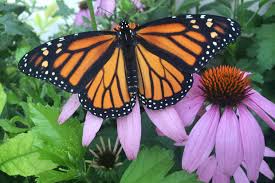 (Beyond Pesticides, December 11, 2017)
 bugs, according to a study published this month in the
  (Beyond Pesticides, December 7, 2017) European health and environmental groups Global 2000 and Pesticide Action Network (PAN) have announced plans to sue European Union authorities over their assessment of the herbicide glyphosate, the active ingredient in Roundup products produced by the chemical company Monsanto. The groups claim that the German regulatory authority, the Federal Institute for Risk Assessment (BfR), and the European Food Safety Authority (EFSA) used material directly from Monsanto in their report over the safety of glyphosate without making clear that the data came from Monsanto itself. “Both the BfR and the EFSA were in breach of the requirement obliging them to make an independent, objective and transparent assessment,” the groups said in a statement
 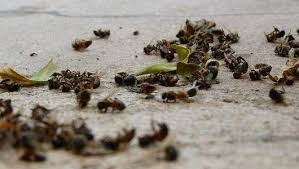 (Beyond Pesticides, December 5, 2017) Fungicides are likely playing an important role in the decline of North American bumblebee populations, according to new research published by a team at Cornell University. While overwhelming data continue to indicate that insecticides, particularly the neonicotinoid class of chemicals, are the leading factor in overall pollinator declines, Cornell scientists discovered that fungicides, in particular the chemical chlorothalonil, are likely compounding risk and toxicity for U.S. bumblebee species. As new studies continue to expand the chemical culprits in pollinator declines, calls for a wholesale change in agricultural practices toward more sustainable organic production are reinforced.
 (Beyond Pesticides, December 4, 2017) You told the Arkansas Plant Board to exercise its authority to protect farmers, consumers, and the environment from use of the herbicide dicamba on genetically engineered (GE) soybeans, and the board listened. Now, we need to ask the board to stop the use of
 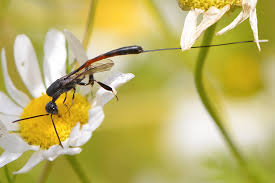 (Beyond Pesticides, December 1, 2017) Ichneumonid wasps (family Ichneumonidae), are a widely distributed parasitoid wasp family within the order Hymenoptera. The name “ichneumonid” comes from Greek words meaning “tracker” and “footprint.” And females do indeed hunt for suitable “hosts” by first identifying the organism’s food source. Once a suitable host is found, females deposit eggs onto the unsuspecting insect larvae where, within ten days to several weeks, the Ichneumonid larva kills the host by feeding on its body fluids before it emerges. They are also known as “scorpion wasps” for the extreme length and curving motion of their segmented abdomens. Note: both adult males and females are stingless, and feed on nectar.
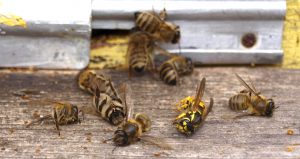 both contain the active ingredient, sulfoxaflor, which is highly toxic to bees. The ruling overturned the decision by France’s health and environment agency, ANSES, to allow the use of the sulfoxaflor products. Sulfoxaflor use was also challenged in the U.S. by beekeepers concerned about its impact on already declining bee populations.
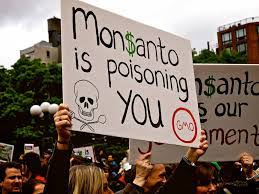 industry-fueled attacks on its reputation in the wake of
 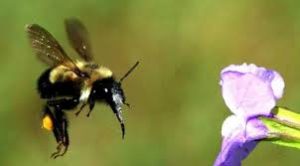 (Beyond Pesticides, November 28, 2017) Bumblebees exposed to field-realistic levels of neonicotinoid insecticides have problems with “buzz pollination” that results in reduced pollen collection, according to new research published in


