





08
Feb
Intermediary Strips of Wildflowers across Fields Reduces Pesticide Use
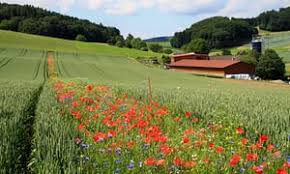 (Beyond Pesticides, February 8, 2018) New trials are being launched in the United Kingdom (UK) to monitor fields that have long strips of wildflowers planted through croplands to boost natural predators and potentially reduce pesticide spraying. The large-scale trials are meant to determine how effective these strips can be as a tool for practitioners wishing to enhance biological pest control in the field.
The field trials, carried out by the Centre for Ecology and Hydrology (CEH), are being conducted on 15 large arable farms in central and eastern England and would be monitored for five years. Until now, wildflower strips have been placed at the edge of fields as refuges. However, natural predators in these strips would be unable to access the center of large planted fields, and thereby unable to effectively target pests that are in the fields. In the new trials, six-meter wide strips of annual wild and cultivated plants – with 13 to 16 species – will be planted 100 meters apart so that predators will be able to attack aphids and other pests typically found in fields.
The researchers at CEH’s ASSIST program (Achieving Sustainable Agricultural Systems) will determine whether in-field strips are feasible tools for practitioners wishing to enhance biological pest control in the field. The most important focus is on supporting diverse communities of predatory and parasitic insects that kill pests. Research increasingly suggests that complex communities of predators and parasitoids are the most effective at controlling pests. Researchers will also be looking out for any sign that drawing the wild insects into the center of fields, and therefore closer to where pesticides are sprayed does more harm than good.
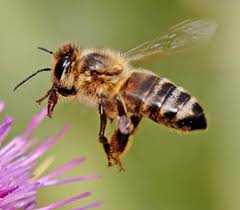
Resources provided by in-field strips and normal field margins benefit the greatest diversity of important predators. According to Ben Woodcock, PhD, ecological entomologist at CEH, sowing specific grasses and wildflowers in the field can support predators in the crop canopy or those that target internal pests living in stems or seed pods. Many parasitic wasps, for instance, need access to open flowers so that they can feed on pollen and nectar. Without this resource, the number of eggs they can lay is dramatically reduced and with it pest control.
Concern over the environmental damage caused by pesticides has grown rapidly in recent years, especially with the drastic decline in pollinator populations. Using wildflower margins to support insects including hoverflies, parasitic wasps and ground beetles have been shown to slash pest numbers in crops and even increase yields. Similar fields are underway in other parts of Europe where flowers such as cornflowers, coriander, buckwheat, poppy and dill are planted in strips. According to reports, densities of leaf beetle pests in fields of winter wheat were 40 to 53% lower than when no flower strips were sown. This low pest pressure even resulted in a 61% reduction in damage to the wheat plants.
Strips of flowering plants, especially with plants attractive to beneficial insects like pollinators, have been used to increased biodiversity on farms and provide refuge for these insects. Flower strips are also designed to provide early season pollen and nectar resources for important crop pollinators, such as bumblebees and solitary bees. In this respect, they provide dual benefits – enhanced natural pest control and crop pollination. In order for annual flower strips for beneficials to be fully maximized, it is important for them to be well integrated into linked perennial habitats with hedgerows, low-input meadows and wildflower strips, and secondly, for them to be combined with a management approach that protects beneficials. This also means protecting them from harmful pesticides. Previous research has shown that hedgerows improve a farm’s ecology and reduce the need for pesticides. Read Beyond Pesticides’ Hedgerows for Biodiversity: Habitat is needed to protect pollinators, other beneficial organisms, and healthy ecosystems.
Dr. Woodcock notes that strips can be easy to manage and readily re-established in another field or location in the same field. With GPS-linked farm machinery allowing the exact location of these strips to be known, this can reduce the chances of accidental spraying of the strips.
To attract beneficial insects and protect their habitats in your own backyard, there are several steps you can take. Like any other living organism, pollinators need food, water, and shelter in order to thrive. For more information, see Managing Landscapes with Pollinators in Mind
Source: The Guardian, CEH Blog

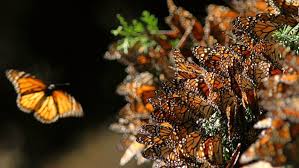 population of the species is continuing to decline at an alarming rate, with scientists and conservation groups pointing to man-made factors like logging, climate change, and herbicide use on genetically engineered (GE) crop fields as primary drivers. The annual California count of western monarch butterflies stationed volunteers at 262 sites, more than ever before, yet at 200,000 butterflies counted, the numbers nearly matched the lowest level recorded this decade, when only 145,000 butterflies were seen in 2012. The decline of these iconic butterflies demands swift action from lawmakers and regulators to protect their dwindling numbers.
 Environmental Protection Agency’s (EPA) efforts to purge academic scientists who had previously received EPA grants from sitting on the agency’s advisory committees. Last October, EPA issued a new policy that changes the makeup of its advisory boards by limiting the participation of scientists from academia and nonpartisan nonprofit organizations. Critics say the change attempts to fill these advisory committees with more industry-friendly officials whose belief systems are anti-environmental protection. On January 23, 2018, a group of scientists
 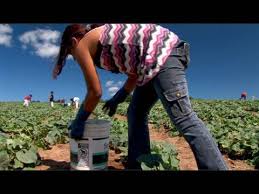 who grow and harvest our food. A sustainable food system must protect the land and the people who work the land, including the children and families of farmworkers. In two related actions, EPA is proposing to remove age requirements for application of pesticides. The actions involve changes to the Agricultural Worker Protection Standard (WPS), which went into effect this January and covers farmworkers hired to apply pesticides, and the Certification of Applicators (CA) rule, which will go into effect May 22 and covers those allowed to apply highly toxic restricted use pesticides (RUPs), the most toxic pesticides. The proposals to remove the age requirements present unacceptable risks to teenagers, who “are still developing in critical physical and emotional areas, with particular regard to their brains and reproductive systems,” according to the
  drastically underestimating chemical-intensive agriculture’s contribution to nitrogen oxide (NOx) caused air pollution, acid rain, and respiratory illness in the state, according to a
  for the Biology of Aging are finding new information about how Parkinson’s disease manifests itself after exposure to the herbicide paraquat, in hopes of finding ways to prevent the progression of the disease. Despite a
 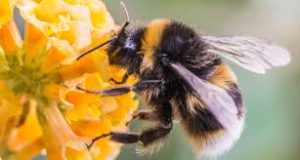 largest retailers, has decided to stop selling neonicotinoid products (neonics) linked to global declines in bee populations. This is the latest retailer in Australia to announce commitments to stop supplying the bee-toxic products.
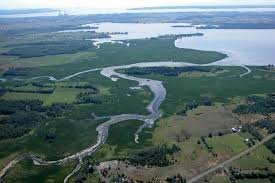 (USGS) reveals the year-round presence of neonicotinoids (neonics) in the Great Lakes – the world’s largest freshwater ecosystem. Neonics, which are highly toxic to aquatic organisms and pollinators, are prevalent in the tributaries of the Great Lakes with concentrations and detections increasing during planting season. This new data adds to burgeoning demand for a federal ban of these insecticides in order to safeguard vulnerable aquatic ecosystems and pollinators.
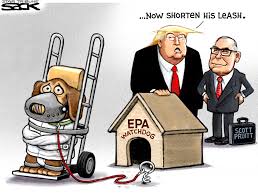 of the public and the environment at the U.S. Environmental Protection Agency (EPA) are being encouraged to exit the agency –as EPA Administrator Scott Pruitt plans to meet his goal of cutting agency staff and programs by 50 percent.
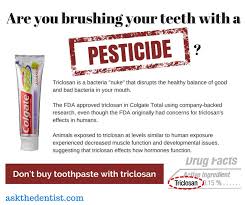 (Beyond Pesticides, January 26, 2018) Triclosan may be on its way out in soaps and disinfectants, but its presence on toothbrushes could stick around for a long time, according to
 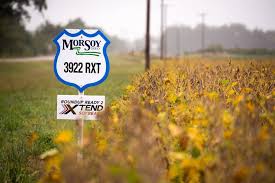 from April 16 to October 31, 2018 in Arkansas, following a vote this week by the state’s Legislative Council. Action by lawmakers was the last step needed to make the ban official after the Arkansas State Plant Board (ASPB) voted last year to continue a
 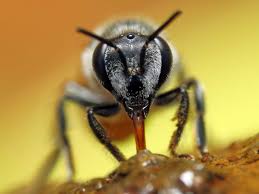 survival of honey bees and their colonies, according to research published by scientists from University of California, San Diego (UCSD). This is the first study to delve into the real-world effects pesticide exposure can have on honey bees also subject to nutritional stress, a common occurrence in the wild. The outcome of this research highlights the weaknesses of the U.S. Environmental Protection Agency’s (EPA) testing regime for registering pesticides, which does not account for the complex ecology surrounding
  European Union’s (EU) authorization procedure for pesticides, in light of the controversial review of Monsanto’s glyphosate. The special committee is to assess the authorization procedure for pesticides in the EU and potential failures in how substances are scientifically evaluated and approved.
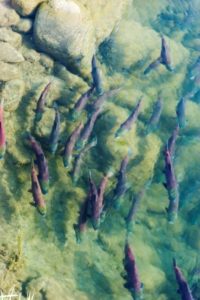 jeopardize the continued existence of endangered species and adversely modify their critical habitats, according to the newly released report from the National Marine Fisheries Service (NMFS). By law, the Environmental Protection Agency (EPA) must not allow their use.
 charged with protecting the health of the public and the environment at the U.S. Environmental Protection Agency (EPA) are being encouraged to exit the agency. This, as EPA Administrator Scott Pruitt plans to meet his goal of cutting agency staff and programs by 50 percent.
 has shown that — despite a partial ban on neonicotinoid insecticides instituted in 2014 — 25% of British honey is still contaminated with residue of these “potent, bee-killing” pesticides. The partial ban, which extended to flowering crops, such as oilseed rape (from which canola oil is made), was instituted by the European Union (EU) in response to evidence of serious threats to bee populations. Samples for this study came from beekeepers and were each from a single location.
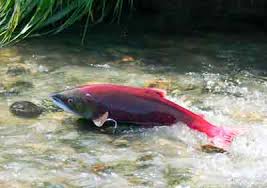 chlorpyrifos
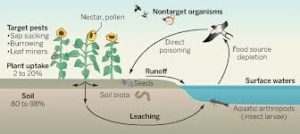 insecticides pose both acute and chronic risks to pollinators, aquatic life, and birds, the U.S. Environmental Protection Agency (EPA) is seeking comment that could support their continued use. Comments are due by February 20, 2018.
  herbicide glyphosate and the fungicide chlorothalonil at certain concentrations,
  pesticide spraying at schools, organic farms, and backyards across California because of inadequate public disclosure of the chemicals’ adverse effects. The California Department of Food and Agriculture’s (CDFA) statewide “pest management” program required no site-specific analysis of risks before the application of 79 pesticides, including some known to cause cancer and birth defects and to be highly toxic to bees, butterflies, fish and birds.
 unanimously to adopt a policy prioritizing the use of organic and defined “least-toxic” pesticides to manage pest problems on city-owned and controlled property and public rights-of-way. Buoyed by a strong and growing coalition of
  by the Trump Administration to scuttle the final rule on organic animal welfare (the Organic Livestock Poultry Practices rule, or OLPP) that was adopted as a final rule a year ago.
 to pesticides that drift from agricultural fields to school yards, California’s new regulations establishing no-spray buffers took effort January 1, as labor and public health groups acknowledged the progress and inadequacy of the measure. The new rule,


