
(Beyond Pesticides, August 12, 2018) In a stunning legal victory for a man who contracted non-Hodgkin lymphoma (NHL) after using the herbicide glyphosate (Roundup), groundskeeper Dewayne Johnson won a $289 million jury verdict against the chemical’s manufacturer, Monsanto. The jury on August 10, 2018 awarded the 46-year old Mr. Johnson $39 million in compensatory damages, and $250 million in punitive damages. The jury found that Monsanto acted with “malice or oppression.”
“We applaud and thank Mr. Johnson, and his family and attorneys, for persevering in this litigation, which sets a critically important standard for protecting people’s right not be poisoned by pesticides in the marketplace,” said Jay Feldman, executive director of Beyond Pesticides. Mr. Feldman continued: “While we know that the jury verdict cannot restore Mr. Johnson’s health, we believe that the verdict is a clarion call to manufacturers that ignore the devastating impact that their products can have on unsuspecting workers, consumers, and families. We look forward to the day in the not-too-distant future when we recognize as a society that products like glyphosate (Roundup) are not necessary, and effective and affordable land and building management can be achieved without toxic chemicals. The case should also signal to all levels of government – local, state, and federal – that we have a social, public health, and environmental responsibility to remove toxic pesticides from use with a high degree of urgency.”
The law firms representing Mr. Johnson, the Miller Firm and Baum, Hedlund, Aristei & Goldman, describes the case (reprinted below) as follows:
Dewayne Johnson v. Monsanto Company is the first Roundup cancer lawsuit to proceed to trial. The lawsuit alleges exposure to Monsanto’s Roundup weed killer and its active ingredient, glyphosate, caused Northern California resident Dewayne “Lee” Johnson to develop non-Hodgkin lymphoma (NHL).
Quick link to trial transcripts
Quick link to trial exhibits
Quick link to trial news
Lee Johnson worked as a groundskeeper for the Benicia Unified School District in the San Francisco Bay Area. Between 2012 and 2015, part of Mr. Johnson’s job was to apply Monsanto herbicides to school properties.
In 2014, Lee began to experience severe skin irritation, which he reported to health care providers. He also contacted Monsanto, asking if his skin irritation could have been caused by his use of Roundup. Internal Monsanto emails later obtained by Lee’s attorneys show that his queries concerning Roundup were discussed among company employees. However, Monsanto never responded to Mr. Johnson, so he continued to use Roundup.
In August of 2014, Lee was diagnosed with epidermotropic T-cell lymphoma. After his diagnosis, his job still required him to apply and be in close contact with Monsanto glyphosate-based herbicides. Despite enduring chemotherapy treatments throughout 2015, Mr. Johnson’s cancer progressed. In September 2017, a biopsy revealed mycosis fungoides (non-Hodgkin lymphoma with large cell transformation).
Mr. Johnson filed a Roundup cancer lawsuit against Monsanto in 2016. He is represented by the Miller Firm and Baum, Hedlund, Aristei & Goldman.
In the documents below, you will find trial transcripts and exhibits (posted after 48-hour delay) and other court documents from Dewayne Johnson v. Monsanto Company. For access to all public documents in this case, you can view the docket via the Superior Court of California, County of San Francisco.
If you are looking for the court documents from the federal Monsanto Roundup litigation (MDL), please visit the Monsanto Court Papers page.
If you are looking for unsealed Monsanto emails, communications, studies and other memoranda, please visit the Monsanto Papers page.
Dewayne Johnson v. Monsanto Trial Transcripts
Day 1: 7/9/18 – Plaintiff opening statement by R. Brent Wisner and Defense opening statement by George C. Lombardi
Day 2: 7/10/18 – Video deposition of Dr. Mark Martens, former Monsanto executive, Toxicology Agriculture Research & Development Director for Monsanto Europe and video deposition of Dr. William Heydens, Product Safety Assessment Strategy Lead
Day 3 A: 7/12/18 – Dr. Christopher Portier, former Director of the Agency for Toxic Substances and Disease Registry, direct by Brent Wisner
Day 3 B: 7/12/18 – Dr. Christopher Portier direct by Brent Wisner resumed
Day 4 A: 7/13/18 – Dr. Christopher Portier direct by Brent Wisner resumed, cross by Kirby Griffis
Day 4 B: 7/13/18 – Dr. Christopher Portier cross by Kirby Griffis resumed
Day 5 A: 7/16/18 – Dr. Christopher Portier cross by Kirby Griffis resumed
Day 5 B: 7/16/18 – Dr. Christopher Portier cross by Kirby Griffis resumed, redirect by Brent Wisner
Day 6 A: 7/17/18 – Dr. Christopher Portier redirect by Brent Wisner resumed, video deposition of Dr. William Heydens continued from Day 2, Monsanto Co. Product Safety Assessment Strategy Lead
Day 6 B: 7/17/18 – Video deposition of Daniel Jenkins, Monsanto’s former US Agency Manager for Regulatory Affairs, video deposition of Daniel Goldstein, Monsanto Co. Lead, Medical Sciences and Outreach and Distinguished Science Fellow
Day 7 A: 7/18/18 – Dr. Alfred Neugut, medical oncologist and cancer epidemiologist at Columbia University, direct by Brent Wisner
Day 7 B: 7/18/18 – Dr. Alfred Neugut direct by Brent Wisner resumed, cross by George Lombardi, redirect by Brent Wisner, recross by George Lombardi, re-redirect by Brent Wisner
Day 8 A: 7/20/18 – Dr. Chadi Nabhan, hematologist and medical oncologist, direct by David Dickens
Day 8 B: 7/20/18 – Dr. Chadi Nabhan, direct by David Dickens resumed, cross by George Lombardi, redirect by David Dickens, recross by George Lombardi, re-redirect by David Dickens
Day 9 A: 7/23/18 – Dr. Ope Ofodile, Mr. Johnson’s dermatologist, direct by Brent Wisner, redirect by Kirby Griffis; Araceli Johnson, plaintiff’s wife, direct by David Dickens; Dewayne “Lee” Johnson, plaintiff, direct by David Dickens
Day 9 B: 7/23/18 – Dewayne “Lee” Johnson, plaintiff, direct by David Dickens resumed, cross by Sandra Edwards, video deposition of Daniel Goldstein resumed
Day 10 A: 7/24/18 – Video deposition of Daniel Goldstein resumed, video deposition of Donna Farmer, Product Protection and Nutrition Lead, Monsanto Company
Day 10 B: 7/24/18 – Video deposition of Donna Farmer resumed
Day 11: 7/25/18 – No transcripts – Jury not present – though exhibits were admitted
Day 12 A: 7/26/18 – William Robert Sawyer, toxicologist, direct by David Dickens
Day 12 B: 7/26/18 – William Robert Sawyer, direct by David Dickens resumed, cross by George Lombardi, redirect by David Dickens, recross by George Lombardi
Day 13 A: 7/27/18 – Charles Benbrook, scientist and agricultural economist, direct by Brent Wisner
Day 13 B: 7/27/18 – Charles Benbrook direct by Brent Wisner resumed, cross by Kirby Griffis, redirect by Brent Wisner, recross by Kirby Griffis
Day 14 A: 7/30/18 – Dr. Kassim Al-Khatib, professor and weed scientist, direct by Sandra Edwards, voir dire examination by Brent Wisner, cross by Brent Wisner
Day 14 B: 7/30/18 – Cross resumed by Brent Wisner, redirect by Sandra Edwards, recross by Brent Wisner, video deposition of Dr. Matthew Ross played, video deposition of epidemiologist Aaron Blair played.
Day 15 A: 7/31/18 – Lorelei Mucci, associate professor of epidemiology, direct by George Lombardi, voir dire examination by Brent Wisner, direct resumed by George Lombardi
Day 15 B: 7/31/18 – Lorelei Mucci, cross by Brent Wisner, redirect by George Lombardi, recross by Brent Wisner
Day 16 A: 8/2/18 – Dr. Warren Foster, direct by Kirby Griffis, voir dire examination by Brent Wisner, direct resumed by Kirby Griffis
Day 16 B: 8/2/18 – Dr. Warren Foster, direct continued by Kirby Griffis, cross by Brent Wisner, redirect by Kirby Griffis, recross by Brent Wisner
Day 17 A: 8/3/18 – Dr. Timothy Kuzel, hematologist and oncologist, direct by Kirby Griffis, voir dire examination by David Dickens, direct continued by Kirby Griffis, cross by David Dickens
Day 17 B: 8/3/18 – Dr. Timothy Kuzel, cross continued by David Dickens
Day 18 A: 8/7/18 – Plaintiff closing statement by Brent Wisner
Day 18 B: 8/7/18 – Defense closing statement by George Lombardi; Plaintiff final statement by Brent Wisner
Plaintiff Closing Slide Presentation by R. Brent Wisner
Day 19: 8/8/18 – Jury intructions given; Jury asks for testimony of Dr. Nabhan
Day 20: 8/9/18 – Jury requests reading of stipulations, Monsanto’s admissions, and Dr. Foster’s testimony
Dewayne Johnson v. Monsanto Trial Exhibits
PTX = Plaintiff Exhibits | DX = Defense Exhibits
Day 1: 7/9/18
Plaintiff Opening Slide Presentation by R. Brent Wisner
Defendant Opening Slide Presentation by George C. Lombardi
Dr. Kirk Azevedo partial deposition transcript, former Monsanto Sales Representative
PTX 0004 – Photo of Dewayne Johnson in protective spray gear
PTX 0006 – Photo of Dewayne Johnson in protective mask and suit
PTX 0007 – Photo of Dewayne Johnson’s family
PTX 0009 – Photo of Dewayne Johnson and family
PTX 0016 – Photo of tank and equipment
PTX 0018 – Photo of Dewayne Johnson’s hand
PTX 0020 – Photo of Dewayne Johnson’s lesions
PTX 0021 – Photo of Dewayne Johnson’s back
PTX 0022 – Photo of Dewayne Johnson’s torso
PTX 0139 – John Acquavella and Donna Farmer review of Hardell & Eriksson
PTX 0144 – Monsanto email from John Acquavella re: Epidemiology Studies on Glyphosate (2000)
PTX 0182 – Photo of the IARC Working Group, Monograph 112
PTX 0215 – Monsanto email re: Actions from 12/17/98 Meeting on Mutagenicity (1998)
PTX 0216 – Monsanto email re: Draft of Minutes 1/15/99 Meeting (1999)
PTX 0220 – Dr. James Parry: Evaluation of the Potential Genotoxicity of Glyphosate, Glyphosate Mixtures and Component Surfactants
PTX 0221 – Monsanto email re: Parry Report
PTX 0263 – Monsanto email re: Draft of Minutes 1/15/99 Meeting (1999)
PTX 0264 – Dr. Parry report with handwritten comments (1999)
PTX 0292 – Monsanto’s IARC Strategy (Feb 2015)
PTX 0293 – Differences in Carcinogenic Evaluation of Glyphosate Between IARC and EFSA (Portier, 2016)
PTX 0294 – Monsanto email re: IARC Evaluation of Glyphosate (2014)
PTX 0306 – American Cancer Society: Known and Probable Human Carcinogens
PTX 0312 – Monsanto email re: McDuffee Article
PTX 0366 – Monsanto email re: Document List (2015)
PTX 0373 – Monsanto email re: Glyphosate Toxicology Activities (2010)
PTX 0377 – Williams, Kroes, Munro Study
PTX-0482-Monsanto email re: Glyphosate and NHL / Alachlor (2003)
PTX 0513 – Monsanto email re: Beyond-Pesticides Article (2008)
PTX 0669 – Glyphosate Use and Cancer Incidence in the AHS (2017)
PTX 0686 – Genotoxic Activity of Glyphosate / Roundup Study (1997)
PTX 0701 – Systematic Review and Meta-Analysis of Glyphosate Exposure and Risk of Lymphohematopoietic Cancers (2016)
PTX 0710 – Integrative Assessment of Multiple Pesticides as Risk Factors for Non-Hodgkin’s Lymphoma Among Men, De Roos (2003)
PTX 0756 – Monsanto email re: Popular Herbicide Linked to Cancers
PTX 0766 – Does Exposure to Glyphosate Lead to an Increase in the Micronuclei Frequency? A Systematic and Meta-Analytic Review (2016)
PTX 0777 – Exposure to Pesticides as Risk Factor for Non-Hodgkin Lymphoma and Hairy Cell Leukemia: Pooled Analysis of Two Swedish Case-Control Studies
PTX 0784 – IARC Glyphosate Monograph 112
PTX 0809 – Genotoxicity and Oxidative Stress Induced by Pesticide Exposure in Bovine Lymphocyte Cultures in vitro (1998)
PTX 0818 – Non-Hodgkin Lymphoma and Specific Pesticide Exposures in Men: Cross-Canada Study of Pesticides and Health (2001)
PTX 0842 – P- Post Labeling Detection of DNA Adducts in Mice Treated with the Herbicide Roundup (1998)
PTX 0852 – Genotoxicity testing of the herbicide Roundup and its active ingredient glyphosate isopropylamine using the mouse bone marrow micronucleus test, Salmonella mutagenicity test, and Allium anaphase-telophase test (1993)
PTX 0861 – Non-Hodgkin Lymphoma and Occupational Exposure to Agricultural Pesticide Chemical Groups and Active Ingredients: A Systematic Review and Meta-Analysis (2014)
Day 2: 7/10/18
Martens Depo Exhibits
Dr. Mark Martens partial deposition transcript, former Monsanto Executive, Toxicology Agriculture Research & Development Director for Monsanto Europe
DX 2181 – CV for Dr. Mark Martens
PTX 0208 – Monsanto email re: Fellow Nomination (2001)
PTX 0209 – Surfactant Toxicology Report: Europe and Africa
PTX 0215 – Monsanto email re: Actions from 12/17/98 Meeting on Mutagenicity (1998)
PTX 0216 – Monsanto email re: Draft of Minutes 1/15/99 Meeting (1999)
PTX 0217 – CV for Dr. James Parry
PTX 0218 – Monsanto email re: Meeting Minutes 2/25 (1999)
PTX 0219 – Monsanto email re: Comments on Parry write-up (1999)
PTX 0220 – Dr. James Parry: Evaluation of the Potential Genotoxicity of Glyphosate, Glyphosate Mixtures and Component Surfactants
PTX 0221 – Monsanto Email re: Parry Report
PTX 0269 – Monsanto Email fw: Meeting Prof Parry 15 Feb 2001
PTX 0270 – Monsanto Email re: Comments on Parry write-up (1999)
Heydens Depo Exhibits
Dr. William Heydens partial deposition transcript, Monsanto Company Product Safety Assessment Strategy Lead
PTX 0294 – Monsanto email re: IARC Evaluation of Glyphosate (2014)
PTX 0336 – Monsanto email re: Post-IARC Activities to Support Glyphosate (2015)
PTX 0357 – Monsanto email re: CE Collaboration Project (2015)
PTX 0359 – Monsanto email re: Need for telephone conversation/Followup (2016)
PTX 0361 – Consulting Agreement for Larry Kier (2015)
PTX 0362 – Monsanto email re: IARC Planning (2015)
PTX 0363 – Monsanto email re: Glyphosate Expert Panel Manuscripts (2016)
PTX 0366 – Monsanto email re: Document List (2015)
PTX 0368 – Monsanto email re: RE: summary article
PTX 0369 – Monsanto email fw: Genotoxicity Panel Final Manuscript (2016)
PTX 0373 – Monsanto Email re: Glyphosate Toxicology Activities (2010)
PTX 0378 – Monsanto email re: Scientific Outreach Council Meeting (1999)
PTX 0379 – Monsanto email re: Revised IARC reactive messaging (2015)
PTX 0383 – Monsanto email re: KP Conversation on POEA (2010)
PTX 0391 – Monsanto email re: Proposal for Post‐IARC Meeting Scientific Projects (2015)
PTX 0394 – Monsanto email re: Declaration of Interest (2016)
PTX 0883 – Critical Reviews in Toxicology: A review of the carcinogenic potential of glyphosate by four independent expert panels and comparison to the IARC assessment (2016)
Day 3: 7/12/18
PTX 0166 – IARC Preamble
PTX 0292 – Monsanto’s IARC Strategy (Feb 2015)
PTX 0295 – IARC Monograph 112 list of participants
PTX 0640 – EPA Guidelines for Carcinogen Risk Assessment (2005)
PTX 0710 – Integrative assessment of multiple pesticides as risk factors for non-Hodgkin’s lymphoma among men; De Roos (2003)
PTX 0784 – IARC Glyphosate Monograph 112
PTX 0818 – Non-Hodgkin Lymphoma and Specific Pesticide Exposures in Men: Cross-Canada Study of Pesticides and Health (2001)
PTX 0884 – Safety Evaluation and Risk Assessment of the Herbicide Roundup and Its Active Ingredient, Glyphosate, for Humans; Williams, Kroes, Munro (2000)
PTX 1020 – Demo 2: Mice Studies | Tumors Chart
PTX 1021 – Demo 3: Rat Studies | Tumors Chart
PTX 1022 – Demo 4: Epidemiology Plot Summary of ever/never
PTX 1023 – Demo 5: Confidence Interval Probability Curve
PTX 1024 – Demo 6: Tumor Formation Diagram
Day 4: 7/13/18
PTX 1030 – Estimated Agricultural Use of Glyphosate 1993 and 2015
DX 2212 – Dr. Christopher Portier deposition transcript, former Director of the Agency for Toxic Substances and Disease Registry, former Associate Director of the National Toxicology Program (NTP), former Associate Director of National Institutes of Health, former Director of the National Center for Environmental Health (NCEH) at the Centers for Disease Control and Prevention (CDC), former Director of the Agency for Toxic Substances and Disease Registry (ATSDR)
DX 2320 – ECHA Committee for Risk Assessment Opinion proposing harmonised classification and labelling at EU level of glyphosate (2018)
DX 2323 – EFSA: Conclusion on the peer review of the pesticide risk assessment of the active substance glyphosate (2015)
DX 2403 – Dr. Christopher Portier Email re: IARC Monograph on Glyphosate (2015)
DX 2437 – EPA Cancer Assessment Review Committee Evaluation of the Carcinogenic Potential of Glyphosate (2015)
DX 2570 – Critical Reviews in Toxicology: Evaluation of carcinogenic potential of the herbicide glyphosate, drawing on tumor incidence data from fourteen chronic/carcinogenicity rodent studies (2015)
DX 2735 – Dr. Christopher Portier and others – open letter: Review of the Carcinogenicity of Glyphosate by EFSA and BfR (2015)
DX 2747 – EFSA Responds to Dr. Christopher Portier’s open letter: Review of the Carcinogenicity of Glyphosate by EFSA and BfR (2016)
DX 2931 – Is Glyphosate Carcinogenic? Debate between Dr. Christopher Portier and Dr. Jose Tarazona
Day 5: 7/16/18
No Exhibits
Day 6: 7/17/18
William Heydens Depo Exhibits
Dr. William Heydens partial deposition transcript (continued from Day 3), Monsanto Company Product Safety Assessment Strategy Lead
PTX 0259 – Ghost Writing Initiated by Commercial Companies – The World Association of Medical Editors
PTX 0295 – IARC Monograph 112 list of participants
PTX 0388 – Monsanto Email re: EPA openly discussed IARC findings at a CLA meeting on Thursday (2015)
PTX 0392 – Monsanto Email re: John, Glyphosate Expert Panel Poster at 2015 SRA Meeting
DX 2114 – Genotoxicity Expert Panel review: weight of evidence evaluation of the genotoxicity of glyphosate, glyphosate-based formulations, and aminomethylphosphonic acid (2016)
DX 2220 – Deposition of Dewayne Johnson December of 2016
DX 3010 – Glyphosate in the general population and in applicators: a critical review of studies on exposures; Solomon (2016)
DX 3109 – Glyphosate rodent carcinogenicity bioassay expert panel review (2016)
DX 3110 – Safety Evaluation and Risk Assessment of the Herbicide Roundup and Its Active Ingredient, Glyphosate, for Humans
Daniel Jenkins Depo Exhibits
Daniel Jenkins final deposition transcript, Monsanto’s former US Agency Manager for Regulatory Affairs
PTX 0371 – Monsanto Email re: A Review of the Carcinogenic Potential of Glyphosate by Four Independent Expert Panels and Comparison to the IARC Assessment (2016)
PTX 0399 – Monsanto Email Fwd: US Government Outreach – WHO IARC Clarification on Glyphosate (2015)
PTX 0400 – Monsanto Email to Michael Goodis, Jess Rowland and others at EPA (2015)
PTX 0402 – Monsanto Email re: GA Update on US Government Outreach – WHO IARC Clarification on Glyphosate (2015)
PTX 0403 – Monsanto Email re: ATSDR from Jack Housenger EPA (2015)
PTX 0404 – Monsanto Email re: Glyphosate IARC Question (2015)
Daniel Goldstein Depo Exhibits
Dr. Daniel Goldstein partial deposition transcript, Monsanto Co. Lead, Medical Sciences and Outreach and Distinguished Science Fellow
PTX 0309 – Monsanto Email re: NHL abstract (2000)
PTX 0311 – Monsanto Email re: ISSE Meeting – epidemiology studies glyphosate (2004)
PTX 0312 – Monsanto email re: McDuffee Article
PTX 0313 – Monsanto Email re: McDuffee paper (2001)
PTX 0314 – Email Article re: NHL and Glyphosate, Alachlor (2003)
PTX 0315 – Monsanto Email re: FYI Aerial spraying of herbicide ‘damages DNA’ – SciDev.Net (2007)
PTX 0316 – Monsanto Email re: Agenda / Awareness File – IMT (2008)
PTX 0318 – Daniel Goldstein LinkedIn profile
PTX 0319 – Monsanto Email re: New Paper (2014)
PTX 0327 – Monsanto Community Safety and Health (Monsanto website)
PTX 0332 – Monsanto Email re: Ranger Pro Exposure, Dewayne Johnson’s story (2014)
PTX 0333 – Monsanto Email re: March 2015 FIFRA 6(a)(2) Reports (2015)
PTX 0334 – Human Exposure / Adverse Events Incidents Involving Monsanto Lawn & Garden Products, March 2015
PTX 0335 – Monsanto Email re: Round-Up information for posting on the net (2004)
Day 7: 7/18/18
PTX 0284 – IARC Monographs: 40 Years of Evaluating Carcinogenic Hazards to Humans; Portier, et al. (2015)
PTX 0669 – Glyphosate Use and Cancer Incidence in the AHS (2017)
PTX 0682 – Methodological Issues Regarding Confounding and Exposure Misclassification in Epidemiological Studies of Occupational Exposures; Blair, et al. (2007)
PTX 0684 – Impact of Pesticide Exposure Misclassification on Estimates of Relative Risks in the Agricultural Health Study; Blair, et al. (2011)
PTX 1029 – Dr. Alfred Neugut Demo: Forest Plots of Relative Risk
PTX 1032 – Glyphosate Use by Year and Crop
PTX 1033 – Bradford-Hill Criteria for Causality
PTX 1034 – Other Pesticides Missed by AHS
DX 2052 – Glyphosate Use and Cancer Incidence in the Agricultural Health Study (2017)
DX 2598 – Using multiple imputation to assign pesticide use for non-responders in the follow-up questionnaire in the Agricultural Health Study; Heltshe, et al. (2012)
DX 3153 – Postdiagnosis Changes in Cigarette Smoking and Survival Following Breast Cancer; Parada Jr., et al. (2017)
Day 8: 7/20/18
PTX 0332 – Monsanto Email re: Ranger Pro Exposure, Dewayne Johnson’s story (2014)
PTX 0333 – Monsanto Email re: March 2015 FIFRA 6(a)(2) Reports (2015)
PTX 0820 – Minimum Latency & Types or Categories of Cancer (2015)
PTX 1031 – Lee Johnson: Risk Factors for Non-Hodgkin Lymphoma (demonstrative board that was filled out before the court)
PTX 1036 – The 2016 revision of the World Health Organization classification of lymphoid neoplasms; Swerdlow, et al.
PTX 1039 – Lee Johnson Timeline
DX 2191 – Cancer Incidence among Glyphosate-Exposed Pesticide Applicators in the Agricultural Health Study; De Roos, et al. (2005)
DX 2193 – Integrative assessment of multiple pesticides as risk factors for non-Hodgkin’s lymphoma among men; De Roos, et al. (2003)
DX 2505 – Pesticide exposure as risk factor for non-Hodgkin lymphoma histopathological subgroup analysis; Eriksson, Hardell, et al. (2008)
DX 2779 – Non-Hodgkin’s Lymphoma and Specific Pesticide Exposures in Men: Cross-Canada Study of Pesticides and Health; McDuffie, et al. (2001)
Day 9: 7/23/18
PTX 0006 – Photo of Dewayne Johnson in protective mask and suit
PTX 0007 – Photo of Dewayne Johnson’s family
PTX 0012 – Photo of the Johnson Family Snowboarding
PTX 0014b – Video of Dewayne Johnson talking about work
PTX 0016 – Photo of tank and equipment
PTX 0018 – Photo of Dewayne Johnson’s hand
PTX 0024 – Photo of Dewayne Johnson and his two sons
PTX 32A – Photos of Dewayne Johnson, Oct. 3, 2014
PTX 32B – Photos of Dewayne Johnson, Oct. 29, 2014
PTX 32E – Photos of Dewayne Johnson, March and April, 2015
PTX 32J – Photos of Dewayne Johnson, Sept. 3, 2015
PTX 0045D – Photos of Dewayne Johnson, June, 2017
PTX 0045E – Photos of Dewayne Johnson, Nov., 2017
PTX 0045F – Photos of Dewayne Johnson, Jan., 2018
PTX 0069 – Human Resources records for Dewayne Johnson, Benicia Unified School District (2017)
PTX 0126 – Photo of Sprayer
PTX 0332 – Monsanto Email re: Ranger Pro Exposure, Dewayne Johnson’s story (2014)
PTX 0334 – Human Exposure / Adverse Events Incidents Involving Monsanto Lawn & Garden Products, March 2015
PTX 0848 – Ranger Pro Herbicide: Complete Directions for Use
Day 10: 7/24/18
Partial Deposition of Donna Farmer
Partial Deposition of Daniel Goldstein
PTX 0227 – Monsanto email re: URGENT – Glyphosate IARC response-request for additional experts (2015)
PTX 0258 – Monsanto email re: First Half… “I added a section in genotox from the Gasnier study…” (2010)
PTX 0261 – Monsanto email re: John, Glyphosate Expert Panel Poster at 2015 SRA Annual Meeting (2015)
PTX 0263 – Monsanto email re: Draft of Minutes 1/15/99 Meeting (1999)
PTX 0264 – Dr. Parry report with handwritten comments (1999)
PTX 0265 – Etheramine Working Group Meeting Notes (1999)
PTX 0266 – Monsanto email re: Mutagenicity assessment of Roundup by Parry (1999)
PTX 0267 – Monsanto email re: micro-MN results (2000)
PTX 0268 – Monsanto email re: Parry report (1999)
PTX 0270 – Monsanto Email re: Comments on Parry write-up (1999)
PTX 0271 – Donna Farmer Product Safety Center Toxicology Goals (2004)
PTX 0272 – Dr. James Parry: Evaluation of the Potential Genotoxicity of Glyphosate, Glyphosate Mixtures and Component Surfactants (1999)
PTX 0282 – Glyphosate Stewardship, Epidemiology and the Farm Family Exposure Study (2002)
PTX 0292 – Monsanto’s IARC Strategy (Feb 2015)
PTX 0294 – Monsanto email re: IARC Evaluation of Glyphosate (2014)
PTX 0304 – Monsanto IARC Media Training (2015)
PTX 0305 – Monsanto email re: Roundup article in Fremantle Herald (2009)
PTX 0336 – Monsanto email re: Post-IARC Activities to Support Glyphosate (2015)
PTX 0357 – Monsanto email re: CE Collaboration Project (2015)
PTX 0361 – Consulting Agreement for Larry Kier (2015)
PTX 0363 – Monsanto email re: Glyphosate Expert Panel Manuscripts (2016)
PTX 0366 – Monsanto email re: Document List (2015)
PTX 0368 – Monsanto email re: RE: summary article
PTX 0369 – Monsanto email fw: Genotoxicity Panel Final Manuscript (2016)
PTX 0371 – Monsanto Email re: A Review of the Carcinogenic Potential of Glyphosate by Four Independent Expert Panels and Comparison to the IARC Assessment (2016)
PTX 0373 – Monsanto email re: Glyphosate Toxicology Activities (2010)
PTX 0378 – Monsanto email re: Scientific Outreach Council Meeting (1999)
PTX 0379 – Monsanto email re: Revised IARC reactive messaging (2015)
PTX 0388 – Monsanto Email re: EPA openly discussed IARC findings at a CLA meeting on Thursday (2015)
PTX 0391 – Monsanto email re: Proposal for Post‐IARC Meeting Scientific Projects (2015)
PTX 0392 – Monsanto Email re: John, Glyphosate Expert Panel Poster at 2015 SRA Meeting
PTX 0400 – Monsanto Email to Michael Goodis, Jess Rowland and others at EPA (2015)
PTX 0402 – Monsanto Email re: GA Update on US Government Outreach – WHO IARC Clarification on Glyphosate (2015)
PTX 0404 – Monsanto Email re: Glyphosate IARC Question (2015)
PTX 0513 – Monsanto email re: Beyond-Pesticides Article (2008)
PTX 0556 – Monsanto Email re: NTP will be Evaluating Glyphosate now! (2016)
DX 2513 – The Toxicity Profiles of Five Surfactants Used in Roundup Branded Agricultural Herbicides (2008)
Day 11: 7/25/18
PTX 0309 – Monsanto Email re: NHL abstract (2000)
PTX 0311 – Monsanto Email re: ISSE Meeting – epidemiology studies glyphosate (2004)
PTX 0312 – Monsanto email re: McDuffee Article
PTX 0313 – Monsanto Email re: McDuffee paper (2001)
PTX 0314 – Email Article re: NHL and Glyphosate, Alachlor (2003)
PTX 0315 – Monsanto Email re: FYI Aerial spraying of herbicide ‘damages DNA’ – SciDev.Net (2007)
PTX 0316 – Monsanto Email re: Agenda / Awareness File – IMT (2008)
PTX 0319 – Monsanto Email re: New Paper (2014)
PTX 0321 – Monsanto Email re: ACSH (2015)
PTX 0326 – Monsanto Email re: Adverse Event Reporting (2015)
Day 12: 7/26/18
No Exhibits Admitted
Day 13: 7/27/18
PTX 0154 – John Acquavella Discussion of Agricultural Health Study Limitations (1997)
PTX 0166 – IARC Preamble
PTX 0169 – IARC Glyphosate Monograph (2015)
PTX 0258 – Monsanto email re: First Half… “I added a section in genotox from the Gasnier study…” (2010)
PTX 0261 – Monsanto email re: John, Glyphosate Expert Panel Poster at 2015 SRA Annual Meeting (2015)
PTX 0263 – Monsanto email re: Draft of Minutes 1/15/99 Meeting (1999)
PTX 0266 – Monsanto email re: Mutagenicity assessment of Roundup by Parry (1999)
PTX 0267 – Monsanto email re: micro-MN results (2000)
PTX 0271 – Donna Farmer Product Safety Center Toxicology Goals (2004)
PTX 0288 – Monsanto Email re: Glyphosate Overview (2015)
PTX 0289 – Monsanto Email re: CA and Glyphosate (2015)
PTX 0290 – Monsanto Email re: “overrun by liberals and morons…sort of like a zombie movie” (2015)
PTX 0291 – Steven Gould: Cost on CA Municipalities Markets
PTX 0299 – Monsanto Email re: Tools to help you address local concerns about IARC and litigation claims with glyphosate (2015)
PTX 0304 – Monsanto IARC Media Training (2015)
PTX 0305 – Monsanto email re: Roundup article in Fremantle Herald (2009)
PTX 0443 – Monsanto Manuscript Clearance Form: Global Regulatory (2012)
PTX 0445 – Monsanto Email re: Genotox Review; your approval requested! (2012)
PTX 0537 – EPA Mouse Oncogenicity Study (1985)
PTX 0591 – EPA Consensus Review of Glyphosate (1985)
PTX 1020 – Demo 2: Mice Studies | Tumors Chart
PTX 1021 – Demo 3: Rat Studies | Tumors Chart
PTX 1035 – Dr. Neugut PowerPoint Presentation
PTX 1043 – Glyphosate’s Rise to the Top — EPA Rankings of the Top Pesticides by Year in the U.S. Agricultural Sector, 1987-2001
PTX 0513 – Monsanto email re: Beyond-Pesticides Article (2008)
PTX 0556 – Monsanto Email re: NTP will be Evaluating Glyphosate now! (2016)
Day 14: 7/30/18
Dr. Aaron Blair Exhibits
PTX 0165 – CV for Dr. Aaron Blair
PTX 0166 – IARC Preamble
PTX 0167 – IARC Monographs on the Evaluation of Carcinogenic Risks to Humans VOLUME 112: List of Participants
PTX 0168 – An Evaluation Of Glyphosate Use And The Risks Of Non-Hodgkin Lymphoma Major Histological Sub-Types In The North American Pooled Project (2015)
PTX 0169 – IARC Glyphosate Monograph (2015)
PTX 0173 – IARC Monographs: 40 Years of Evaluating Carcinogenic Hazards to Humans (2015)
PTX 0664 – Increased Cancer Burden Among Pesticide Applicators and Others Due to Pesticide Exposure (2013)
DX 2035 – DRAFT Lymphoma risk and pesticide use in the Agricultural Health Study (2013)
DX 2036 – DRAFT Risk of total and cell specific non-Hodgkin Lymphoma and pesticide use in the Agricultural Health Study (2013)
DX 2333 – Blair Email Chain (2014)
DX 2336 – Blair Email Chain (2015)
DX 2337 – Blair Email Chain (2015)
DX 2339 – Blair Email Chain (2015)
DX 2360 – Blair Email Chain (2015)
DX 2374 – Blair Email Chain (2015)
DX 2375 – Blair Email Chain (2014)
DX 2379 – Blair Email Chain (2014)
DX 2419 – Blair Email Chain (2016)
DX 2424 – Blair Email Chain (2016)
DX 2851 – 2015 PowerPoint Presentation: Occupational Cancer Research Center – An Evaluation of Glyphosate Use and the Risk of Non-Hodgkin Lymphoma Major Histological Sub-Types in the North American Pooled Project
Dr. Matthew Ross Exhibits
PTX 0293 – Differences in Carcinogenic Evaluation of Glyphosate Between IARC and EFSA (Portier, 2016)
DX 2412 – Ross Email Chain (2015)
DX 2413 – Ross Email Chain (2015)
DX 2416 – Ross Email Chain (2015)
DX 2580 – 3/6/2015: Plenary General Remarks
DX 2635 – IARC Preamble
Day 15: 7/31/18
PTX 0293 – Differences in Carcinogenic Evaluation of Glyphosate Between IARC and EFSA (Portier, 2016)
PTX 0681 – Patterns of Pesticide Use among Farmers: Implications for Epidemiologic Research; Blair & Zahm (1993)
PTX 0682 – Methodological Issues Regarding Confounding and Exposure Misclassification in Epidemiological Studies of Occupational Exposures; Blair, et al. (2007)
PTX 0709 – Cancer Incidence among Glyphosate-Exposed Pesticide Applicators in the Agricultural Health Study; De Roos et al. (2005)
PTX 0710 – Integrative Assessment of Multiple Pesticides as Risk Factors for Non-Hodgkin’s Lymphoma Among Men, De Roos (2003)
PTX 0777 – Exposure to Pesticides as Risk Factor for Non-Hodgkin Lymphoma and Hairy Cell Leukemia: Pooled Analysis of Two Swedish Case-Control Studies
PTX 0778 – A Case-Control Study of Non-Hodgkin Lymphoma and Exposure to Pesticides; Hardell, Eriksson (1999)
PTX 0818 – Non-Hodgkin Lymphoma and Specific Pesticide Exposures in Men: Cross-Canada Study of Pesticides and Health (2001)
DX 2052 – Glyphosate Use and Cancer Incidence in the Agricultural Health Study (2017)
DX 2191 – Cancer Incidence among Glyphosate-Exposed Pesticide Applicators in the Agricultural Health Study; De Roos, et al. (2005)
DX 2193 – Integrative assessment of multiple pesticides as risk factors for non-Hodgkin’s lymphoma among men; De Roos, et al. (2003)
DX 2333 – Blair Email Chain (2014)
DX 2336 – Blair Email Chain (2015)
DX 2337 – Blair Email Chain (2015)
DX 2339 – Blair Email Chain (2015)
DX 2360 – Blair Email Chain (2015)
DX 2374 – Blair Email Chain (2015)
DX 2375 – Blair Email Chain (2014)
DX 2412 – Ross Email Chain (2015)
DX 2413 – Ross Email Chain (2015)
DX 2416 – Ross Email Chain (2015)
DX 2419 – Blair Email Chain (2016)
DX 2424 – Blair Email Chain (2016)
DX 2505 – Pesticide exposure as risk factor for non-Hodgkin lymphoma histopathological subgroup analysis; Eriksson, Hardell, et al. (2008)
DX 2580 – 3/6/2015: Plenary General Remarks
DX 2584 – Exposure to Pesticides as Risk Factor for Non-Hodgkin’s Lymphoma and Hairy Cell Leukemia: Pooled Analysis of Two Swedish Case-control Studies; Hardell, et al. (2002)
DX 2598 – Using multiple imputation to assign pesticide use for non-responders in the follow-up questionnaire in the Agricultural Health Study; Heltshe, et al. (2012)
DX 2779 – Non-Hodgkin’s Lymphoma and Specific Pesticide Exposures in Men: Cross-Canada Study of Pesticides and Health; McDuffie, et al. (2001)
DX 2867 – An Evaluation of Glyphosate Use and the Risk of Non-Hodgkin Lymphoma Major Histological Sub-Types in the North American Pooled Project, PowerPoint Presentation (2015)
Day 16: 8/2/18
PTX 0762 – FIFRA Scientific Advisory Panel Meeting Minutes and Final Report: EPA’s Evaluation of the Carcinogenic Potential of Glyphosate, 2017
PTX 0765 – Studies on glyphosate-induced carcinogenicity in mouse skin: A proteomic approach; George, et. al (2009)
PTX 1020 – Demo 2: Mice Studies | Tumors Chart
PTX 1021 – Demo 3: Rat Studies | Tumors Chart
PTX 1062 – OECD Guideline for the Testing of Chemicals: Carcinogenicity Studies (2018)
PTX 1063 – Spontaneous Neoplastic Lesions in the CrI:CD-1(ICR) Mouse in Control Groups from 18 Month to 2 year Studies (2005)
DX 2071 – CLH report Proposal for Harmonised Classification and Labelling: Glyphosate (2008)
DX 2481 – Glyphosate Issue Paper: Evaluation of Carcinogenic Potential | EPA’s Office of Pesticide Programs (2016)
DX 2486 – Revised Glyphosate Issue Paper: Evaluation of Carcinogenic Potential EPA’s Office of Pesticide Programs (2017)
DX 2489 – EPA Reregistration Eligibility Decision: Glyphosate (1993)
DX 2552 – Spontaneous Neoplastic Lesions in the CrI:CD-I (ICR)BR Mouse (2000)
DX 2570 – Critical Reviews in Toxicology: Evaluation of carcinogenic potential of the herbicide glyphosate, drawing on tumor incidence data from fourteen chronic/carcinogenicity rodent studies (2015)
DX 2865 – OECD Guideline for the Testing of Chemicals: Combined Chronic Toxicity Carcinogenicity Studies (2009)
DX 3114 – Summary Histopathology Data for 18 Month Control Study Safepharm Laboratories Internal Project 0041-0216 (2008)
Dewayne Johnson v. Monsanto Court Documents
Order on Deposition Designations and Certain Proposed Jury Instructions(23 pages) (5.17.18) – Judge rules plaintiffs can present punitive damages in CA State Court case DEWAYNE JOHNSON vs. MONSANTO COMPANY, ET AL. Deposition designations start on page 17. Rulings are in limine and so subject to review by trial judge as the trial progresses.
Order on (1) Monsanto’s Omnibus Sargon Motion; (2) Monsanto’s Motion for Summary Judgment; (3) Plaintiff’s Omnibus Sargon Motion; (4) Plaintiff’s Motion for Summary Adjudication (48 pages) (5.17.18) – Judge issues ruling in CA State Court case DEWAYNE JOHNSON vs. MONSANTO COMPANY, ET AL.
Monsanto’s Omnibus Sargon Motion: The judge ruled to exclude Dr. Portier’s pooling analysis and any conclusions that depend on it, Dr. Sawyer’s water permeability test and cancer slope opinions, certain testimony from Dr. Benbrook and Dr. Mills’ opinion as to total lost income. Otherwise motion was denied.
- Monsanto’s Motion for Summary Judgment and Adjudication: The motions were denied.
- Plaintiff’s Omnibus Sargon Motion: The judge ruled to exclude Dr. Rider’s opinion that the epidemiological evidence precludes the conclusion that there is a causal relationship between glyphosate exposure and non-Hodgkin lymphoma, Dr. Kuzel’s mycosis fungoides latency opinion, although Dr. Kuzel may opine generally as to latency for cancers. Otherwise the motion is denied.
- Plaintiff’s Motion for Summary Adjudication: The motion was granted.
Complaint Dewayne Johnson v. Monsanto Co. (50 pages) (1.28.16)
Johnson vs Monsanto Trial News
ABC News 7 San Francisco – Opening arguments begin in lawsuit over Roundup weed killer
The Guardian – Monsanto ‘bullied scientists’ and hid weedkiller cancer risk, lawyer tells court
US Right to Know Carey Gillam Blog: First Monsanto Roundup Cancer Trial Jury Selection
Courthouse News – Trial Begins Over Claim That Roundup Causes Cancer
KPIX CBS News TV – Trial Begins Seeking To Prove Monsanto’s Roundup Caused Man’s Cancer
Glyphosate Girl – Blog about the trial
CBS News – Monsanto’s Roundup goes to first trial in giant legal battle – CBS News
Food Integrity Now – Trial of The Century: Johnson v. Monsanto
ABC7 Society – Man Dying of Cancer Takes the Stand Against Monsanto
Australia Broadcasting Corp Radio – Victorian Country Hour for Wednesday 11th July 2018
Politico EU – The man who haunts Europe’s food safety watchdog
Courthouse News – Judge Culls Cancer Expert’s Testimony in Roundup Trial
Courthouse News – Monsanto Lawyer Clashes With Cancer Expert in Roundup Trial
Courthouse News – Yelling Breaks Out During Roundup Cancer Link Trial
Organic Consumers Association
FigaroLive – Glyphosate: “Monsanto should have prevented risks”
The Daily Coin – Monsanto Trial: Toxicologist Explains to Jury How Monsanto Colluded With EPA
ABC7 – Case against Monsanto over Roundup, Ranger Pro goes to jury
Source: Baum, Hedlund, Aristei & Goldman
See other resources on glyphosate/Roundup on the Beyond Pesticides website:
Glyphosate: Gateway on Pesticide Hazards and Safe Pest Management
Glyphosate/Roundup Factsheet
“Global Glyphosate Study” Finds Health Impacts at Levels Regulators Consider Acceptable
Court Affirms Listing Glyphosate as Probable Carcinogen
Action: Glyphosate/Roundup Must Be Removed from the Market
Federal Bill Benefits Monsanto/Bayer, Overriding Labeling of Roundup/Glyphosate as a Carcinogen under California Law
Consumers Sue Monsanto for Misleading Labeling of Roundup …
Amount of Monsanto’s Glyphosate/Roundup in Human Body …
Roundup Damages Earthworms and Soil Biota, Contributes to Nutrient Pollution
Roundup Linked to Animal Shape Changes
See over 200 articles and actions on glyphosate/Roundup and Monsanto on Beyond Pesticides’ website.






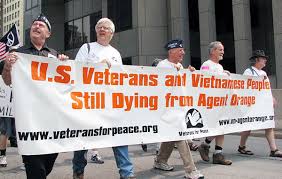 (Beyond Pesticides, September 4, 2018) Close on the heels of the recent landmark California decision against Monsanto, maker of the glyphosate-based pesticide Roundup, Vietnam has demanded that the company pay damages to the many victims of its Agent Orange herbicide and defoliant, which Monsanto supplied to the U.S. military during the Vietnam War. (Monsanto was not the only U.S. manufacturer of the compound; there were nine in total.) U.S. forces, in a program dubbed Operation Ranch Hand, used more than 13 million gallons of the compound in Vietnam — nearly one-third of the 20 million gallons of all herbicides used during the war in Laos, Cambodia, and Vietnam. In Vietnam alone, 4.5 million acres were impacted by Agent Orange.
 (Beyond Pesticides, August 31, 2018) Given the choice to forage on untreated or pesticide-contaminated food sources, bees will increasingly choose the pesticide, according to research published in
  (Beyond Pesticides, August 30, 2018) A plan announced earlier this month by Agriculture Secretary, Sonny Perdue, to relocate one of the U.S. Department of Agriculture’s (USDA) top research office — the Economic Research Service — into the Office of the Secretary, a political branch of the U.S. Department of Agriculture, is raising alarm from some scientists. Concerned researchers see the move as a way to cut funding to important projects around climate change and nutrition, among others.
 (Beyond Pesticides, August 29, 2018) As pesticides drain from agricultural fields, they can poison waterways and coastal areas and harm wildlife. Now, a study finds that a gene that helps terrestrial mammals break down certain toxic chemicals appears to be faulty in marine mammals — potentially leaving manatees, dolphins and other warm-blooded aquatic life more sensitive to toxic pesticides, especially organophosphates.
 (Beyond Pesticides, August 28, 2018) Reinforcing findings of
  (Beyond Pesticides, August 27, 2018) Beyond the visual and audial charms of some bird species, insect-eating birds play a significant role in controlling pests that can ruin crops or ravage forests.
  (Beyond Pesticides, August 24, 2018) We must stop the adoption of a law that will prevent local communities from restricting pesticides. Request that Minority Leader Rep. Nancy Pelosi lead the effort to protect a basic principle of local democratic decision making, especially in light of inadequate federal environmental and health protections.
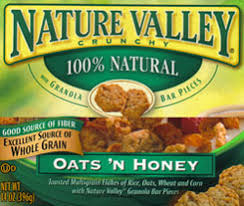 (Beyond Pesticides, August 23, 2018) Three nonprofit groups today jointly announced that they have resolved a consumer-protection action filed by the groups against General Mills on August 24, 2016, concerning General Mills’ labeling of its Nature Valley Granola Bars as “Made with 100% Natural Whole Grain Oats.” See a
  (Beyond Pesticides, August 22, 2018) Mothers with high levels of DDT’s major metabolite, DDE, are more likely to have their children diagnosed with autism, according to a study published in The American Journal of Psychiatry this month. Though this study links autism to long-banned DDT, it raises significant concerns about legacy contamination from this chemical, which remains ubiquitous in the environment and in human bodies. With an increasing number of studies linking autism and other developmental disabilities to pesticides, the need to transition to safer, organic methods of farming is now more important than ever before.
 (Beyond Pesticides, August, 20, 2018) Health Canada’s Pest Management Regulatory Agency (PMRA) has announced a plan to phase out the outdoor use of two neonicotinoid insecticides — thiamethoxam and clothianidin — over three to five years, due to concerns about their effects on aquatic invertebrates. This comes after their 2016 proposal to phase out another neonicotinoid, imidacloprid, for the same concerns, but the proposal has not been finalized. In April, the European Union (EU) voted to ban the most widely used neonicotinoids, citing risks to bees.
 (Beyond Pesticides, August 17) Please comment by the deadline of Monday, August 20, 2018, 11:59 pm EDT. The White House Council on Environmental Quality (CEQ) has announced plans to weaken one of our country’s bedrock environmental laws, the National Environmental Policy Act (NEPA). NEPA provides a foundation for environmental law in the U.S., and requires a precautionary approach that is stronger than other laws. NEPA requires the government to investigate and publish results concerning all alternatives –including a “no action” alternative of major federal actions.
 (Beyond Pesticides, August 16, 2018) The jury verdict last week awarding groundskeeper Dewayne “Lee” Johnson
  (Beyond Pesticides, August 13, 2018) Tell USDA to Follow the EU in Classifying New Mutagenesis Techniques as GMO. The Court of Justice of the European Union has highlighted the fact that failing to classify mutagenesis (purposeful changes in DNA) as genetic engineering is a backdoor way of allowing GMOs (genetically modified organisms) without labeling them as such. The court
  (Beyond Pesticides, August 10, 2018) The U.S. Environmental Protection Agency (EPA) must ban a widely used organophosphate pesticide linked to brain damage in children, the 9th Circuit Court of Appeals ruled yesterday.
  (Beyond Pesticides, August 9, 2018) Last week, the Massachusetts legislature failed to pass legislation that would have restricted the use of neonicotinoid pesticides in the state in order to protect sensitive pollinators, but advocates vow to campaign for a victory in the next legislative session. H. 4041, would have restricted neonicotinoid uses to certified applicators only. Massachusetts beekeepers lost 65 percent of honey bee hives this year, a rate 25 percent higher than the national average.
 (Beyond Pesticides, August 8, 2018) On July 30, the California Department of Pesticide Regulation (DPR) released its scientific assessment concluding that the organophosphate insecticide, chlorpyrifos, should be listed as a Toxic Air Contaminant (TAC) in the state based on evidence of its neurological effects and exposure risks of concern. This comes after the 2017 decision by the U.S. Environmental Protection Agency (EPA) reversed its decision to ban the dangerous chemical after intervention by its manufacturer.
 (Beyond Pesticides, August 6, 2018) Say “No” to Trump’s Supreme Court Pick. President Donald Trump’s nominee for Supreme Court Justice, Brett Kavanaugh, would be disastrous for workers, public health, and our environment. Judge Kavanaugh’s record shows he consistently puts the interests of big business and polluters over those of public health and the environment.
 (Beyond Pesticides, August 3, 2018) Documents made public in late July show that the U.S. Environmental Protection Agency (EPA) let Monsanto write its own rules after farmers and the public raised red flags over