10
Jul
EPA Administrator Pruitt Resigns, But Mission to Dismantle Environmental Regulations Continues
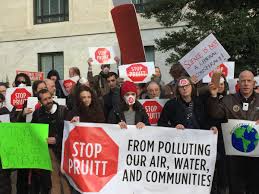 (Beyond Pesticides, July 10, 2018) Scott Pruitt’s resignation as Administrator of the U.S. Environmental Protection Agency (EPA) took effect Monday under a cloud of ethics investigations and alleged collusion with industry to systematically undermine, dismantle, and reverse critical protections for air, water, and workers. Deputy Administrator Andrew Wheeler will take the helm as Acting Administrator after serving as Deputy Administrator, a position that required Senate confirmation. Mr. Wheeler, a lawyer who worked in the toxics office at EPA under Presidents George H.W. Bush ad Bill Clinton, as an aide to U.S. Senator Jim Inhofe (R-OK) – a denier of climate change – and the Senate Committee on Environment and Public Works (EPW), and as a lobbyist for the coal and chemical industry, told the Washington Post: “[I] would say that the agenda for the agency was set out by President Trump. And Administrator Pruitt has been working to implement that. I will try to work to implement the president’s agenda as well. I don’t think the overall agenda is going to change that much, because we’re implementing what the president has laid out for the agency. He made several campaign promises that we are working to fulfill here.”
Senator John Barrasso (R-WY), chair of EPW, in a statement, said: “Under President Trump, the EPA has returned to its original mission of protecting America’s air, water, and land. During Administrator Pruitt’s tenure, the agency has rolled back punishing regulations that were hurting American workers and stifling our economy. It has become increasingly challenging for the EPA to carry out its mission with the administrator under investigation. President Trump made the right decision to accept his resignation.” Meanwhile, some Democrats went on the attack. Senator Elizabeth Warren (D-MA) tweeted, “Andrew Wheeler may not have the same stink of blatant corruption as EPA Scott Pruitt, but he’s just as dirty. The EPA’s new Acting Director is a former coal lobbyist who will work to poison the agency and the environment he’s supposed to protect from the inside.”
During Mr. Wheeler’s confirmation for the Deputy Administrator position, the Sierra Club issued a critical press release: “Wheeler brings his own troubling record of serving as a paid lobbyist for corporate polluters; the fact he would enter the administration in direct violation of Trump’s own “ethics” Executive Order; a past history of paid industry sponsored junkets; and a campaign finance scandal under which he raised funds for committee members who voted on him months after he was already the presumptive nominee.” Sierra Club executive director Michael Brune released the following statement: “Confirming coal lobbyist Andrew Wheeler to help lead the agency that is supposed to hold corporate polluters accountable is a move straight from the Washington, D.C. swamp. Wheeler’s confirmation further enables the culture of corruption in which Scott Pruitt attacks clean air and water standards on behalf of the corporate polluters who’ve been providing him favors and giving him marching orders. The Senate should be demanding more scrutiny of Wheeler’s own problematic record, not rushing his confirmation so that he can stand by Pruitt’s side. Wheeler is ethically compromised. In addition to spending a decade getting paid to push corporate polluter interests in Washington, Wheeler has made clear he will do everything in his power to roll back essential safeguards that protect our air, water, and families from harmful toxins like mercury, arsenic, lead, and other pollution.”
After months of pressure and an embarrassing encounter at an eatery in DC, EPA Administrator Scott Pruitt has resigned. Pruitt’s resignation is on the heels of heavily critiqued spending, ethics, and policy decisions. One of his first orders (and one of his most egregious) in office was to reverse EPA’s proposed decision to ban the nerve toxin, chlorpyrifos, a pesticide that decades of science as shown to be toxic to children’s brains and harmful to workers. At a hearing last year, U.S. Senator Tom Udall (D-NM) pressed Mr. Pruitt to name a peer-reviewed study that indicates that chlorpyrifos is safe. Mr. Pruitt answered by saying that he had relied on ‘interagency dialogue’ with the U.S. Department of Agriculture (USDA) before denying the petition to ban the chemical. Regarding chlorpyrifos’ safety, Mr. Pruitt stated that his decision was founded on “meaningful data and meaningful science.” However, when EPA was followed up with to provide details on this science, Mr. Pruitt’s office replied with quotes from trade groups and USDA, but failed to provide any scientific studies on the chemical’s safety.
Mr. Pruitt‘s “changes” to the agency, frequently favored industry interests over science-based protection of the environment and public health. EPA’s moves to reduce enforcement, roll back protective regulations, and install industry-friendly personnel have been covered extensively by Beyond Pesticides; examples include: “Where Has All the EPA Enforcement Gone,” “The Threat to Scientific Integrity at EPA,” and regular posts in its Daily News Blog.
Mr. Pruitt called his approach to EPA’s function “Back to Basics,” which he said included a refocus on EPA’s “intended mission, a return of power to the states, and creation of an environment where jobs can grow.” The agency website sets out the “three Es” of the Back-to-Basics agenda: Environment: protecting the environment; Economy: sensible regulations that allow economic growth; and Engagement: engaging with state and local partners. The new agenda was announced in April 2017 at a coal mine in Sycamore, Pennsylvania — a telling gesture that betrayed Pruitt’s actual allegiances: to the extractive, chemical, industrial, and transportation interests that are the chief sources of environmental degradation in the U.S. In addition, Mr. Pruitt reassigned or demoted EPA employees who question him; failed to investigate civil rights complaints; delayed rules designed to protect farmworker children; eliminated from EPA advisory boards scientists who have received EPA grants; and attempted to slash EPA’s staff in half.
But now with Mr. Pruitt gone, Mr. Wheeler, will step in as acting Administrator. He was confirmed as Deputy Administrator by the Senate in April by a vote of 53-45, despite being one of 30 federal employees who allegedly violated Mr. Trump’s executive order barring former lobbyists from working in positions requiring them to manage issues they lobbied in the preceding two years. A former energy lobbyist, Mr. Wheeler’s biggest client included Murray Energy Corporation, which is considered to be the largest coal mining company in the U.S. that fought the Obama administration’s attempts to reduce carbon emissions and strengthen environmental and public health laws. According to the Natural Resources Defense Council (NRDC), Mr. Wheeler also served as a vice president of a 300-strong federation of coal interests in the capital called the Washington Coal Club and “made time to lobby the U.S. Department of the Interior to open portions of the Bears Ears National Monument to uranium mining.” His other clients included Energy Fuels Resources Inc., Xcel Energy and Bear Head LNG Corporation.
The New York Time reports that Mr. Wheeler and the CEO of Murray Energy Corporation, Robert Murray, put together a so-called environmental regulations wish-list which detailed policies aimed at reinvigorating the coal industry — like curbing restrictions on greenhouse gases and slashing staff at the EPA.
His previous boss, Senator Inhofe is a noted climate change denier who refers to the science of climate change as “the greatest hoax” ever perpetrated on the American people. The New York Times notes that he once served at the EPA as a special assistant in the agency’s Office of Pollution Prevention and Toxics for four years before he worked for Mr. Inhofe, and is a seasoned political operative who knows how to carefully traverse the system – which could mean even more wide ranging rollbacks.
Ideologically, Mr. Pruitt and Mr. Wheeler are cut from the same cloth, although it is yet to be seen whether he also shares similar lavish spending or desires for private $34,000 phone booths. EPA will continue to be led by Administrators hell-bent on destroying the environment, and under the new Acting Administrator, we can expect more assaults on the environment.
All unattributed positions and opinions in this piece are those of Beyond Pesticides.
Source: New York Times, Vox, NRDC

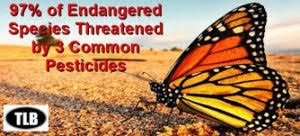 (Beyond Pesticides, July 9, 2018) The Center for Biological Diversity (CBD) is urging the U.S. Fish and Wildlife Service (FWS) to take action to protect 23 wildlife species in the Southeast that are at risk of extinction. Citing deep concerns about unprecedented assaults on the Endangered Species Act (ESA),
  (Beyond Pesticides, July 6, 2018) Two years ago, thirteen bald eagles were found dead on a farm in Maryland. Now the investigation has revealed that these birds died after ingesting the highly toxic pesticide, carbofuran. Carbofuran, whose use has been phased out in the U.S., is so toxic to birds that one granule is all it takes to kill. Irresponsible and illegal use of pesticides is still responsible for primary and secondary poisonings of wildlife, as is the case of these bald eagles.
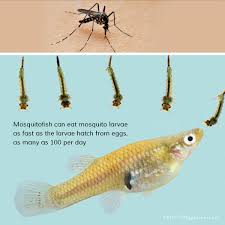 (Beyond Pesticides, July 5, 2018) With mosquito season in full swing throughout the U.S., land managers and abatement districts can be well served by employing biological controls in the form of fathead minnows (
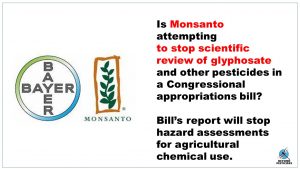 (Beyond Pesticides, July 2, 2018) The U.S. House of Representatives is considering
  (Beyond Pesticides, June 29, 2018) It is widely known that pollinators are in trouble. In light of this,
  (Beyond Pesticides, June 28, 2018) Having voted to allow retail recreational cannabis sales as of January 1, 2018,
  (Beyond Pesticides, June 27, 2018)
 (Beyond Pesticides, June 25, 2018) Ten organizations filed an Amicus brief last week in support of a 2015 landmark Montgomery County, Maryland ordinance that restricts the use of toxic pesticides on public and private land within its jurisdiction. The law, intended to protect children, pets, wildlife, and the wider environment from the hazards of lawn and landscape pesticide use, is on appeal from a Circuit Court ruling in August 2017 which struck down aspects of the ordinance that apply to private property. The Montgomery County Council decided to appeal the Circuit Court ruling based on an outpouring of public support, and the advice of its legal team that the County has a reasonable chance of prevailing. The case will now be heard in front of the Court of Special Appeals of Maryland.
 (Beyond Pesticides, June 22, 2018) Mosquito misters pose a threat to human health. They also harm bees and other flying pollinators and are the least effective way to deal with biting mosquitoes. These devices are typically placed outdoors and spray insecticides –mostly in an attempt to control mosquitoes. In May, the Connecticut state legislature
  (Beyond Pesticides, June 21, 2018) In a letter sent by the Center for Biological Diversity (CBD), the U.S. Fish and Wildlife Service (FWS) is being urged to complete status reviews and listing proposals for 23 wildlife species in the Southeast that are at risk of extinction. Citing deep concerns about unprecedented assaults on the Endangered Species Act (ESA), the letter reiterates the critical need for FWS to provide timely protection to the most critically imperiled species.
 (Beyond Pesticides, June 20, 2018) Bumblebee queens that wake up from hibernation to a neonicotinoid-contaminated, monofloral landscape take longer to set up their nest and die-off at higher rates, according to new
 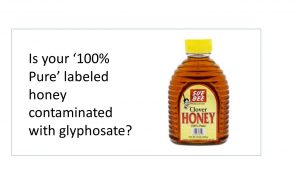 (Beyond Pesticides, June 19, 2018) Some 200 members of a
 (Beyond Pesticides, June 14, 2018) With nearly 40% of Americans diagnosed as clinically obese, leading to health care costs estimated at over $200 billion, researchers are focusing on ways individuals can reduce their exposure to chemicals that contribute to weight gain regardless of diet or exercise. These chemicals, known as “obesogens,” include a range of consumer products, from pesticides to plastics and flame retardants. While diet and exercise remain critically important to fighting the ongoing obesity epidemic, obesogens may be working to increase appetite, fat storage, or make it more difficult for the body to shed fat once it is gained.
 (Beyond Pesticides, June 13, 2018) On June 6, 2018, the New York State Department of Environmental Conservation (NYSDEC) released its final policy for the disclosure of cleaning product ingredients under its Household Cleansing Product Information Disclosure Program. The program will require full disclosure of ingredients on product labels or manufacturer website for all products sold in the state, as well as the identification of chemicals of concern. NYSDEC states the program is intended to protect consumers from harmful chemicals in household products.
 (Beyond Pesticides, June 11, 2018) With
  (Beyond Pesticides, June 8, 2018) In the wake
 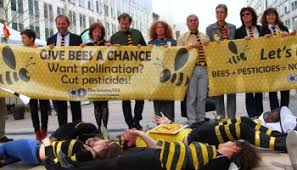 (Beyond Pesticides, June 7, 2018) Health Canada is proposing to phase out a number of uses of neonicotinoids in order to mitigate risks to pollinators. The agency has completed its review of clothianidin and thiamethoxam — two neonicotinoids that have been linked to pollinator decline and finds risks of concern for bees. However, these measures do not go as far as those recently made in the European Union, but further than label restrictions issued by the U.S. Environmental Protection Agency (EPA).