





28
Jun
California Establishes Testing for Pesticides in Marijuana Products
 (Beyond Pesticides, June 28, 2018) Having voted to allow retail recreational cannabis sales as of January 1, 2018, California will mandate testing for pesticide residue in cannabis products beginning July 1. Cannabis farmers welcome the regulations. Nikolai Erickson of Full Moon Farms in Dinsmore, California says, the new requirements will “clear the shelves of poor quality product and give small craft, organic farmers a chance to prove their quality over larger farms. . . . We’re the ones taking the time and energy, putting in the extra hours and the extra cost to ensure that we’ll pass testing. So we’re creating shelf space finally, getting value added for craft.”
The new California laws require that any cannabis products sold by retailers must have undergone both quality and pesticide testing. Whereas from January 1 to June 30, 2018 regulations mandated testing for 21 pesticides and for microbial contaminants, such as E. coli, that number jumps to 66 in July. The regulations also institute new quality standards that analyze products for contaminants, such as feces, mold, and insect and rodent parts. The quality“bar” will jump again in December, when testing must also look for mycotoxins, terpenoids, and heavy metals.
The stakes are high for producers and retailers: if a product batch fails two assays, the state will require that the entire batch be destroyed. In addition, retailers will have to restock their shelves, beginning July 1, with only products that have undergone the new, more stringent, evaluation. All this testing will cost producers, labs, and distributors more; EVIO Labs CEO Lori Glauser says, “The implementation of the new rules will be challenging for all the stakeholders to implement. . . . However, it’s absolutely going to result in improved quality of product and will give consumers peace of mind that the product that they’re purchasing is indeed what it says on the label and that it is free of contaminants.”
The Humboldt Patient Resource Center in Arcata has required its cannabis inventory to be tested for the past three years. The center made the decision to do so after it received product from cultivators who claimed no pesticide use, only to discover that the products were contaminated with pesticides. As owner Mariellen Jurkovich notes, “If you are buying any cannabis . . . and you’re not . . . buying it from where it’s been tested, you are risking your health,” Jurkovich said. “You are risking a chance that these things could be filled with very toxic chemicals.”
Beyond Pesticides has, for a number of years, tracked state-level policies on medical and recreational cannabis use. Because cannabis is not a legal agricultural crop under federal law, the Environmental Protection Agency (EPA) has not evaluated the safety of any pesticide on cannabis plants. EPA has established no restrictions for pesticides used in cannabis production, no tolerances, nor any exemptions from tolerances for allowable pesticide residues on cannabis. As a result, EPA-permitted pesticide labels do not contain allowances for pesticide use in cannabis production. Beyond Pesticides maintains that because of the federal status of cannabis (as a Schedule 1 illegal drug), EPA cannot legally register pesticides for use in the production of the crop. Therefore, the organization asserts, pesticide use on cannabis is illegal.
The lack of federal oversight for cannabis as a crop has states all over the map as they sort through what pesticides, and at what levels, cultivators might be allowed to use. (A snapshot of where states were a few years ago is available here.) State regulations continue to be a crazy quilt of laws and shifting policies that attempt to keep pace with public sentiment, emerging science, and existing health and safety regulations. Currently, 29 states allow some form of medical or recreational cannabis to be sold, each with different pesticide rules. Some have affirmed the prohibition inferred from the federal situation (either with clear prohibitory language or through regulatory silence with an explanatory note on pesticide prohibition), some allow certain toxic pesticide, and some permit pesticides that EPA has determined are exempt from registration.
Some of the legislative scrambling constitutes attempts to define allowed pesticide use and management practices in cannabis production. As Beyond Pesticides executive director Jay Feldman has said, “The use of pesticides in the cultivation of cannabis has health implications for those growing the crop, and for users who are exposed to toxic residues through inhalation, ingestion, and absorption through the skin. [Some] states and DC have adopted rules that require marijuana to be grown with practices that prevent the use of pesticides.” This moment represents an opportunity to restrict all pesticide use at the front end of a growing market and mandate organic management of cannabis — setting a course to protect health and the environment. (The USDA certified organic seal will not be found on marijuana products any time soon because of the federal status of cannabis.)
With more and more states permitting the sale of cannabis for medical and recreational use, governments, growers, retailers, and consumers would do well to consider whether “weed” is harboring unsavory contaminants, including pesticide residues, that could be inhaled, ingested, or absorbed. If cannabis is something a consumer plans to ingest, consideration of such contamination ought not be different than that for a decision to buy produce grown with or without pesticides.
As states struggle to keep pace with this burgeoning industry, some producer groups have taken matters into their own hands. In Colorado, for example, faced with the state Senate’s indefinite postponement of a proposed “Pesticide-Free Marijuana Bill,” and the failure of the Colorado Department of Agriculture to implement meaningful regulations, the Organic Cannabis Association developed a voluntary “pesticide free” certification program for growers. The certification focused on residues on the finished product, so still allowed the use of pesticides not on the narrow list of those restricted by the state. No doubt an attempt to distinguish more-sustainably-grown cannabis from other products in the marketplace, the certification program nevertheless was a step in the right direction for consumers who wish to protect themselves from unwanted pesticides in their cannabis products.
Early in 2018, Canada took the step — in the runup to its July 2018 launch of the recreational market and after discovering that there was significant contamination of cannabis crops by proscribed pesticides — of instituting very hefty fines (up to $1 million) on growers using the banned compounds. Previously, Health Canada, the country’s primary pesticide enforcement agency, had said fines were unlikely because companies knew the banned pesticides were illegal. However, after the country began regular testing, and news outlets began reporting on multiple instances of banned and highly toxic pesticides making their way onto the market, the agency decided to change its approach. Health Canada currently allows some 20 pesticide products for use on cannabis, most of which are biologically based or least-toxic insecticidal soaps.
A few states (Connecticut, Maine, Minnesota, New Hampshire, Massachusetts) and the District of Columbia have adopted regulations that focus on less-toxic approaches to cultivation of medical cannabis, with some focus on ensuring growing practices that avoid or prohibit the use of pesticides. The federal “limbo” provides an important opportunity for states to incentivize the development of a significant industry built on production practices that do not rely on pesticides.
Beyond Pesticides opined, in the Winter 2014–2015 issue of its journal, Pesticides and You, that in the absence of useful federal regulation or guidance on the potential impacts of pesticide use on cannabis — to consumers, workers, and the environment — states should at the very least provide clear rules to producers regarding sustainable production practices that are protective. As crop production of cannabis increases, we have an opportunity to restrict all pesticide use at the front end of a growing market, require the adoption of organic systems plans, and set a course to protect health and the environment.
Primary source: Times Standard

 (Beyond Pesticides, June 27, 2018)
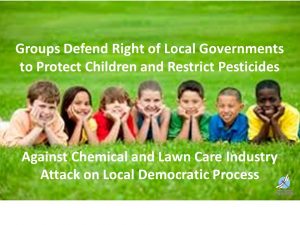 (Beyond Pesticides, June 25, 2018) Ten organizations filed an Amicus brief last week in support of a 2015 landmark Montgomery County, Maryland ordinance that restricts the use of toxic pesticides on public and private land within its jurisdiction. The law, intended to protect children, pets, wildlife, and the wider environment from the hazards of lawn and landscape pesticide use, is on appeal from a Circuit Court ruling in August 2017 which struck down aspects of the ordinance that apply to private property. The Montgomery County Council decided to appeal the Circuit Court ruling based on an outpouring of public support, and the advice of its legal team that the County has a reasonable chance of prevailing. The case will now be heard in front of the Court of Special Appeals of Maryland.
 (Beyond Pesticides, June 22, 2018) Mosquito misters pose a threat to human health. They also harm bees and other flying pollinators and are the least effective way to deal with biting mosquitoes. These devices are typically placed outdoors and spray insecticides –mostly in an attempt to control mosquitoes. In May, the Connecticut state legislature
  (Beyond Pesticides, June 21, 2018) In a letter sent by the Center for Biological Diversity (CBD), the U.S. Fish and Wildlife Service (FWS) is being urged to complete status reviews and listing proposals for 23 wildlife species in the Southeast that are at risk of extinction. Citing deep concerns about unprecedented assaults on the Endangered Species Act (ESA), the letter reiterates the critical need for FWS to provide timely protection to the most critically imperiled species.
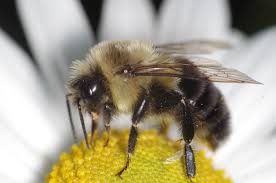 (Beyond Pesticides, June 20, 2018) Bumblebee queens that wake up from hibernation to a neonicotinoid-contaminated, monofloral landscape take longer to set up their nest and die-off at higher rates, according to new
  (Beyond Pesticides, June 19, 2018) Some 200 members of a
 (Beyond Pesticides, June 14, 2018) With nearly 40% of Americans diagnosed as clinically obese, leading to health care costs estimated at over $200 billion, researchers are focusing on ways individuals can reduce their exposure to chemicals that contribute to weight gain regardless of diet or exercise. These chemicals, known as “obesogens,” include a range of consumer products, from pesticides to plastics and flame retardants. While diet and exercise remain critically important to fighting the ongoing obesity epidemic, obesogens may be working to increase appetite, fat storage, or make it more difficult for the body to shed fat once it is gained.
 (Beyond Pesticides, June 13, 2018) On June 6, 2018, the New York State Department of Environmental Conservation (NYSDEC) released its final policy for the disclosure of cleaning product ingredients under its Household Cleansing Product Information Disclosure Program. The program will require full disclosure of ingredients on product labels or manufacturer website for all products sold in the state, as well as the identification of chemicals of concern. NYSDEC states the program is intended to protect consumers from harmful chemicals in household products.
 (Beyond Pesticides, June 11, 2018) With
  (Beyond Pesticides, June 8, 2018) In the wake
 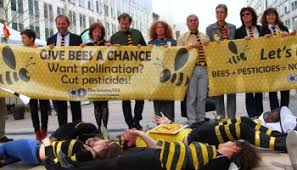 (Beyond Pesticides, June 7, 2018) Health Canada is proposing to phase out a number of uses of neonicotinoids in order to mitigate risks to pollinators. The agency has completed its review of clothianidin and thiamethoxam — two neonicotinoids that have been linked to pollinator decline and finds risks of concern for bees. However, these measures do not go as far as those recently made in the European Union, but further than label restrictions issued by the U.S. Environmental Protection Agency (EPA).
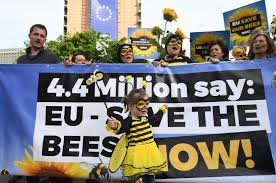 (Beyond Pesticides, June 6, 2018) By the close of 2018, three top neonicotinoid (neonic) pesticides, linked to the worldwide decline in bee populations, will be banned for outdoor use in the European Union (EU), based on the
 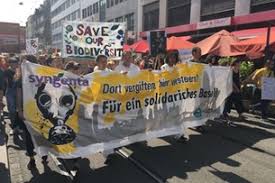 (Beyond Pesticides, June 5, 2018) After more than 100,000 Swiss citizens signed a petition calling for a ban on pesticides, Switzerland will soon have to vote on a complete ban on the use of synthetic pesticides. The ban would apply to farmers, industries, and imported goods, and advocates hope this measure would cause other EU nations to follow.
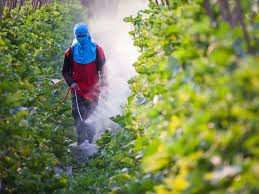 (Beyond Pesticides, June 1, 2018) States and civil society organizations launched new lawsuits in late May against the Pruitt Environmental Protection Agency (EPA) for its continued attack against farmworker health and safety. Two separate lawsuits, one filed by attorneys general in the states of California, Maryland, and New York, and another by health and justice advocates represented by Earthjustice and Farmworker Justice take aim at EPA’s decision to delay the implementation of training requirements designed to protect farmworkers and their families. This is the latest in a series of lawsuits which began when EPA announced
  (Beyond Pesticides, May 31, 2018) Deforestation in tropical regions helps spread malaria, concludes a
 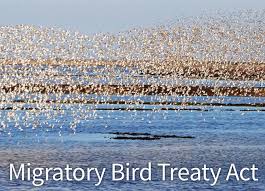 (Beyond Pesticides, May 30, 2018) Six environmental groups have sued the Trump Administration for reversing a long standing interpretation of the Migratory Bird Treat Act (MBTA) that provides migratory bird protections from incidental killing or “taking” caused by industrial activities. The lawsuit,
  (Beyond Pesticides, May 29, 2018) The Farm Bill is beginning to move in the U.S. Senate Committee on Agriculture, Nutrition, and Forestry, and your voice is critically needed to help stop provisions that are harmful to health and the environment.


