





14
Feb
‘Bug Bombs’ Still Deadly after EPA Label Changes, says CDC
(Beyond Pesticides, February 14, 2018) Total release foggers, otherwise known as bug bombs, 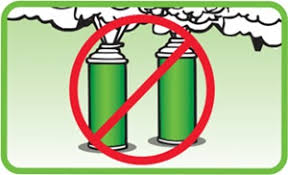 received updated labels from the U.S. Environmental Protection Agency (EPA) in 2011 as part of efforts to reduce accidental poisonings, but a new report from the U.S. Centers for Disease Control and Prevention (CDC) finds that EPA restrictions are a public health failure. Bug bombs pose a significant risk of acute illness to individuals even when attempting to follow new label instructions. Beyond Pesticides has long called for bug bombs to be banned, as there are a myriad of non-toxic alternative strategies to successfully manage household pests.
CDC’s report, Acute Illnesses and Injuries Related to Total Release Foggers, updates a previous study released in 2008 which found significant safety concerns about bug bombs and ultimately prompted EPA to revise the labels of these products. At the time, CDC found a total of 466 illnesses or injuries associated with the use of total release foggers between 2001-2006. Incidents ranged from failing to leave an area after releasing the bug bomb, reentering the premises too early, use of too many products for the space provided, and even explosions related to the ignition of aerosols released from the product.
Bug bombs are small cans primarily comprised of an insecticide, often a synthetic pyrethroid, a synergist such as piperonyl butoxide (PBO), and an aerosol propellant. In addition to the explosion/fire risk, if the aerosol product is used in an unattended home near a pilot light or other spark-producing appliance, both synthetic pyrethroids and PBO pose acute and chronic human health risks. PBO is added to pesticide formulations to increase the toxicity of synthetic pyrethroids, and has been linked to childhood cough. Peer-reviewed research associates synthetic pyrethroids with externalizing and internalizing disorders, ADHD, and delayed cognitive and motor development, and premature puberty in boys. Not only can bug bombs acutely poison, but once applied these chemicals can persist in the home for over a year, putting individuals and families at risk of chronic exposure and subsequent health issues.
In response to the report and several high profile incidents, including a 10 month old boy in Williamston, SC who died after his mother used several bug bombs in their home, EPA conducted an evaluation of total release foggers. The agency determined at the time that incidents were “overwhelmingly minor in nature,” resulting from “a few basic errors” and concluded that “label improvements can mitigate these risks.” This response was strongly criticized by Beyond Pesticides and other health groups, who called for increased education on alternative pest management strategies, and bans on the residential use of bug bombs by the general public. The New York City Department of Health asked EPA to make these products restricted use, and the state of New York began moving towards similar actions at the state level, but to date no substantive restrictions have been placed on bug bombs by EPA or any particular state.
CDC’s new data reveals that EPA’s attempt to reduce bug bomb illness and injury through label changes was unsuccessful. Looking at records from 2007-2015, a total of 3,222 unique cases of illness and injury were reported. The report indicates, “No statistically significant reduction in overall incidence of TRF [total release fogger]-associated injuries and illnesses was observed in the first 3 years after the label revisions took effect.” Reasons why changed little from the previous report, with CDC indicating the most reported causes were failure to vacate a treated premise, and early reentry.
Rather than clarify, EPA’s new labels may have caused more problems. For instance, EPA added pictures to the labels to show required steps. One step indicates that, after fogging, individuals should allow the premises to air out. However, the labels do not provide guidance on how to minimize exposure when ventilating, so many are injured during that process. And. as is too often the case, even following EPA’s new product labels did not eliminate illnesses. The CDC report notes, “Some users ventilated treated premises for the recommended length of time or longer, but still became ill, suggesting that ventilation might be inadequate or the recommended period might be insufficient to fully eliminate TRF [total release fogger] residuals before occupancy.”
The continued poisoning and injury of individuals from bug bombs due to insufficient protections is a regulatory failure that EPA has repeated in numerous arenas. How has the agency attempted to address the pollinator crisis? New labels. Problems with Monsanto’s dicamba herbicide drifting onto other farm fields and damaging crops? New labels. Beyond Pesticides is calling for the establishment of an alternatives assessment within EPA. Under an alternatives assessment, when pesticides are found to have adverse effects on human health or the environment, focus shifts to employing less-toxic alternatives to their use, rather than attempting to mitigate risk by revising labels that very few read or adequately comprehend.
Before reaching for a bug bomb to manage household pests, consider the factors that led the pest into the building in the first place. Most common pest problems can be successfully dealt with by eliminating pest entryways into the home (i.e. caulking cracks/crevices, doorsweeps, repairs, etc.), and sealing off access to food, water, and shelter (i.e. clean often, remove clutter, seal food in airtight containers, tight lid on trash can). Remaining pests can be dealt with through least toxic products such as boric acid bait stations and desiccating dusts. Also remember that many pests, such as bed bugs, display widespread resistance to the pyrethroid insecticides contained in most bug bombs.
Beyond Pesticides ManageSafe webpage can assist with many common household and landscape pest problems to prevent the need to use toxic pesticides. For detailed information and specific pest questions individuals can call 202-543-5450 or email [email protected].
All unattributed positions and opinions in this piece are those of Beyond Pesticides.
Source: Morbidity and Mortality Weekly (CDC)

 (Beyond Pesticides, February 13, 2018) Arguments by the U.S. Food and Drug Administration (FDA) to withhold from public and court review key documents revealing how it approved the first genetically engineered (GE) salmon were rejected by the Ninth Circuit Court of Appeals. Now, documents detailing how the agency reviewed and approved the GE animal will have to be produced for court review in the ongoing case challenging its controversial approval.
 exposure to the highly toxic paraquat add to the
 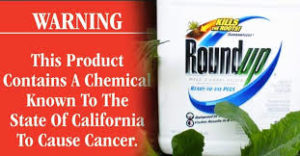 National Wheat Growers Association last month in challenging California’s listing of glyphosate as a carcinogen under the state’s Proposition 65 law. California added glyphosate to the list of cancer-causing chemicals in July 2017, but has since been attacked by Monsanto and its allies for carrying out state law that requires carcinogens to be labeled and monitored.
 (Beyond Pesticides, February 8, 2018) New trials are being launched in the United Kingdom (UK) to monitor fields that have long strips of wildflowers planted through croplands to boost natural predators and potentially reduce pesticide spraying. The large-scale trials are meant to determine how effective these strips can be as a tool for practitioners wishing to enhance biological pest control in the field.
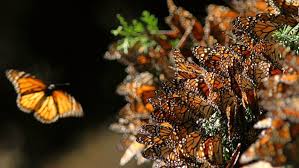 population of the species is continuing to decline at an alarming rate, with scientists and conservation groups pointing to man-made factors like logging, climate change, and herbicide use on genetically engineered (GE) crop fields as primary drivers. The annual California count of western monarch butterflies stationed volunteers at 262 sites, more than ever before, yet at 200,000 butterflies counted, the numbers nearly matched the lowest level recorded this decade, when only 145,000 butterflies were seen in 2012. The decline of these iconic butterflies demands swift action from lawmakers and regulators to protect their dwindling numbers.
 Environmental Protection Agency’s (EPA) efforts to purge academic scientists who had previously received EPA grants from sitting on the agency’s advisory committees. Last October, EPA issued a new policy that changes the makeup of its advisory boards by limiting the participation of scientists from academia and nonpartisan nonprofit organizations. Critics say the change attempts to fill these advisory committees with more industry-friendly officials whose belief systems are anti-environmental protection. On January 23, 2018, a group of scientists
  who grow and harvest our food. A sustainable food system must protect the land and the people who work the land, including the children and families of farmworkers. In two related actions, EPA is proposing to remove age requirements for application of pesticides. The actions involve changes to the Agricultural Worker Protection Standard (WPS), which went into effect this January and covers farmworkers hired to apply pesticides, and the Certification of Applicators (CA) rule, which will go into effect May 22 and covers those allowed to apply highly toxic restricted use pesticides (RUPs), the most toxic pesticides. The proposals to remove the age requirements present unacceptable risks to teenagers, who “are still developing in critical physical and emotional areas, with particular regard to their brains and reproductive systems,” according to the
  drastically underestimating chemical-intensive agriculture’s contribution to nitrogen oxide (NOx) caused air pollution, acid rain, and respiratory illness in the state, according to a
  for the Biology of Aging are finding new information about how Parkinson’s disease manifests itself after exposure to the herbicide paraquat, in hopes of finding ways to prevent the progression of the disease. Despite a
 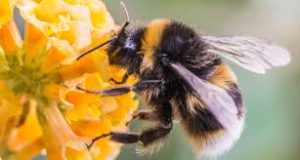 largest retailers, has decided to stop selling neonicotinoid products (neonics) linked to global declines in bee populations. This is the latest retailer in Australia to announce commitments to stop supplying the bee-toxic products.
 (USGS) reveals the year-round presence of neonicotinoids (neonics) in the Great Lakes – the world’s largest freshwater ecosystem. Neonics, which are highly toxic to aquatic organisms and pollinators, are prevalent in the tributaries of the Great Lakes with concentrations and detections increasing during planting season. This new data adds to burgeoning demand for a federal ban of these insecticides in order to safeguard vulnerable aquatic ecosystems and pollinators.
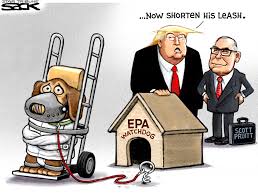 of the public and the environment at the U.S. Environmental Protection Agency (EPA) are being encouraged to exit the agency –as EPA Administrator Scott Pruitt plans to meet his goal of cutting agency staff and programs by 50 percent.
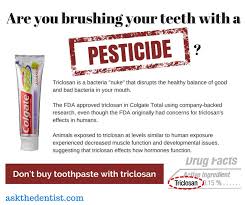 (Beyond Pesticides, January 26, 2018) Triclosan may be on its way out in soaps and disinfectants, but its presence on toothbrushes could stick around for a long time, according to
  from April 16 to October 31, 2018 in Arkansas, following a vote this week by the state’s Legislative Council. Action by lawmakers was the last step needed to make the ban official after the Arkansas State Plant Board (ASPB) voted last year to continue a
 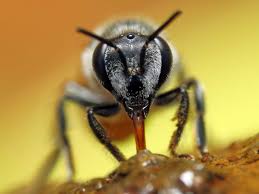 survival of honey bees and their colonies, according to research published by scientists from University of California, San Diego (UCSD). This is the first study to delve into the real-world effects pesticide exposure can have on honey bees also subject to nutritional stress, a common occurrence in the wild. The outcome of this research highlights the weaknesses of the U.S. Environmental Protection Agency’s (EPA) testing regime for registering pesticides, which does not account for the complex ecology surrounding
  European Union’s (EU) authorization procedure for pesticides, in light of the controversial review of Monsanto’s glyphosate. The special committee is to assess the authorization procedure for pesticides in the EU and potential failures in how substances are scientifically evaluated and approved.
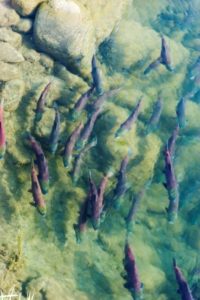 jeopardize the continued existence of endangered species and adversely modify their critical habitats, according to the newly released report from the National Marine Fisheries Service (NMFS). By law, the Environmental Protection Agency (EPA) must not allow their use.
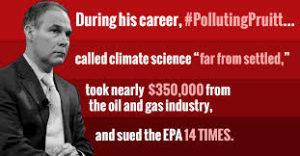 charged with protecting the health of the public and the environment at the U.S. Environmental Protection Agency (EPA) are being encouraged to exit the agency. This, as EPA Administrator Scott Pruitt plans to meet his goal of cutting agency staff and programs by 50 percent.
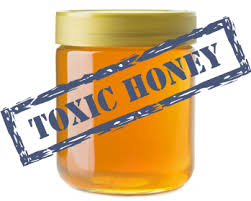 has shown that — despite a partial ban on neonicotinoid insecticides instituted in 2014 — 25% of British honey is still contaminated with residue of these “potent, bee-killing” pesticides. The partial ban, which extended to flowering crops, such as oilseed rape (from which canola oil is made), was instituted by the European Union (EU) in response to evidence of serious threats to bee populations. Samples for this study came from beekeepers and were each from a single location.
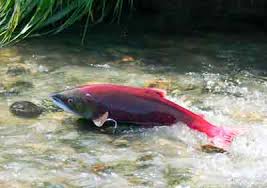 chlorpyrifos
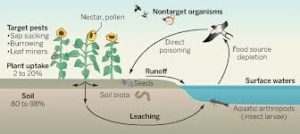 insecticides pose both acute and chronic risks to pollinators, aquatic life, and birds, the U.S. Environmental Protection Agency (EPA) is seeking comment that could support their continued use. Comments are due by February 20, 2018.
 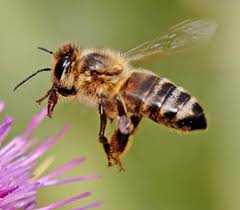 herbicide glyphosate and the fungicide chlorothalonil at certain concentrations,


